
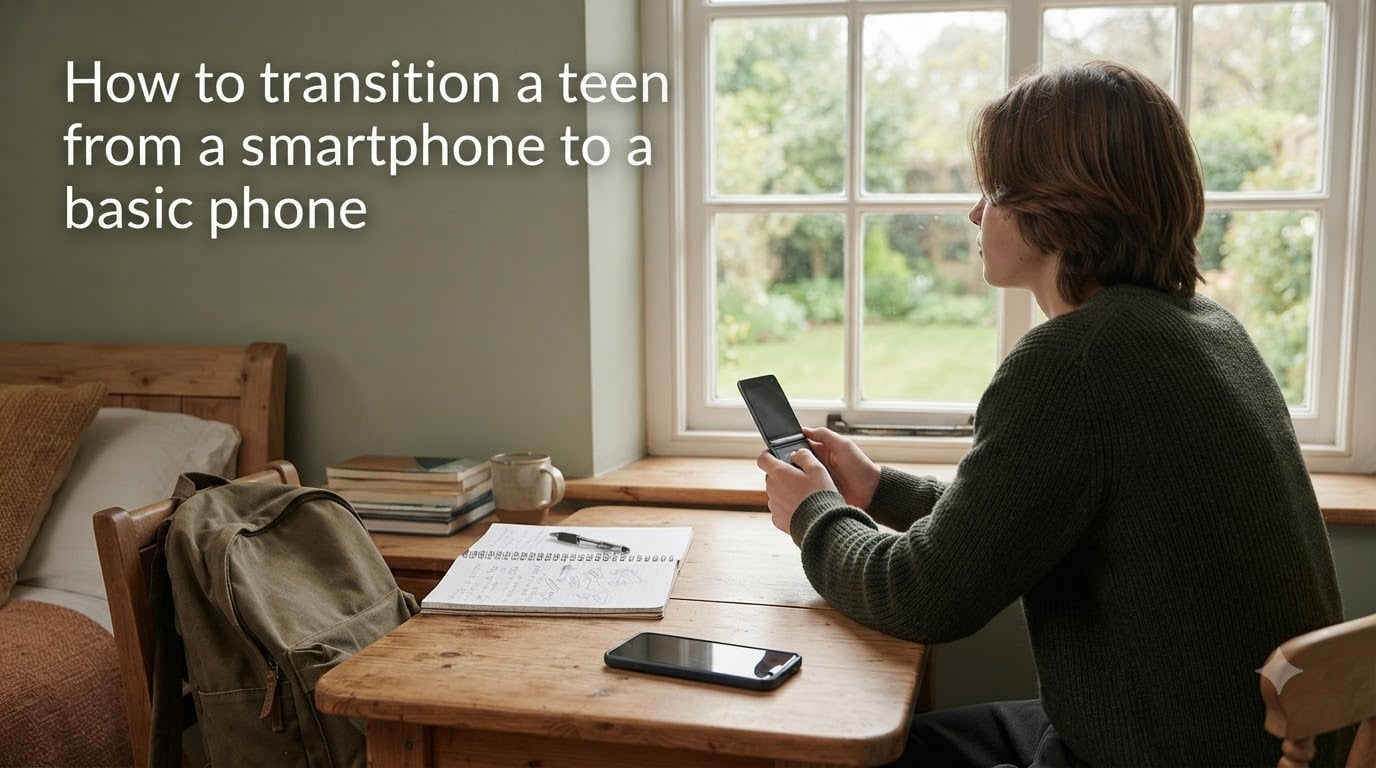
I watched my nephew scroll through TikTok for four hours straight on a Saturday, missing a family lunch entirely. That moment made me realize how much smartphones had quietly taken over teen life. If you’re wondering how to transition a teen from a smartphone to a basic phone, you’re not alone in this concern. Our team has spent the last three months researching parent forums, expert interviews, and real family experiences to bring you a guide that actually works.
The good news: thousands of families have made this switch successfully. The better news: it does not require an all-or-nothing approach. Whether you want a full digital detox or a hybrid setup, this guide will walk you through every step with practical strategies you can start using today.
Table of Contents
Why Teens Struggle With Smartphone Addiction?
Teens today carry devices more powerful than the computers that sent humans to the moon. Roughly 91% of teens own a smartphone by age 14, and 42% have one by age 10. That early, constant access rewires developing brains in ways we are only beginning to understand.
The core problem is dopamine. Every notification, like, and comment triggers a small reward in the brain. Researchers call this “variable reinforcement” — the same mechanism that makes slot machines addictive. Teens check their phones an average of 100+ times per day, often without conscious intent.
Beyond brain chemistry, smartphones feed social comparison loops. Instagram, Snapchat, and TikTok are engineered to keep users scrolling through endless content about peers. Studies from the National Institutes of Health have linked heavy social media use in teens to increased rates of anxiety, depression, and sleep disruption.
I have seen parents describe their teens as “glued to the screen” or “a different person” after getting a smartphone. These observations are not exaggerations. Smartphones genuinely compete for attention in ways earlier technologies never did.
Signs Your Teen May Need a Phone Transition
Not every teen who owns a smartphone needs to switch to a basic phone. But if you notice several of these patterns, a transition might help.
Sleep disruption: Staying up past midnight on the phone, then struggling to wake up for school.
Mood swings tied to notifications: Visible anxiety when the phone is taken away or dies.
Academic decline: Grades dropping alongside increased screen time.
Social withdrawal: Choosing online interactions over in-person friendships and family time.
Loss of interest in hobbies: Dropping sports, music, or activities they once loved.
Physical symptoms: Headaches, eye strain, neck pain from looking down at screens.
On Reddit’s r/Parenting and r/dumbphones, parents frequently share stories of teens who could not sit through a family meal without checking their phone. One mother told me her 15-year-old daughter had not read a physical book in two years because “reading felt boring” compared to TikTok.
These are not character flaws. They are symptoms of a device designed to be addictive. Recognizing this distinction helps parents approach the transition with empathy rather than blame.
How to Have the Conversation With Your Teen?
This is where most parents stumble. They announce the change as a decree and wonder why their teen shuts down or rebels. Our research showed that negotiation matters more than logistics.
Pick the right moment. Do not bring this up during an argument about screen time. Choose a calm afternoon, ideally during a walk or car ride, when your teen is relaxed.
Acknowledge their perspective first. Before suggesting a change, ask: “What do you like most about your phone?” Then listen without interrupting. Many parents are surprised to learn their teens also feel overwhelmed by their phones.
Frame it as a partnership. Instead of “I’m taking your phone away,” try “I think we both want you to feel less anxious. Let’s figure out a plan together.”
Address specific fears. Teens worry about being excluded from friend group chats, missing social events, and looking weird. Validate these fears before problem-solving around them.
Offer choice and agency. Let your teen pick the basic phone model. Let them decide whether to go cold turkey or use a hybrid approach. When teens feel ownership over the decision, cooperation rises dramatically.
Step-by-Step Transition Guide: A Gradual Approach
How to transition a teen from a smartphone to a basic phone works best as a gradual process. Cold turkey rarely succeeds. Here is the timeline that most families in online communities have reported as successful.
Week 1: Audit current usage. Sit with your teen and review screen time reports on their iPhone or Android device. Many families are shocked to discover 7-10 hours of daily use.
Week 2: Declutter and delete. Remove social media apps, games, and anything that triggers compulsive checking. Keep essential apps like messaging, maps, and school tools.
Week 3: Set phone-free zones and times. No phones in the bedroom after 9 PM. No phones at the dinner table. No phones during homework.
Week 4: Introduce a basic phone for outings. When your teen goes to a friend’s house or short outing, have them carry a flip phone or candy bar phone instead of their smartphone.
Week 5: Switch the primary device. Move the SIM card to a basic phone. Make it their daily driver.
Week 6: Address friction points. Help your teen find workarounds for things like maps, music, and group chats. Keep a list and solve one problem per day.
Week 7-8: Evaluate and adjust. Check in weekly. What is working? What feels frustrating? Adjust the plan together.
The hybrid approach deserves special mention. Some families keep the smartphone for schoolwork and weekends, with a basic phone for weekdays. This reduces social friction while still cutting down screen time significantly.
Types of Basic Phones Suitable for Teens
Basic phones fall into three main categories. Each has trade-offs your teen should understand before choosing.
Candy bar phones are the classic Nokia-style devices with a keypad and small screen. They are durable, affordable, and easy to use. Most support calls, texts, and basic games like Snake.
Flip phones offer the same functionality with a clamshell design. Many teens find them satisfying because of the tactile “snap” of closing the phone. Modern 4G LTE flip phones work on current carrier networks.
Minimalist smartphones are a newer option. They look like regular phones but run stripped-down operating systems with no app store, no social media, and limited internet. The Light Phone and Punkt MP02 fall into this category.
A critical note: avoid older 2G or 3G phones. Most carriers have deprecated these networks. A basic phone must support 4G LTE to function properly in 2026.
Creative Analog Alternatives for Smartphone Features
The biggest practical hurdle is replacing smartphone conveniences. Here is what real families have done.
Maps and directions: Write down directions before leaving. Use a paper map for longer trips. Most destinations can be planned in advance.
Music: A dedicated MP3 player like a used iPod holds thousands of songs. Teens can still enjoy music during commutes without social media distractions.
Camera: A standalone digital camera costs less than most phone cases. Teens can still take photos and transfer them to a computer later.
Alarm clock: A basic alarm clock eliminates the “phone in bed” problem entirely. Pair it with a regular watch to remove the bedroom phone entirely.
Notes and reminders: A small notebook or sticky notes work better than most people expect. The act of writing things down also improves memory.
Handling Social Pressure and Peer Dynamics
Teens fear being excluded. This is the number one concern I have seen in forum discussions across Reddit, Quora, and parenting Facebook groups. Here is how to address it directly.
Talk about real friendship. Ask your teen: “If a friend stopped using a smartphone, would you stop being their friend?” Most teens will say no. This reframes the issue from social death to a personal choice.
Communicate the change early. Your teen should tell close friends about the switch before it happens. This avoids awkward confusion when group chats go silent.
Offer workarounds for group chats. Some basic phones support WhatsApp or basic messaging apps. If not, your teen can check group chats on a family computer at set times.
Build confidence with social scripts. Prepare your teen for the inevitable questions: “Why don’t you have a smartphone?” Help them rehearse a confident answer like “I wanted less stress, and honestly it’s been great.”
One teen on r/dumbphones shared that after three months, his friends respected his choice. Some even asked him about it because they felt the same phone anxiety he had described.
What to Do in Emergencies and School Requirements
Parents reasonably worry about safety. Here is how to plan for the real concerns.
Calling 911. Any active phone, including a basic phone, can call emergency services. The SIM card does not need a plan for this to work in most regions.
School-required apps. Some schools use apps for homework, grades, or communication. Negotiate with your teen to use a shared family tablet or laptop for these specific tasks rather than a personal smartphone.
Communicating with parents. Set clear expectations: check in by text at certain times, reply within an hour unless at school, and call if plans change.
Driving. If your teen drives, the basic phone becomes a major safety upgrade. No texting temptation, no distracted driving apps. This alone justifies the switch for many families.
Travel and sports. Coordinate with coaches and trip leaders in advance. Provide a contact card with relevant phone numbers written down so your teen does not need to memorize everything.
The hybrid approach solves many of these concerns. School days and travel use the basic phone plus a shared device. Weekends or trips where more connectivity helps can involve the smartphone with parental oversight.
Frequently Asked Questions
How do I transition away from a smartphone?
The best approach is a gradual transition over 6-8 weeks. Start by deleting addictive apps and setting phone-free times. Move the SIM card to a basic phone after 4 weeks. Use analog alternatives for maps, music, and alarms. Keep the smartphone as a household device for schoolwork only.
How do I wean my teenager off the phone?
Begin with a calm conversation that acknowledges your teen’s perspective. Audit current screen time together. Set small, achievable goals each week: phone-free meals, no phones in the bedroom, then move the SIM to a basic phone. Offer choice and involve your teen in picking the new device.
Can you turn a smartphone into a basic phone for kids?
Yes. You can delete social media and game apps, enable parental controls, turn off most notifications, and use grayscale mode. Apps like ‘Dumb Phone’ or ‘minimalist launchers’ can further strip down the interface. Some families do this temporarily while preparing for a full switch to a dedicated basic phone.
How to turn a smartphone into a basic phone?
Delete social media, games, and streaming apps. Remove the app store if possible. Turn off all notifications except calls and texts from favorites. Use airplane mode except when needed. Enable grayscale display and parental restrictions. Consider a minimalist launcher app for a simpler interface.
What age should a teen get a smartphone?
There is no universal answer, but many child development experts suggest waiting until at least 14-16 for full smartphone access. Younger teens can use basic phones, kid-friendly smartwatches, or supervised devices. The decision depends on your child’s maturity, your family’s needs, and school requirements.
Final Thoughts on Making the Switch
Learning how to transition a teen from a smartphone to a basic phone is really about rebuilding a healthier relationship with technology. The device itself is just a tool. The real goal is more sleep, more focus, more presence, and less anxiety for your entire family.
Every family I have followed through this process reported the same thing within a few weeks: their teen seemed calmer, more engaged, and surprisingly happier. Some even thanked their parents later. That moment is worth the awkward conversations and temporary friction you may face along the way.
Start small. Have one good conversation this week. Audit the screen time together. Pick a basic phone your teen actually likes. Then take the next step. The journey of a thousand miles begins with a single flip phone snap.
If you have stuck with me through this entire guide, you are clearly serious about this change. Trust that instinct. Your teen is lucky to have a parent willing to do this work.