
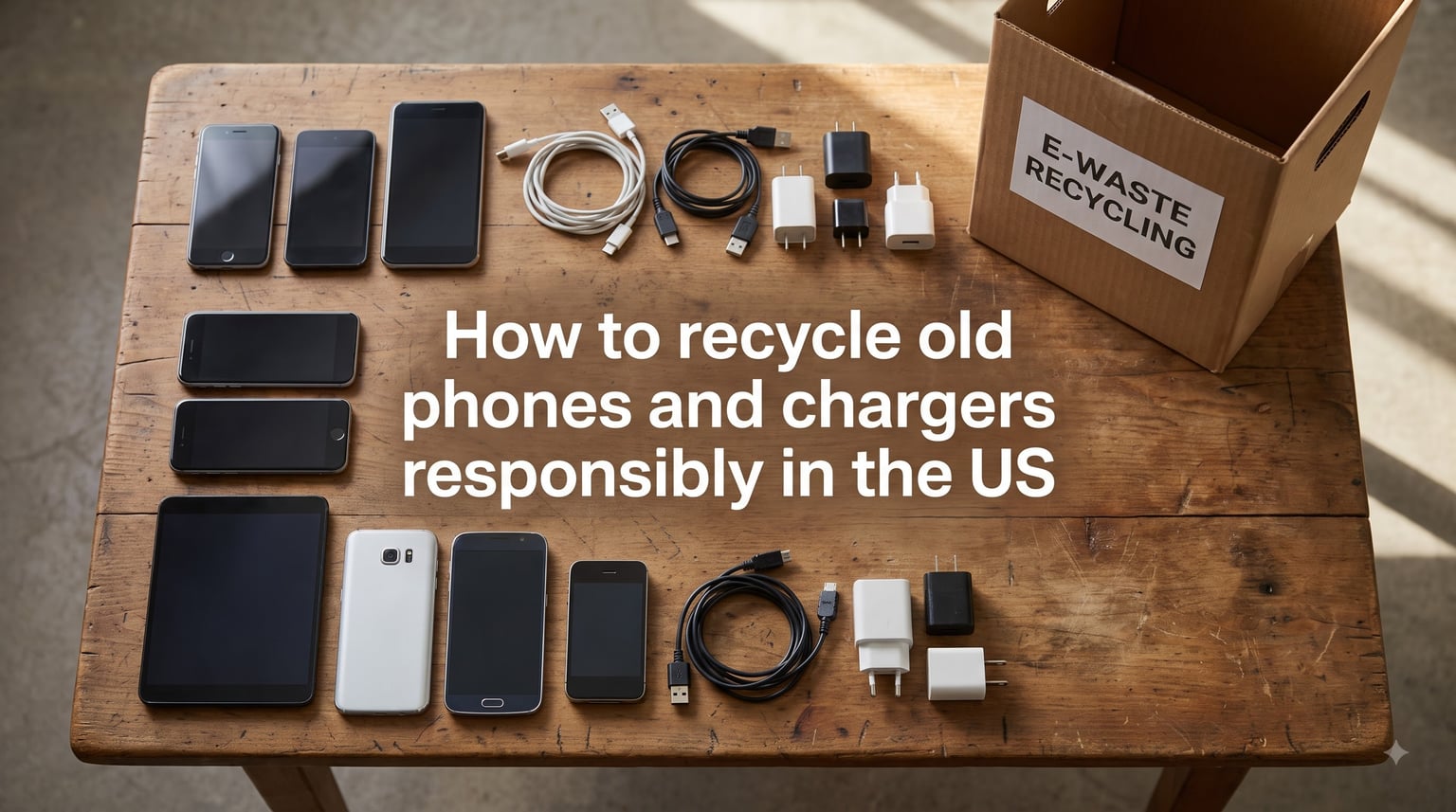
If you have a drawer full of old phones, tangled chargers, and mystery cables, you are not alone. The average American household has at least a few forgotten devices collecting dust. The problem is that tossing them in the trash is illegal in many states and dangerous for the environment.
Learning how to recycle old phones and chargers responsibly in the US is easier than most people think. You have free drop-off options at major retailers, manufacturer take-back programs, and certified e-waste recyclers in nearly every community. This guide walks you through every step, from wiping your personal data to choosing the right recycling location.
Our team researched EPA guidelines, retailer programs, and community recycling resources across the country. We also pulled real experiences from Reddit communities like r/ZeroWaste and r/privacy to find out what actually works. Here is everything you need to handle your old electronics the right way.
Table of Contents
Why Responsible E-Waste Recycling Matters?
Electronic waste is the fastest-growing waste stream in the world. The US alone generates over 6 million tons of e-waste each year, and only about 15 percent of it gets recycled properly. The rest ends up in landfills, where it leaches toxic chemicals into soil and groundwater.
Phones and chargers contain hazardous materials including lead, mercury, cadmium, and flame retardants. When these substances break down in a landfill, they contaminate the surrounding ecosystem for decades. A single phone battery can pollute up to 60,000 liters of water.
The good news is that recycling also recovers valuable resources. One million recycled cell phones yield approximately 35,000 pounds of copper, 772 pounds of silver, 75 pounds of gold, and 33 pounds of palladium, according to EPA data. That is real money and real materials sitting in your junk drawer.
Responsible e-waste disposal keeps hazardous materials out of landfills and puts recovered metals back into manufacturing. It reduces the need for mining, saves energy, and cuts greenhouse gas emissions. When you recycle old phones and chargers through certified programs, you close the loop on a system that benefits everyone.
How to Recycle Old Phones and Chargers Responsibly: Step-by-Step
Here is the complete process for recycling your old devices and accessories. Follow these steps in order to make sure your electronics are handled safely and your personal data stays protected.
Step 1: Back up everything you want to keep. Transfer photos, contacts, files, and app data to your new device or cloud storage. Once you wipe a phone, the data is gone for good.
Step 2: Sign out of all accounts. Log out of iCloud, Google, Samsung, and any carrier accounts. This disables activation lock so the next person can use the device if it gets refurbished.
Step 3: Factory reset the device. Go to Settings and perform a complete factory data wipe. On iPhones, also remove the device from your Apple ID account online.
Step 4: Remove the SIM card, SD card, and case. Take out any memory cards and the SIM card. These contain personal information and can be reused or recycled separately.
Step 5: Bundle chargers and cables together. Gather all old cables, power bricks, and adapters. Most recyclers accept these alongside phones.
Step 6: Choose a recycling option. Take your items to a retailer drop-off, manufacturer program, certified recycler, or community event. The next section covers all your options in detail.
Step 7: Get a receipt if available. Some certified recyclers provide a certificate of recycling. This documents that your devices were handled according to EPA standards and can be useful for tax deductions if you donated.
How to Prepare Your Phone Before Recycling?
Data security is the number one concern people have about recycling phones. Reddit users in r/privacy consistently recommend a thorough wipe before handing over any device. Here is exactly what to do.
Start by backing up everything. Use iCloud, Google Drive, or a local backup to your computer. Check that your photos, contacts, messages, and app data transferred successfully to your new device before proceeding.
Next, sign out of every account. This step is critical because it disables factory activation protection. On iPhones, go to Settings, tap your name, scroll down, and tap Sign Out. On Android, remove your Google account under Settings, then Accounts. If you skip this step, the recycler cannot refurbish or resell the phone.
Perform a full factory reset. On an iPhone, go to Settings, General, Transfer or Reset Phone, then Erase All Content and Settings. On Android, look under Settings, System, Reset Options. This overwrites your personal data and restores the phone to its original state.
Remove your SIM card and any microSD storage card. The SIM card ties your phone to your carrier account and should be destroyed or transferred to your new device. MicroSD cards can be reused in other devices or wiped and recycled separately.
If your phone has a swollen or damaged battery, do not try to remove it yourself. Lithium-ion battery fires are a serious hazard. Place the device in a fireproof container and take it directly to a recycler that handles damaged batteries. Best Buy and Call2Recycle drop-off points accept devices with intact batteries.
One Reddit user from r/privacy put it simply: “First, make sure to backup and wipe your data from your phone.” That advice covers the most important step in the entire process.
Where to Recycle Old Phones and Chargers in the US
You have more free options than you might realize. Retailers, manufacturers, nonprofits, and local governments all run recycling programs. Here is a breakdown of where to go.
Major Retailer Drop-Off Programs
Best Buy accepts up to three recycled items per household per day at most store locations. They take phones, chargers, cables, and a wide range of other electronics. This is the most convenient option for most people since Best Buy has over 900 stores across the US. A Reddit user in r/ZeroWaste confirmed: “Best Buy also will [take e-waste]” and it is completely free.
Staples recycles phones, chargers, and small electronics at no charge. They partner with electronic recyclers to process collected items. As one r/NoStupidQuestions user noted: “If you are in the US and near a Staples or a MicroCenter location, they take this stuff for free.”
Apple stores accept any brand of phone and Apple accessories for recycling through their GiveBack program. They will also give you store credit for devices that still have value. One r/ZeroWaste user shared: “Apple will accept any e-waste product. Apple will take pretty much any e-waste and recycle it for free.”
Amazon offers a mail-in recycling program through their Second Chance initiative. You can request a free shipping label and send in small electronics and accessories. Target also has in-store recycling kiosks for small items like cell phones and batteries in many locations.
Manufacturer Take-Back Programs
Samsung runs a direct mail-in recycling program that accepts Samsung phones, tablets, and accessories at no cost. You print a prepaid label and ship from any USPS location.
Google offers a similar program for Pixel devices and accessories. They also provide trade-in credit for newer models that still function.
Dell operates the Dell Reconnect program in partnership with Goodwill. You can drop off any brand of computer equipment, including phones and accessories, at participating Goodwill locations.
Certified E-Waste Recyclers
For the most responsible option, use a certified electronics recycler. Look for certifications from e-Stewards or R2 (Responsible Recycling). These certifications mean the recycler follows strict environmental and data security standards.
Use the Earth911 recycling locator at earth911.com to find certified recyclers near you. Just enter your ZIP code and the type of item you want to recycle. Call2Recycle at call2recycle.org specializes in battery and phone recycling and has over 30,000 drop-off locations nationwide.
Community E-Waste Events
Many cities and counties host regular e-waste collection events. Check your local government website or waste management department for schedules. These events often accept items that retailers will not, including larger electronics and damaged devices.
Some communities also have permanent hazardous waste drop-off facilities that accept electronics year-round. These are especially useful for items with damaged batteries or devices that no retailer will take.
Mail-In Recycling Programs
If you live in a rural area without convenient drop-off locations, mail-in programs are a great option. Call2Recycle offers free prepaid shipping boxes for battery and phone recycling. The Wireless Foundation runs a program called Call2Recycle that provides free collection boxes for communities and organizations.
How to Recycle Phone Chargers Specifically?
Chargers need special attention because they are different from phones in important ways. A charger has no personal data to worry about, but it does contain materials that require specific processing.
Phone chargers consist of copper wiring, plastic housing, circuit boards, and metal connectors. Power bricks and wall adapters also contain transformers with copper coils. These materials are all recyclable but should never go in your curbside bin.
The plastic coating on charging cables is usually PVC, which releases toxic dioxins if burned. Circuit boards contain lead solder and small amounts of precious metals. This is why chargers must go to an electronics recycler, not a general recycling facility.
Most retailers that accept phones also accept chargers. Best Buy, Staples, and Apple all take charging cables, wall adapters, and power bricks regardless of brand. You do not need to separate the cable from the wall block before dropping them off.
For a large collection of old cables, consider bundling them. Tie cables with a rubber band or twist tie to keep them organized. This makes processing easier for recyclers and prevents tangles in collection bins.
If you have USB cables that still work, consider donating them. Schools, community centers, and thrift stores often accept working cables. You can also check with local shelters, as many need charging cables for residents.
What Happens to Recycled Phones and Chargers
Understanding the recycling journey helps you appreciate why proper disposal matters. When you drop off a phone or charger at a certified facility, it goes through a multi-step recovery process.
First, the recycler sorts devices by type and condition. Working phones may be refurbished and resold, extending their useful life. Non-working devices move to the material recovery stage.
The recycler then dismantles the device by hand or with automated equipment. They separate batteries, circuit boards, screens, plastic housings, and metal components. Each material stream goes to a specialized processor.
Circuit boards are smelted to recover copper, gold, silver, and palladium. Plastics are shredded and repurposed into new products. Batteries go through a separate process that extracts lithium, cobalt, and nickel for reuse in new batteries.
This recovery process is far more efficient than mining raw materials. Recovering one ounce of gold from recycled electronics produces 80 percent less carbon emissions than mining the same amount from ore. That is the circular economy in action.
State E-Waste Recycling Laws You Should Know
E-waste regulations vary significantly by state. Currently, 25 states plus Washington DC have laws governing electronics disposal. These laws range from landfill bans to mandatory manufacturer take-back programs.
California, New York, and Illinois have the strictest regulations. In these states, it is illegal to put any electronic device in the regular trash. Residents must use designated recycling programs, and retailers are required to offer collection services.
States with e-waste landfill bans include California, Connecticut, Hawaii, Illinois, Indiana, Maine, Maryland, Michigan, Minnesota, New Jersey, New York, North Carolina, Oregon, Pennsylvania, Rhode Island, South Carolina, Texas, Vermont, Washington, West Virginia, and Wisconsin.
Even if your state does not mandate electronics recycling, local municipalities often have their own rules. Check with your city or county waste management department to find out what applies where you live.
Manufacturer take-back laws in states like Washington, Oregon, and Texas require electronics manufacturers to fund and operate free recycling programs. This means the companies that made your phone are legally obligated to help you dispose of it.
Alternatives to Recycling: Donate or Trade In
If your phone still works, recycling is not your only option. Donation and trade-in programs can give your device a second life while putting money or credit in your pocket.
Trade-in programs from Apple, Samsung, Google, and major carriers offer store credit for working devices. An iPhone in good condition can fetch significant value toward a new purchase. Even older or damaged phones may have some trade-in value.
Donation programs include Cell Phones for Soldiers, which provides free communication services to active-duty military members. The National Coalition Against Domestic Violence accepts phone donations and uses proceeds to fund their programs.
Local shelters, schools, and community centers may accept working phones and chargers directly. Call ahead to confirm what they need. Working chargers and cables are often in high demand at these organizations.
For tax purposes, keep your donation receipt. If you donate to a registered nonprofit, you may be able to deduct the fair market value of your device on your tax return.
FAQs
Does Best Buy recycle old cell phone chargers?
Yes, Best Buy accepts old cell phone chargers, cables, and power adapters for free at most store locations. You can bring up to three items per household per day. They accept chargers of any brand and do not require you to make a purchase.
What to do with old phones that no longer work?
If your old phone no longer works, take it to a retailer drop-off like Best Buy or Staples, use a manufacturer take-back program, or find a certified e-waste recycler through Earth911. Wipe your data first, remove the SIM card, and never throw a broken phone in the trash.
Do I need to wipe my phone before recycling?
Yes, always wipe your phone before recycling it. Back up your data, sign out of all accounts including iCloud and Google, remove the SIM card, then perform a full factory reset. This protects your personal information and allows the recycler to refurbish the device if it still works.
How do you dispose of old phone chargers?
Take old phone chargers to an electronics retailer like Best Buy, Staples, or Apple for free recycling. You can also bring them to a certified e-waste recycler or a community collection event. Never put chargers in your regular trash or curbside recycling bin because they contain copper wiring and circuit boards that require special processing.
Can I throw a phone charger in the garbage?
No, you should never throw a phone charger in the garbage. Chargers contain PVC plastic, copper wiring, and small circuit boards that release toxic chemicals in landfills. In many states, disposing of electronics in the trash is illegal. Use a free retailer or certified recycler drop-off instead.
Should I remove the SIM card before recycling my phone?
Yes, always remove your SIM card before recycling or donating your phone. The SIM card links your phone to your carrier account and may contain contacts and other personal data. You can transfer it to your new phone, destroy it, or take it to your carrier for disposal.
Conclusion
Learning how to recycle old phones and chargers responsibly in the US is one of the simplest ways to reduce your environmental footprint. Back up and wipe your data, remove your SIM card, bundle your cables, and take everything to a free drop-off location near you.
With retailer programs at Best Buy, Staples, and Apple, plus certified recyclers available through Earth911 and Call2Recycle, there is no reason for any device to end up in a landfill. Start with one drawer today and work through your old electronics one item at a time. The planet and your community will thank you.