
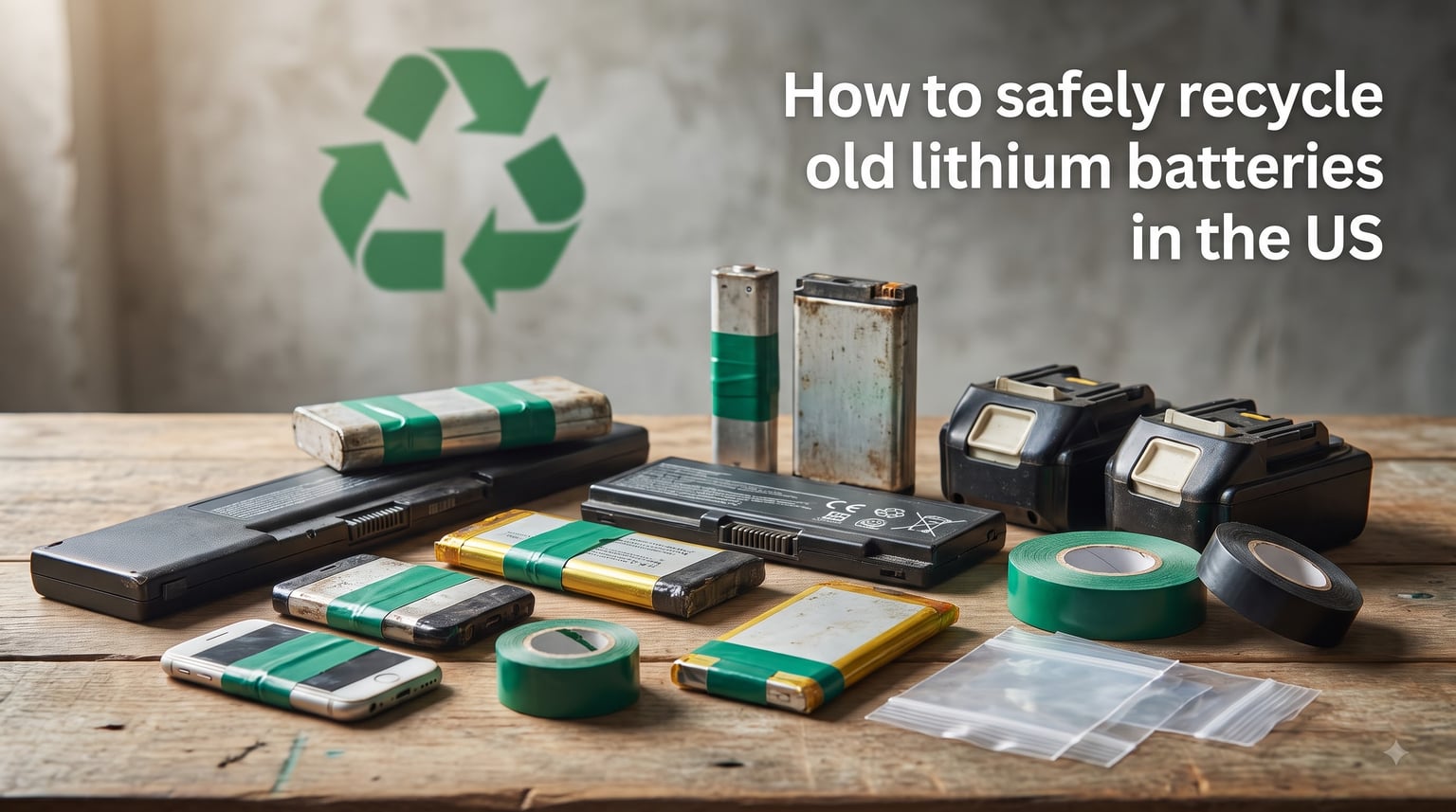
Every year, lithium battery fires destroy recycling trucks, waste facilities, and homes across the United States. I have spent months researching the safest way to recycle old lithium batteries, and the process is simpler than most people think once you know the steps.
The key is preparation. If you tape the terminals, bag each battery separately, and drop them at a certified location, you eliminate nearly all the fire risk. This guide walks you through every step of how to safely recycle old lithium batteries in the US, from identifying what you have to finding a free drop-off location near you.
I will cover battery types, preparation instructions, retailer take-back programs, damaged battery handling, state laws, and what actually happens inside a recycling facility. By the end, you will have a complete roadmap for getting rid of old lithium batteries the right way.
Lithium battery recycling matters more in 2026 than ever before. Americans discard millions of these batteries yearly, and the volume keeps climbing with the growth of e-bikes, power tools, wireless earbuds, and consumer electronics.
Table of Contents
What Are Lithium Batteries and Why They Need Special Disposal?
Lithium batteries are a broad category of high-energy batteries used in everything from smartphones to electric vehicles. They come in two main types: lithium-ion (rechargeable) and lithium metal (single-use, non-rechargeable).
Both types pack far more energy into a smaller package than traditional alkaline batteries. That high energy density is exactly what makes them useful, but it is also what makes them dangerous when damaged or improperly handled.
When a lithium battery is punctured, crushed, or short-circuited, it can enter thermal runaway. This is a chain reaction where the battery rapidly heats up and catches fire, often producing its own oxygen supply so the fire is extremely difficult to extinguish.
I have read reports from waste management facilities where a single lithium battery tossed into a garbage truck caused the entire load to ignite. These fires cost millions in damage annually and put sanitation workers at serious risk.
Beyond the fire danger, lithium batteries contain valuable critical minerals. Cobalt, lithium, nickel, copper, and graphite can all be recovered through proper recycling. Throwing these batteries away wastes finite resources that could be reused in new products.
That is why every state and federal agency agrees: lithium batteries must never go in your regular trash or curbside recycling bin. They require dedicated recycling at certified facilities equipped to handle them safely.
Types of Lithium Batteries You Can Recycle
Before you prepare your batteries for recycling, it helps to know what you are dealing with. Here are the two main categories and where you typically find them.
Lithium-Ion (Li-ion) Batteries: Rechargeable
Lithium-ion batteries are rechargeable and power most modern consumer electronics. You will find them inside cell phones, laptops, tablets, power tools, wireless headphones, e-readers, digital cameras, and e-cigarettes.
These batteries are usually embedded inside the device, which means you may need to remove them before recycling. Some devices require a screwdriver or professional help to access the battery safely.
Larger lithium-ion batteries power e-bikes, scooters, and electric vehicles. These require special handling and cannot go in standard retail drop-off bins. You will need to contact a certified recycler or the manufacturer for EV and e-bike batteries.
Lithium Metal Batteries: Single-Use
Lithium metal batteries are non-rechargeable and typically come in standard sizes like AA, AAA, or coin cells. They are commonly used in smoke detectors, watches, calculators, and remote controls.
People often confuse these with regular alkaline batteries because they look identical. Check the label: if it says “lithium” anywhere on the battery, it needs special recycling, not the trash.
Both lithium-ion and lithium metal batteries can and should be recycled. The preparation steps are the same for both types, which makes the process straightforward once you learn it.
How to Safely Recycle Old Lithium Batteries in the US: Step-by-Step Preparation
This is the most important section in this guide. Proper preparation is what prevents fires during transport and processing. Follow these steps in order for every lithium battery you need to recycle.
Step 1: Identify and Sort Your Batteries
Gather all your old batteries and check each one for the word “lithium” or “Li-ion” on the label. Separate lithium batteries from alkaline, nickel-cadmium, and other battery types. Mixing battery chemistries can create dangerous reactions.
If a battery is embedded in a device, remove it if possible. If you cannot remove it safely, recycle the entire device at an e-waste recycling center rather than forcing the battery out.
Step 2: Inspect for Damage
Check each battery for signs of swelling, leakage, denting, corrosion, or physical damage. Set aside any damaged batteries for special handling. Damaged batteries need different treatment, which I cover in a later section.
A swollen battery that looks puffy or bloated is especially dangerous. Do not use it, charge it, or puncture it. Handle it gently and set it aside.
Step 3: Tape the Terminals
This is the single most important safety step. Use clear packing tape, electrical tape, or Kapton tape to cover both the positive and negative terminals of every battery. The goal is to prevent the terminals from touching anything conductive, which could cause a short circuit and fire.
For batteries with visible wire leads, tape the exposed metal ends of the wires too. Some experienced recyclers on forums like Reddit also recommend snipping exposed wires before taping, as long as you can do so safely without damaging the battery cell itself.
For button cell and coin cell batteries, place a piece of tape across the entire top of the battery. For 18650 cells and similar cylindrical batteries, wrap tape around both ends.
Step 4: Bag Each Battery Separately
After taping, place each battery in its own separate plastic bag. A small ziplock or sandwich bag works well. This provides a second layer of protection against terminals touching each other or other metal objects.
If you have the original retail packaging for the batteries, that works too. The key is that each battery is physically isolated from the others.
Some recycling programs accept multiple batteries in a single container if all terminals are taped. Check with your specific drop-off location for their requirements.
Step 5: Store Safely Until Drop-Off
Keep your prepared batteries in a cool, dry place away from direct sunlight, heat sources, and flammable materials. Do not store them in a metal container. A plastic bin or cardboard box in a temperature-controlled room is ideal.
Try to drop off batteries within a few weeks of preparing them. Long-term storage of old batteries increases the risk of leakage or degradation over time.
Step 6: Transport to a Certified Drop-Off Location
Place your bagged, taped batteries in a non-conductive container for transport. A plastic bag or cardboard box works well. Drive them to your nearest certified recycling location.
Never ship lithium batteries through the mail unless you are using an approved mail-back program with proper packaging. The Department of Transportation has specific regulations for shipping lithium batteries because of the fire risk during transit.
Where to Recycle Lithium Batteries in the US
Finding a drop-off location is easier than most people realize. There are over 20,000 battery recycling locations across the United States, and many of them are completely free. Here are your main options.
Call2Recycle / The Battery Network
Call2Recycle, now operating under The Battery Network brand, is the largest voluntary battery recycling program in the US. They maintain a network of over 20,000 drop-off locations nationwide at retailers, municipal facilities, and businesses.
Their website features a locator tool where you enter your zip code and immediately see every participating location within driving distance. Most locations accept rechargeable lithium-ion batteries up to 11 pounds and lithium metal batteries free of charge.
This is the resource I recommend starting with. It is trusted by government agencies and consistently mentioned by Reddit users in recycling communities as the most reliable free option.
Household Hazardous Waste Facilities
Most counties and municipalities operate household hazardous waste (HHW) collection facilities. These sites accept lithium batteries along with paint, chemicals, and other hazardous materials that cannot go in regular trash.
Some HHW facilities have specific drop-off hours or require an appointment, so call ahead before visiting. Many also host periodic community collection events where you can drop off batteries and other hazardous waste in bulk.
Earth911 Recycling Search
Earth911 operates a comprehensive recycling locator at earth911.com. You enter your zip code and the material you want to recycle, and it returns a list of nearby facilities that accept it.
This is a great backup tool if Call2Recycle does not show any convenient locations near you. Earth911 includes municipal facilities, private recyclers, and retailer programs in its results.
E-Waste Recycling Centers
Dedicated e-waste recycling centers handle electronics of all kinds, including devices with embedded lithium batteries. If you have an old laptop, phone, or tablet and cannot remove the battery, an e-waste center is your best option.
These facilities dismant electronics and route each component, including batteries, to the appropriate recycling stream. Many offer free drop-off for personal electronics.
Retailer Take-Back Programs: Home Depot, Lowe’s, Best Buy
Major retailers make battery recycling incredibly convenient by offering free in-store drop-off bins. These are some of the easiest locations to use because they are already part of your regular shopping routine.
Does Home Depot Accept Lithium Batteries?
Yes, Home Depot participates in the Call2Recycle program and offers free battery recycling at most of its US stores. You will typically find the drop-off bin near the customer service desk or the Pro Desk entrance.
Home Depot accepts rechargeable lithium-ion batteries, including those from power tools, cell phones, and laptops. They generally accept batteries up to 11 pounds at no charge. I have seen the bins myself on visits to multiple locations, and the process takes less than two minutes.
Does Lowe’s Accept Lithium Batteries for Recycling?
Yes, Lowe’s also partners with Call2Recycle and provides free battery recycling bins at the majority of its stores. The collection station is usually located near the returns desk or front entrance.
Lowe’s accepts rechargeable lithium-ion batteries from power tools, consumer electronics, and similar devices. The same weight limit of approximately 11 pounds applies, and there is no fee for dropping off household quantities.
Best Buy Battery Recycling
Best Buy has one of the most comprehensive electronics recycling programs among US retailers. They accept lithium-ion batteries from phones, tablets, laptops, and other consumer electronics, often with no purchase required.
Best Buy also accepts entire devices with embedded batteries, which makes them a top choice if you cannot remove the battery yourself. Some items may carry a small recycling fee for larger electronics, but standard batteries and small devices are typically free.
Other Retailers with Battery Recycling
Several other chains participate in battery take-back programs. Staples accepts rechargeable batteries and electronics at most locations. Whole Foods, Batteries Plus, and many local hardware stores also offer collection bins.
Always call ahead to confirm participation, as individual store policies can vary. A quick phone call can save you a wasted trip.
How to Handle Damaged, Swollen, or Defective Lithium Batteries
Damaged batteries are the most dangerous type to handle and cannot go in standard retail drop-off bins. They need special treatment from start to finish.
Signs of a Damaged Battery
Look for visible swelling or puffing, which means gas has built up inside the battery cell. Other warning signs include leaking fluid, a burning or chemical smell, discoloration, corrosion on the terminals, and physical dents or punctures in the casing.
If a battery feels warm or hot to the touch while not in use, that is another red flag. Any of these signs means the battery is unstable and requires careful handling.
What to Do with a Swollen Battery
Do not charge, use, or attempt to discharge a swollen battery. Move it immediately to a non-flammable surface away from combustible materials. A ceramic plate or metal tray works well for temporary placement.
Place the battery in a fireproof container if you have one available. Do not tape the terminals of a visibly swollen battery, as pressing on it could cause rupture. Instead, place it gently in a clear plastic bag and seal it.
Contact your local household hazardous waste facility and explain that you have a damaged lithium battery. Most HHW sites have protocols for accepting damaged batteries. Some may ask you to transport it in a specific type of container.
Never Ship a Damaged Battery
Do not put a damaged or swollen lithium battery in the mail under any circumstances. Postal services and shipping carriers have strict prohibitions on damaged lithium batteries because of the fire risk during transit.
If no local facility can accept a damaged battery, contact the manufacturer. Many electronics companies have take-back programs for defective batteries and will provide safe shipping instructions or arrange pickup.
Safety Warnings: Why You Cannot Throw Lithium Batteries in Regular Trash?
Never throw lithium batteries in your household trash or curbside recycling bin. This is the most important rule in this entire guide, and I want to explain exactly why.
When lithium batteries end up in garbage trucks or recycling sorting facilities, they get crushed, punctured, or compacted alongside other materials. This physical damage triggers thermal runaway, and the resulting fires spread rapidly through the waste load.
According to industry data, lithium battery fires in waste facilities have increased dramatically over the past decade. These fires cause millions of dollars in property damage, force facility shutdowns, and put workers in serious danger.
In many states, throwing lithium batteries in the trash is not just dangerous but illegal. Disposal bans exist at both the state and local levels, and violations can result in fines.
The fire risk does not end at the trash can. Batteries tossed in curbside recycling bins cause fires at materials recovery facilities, where automated sorting equipment can easily damage them. Even a single battery can shut down an entire recycling plant.
The bottom line: there is no safe way to dispose of lithium batteries in regular waste streams. Always use a certified recycling option.
State-Specific Recycling Laws and Regulations
Battery disposal laws vary significantly from state to state. Understanding your local regulations helps you stay compliant and avoid fines. Here is what you need to know about the regulatory landscape.
States with Universal Lithium Battery Disposal Bans
California leads the country with the strictest battery disposal laws. As of recent legislation, California bans all batteries, including small consumer batteries, from landfill disposal. Residents must use designated recycling programs.
New York, Vermont, Minnesota, Connecticut, and Maine also have laws prohibiting the disposal of rechargeable batteries in regular trash. These states typically require retailers that sell rechargeable batteries to also accept them for recycling.
Extended Producer Responsibility (EPR) Laws
An increasing number of states are passing Extended Producer Responsibility laws for batteries. These regulations make battery manufacturers responsible for funding and operating recycling programs.
Washington state passed a comprehensive battery EPR law that requires producers to finance a statewide collection and recycling system. Oregon and the District of Columbia have similar legislation in progress or already enacted.
These laws mean more drop-off locations and free recycling options will continue appearing across the country as implementation expands.
Checking Your Local Regulations
I recommend checking your state environmental agency website or your county waste management department for specific rules in your area. Local regulations can add requirements on top of state laws.
Even if your state does not have a specific ban, following proper recycling practices is always the right choice. The fire risk and environmental impact are the same regardless of legal requirements.
What Happens to Recycled Lithium Batteries?
One of the most common questions I see on forums is what actually happens after you drop off a battery. Understanding the recycling process helps explain why proper preparation matters so much.
Collection and Sorting
When batteries arrive at a certified recycling facility, they are sorted by chemistry type. Lithium-ion batteries are separated from lithium metal, nickel-cadmium, and alkaline batteries because each type requires a different processing method.
This is why taping terminals before drop-off is so important. During sorting, workers handle thousands of batteries. Untaped terminals can easily touch metal sorting equipment and cause fires on the processing line.
Processing and Material Recovery
Most lithium battery recycling uses one of two main processes. Pyrometallurgy involves smelting batteries at high temperatures to extract metals. Hydrometallurgy uses chemical solutions to dissolve and separate the recovered materials.
Both methods recover valuable materials. Cobalt, nickel, copper, lithium, and graphite are extracted and purified for reuse in new batteries and other products. A single recycled EV battery pack can yield enough material to produce hundreds of new consumer batteries.
Environmental Impact of Recycling
Recycling lithium batteries reduces the need for mining raw materials. Cobalt mining, in particular, carries significant environmental and ethical concerns. Recovering these metals from old batteries creates a circular supply chain that is less dependent on new extraction.
The Battery Network reports having recycled over 175 million pounds of batteries since its founding. That represents a massive amount of critical minerals kept out of landfills and put back into productive use.
Tips for Storing Lithium Batteries Before Recycling
If you are collecting batteries over time before making a recycling trip, safe storage is essential. Here is how to store them without creating a hazard.
Keep stored batteries in a cool, dry location away from heat sources and direct sunlight. High temperatures accelerate battery degradation and increase fire risk. A closet or shelf in a climate-controlled room works well.
Store batteries in non-conductive containers. Plastic bins, glass jars, or cardboard boxes are all good options. Never use metal containers, which can conduct electricity if a terminal becomes exposed.
Always tape terminals before storing, even if you plan to recycle soon. This prevents accidental short circuits if batteries shift and touch each other in the container.
Keep batteries away from flammable materials like paper, cardboard, gasoline, or household chemicals. If a battery were to fail, you do not want combustible materials nearby to feed a fire.
Try to make a recycling run every few months rather than letting batteries accumulate for years. The older a battery gets, the more likely it is to degrade and become unstable.
FAQs
What should I do with old lithium batteries?
Tape the terminals of each battery with electrical or packing tape, place each one in a separate plastic bag, and take them to a certified recycling drop-off location such as Home Depot, Lowe’s, Best Buy, a household hazardous waste facility, or a Call2Recycle collection point. Never throw lithium batteries in the trash or curbside recycling bin.
Does Home Depot accept lithium batteries?
Yes, Home Depot participates in the Call2Recycle program and offers free battery recycling at most US stores. Drop-off bins are typically located near the customer service desk or Pro Desk. They accept rechargeable lithium-ion batteries up to 11 pounds at no charge.
Does Lowe’s accept lithium batteries for recycling?
Yes, Lowe’s partners with Call2Recycle and provides free battery recycling bins at most of its stores. Collection stations are usually near the returns desk or front entrance. They accept rechargeable lithium-ion batteries from power tools, electronics, and similar devices up to approximately 11 pounds.
What is the 80/20 rule for lithium batteries?
The 80/20 rule means keeping lithium battery charge levels between 20% and 80% to extend battery lifespan. Charging to full 100% or draining to 0% repeatedly accelerates degradation. This practice helps batteries last longer before they need recycling.
Can you throw lithium batteries in the garbage?
No, never throw lithium batteries in the garbage or curbside recycling bin. They can cause fires in garbage trucks and waste facilities when crushed or punctured. In many states, disposing of lithium batteries in regular trash is illegal. Always take them to a certified recycling location.
How do I find a free lithium battery recycling location near me?
Use the Call2Recycle (The Battery Network) locator tool at batterynetwork.org or the Earth911 search at earth911.com. Enter your zip code to see all nearby drop-off locations. Most retailer programs at Home Depot, Lowe’s, and Best Buy are free, as are municipal household hazardous waste facilities.
Wrapping Up: Do Your Part to Recycle Old Lithium Batteries
Learning how to safely recycle old lithium batteries in the US comes down to a few simple but critical steps. Tape every terminal, bag each battery separately, and drop them at a certified location like Home Depot, Lowe’s, Best Buy, or your local household hazardous waste facility.
The entire preparation process takes under five minutes per battery. That small effort prevents fires, protects sanitation workers, and recovers valuable critical minerals that would otherwise be lost forever.
Grab some electrical tape and plastic bags, gather your old batteries, and make a recycling trip this week. With over 20,000 free drop-off locations across the country, there is no reason to let another lithium battery sit in a drawer or end up in the wrong place.