
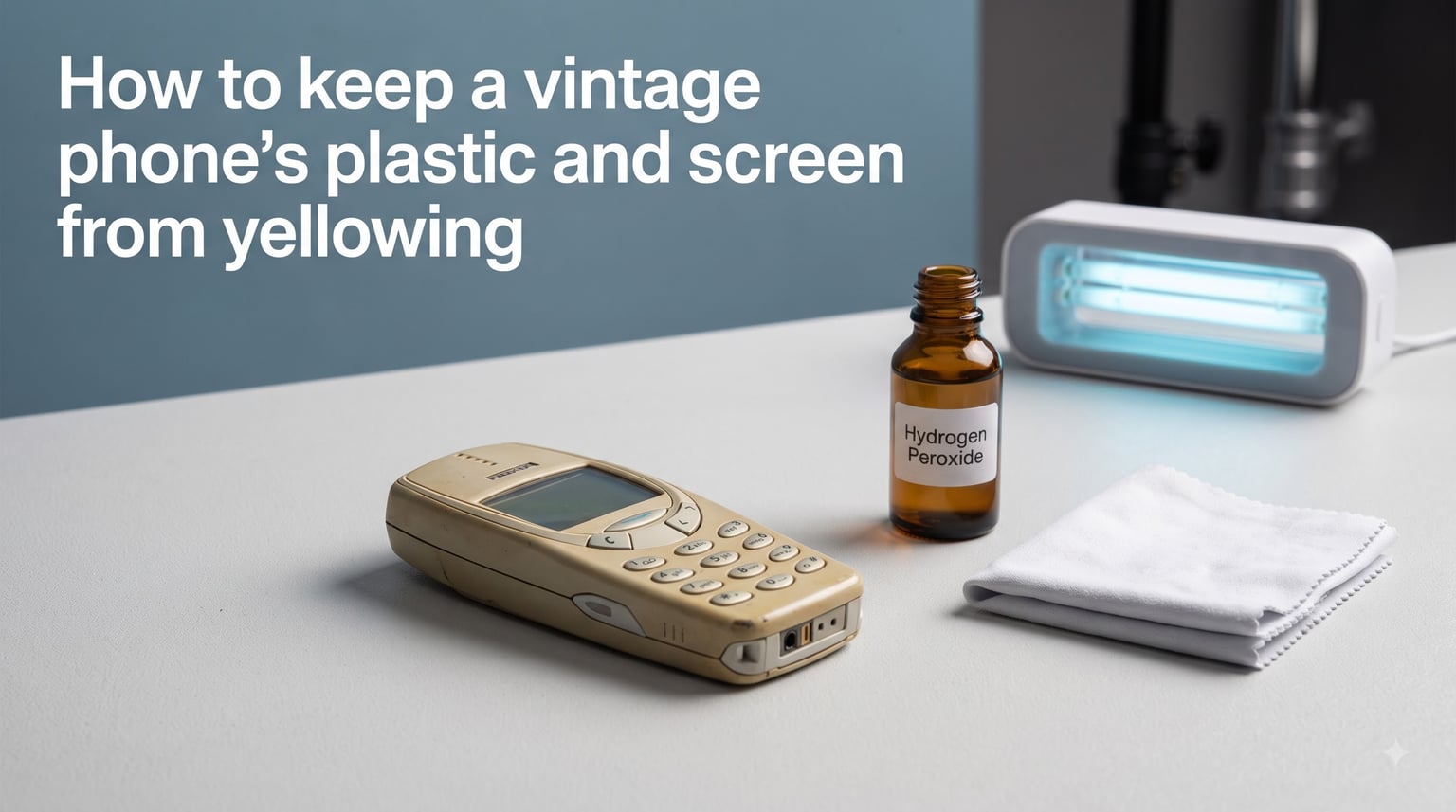
That cream-colored Nokia 3310 or beige rotary phone sitting on your shelf was probably brilliant white when it left the factory. Years of UV exposure, heat, and oxygen have turned it yellow, and the same thing can happen to the screen. The good news is that vintage phone yellowing plastic screen damage is both preventable and, in many cases, reversible.
I have spent the last few years restoring retro electronics, testing everything from baking soda pastes to full hydrogen peroxide UV treatments on collectible phones. This guide covers what actually works, what causes the yellowing in the first place, and how to protect your devices for the long haul.
Whether you are a serious collector or just want to save a family heirloom, you will learn how to stop yellowing before it starts, restore plastic that has already discolored, and tell the difference between surface grime and genuine material breakdown.
Table of Contents
Why Vintage Phone Plastic and Screens Yellow?
Yellowing happens when the chemical structure of plastic breaks down. UV light from the sun or fluorescent bulbs triggers oxidation in the polymer chains, and that oxidation changes how the material absorbs and reflects light. The result is that familiar yellow, amber, or brown tint.
Most vintage phones from the 1980s through the early 2000s use ABS plastic or polycarbonate. Manufacturers added bromine-based flame retardants to these plastics for safety, and those bromine compounds are especially reactive to UV light. When UV hits the bromine, it oxidizes rapidly and turns yellow or brown.
Heat accelerates the process. A phone stored near a radiator, in a hot attic, or in a car dashboard will yellow significantly faster than one kept in a climate-controlled room. Oils from your skin, nicotine residue, and certain cleaning chemicals also contribute to discoloration over time.
This is not just a cosmetic issue. Heavy yellowing indicates the plastic is degrading at a molecular level, which can make it more brittle and prone to cracking. Addressing yellowing early preserves both the appearance and the structural integrity of your device.
Different Plastics, Different Problems
Not all vintage phone plastics yellow the same way, and identifying your material is the first step in choosing the right treatment.
ABS plastic, used in most vintage mobile phones and many rotary phone housings, yellows from bromine flame retardants reacting to UV. This is the most common type of yellowing and responds well to hydrogen peroxide treatments.
Polycarbonate, often used for screens and transparent panels, can develop a slightly different yellow tint caused by UV-induced photo-oxidation. It is generally more resistant than ABS but still vulnerable over decades of exposure.
TPU, or thermoplastic polyurethane, is the material used in modern clear phone cases. It yellows quickly from UV and body oils, sometimes within months. TPU yellowing is often surface-level and easier to reverse than ABS discoloration.
Bakelite, found in very old rotary phones from the 1930s through 1950s, does not yellow from UV in the same way. Bakelite can darken or develop a mottled patina from age and heat, but this is part of the curing process rather than UV damage. Standard retrobright methods do not work on Bakelite and may damage it.
Screen Yellowing vs Plastic Yellowing
One thing almost no guide covers is that screen yellowing and plastic yellowing are different problems requiring different approaches.
The plastic housing around a phone yellows due to chemical breakdown in the material itself. Screen yellowing, on the other hand, is often caused by degradation of the anti-glare or protective coating applied to the display surface, not the glass or LCD beneath it.
If your vintage phone screen has a yellow tint, first determine whether the discoloration is on the surface coating or inside the display. Gently clean the screen with a microfiber cloth and mild dish soap diluted in water. If the yellow disappears, it was surface contamination.
If the yellowing remains after cleaning, the protective coating has likely degraded. You cannot use hydrogen peroxide on a screen the way you would on a plastic housing, because the chemicals can damage display coatings and seep into the device. For screens, prevention is far more effective than restoration.
Some users report success with very careful application of isopropyl alcohol on a microfiber cloth for light screen discoloration, but test on a small corner first and never let liquid pool near the screen edges.
How to Keep a Vintage Phone’s Plastic and Screen From Yellowing: Prevention
Prevention is always easier than restoration. Here are the steps that actually protect your vintage phone from yellowing.
1. Keep your phone out of direct sunlight. UV light is the single biggest cause of plastic yellowing, so store and display your devices away from windows or use UV-filtering display cases.
2. Control temperature and humidity. Store phones in a climate-controlled room between 60 and 75 degrees Fahrenheit with moderate humidity. Avoid attics, garages, and basements where temperatures fluctuate wildly.
3. Apply a clear acrylic varnish for permanent protection. Collectors on vintage phone forums swear by this method. A thin, even coat of clear acrylic varnish or UV-blocking spray creates a barrier between the plastic and the environment, preventing yellowing from returning after restoration.
4. Wash your hands before handling collectible phones. Skin oils contain compounds that accelerate plastic degradation over time. Cotton or nitrile gloves are even better for frequent handling.
5. Use a protective carrying pouch or display case. For portable vintage phones, a soft microfiber pouch prevents both UV exposure and physical scratches during storage.
6. Avoid harsh cleaning chemicals. Ammonia-based cleaners, acetone, and abrasive pads can damage plastic surfaces and actually speed up discoloration. Stick to mild dish soap and water for routine cleaning.
7. Inspect your collection regularly. Catching early signs of yellowing lets you address it before it becomes deeply set in the material.
How to Restore Yellowed Plastic: Hydrogen Peroxide Method?
The hydrogen peroxide UV method, sometimes called retrobright, is the most effective way to reverse yellowing in ABS and polycarbonate plastics. Forum communities and electronics restorers consistently recommend it as the gold standard.
Here is the step-by-step process I use on vintage phone housings.
Step 1: Disassemble the phone. Remove all electronic components, screens, buttons, and any parts that are not pure plastic. Hydrogen peroxide and UV light can damage circuitry and internal components.
Step 2: Clean the plastic thoroughly. Wash the housing with mild dish soap and warm water to remove all oils, dust, and grime. Any residue left on the surface will cause uneven bleaching.
Step 3: Choose your peroxide delivery method. You can submerge the part in a 12 percent hydrogen peroxide solution (liquid hair developer works well) or coat it with a stabilized peroxide cream. The cream method is better for large or awkwardly shaped parts.
Step 4: Apply the peroxide evenly. If using liquid, place the part in a clear glass or plastic container and pour in enough peroxide to fully submerge it. If using cream, spread a thick, even layer over the entire surface with a brush.
Step 5: Expose to UV light. Place the container or coated part in direct sunlight or under a UV lamp. The UV activates the peroxide and drives the bleaching reaction. Most restorations need 4 to 12 hours of UV exposure depending on severity.
Step 6: Check progress every few hours. Rotate the part periodically for even exposure. If the peroxide dries out (with the cream method), reapply as needed.
Step 7: Rinse and dry thoroughly. Once the yellowing has faded, wash the part with soap and water, dry it completely, and let it rest for 24 hours before reassembly.
One important warning from the collector community: hydrogen peroxide treatment can temporarily restore color but does not address the underlying chemical degradation. Without a protective UV-blocking coating applied afterward, the yellowing will return, often within months.
Baking Soda and Other Home Remedies
Not every yellowing problem requires a full peroxide treatment. For light surface discoloration or TPU phone cases, household remedies can work well.
Baking soda paste is the most popular home method. Mix baking soda with a small amount of water to form a thick paste, apply it to the yellowed surface, and gently scrub with a soft toothbrush in circular motions. Rinse with warm water and dry. This works best on surface-level staining and mild TPU discoloration.
Toothpaste, specifically the non-gel white variety, works on the same principle as baking soda. The mild abrasives lift surface discoloration. Apply with a soft cloth, rub gently, and rinse thoroughly. Avoid whitening toothpastes with strong chemicals on vintage plastics.
A mixture of equal parts white vinegar and water can help with yellowing caused by hard water deposits or soap scum rather than UV damage. Soak a soft cloth in the solution, wipe the surface, and dry immediately.
For nicotine-based yellowing, which appears on phones from smoking households, a mild bleach and water solution (1 part bleach to 10 parts water) can be effective. Use this only on white or light-colored plastics, test on a hidden area first, and never mix bleach with other cleaning products.
The limitation of all these methods is that they address surface staining, not the molecular breakdown that causes true UV yellowing. If your phone has deep, even yellowing across all exposed surfaces, hydrogen peroxide with UV light is the only reliable solution.
Professional Restoration vs DIY: When to Call an Expert
Most yellowing can be treated at home, but some situations call for professional help.
If your vintage phone is a rare or high-value collectible, DIY restoration carries risk. Uneven peroxide application can leave blotchy results, and overexposure to UV can make old plastic brittle. A professional restorer experienced with vintage electronics will have the equipment and technique to deliver consistent results.
Phones with original packaging, documentation, or provenance may lose collector value if restored improperly. Some buyers prefer original patina, so research your specific model before treating it.
For phones with cracked, chipped, or structurally compromised plastic, skip home remedies entirely. The peroxide process can worsen existing stress fractures, and brittle plastic may not survive disassembly.
If you do choose professional restoration, look for specialists in vintage electronics or retro gaming restoration. They typically use professional-grade UV chambers and controlled peroxide application that produces more even results than DIY setups.
FAQs
How to fix yellowing on old plastic?
The most effective method is the hydrogen peroxide UV treatment. Disassemble the phone, clean the plastic thoroughly, coat or submerge it in 12 percent hydrogen peroxide, and expose it to UV light for 4 to 12 hours. For light surface discoloration, a baking soda paste scrubbed with a soft brush can also help.
How do you stop plastic from yellowing?
Keep vintage phones out of direct sunlight, store them in climate-controlled environments, avoid harsh chemicals, and consider applying a clear acrylic varnish or UV-blocking spray coating for permanent protection. Handling with clean hands or gloves also slows the process.
Can yellowed plastic be whitened?
Yes, yellowed plastic can be whitened in most cases. The hydrogen peroxide and UV light method reverses UV-induced yellowing by breaking down the oxidized molecules. Results vary by plastic type, with ABS responding best and Bakelite not responding at all.
Does hydrogen peroxide remove yellowing from plastic?
Yes, hydrogen peroxide combined with UV light is the most widely recommended method for removing yellowing from plastic. The UV activates the peroxide, which bleaches the discolored bromine compounds in the plastic. Most treatments take 4 to 12 hours of UV exposure.
Does a hard plastic phone case turn yellow?
Hard plastic cases made from polycarbonate or ABS can yellow over time due to UV exposure and bromine flame retardants, though more slowly than soft TPU cases. TPU cases yellow the fastest, often within months of regular use, because the material degrades quickly under UV light and body oils.
What to do if my phone screen is yellowing?
First clean the screen with a microfiber cloth and mild soapy water to rule out surface contamination. If yellowing persists, the protective coating on the display has likely degraded. Do not use hydrogen peroxide on screens, as it can damage display coatings. Focus on prevention by keeping the device out of UV light.
Conclusion
Learning how to keep a vintage phone’s plastic and screen from yellowing comes down to two things: blocking UV light before damage occurs and using the right restoration method when it already has. Prevent with smart storage and protective coatings, restore with hydrogen peroxide and UV for deep yellowing, and always know when a piece is too valuable to risk on DIY methods.