
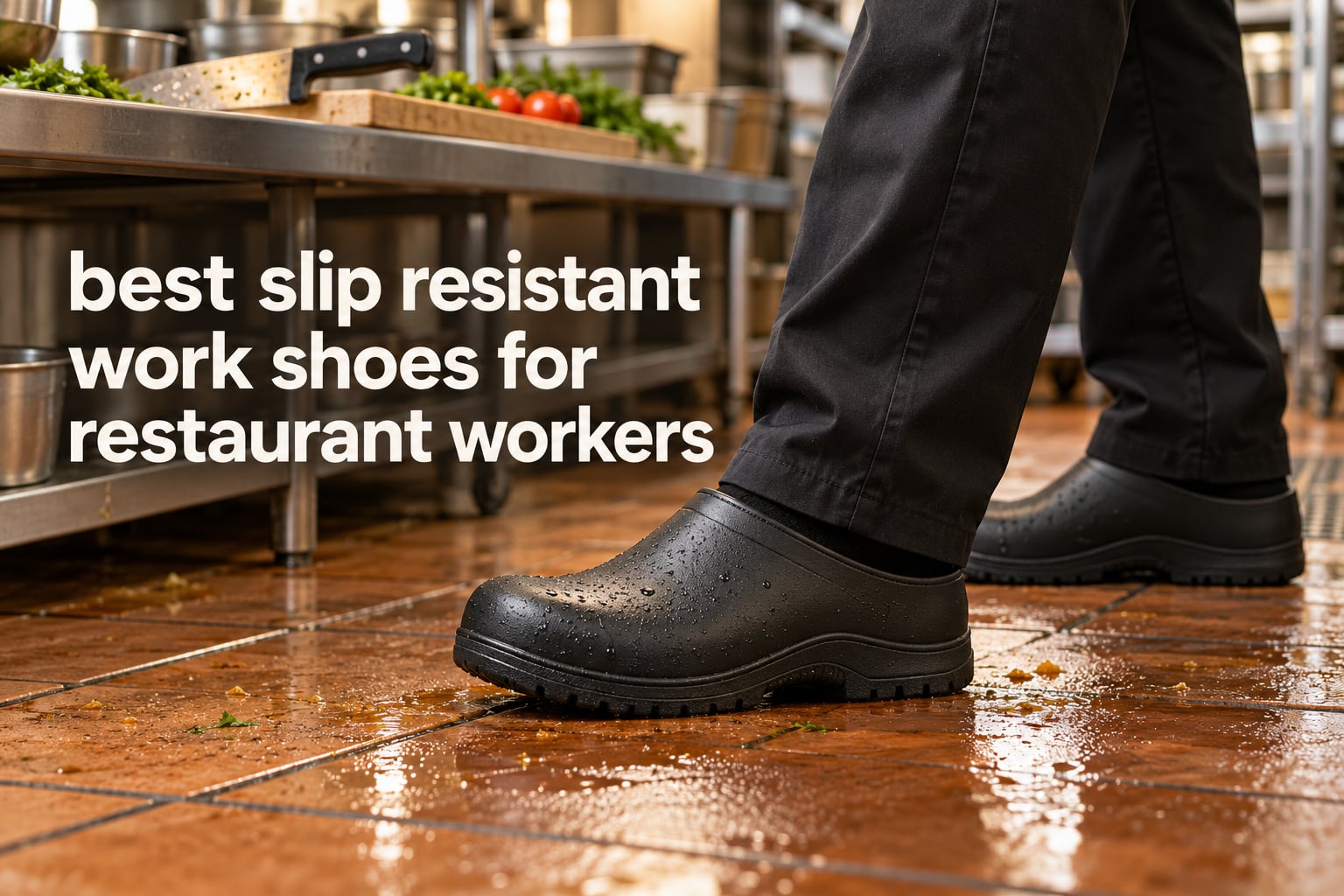
Restaurant floors are the most consistently hostile surface most workers will ever stand on. Water from the dish pit, cooking oil from the line, sugar syrup that never fully dries, and floor cleaner that leaves a soapy film combine into a hazard that changes every thirty minutes. Most slips in food service do not happen because a worker was careless. They happen because a shoe with a worn-out or smooth outsole met a wet floor with nothing left to grip with.
That is why picking the best slip resistant work shoes for restaurant workers is not a style decision. It is a decision about whether your feet still work at hour eleven of a double. We spent weeks going through the shoes restaurant workers actually buy, weighing what matters when a line cook is standing on a greasy tile for ten hours, a server walks nine miles on sealed wood, and a dishwasher is standing in two inches of water.
Before we get into the list, the four things that actually decide whether a restaurant work shoe works:
Certified slip resistance, not marketing language. Look for an ASTM standard printed on the product page or box. ASTM F1677, ASTM F2913, and ASTM F3445 are the codes that matter, and we call out which one each shoe in this guide carries.
Cushioning that survives a standing shift. Standing still on tile loads your feet differently than walking. Memory foam, Croslite foam, EVA, and geometric midsoles each fail in a different way over a full service.
A cleanable upper. Food service shoes get bleached, hosed, and sanitized. A mesh upper that soaks through and never dries will make you miserable within a month.
A fit you can keep at hour eight. Feet swell during a shift. If the only way to stop heel slip is to size down, you have made the slipping problem worse, not better.
We also used feedback from working servers, line cooks, and dishwashers gathered across restaurant-focused communities, including r/KitchenConfidential, r/Serverlife, and r/starbucks, where the same shoes get recommended and criticized in detail. If you are picking shoes for someone who stands all day, you may also want to look at our guides to posture trainers for desk workers and rugged headphones for construction workers to round out the rest of the shift kit.
Table of Contents
Top 3 Picks for Restaurant Workers in 2026

Crocs Bistro Work Clog
- Crocs Lock slip-resistant tread
- Enclosed toe
- One-piece molded build
- Soap and water cleanable

Skechers Women’s Squad Slip On
- Memory Foam insole
- ASTM-F2892 electrical hazard
- Scotchgard water-repellent upper
- Stretch-lace slip-on
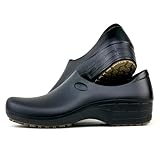
Sticky Waterproof Nursing Clog
- Waterproof upper and outsole
- TPR outsole resists oil and heat
- Absorbent footbed
- Women's sizing 5 to 11
Before the full list, here is the short version. The Crocs Bistro takes our Editor’s Choice because of its one-piece molded build, which is the single biggest reason it outlasts everything else here. The Skechers Squad is our Best Value for servers who want a professional black shoe that still passes a dress code. The Sticky clog is our Budget Pick for anyone working a genuinely wet dish area on a tight budget.
Best Slip Resistant Work Shoes for Restaurant Workers (October 2026)
| Product | Specs | Action |
|---|---|---|
| Crocs Unisex-Adult Bistro Work Clogs |
|
Check Latest Price |
| Skechers Women’s Squad Slip On |
|
Check Latest Price |
| Sticky Waterproof Non Slip Nursing Clog |
|
Check Latest Price |
 Skechers Men’s Work Dighton Skechers Men’s Work Dighton |
|
Check Latest Price |
 Dr. Scholl’s Men’s Winder II Loafer Dr. Scholl’s Men’s Winder II Loafer |
|
Check Latest Price |
 Shoes For Crews Pembroke Unisex Sneaker Shoes For Crews Pembroke Unisex Sneaker |
|
Check Latest Price |
 LARNMERN Men Chef Shoes LARNMERN Men Chef Shoes |
|
Check Latest Price |
 HISEA Non Slip Slip-On Loafers HISEA Non Slip Slip-On Loafers |
|
Check Latest Price |
 Bruno Marc Men’s Non Slip Work Shoes Bruno Marc Men’s Non Slip Work Shoes |
|
Check Latest Price |
 AEHAO Waterproof Chef Slip-On AEHAO Waterproof Chef Slip-On |
|
Check Latest Price |
 SHULOOK Non Slip Work Boots SHULOOK Non Slip Work Boots |
|
Check Latest Price |
 ENLEN&BENNA Women’s Food Service Shoes ENLEN&BENNA Women’s Food Service Shoes |
|
Check Latest Price |
A note on reading that table: the ASTM code matters more than the brand name. Shoes For Crews, HISEA, and Bruno Marc print a tested standard on the listing, while several cheaper listings use the phrase “oil resistant” as a marketing description rather than a tested certification. We come back to how to tell the difference in the buying guide below.
How We Picked: What We Looked For
Every shoe in this list was assessed on the same five criteria, weighted toward what restaurant workers told us actually breaks their pairs.
Tested traction. We prioritized listings that name a slip resistance standard. Marketing adjectives like “non-slip” or “slip-resistant” without a code tell you nothing verifiable.
Long-shift comfort. A shoe that feels great in a store and falls apart at hour nine is a bad bet. We weighted the insole and midsole system heavily, and we paid attention to the review language about hour eight, double shifts, and foot swelling.
Cleanability. A one-piece molded clog and a coated synthetic upper both survive sanitizing. A plain mesh upper does not, no matter what the listing says.
Durability signals. We looked for the failure modes real users report, like sole delamination, tread edge wear, insole compression, and upper separation, rather than trusting marketing durability claims.
Uniform compatibility. A shoe that violates your employer’s dress code is worthless, so we noted which models read as clog, sneaker, loafer, or boot.
1. Crocs Bistro Work Clog – The One That Outlasts Everything Else
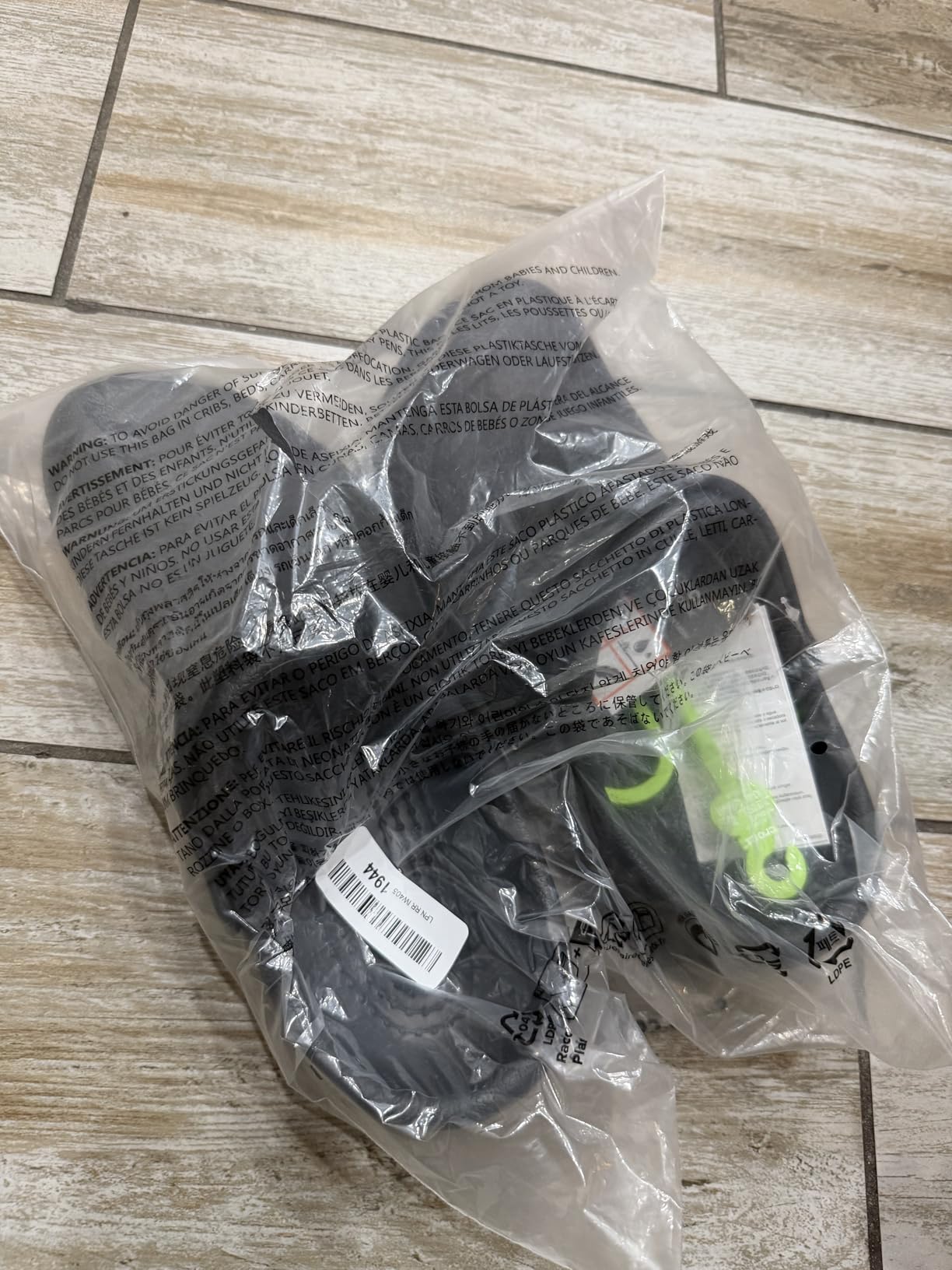
Crocs Unisex-Adult Bistro Work Clogs, Black, 9 Women/7 Men
Crocs Lock slip-resistant tread
Enclosed toe with thicker metatarsal area
One-piece molded construction
Soap and water cleanable
Pros
- Genuinely slip resistant on wet and greasy floors
- One-piece build cannot split at the layers
- Trivially cleaned with soap and water
- Does not hold odor and dries fast
- Lightweight enough for 9-12 hour shifts
Cons
- Runs large and often needs a full size down
- Slip-resistant tread edges wear down over long service
- Heel strap can drag if the shoe is too large
- Squeaks with sweaty feet
The Crocs Bistro is the shoe I recommend to anyone who asks me a single question about restaurant footwear. Its advantage is structural, not cosmetic. Because it is molded as a single piece, there are no glued layers to delaminate, and that is why it keeps working long after cheaper shoes have a sole flapping off the upper.
The Crocs Lock slip-resistant tread pattern is genuinely effective on wet tile, and the enclosed toe with a thicker metatarsal area is a real benefit when a stock pot tips. Reviewers describe it as comfortable across 9 to 12 hour shifts with a supportive arch, and the wash-it-with-soap-and-water routine takes about a minute at the end of service.
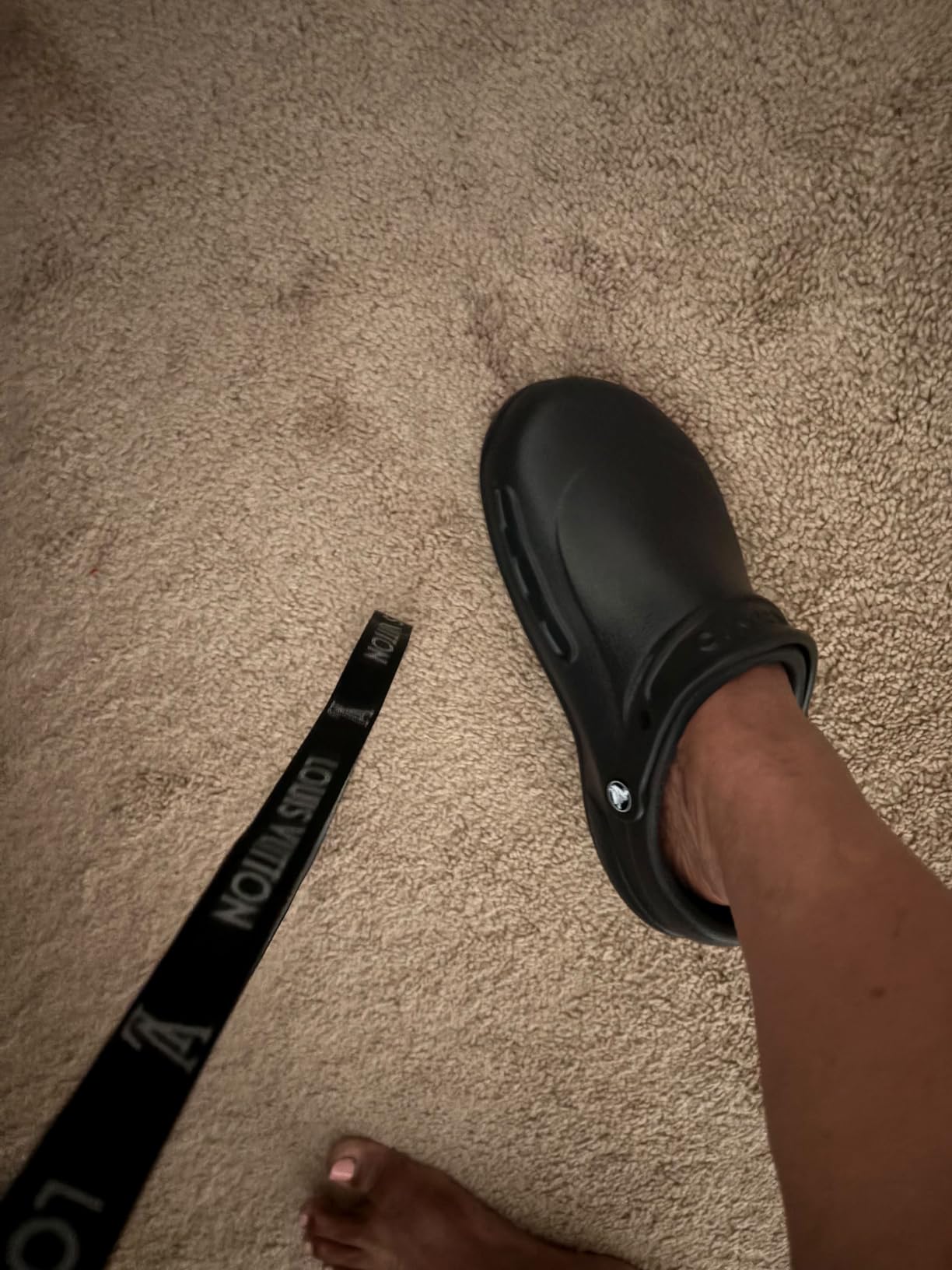
The fit is where most people get caught. This shoe runs large, and the sizing recommendation is one size down, but the mistake people make is sizing down to fix heel slip without checking the width. If your heel lifts because the shoe is too long, a footbed or a different model will solve it. Shrinking the shoe until your toes curl does not.
Two smaller issues come up repeatedly. The slip-resistant tread can wear down at the edges over a long service life, which is a wear-pattern signal worth checking, and the heel strap drags if the shoe is too large, which is another reason to nail the size on the first order. Squeaking with sweaty feet is common but harmless.
Is the Crocs Bistro the right call if your employer bans clogs?
Not always. Uniform policy is a real issue, and workers in r/Panera have raised it directly. Some corporate restaurants restrict open-back footwear for safety and branding reasons, while others allow any closed-toe non-slip shoe. Ask your manager before you order, because the Bistro is specifically designed around a heel strap to meet food service regulations, and a version without that strap is a different product.
If clogs are allowed, this is the strongest pick in the guide for a reason. It handles grease, water, twelve hours, and a sanitizing station without complaint.
What should you check before assuming your pair is still safe?
Flip the shoe over and look at the tread edges first, because that is where the Crocs Lock pattern loses grip earliest. If the siping at the perimeter has worn smooth, treat the shoe as a normal shoe and stop relying on it. Also check the heel strap attachment, since a strap that has started to pull loose changes how the shoe sits on your foot.
If the tread still bites your thumb and the strap is intact, you still have a working clog. Replace it when the tread goes smooth, not on a calendar.
2. Skechers Women’s Squad Slip On – Best All-Rounder for Servers
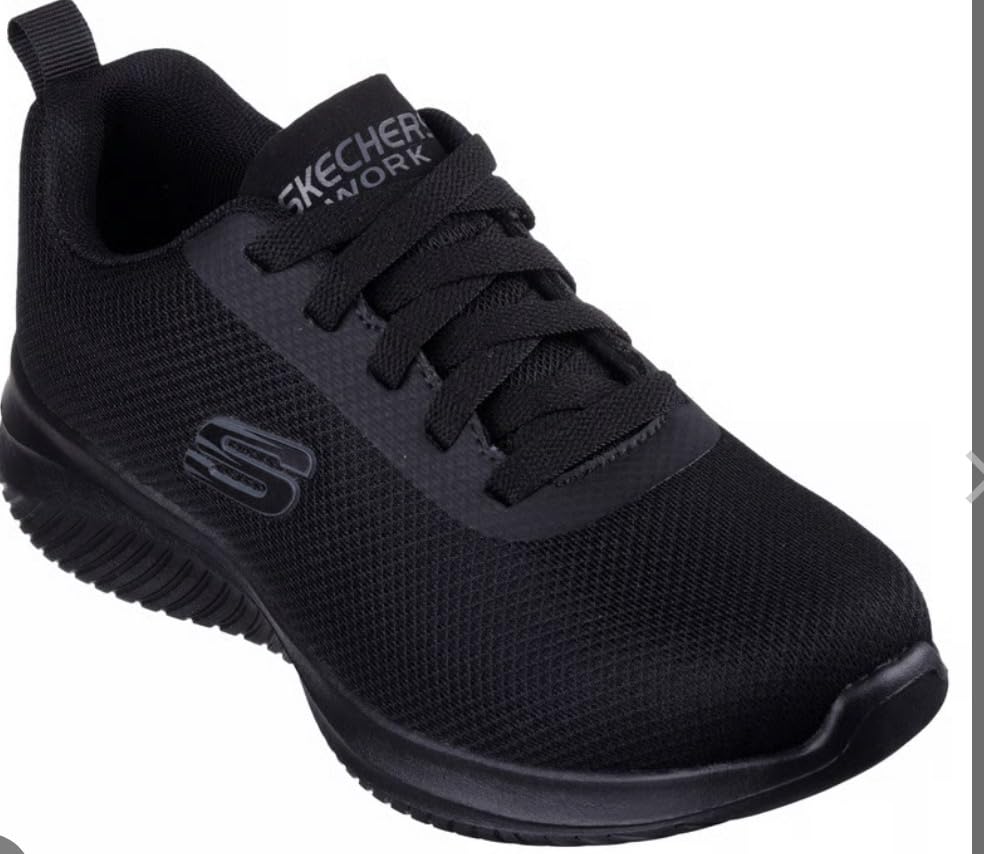
Skechers Women’s Work Squad Sr Food Service Shoe, Black, 9.5
Slip-resistant traction outsole for wet, dry and oily surfaces
ASTM-F2892 electrical hazard safe
Memory Foam cushioned insole
3M Scotchgard water-repellent upper
Pros
- Excellent grip on wet
- greasy and even icy surfaces
- Memory Foam insole takes the sting out of standing shifts
- Slip on and off instantly with no laces
- Professional black look that passes a dress code
- Wide and X-wide widths available
Cons
- Runs about a size and a half long
- Memory foam arch support varies by wearer
- Toe box material can hole after about a year
- Cushioning flattens with extended daily use
This is the shoe I see most often on servers who refuse to wear anything that looks like kitchen equipment. The black knit upper reads as an ordinary walking shoe, and the 3M Scotchgard water-repellent treatment means a spilled drink beads off instead of soaking in. For a role that is part walking and part standing, the combination of a slip-resistant traction outsole and a Memory Foam cushioned insole is a genuinely good balance.
The outsole is rated for wet, dry, and oily surfaces, and reviewers consistently single out the grip as the reason they keep buying it again. The stretch-lace slip-on construction means no laces to untie when your feet are swollen at hour eight, which is one of the most underappreciated features in this category.
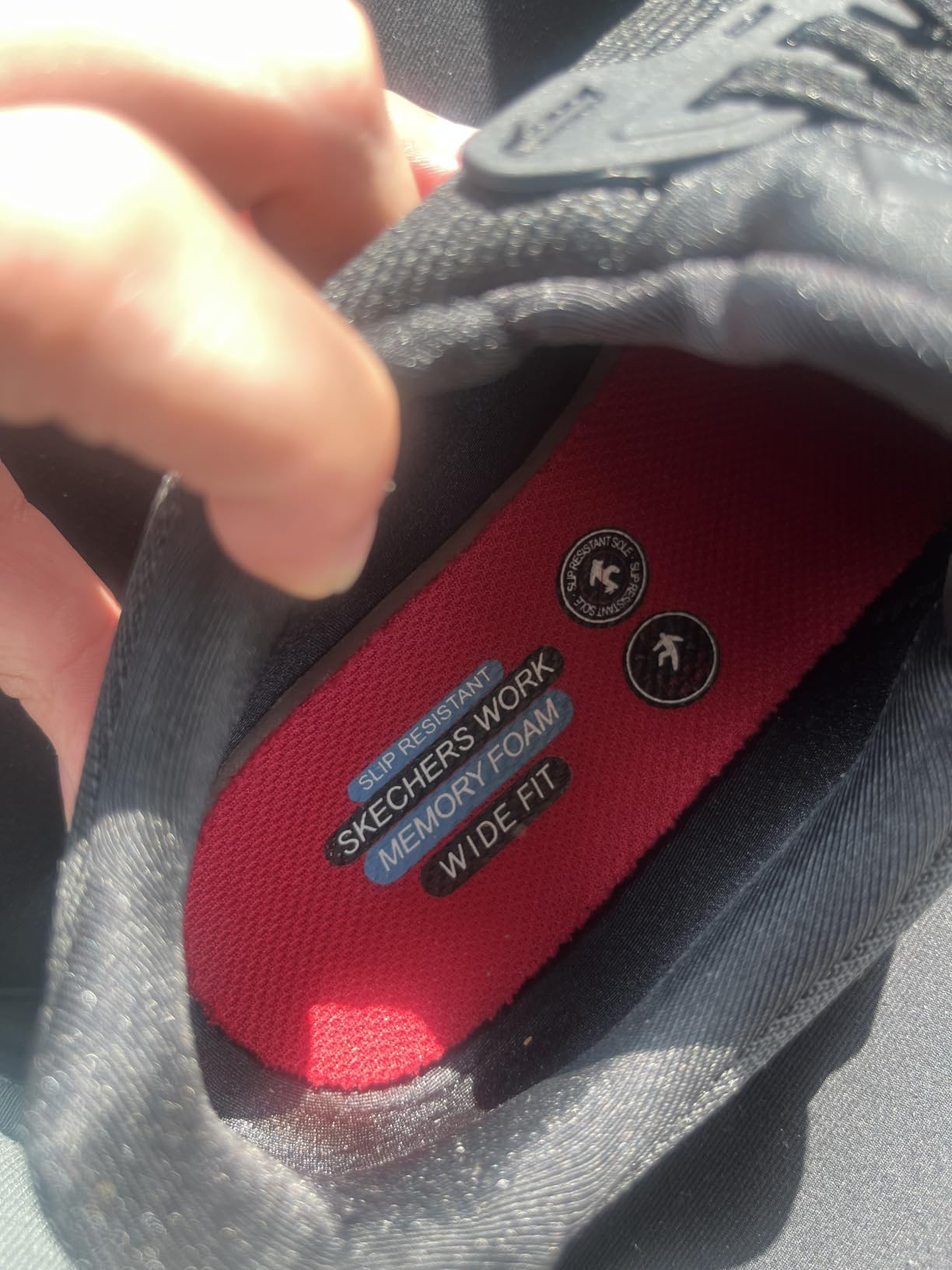
It is also ASTM-F2892 electrical hazard safe, which matters if you work near equipment or in a combined food service and utility role. That certification is rarely mentioned in listings and is worth more to some workers than any comfort feature.
Watch two things. It runs about a size and a half long, and some reviewers need a wide or X-wide width, so order carefully rather than assuming your usual size. Cushioning flattens with extended daily use, and the toe box material can develop a small hole after about a year, so treat this as a solid one-year-to-two-year shoe depending on your step count.
Is this the best non-slip shoe for restaurant servers who walk a lot?
It is the one we recommend most for front of house. Servers move constantly between tables, the host stand, and the expo window, so they need something that walks well but still passes a uniform check. The slip-on entry is a bonus during a rush when your feet are swelling and tying laces is a waste of ten seconds you do not have.
For a role where you are stationary most of the shift, such as a host, cushioning matters more than grip. In that case compare it against a clog with a contoured footbed.
What does the memory foam insole actually do for plantar fasciitis?
It cushions, but it is not arch support in the corrective sense. Memory foam distributes pressure and softens hard tile, which takes the sting out of standing, and swapping in a supportive orthotic on top of it is a common fix. In r/starbucks, workers describe wearing these and adding Dr. Scholl’s insoles, and reporting that their feet stopped hurting.
Be aware that the feel of the foam is a matter of preference. Some people love a softer footbed, some feel unsupported by it. If you have a diagnosed arch issue, test with a removable orthotic before committing.
3. Sticky Waterproof Non Slip Clog – Most Versatile for Wet Dish Areas
Sticky SSW-US-PTA-9 Nursing Shoes Women – Chefs – Kitchen – Nurses – Clogs for Work – Waterproof Non Slip (Black, 9)
Waterproof upper and outsole
TPR outsole resistant to oil, heat and abrasion
Absorbent moisture-wicking footbed
Padded footbed for long shifts
Pros
- Fully waterproof upper and outsole
- Stays planted on wet kitchen and clinical floors
- Lightweight and breathable for long shifts
- Padded footbed for extended standing
- Color options beyond plain black
Cons
- Average rating sits at the low end of this group at 4.1
- Build quality and tread grip less consistent than premium brands
- Fit can run narrow for some wearers
- Styling is plain clog-like
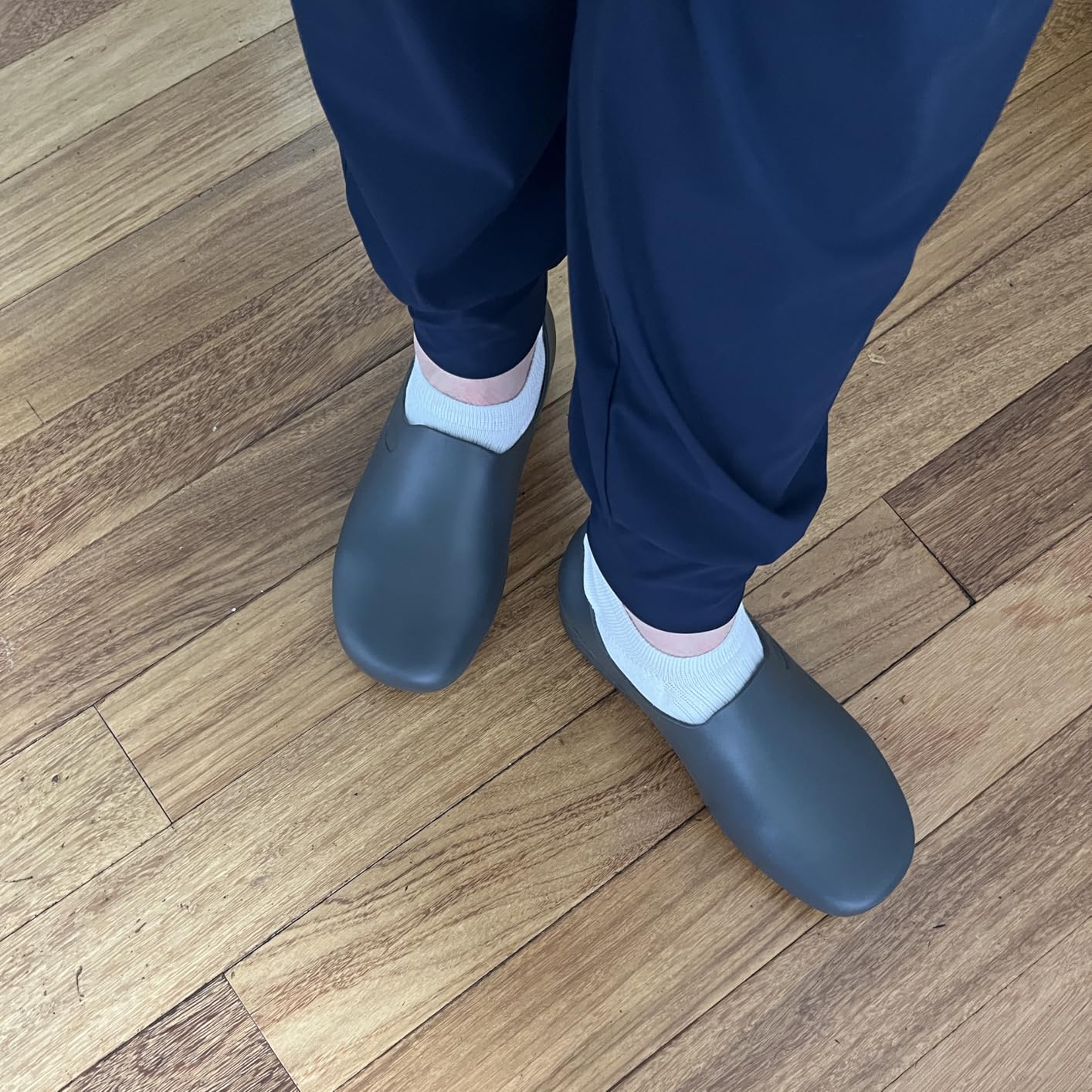
This is the clog to look at if you work in the dish pit. The waterproof upper and outsole are the headline feature here, and for a dishwasher standing in standing water, that is more important than any amount of memory foam. The TPR outsole is resistant to oil, heat, and abrasion, which is the right material choice for a wet kitchen environment.
The slip-resistant outsole is designed to stay planted on wet floors, and reviewers put it that way directly. The absorbent moisture-wicking footbed pulls water away from the foot, and the padded footbed adds enough cushioning that the shoe stays bearable through a long shift.
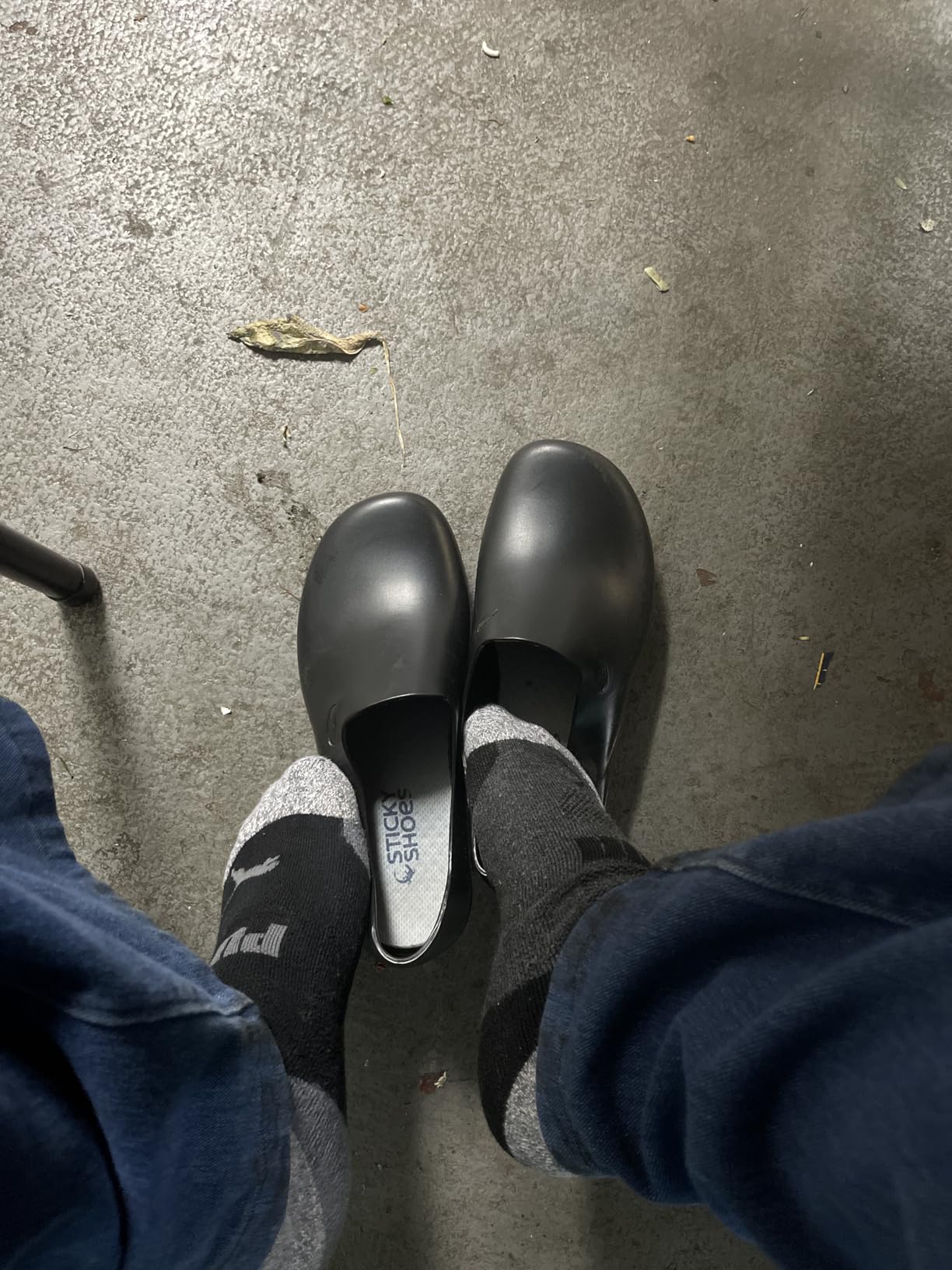
At 4.1 average, this sits at the low end of this group and the share of one and two star ratings is higher than the branded options. Build quality and tread grip are not as uniform from pair to pair, and the fit can run narrow for some wearers. Women’s sizing runs 5 to 11.
If your budget is the deciding factor, this does the core job well. If you can stretch to a clog with a one-piece molded build, you will likely replace it less often.
Is a fully waterproof shoe better than a water-resistant one?
For dish pit work, yes. Waterproof means the upper and outsole are a sealed surface, so standing water does not reach your foot. Water-resistant means the material sheds a spill but a soak will eventually get through the seams and mesh. In r/KitchenConfidential, dishwasher recommendations consistently separate the two, and a shoe marketed as waterproof that is only water-resistant is the most common disappointment in this category.
Waterproof does not mean you can submerge the shoe indefinitely, so treat it as job protection rather than a diving boot.
How do you know if your current shoes still grip?
Take them off and press your thumb into the tread. You should feel distinct edges and channels. If the surface feels smooth and slick under your thumb, the rubber has polished itself flat and the shoe is now a normal shoe with a non-slip label.
Then run the shoe across a wet tile with moderate pressure. If it skates, replace it. This check takes twenty seconds and catches most failures before a real slip does.
4. Skechers Men’s Work Dighton – Best Lace-Up for Male Line Cooks
Skechers Men’s Work Dighton Athletic Slip Resistant Food Service Shoe, Black, 10.5W
Leather and synthetic upper for durability
Slip-resistant rubber outsole for slick surfaces
Relaxed fit with roomy toe box
Memory Foam cushioned insole
Pros
- Memory Foam cushioning reduces foot fatigue on long shifts
- Solid traction on wet and greasy floors
- Sturdy leather upper that holds its shape
- All-black design matches most uniforms
- True to size with a wide option
Cons
- Fine tread picks up dirt and debris outdoors
- Requires a short break-in period
- Tread and base can flatten within about six months of daily use
- Not ideal for general outdoor walking
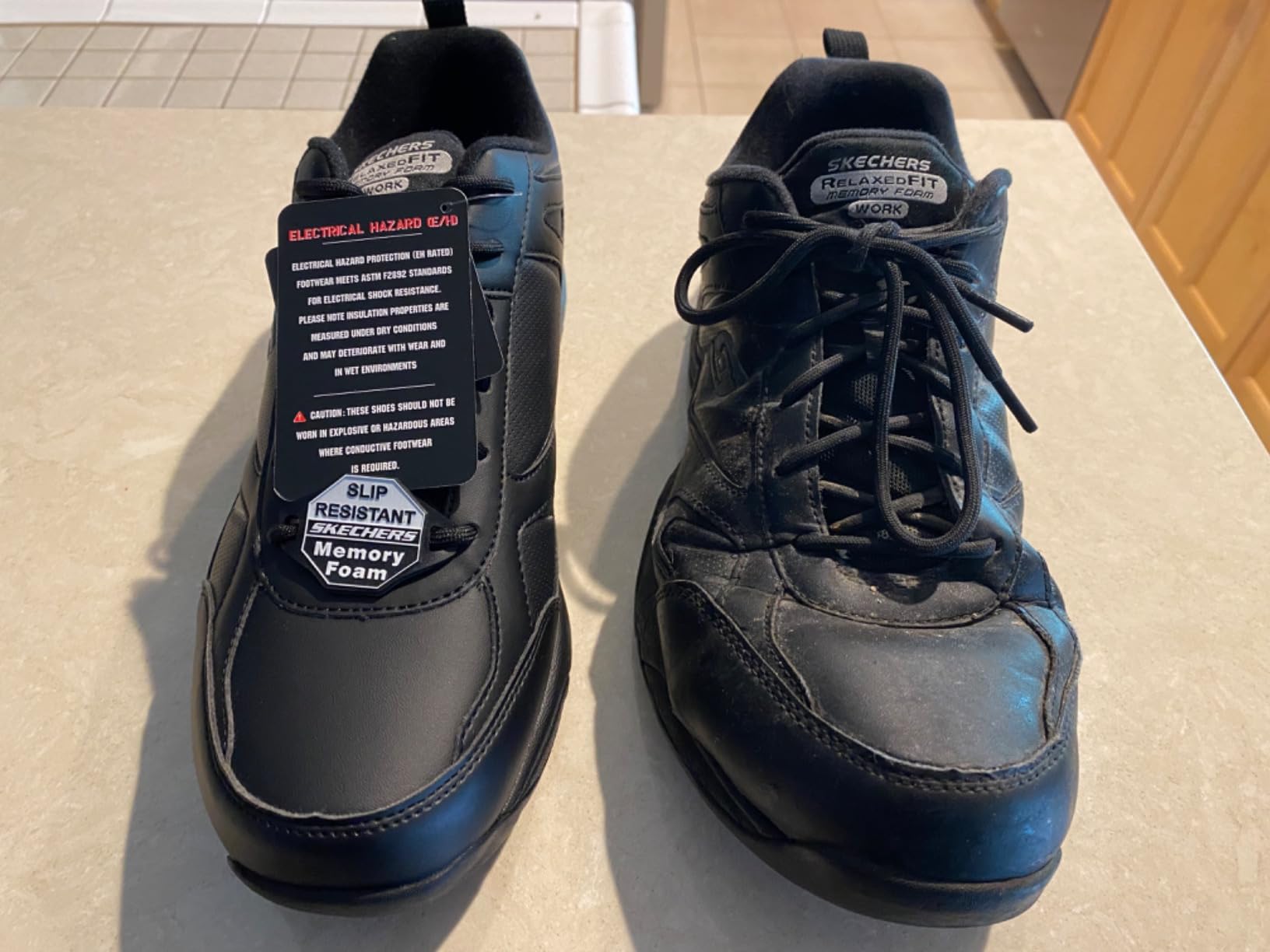
The Dighton is the men’s counterpart to the Squad, and for line cooks it works because of the upper rather than the outsole. The smooth leather and synthetic upper is genuinely durable in a way that knit uppers are not, and it wipes down fast when you are working through a ticket rush. At 1.5 pounds, it is also lighter than most work shoes in this format.
Underneath, a slip-resistant rubber outsole handles slick surfaces and a Memory Foam cushioned insole absorbs shock. The relaxed fit with a roomy toe box means your toes are not compressed at hour nine, which is the single biggest comfort factor in a work shoe.
Sizing is straightforward here, which is a relief compared with the rest of this list. It runs true to size, and a wide option is available. Do budget a short break-in period, because the leather upper stiffens slightly before it relaxes.
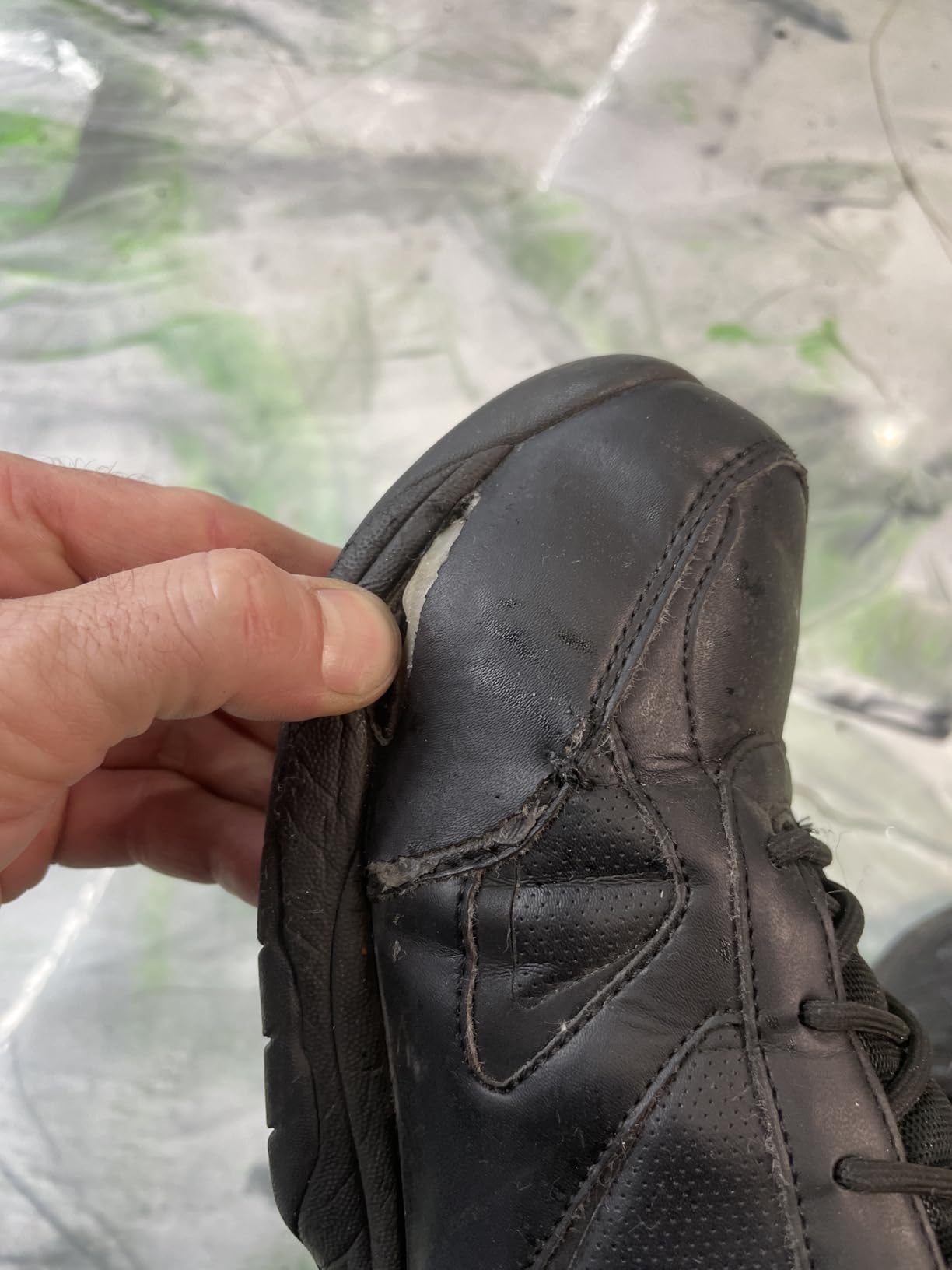
The durability reports are worth taking seriously. Reviewers using this in heavy daily service note flattening of the base and reduced tread longevity over about six months of forty-hour weeks. The fine slip-resistant tread also picks up dirt and debris easily from outdoor surfaces, so clean the outsole regularly if you step outside during a catering shift.
Is a lace-up better than a slip-on for kitchen work?
It depends on whether your feet swell. Lace-ups let you adjust the fit through the shift, and they tend to feel more secure through fast pivots on a line. Slip-ons win on convenience, because nothing has to be retied when your hands are wet and your feet are bigger than they were this morning.
Many line cooks land on a two-pair rotation for exactly this reason. A secure lace-up for service, a slip-on for dish work.
How long should slip-resistant restaurant shoes last?
It depends far more on hours than on calendar time. A cook working forty hours a week on a hard, abrasive kitchen floor may get six months of useful traction, while a server on carpeted dining room flooring can get considerably longer from the same pair. Judge replacement on tread depth and sole condition rather than the date you bought them.
Two things shorten life more than anything: standing water and rough outdoor surfaces. If your work takes you outside, keep a second pair for outdoor duty.
5. Dr. Scholl’s Men’s Winder II Loafer – Most Professional Looking
Dr. Scholl’s Shoes Men’s Winder II Slip Resistant Work Loafer,Black Leather,10
Oil-resistant and slip-resistant Lock Step outsole
Tested to SATRA TM63 and TM144 standards
Majority leather upper
Anatomical cushioned insole
Pros
- Genuine leather slip-on that looks professional on a bar shift
- Outsole holds up on wet and oily surfaces
- Comfortable for long hours standing especially if flat-footed
- Good arch support and cushioning
- No laces to tie
Cons
- Can feel stiff out of the box
- Sizing runs loose
- Some reports of the glued sole layer peeling away
- Upper leather is thin and scuffs easily
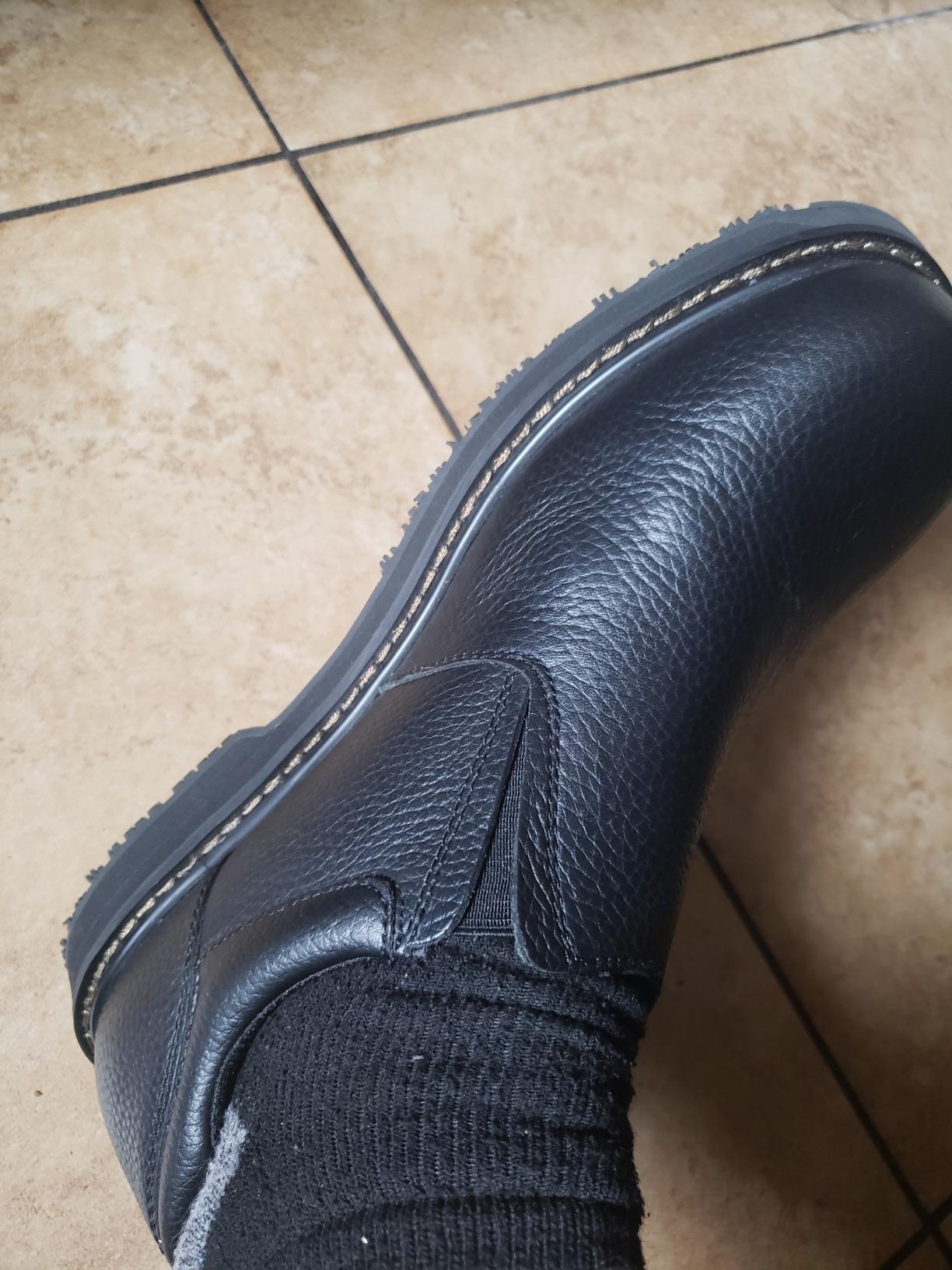
If your venue has a dress code, this is the shoe in the guide that gets past it. A majority leather slip-on loafer looks like ordinary business footwear, which answers the long-standing complaint from front of house staff in r/DrMartens that there is no acceptable non-slip option for a server who wants to dress professionally.
Performance-wise, the Lock Step outsole is oil-resistant and slip-resistant and has been tested to SATRA TM63 and TM144 standards, which is a real tested specification rather than a marketing phrase. The anatomical cushioned insole and shock-absorbing midsole reduce foot pressure, and flat-footed wearers in particular report good comfort across long standing shifts.
Sizing runs loose, and this is where it catches people. If you go down a size to fix it, the arch benefit drops with it. Many buyers instead keep the length and add an insert. Men’s sizing runs 7 to 15 including wide widths, and the shoe weighs 1.3 pounds.
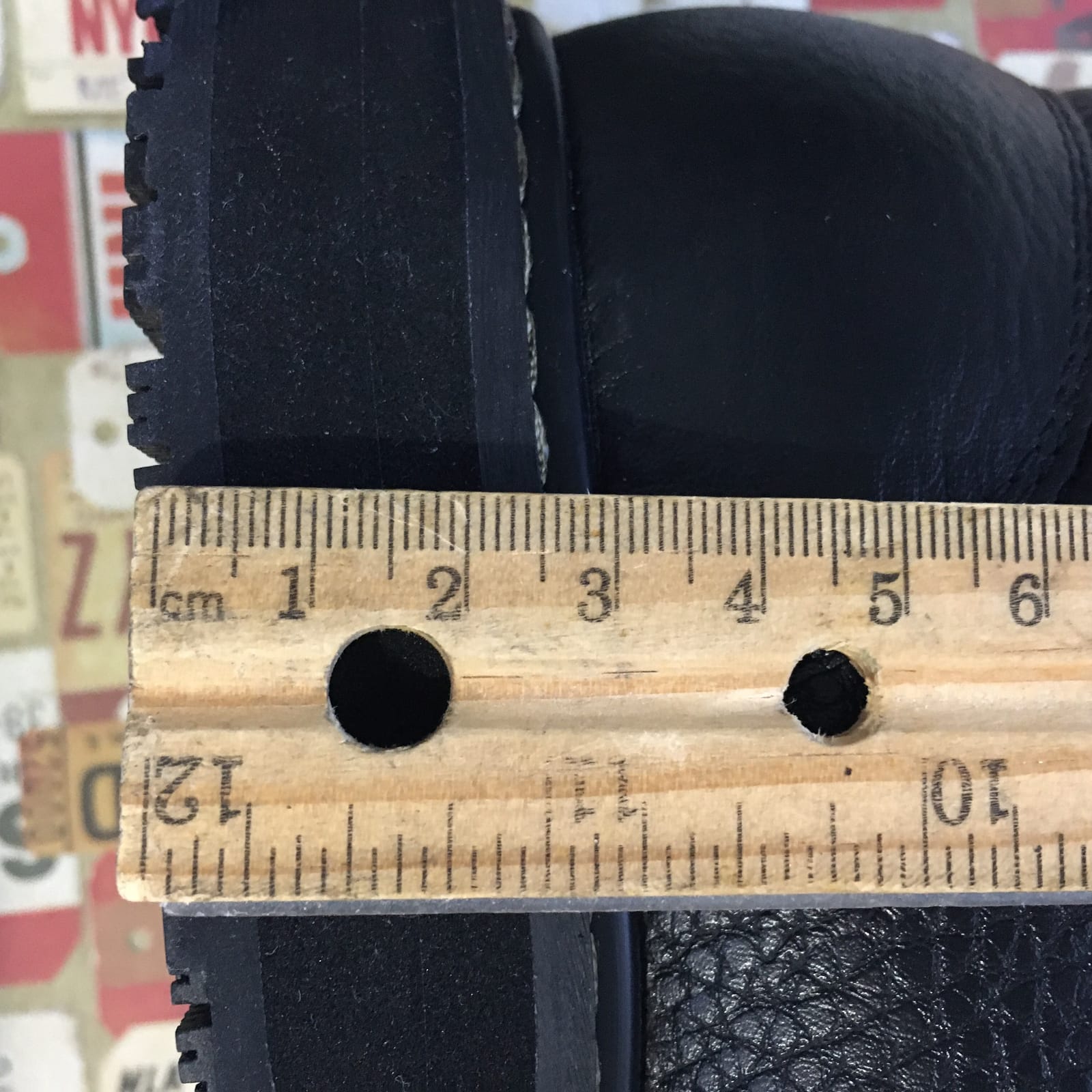
There is also a real durability complaint in the data. Some reviewers report the glued slip-resistant sole layer peeling away with use, and slip resistance can diminish after roughly six months of daily service. Expect some stiffness out of the box before the leather relaxes.
Is a dress shoe ever going to match a clog for kitchen grip?
No, and we would not tell you otherwise. A smooth leather dress sole is never going to handle a soaked kitchen floor the way a molded clog tread will. This loafer is a front of house and bar solution, where floors are sealed and relatively dry, and for those surfaces it performs well.
If you split your shift between the dining room and the line, you need a clog or a certified work sneaker instead. Do not let appearance override the floor you are actually standing on.
What should you do when a sole starts to separate?
Stop using it for wet-floor work immediately. A peeling sole layer is not a cosmetic issue, because the exposed edge is exactly where your foot can catch and the tread geometry changes. Many workers keep a separated shoe around as a break-room or garden shoe, but that is not a compromise worth making on a service shift.
Check the bond line at the toe and the heel before you buy, and again after the first month of use. If the edge is already lifting, that is your replacement signal.
6. Shoes For Crews Pembroke – Best for Uniform-Code Hospitality Work
Shoes for Crews Pembroke Unisex Work Sneaker, Non-Slip, High-Top
TRIPGUARD slip-resistant outsole to ASTM F2913-19
SPILL GUARD water-resistant upper
Removable easy-to-clean insole
Breathable unisex high-top
Pros
- Polished look that works with hospitality uniforms
- TRIPGUARD outsole delivers strong traction on wet
- oily and greasy surfaces
- Removable insole can be swapped for extra support
- Water-resistant upper blocks kitchen spills
- Brand built around tested slip-resistant engineering
Cons
- Highest price point in this category
- Not fully waterproof and not intended for submersion
- High-top collar adds bulk for some uniform requirements
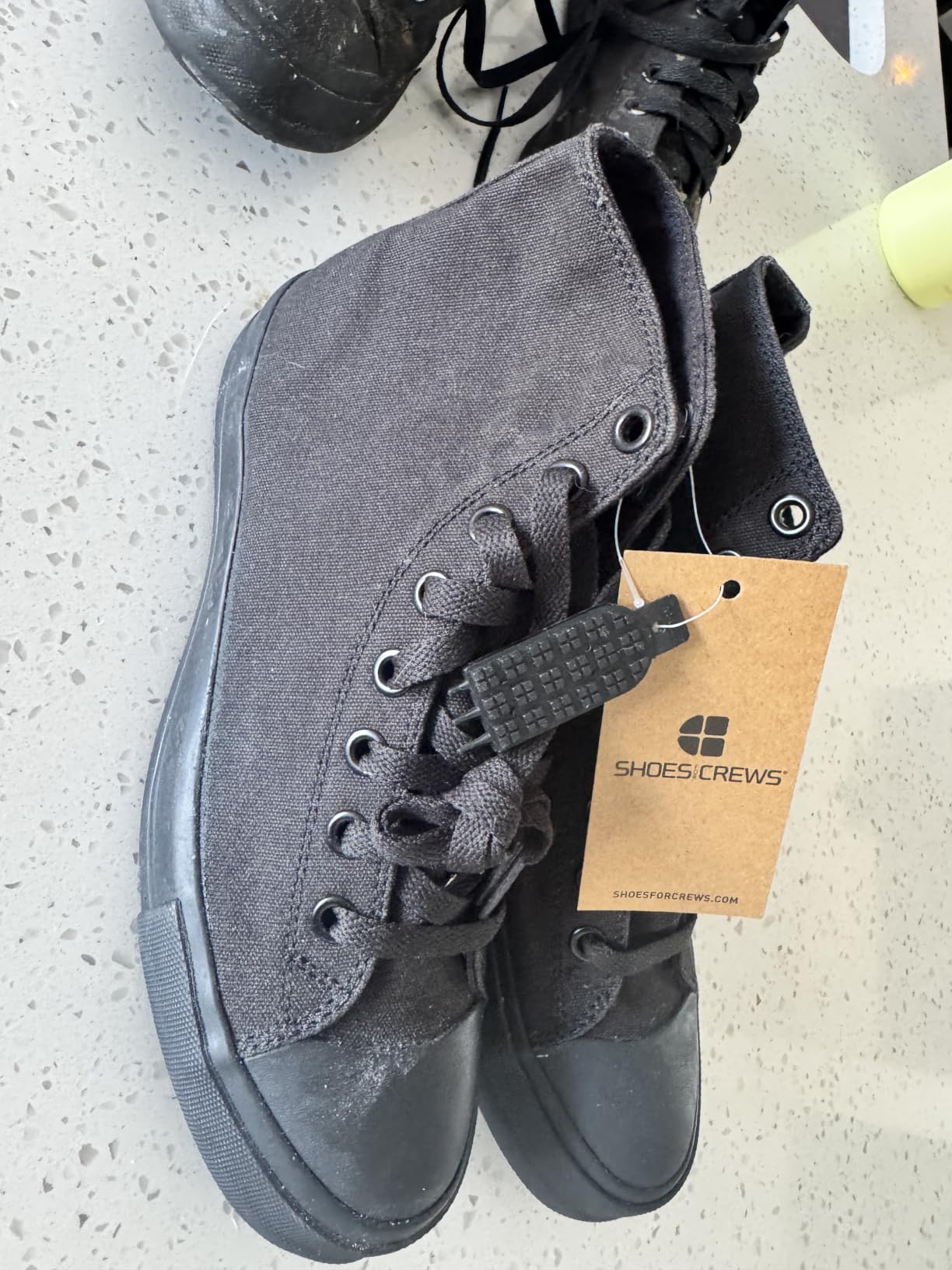
Shoes For Crews built this company around slip-resistant footwear, and the Pembroke shows that heritage. The TRIPGUARD outsole is tested to ASTM F2913-19 for wet, oily, and greasy surfaces, which is one of the more demanding of the slip standards. For a hospitality worker who also crosses into the kitchen, that tested rating is worth paying up for.
The removable insole is the feature most reviewers mention. You can pull it out, wash it, and drop in a more supportive insert, which extends the life of the shoe and lets you tune it for a long standing shift. The SPILL GUARD water-resistant upper and breathable construction handle a busy service without turning your feet into a sauna.
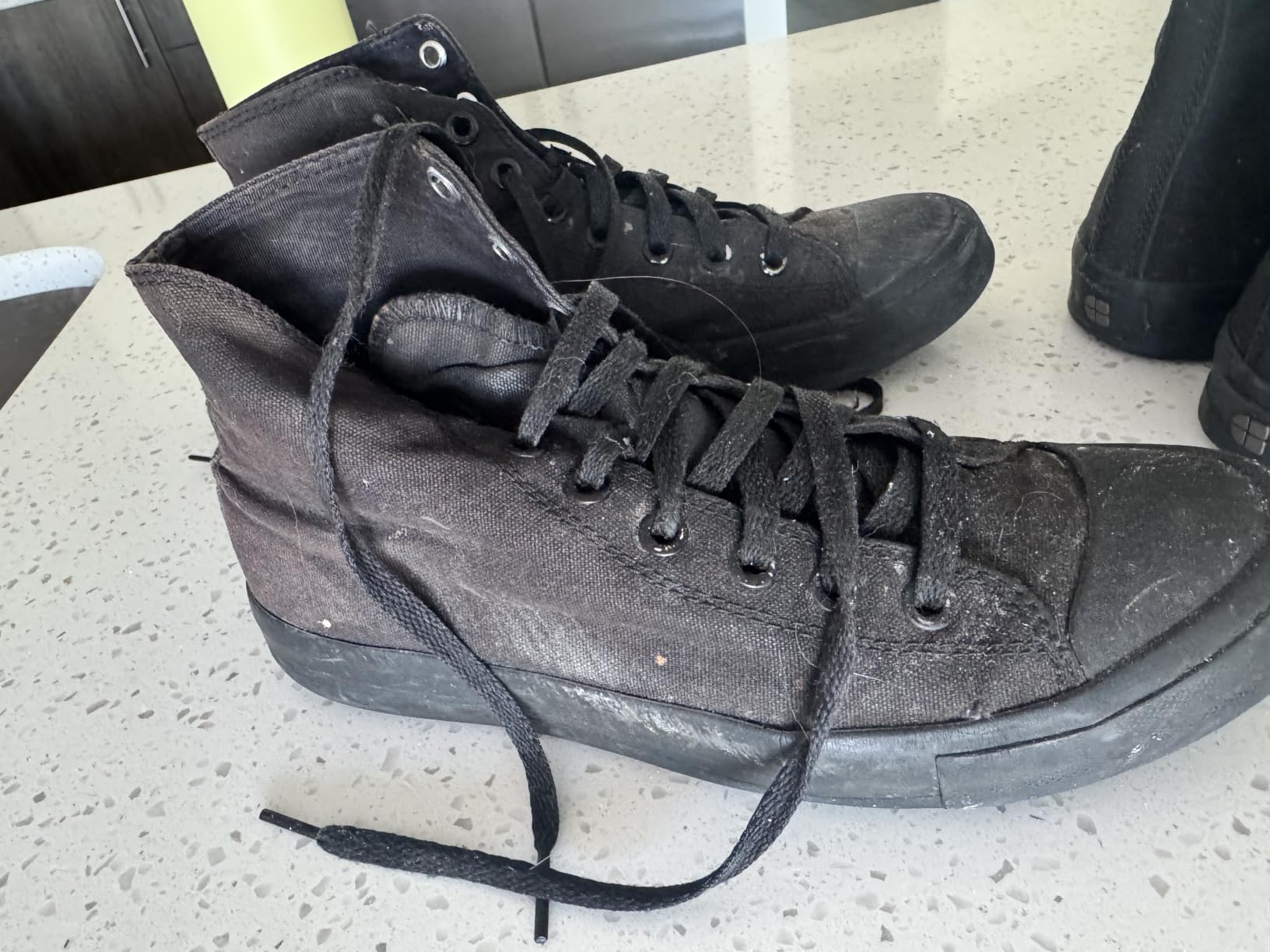
Fitting is uncomplicated, which is not something you can say for most shoes on this list. It fits true to size, and unisex sizing runs from women’s 5.5 to 15.5, so it works for a wide range of feet. Black canvas and black leather uppers are both available.
The trade-offs are practical. This is the most expensive shoe in the guide, and it is water-resistant rather than waterproof, so it is the wrong choice for a dishwasher. The high-top collar also adds bulk, which matters in venues with a strict uniform silhouette.
Is ASTM F2913 better than ASTM F1677?
They test different conditions rather than ranking each other. ASTM F1677 is the older standard, calibrated to a greasy and soapy wet test surface, and it is widely used and widely recognized. ASTM F2913 is a newer standard with its own threshold for wet, oily, and greasy conditions. Shoes For Crews, HISEA, and Bruno Marc in this guide carry one or the other.
For a general restaurant worker, either is a meaningful upgrade over an untested shoe. For a line cook working in a hot, greasy kitchen, the newer wet, oily, and greasy specification is the more relevant one to look for.
Why does a removable insole matter more than people think?
Because the insole is the part of a work shoe that dies first under a standing shift, even when the outsole still has life. A compressed foam insole stops absorbing shock long before the rubber tread wears out, and replacing a removable insole costs a fraction of replacing the whole shoe.
It also lets you adapt. A soft footbed for service, a firmer orthotic for prep work where you are standing on concrete-like flooring, and a clean spare insole in your bag on dish days.
7. LARNMERN Men Chef Shoes – The Chef-Style Kitchen Workhorse
LARNMERN Men Chef Shoes Non Slip Work Waterproof Slip-on,Brown Green,10.5
Anti-slip outsole channels oil, grease and water
Water-resistant breathable mesh upper
One-piece seamless lightweight build
Anti-fatigue footbed with supported heel
Pros
- Very lightweight and comfortable for a full shift
- Good traction on kitchen and wet surfaces
- Wide and X-wide widths run true
- Heel support holds up over 8-10 hour shifts
- Breatheable and easy to wipe clean
Cons
- Waterproof claim underperforms and water gets in
- Can feel tight on first wear before breaking in
- Some reviewers report foot fatigue after about six hours
- Laces are described by some as annoying
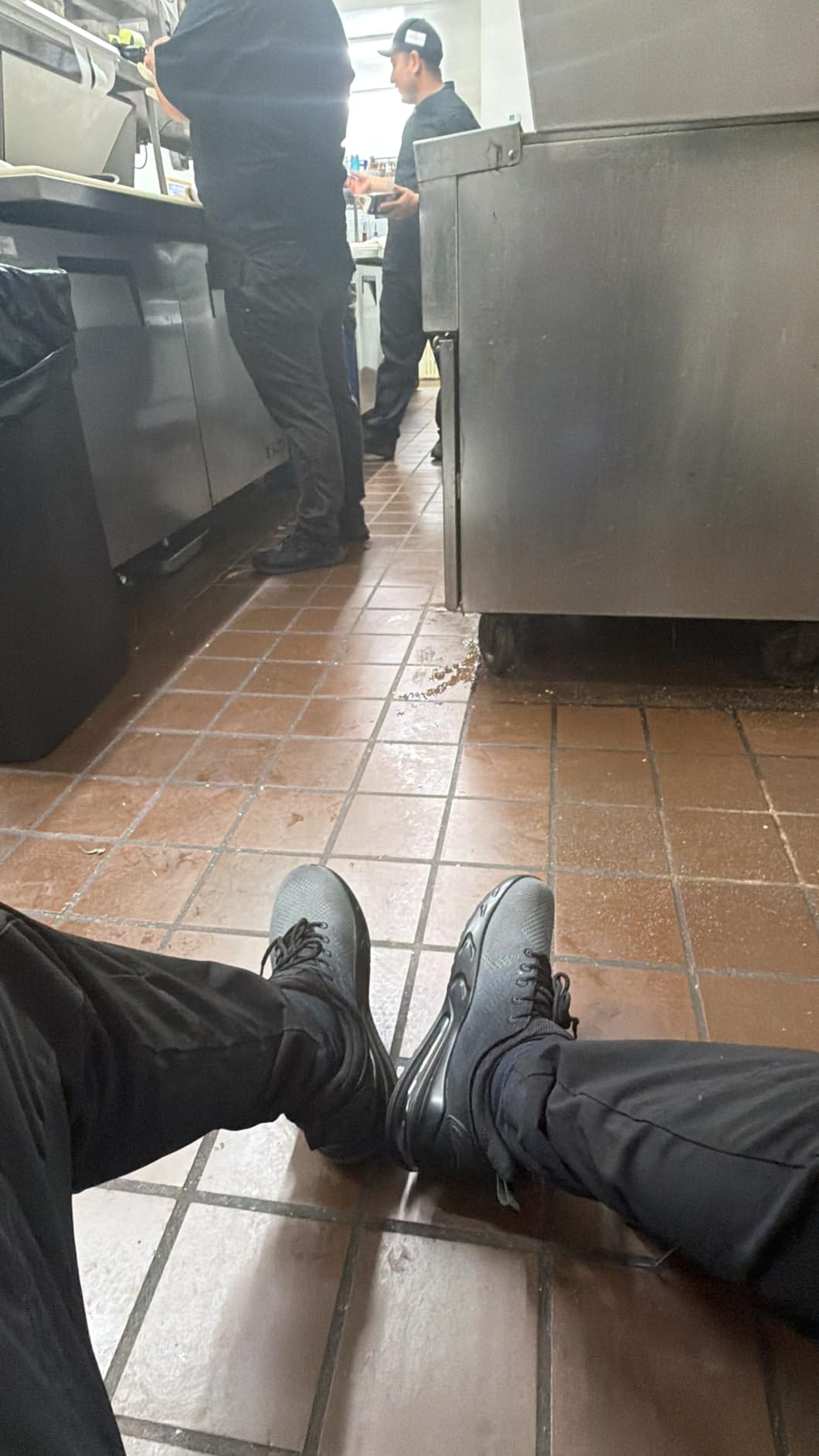
LARNMERN is the brand that comes up most often in r/KitchenConfidential when kitchen workers discuss Amazon-available chef shoes, and the reason is straightforward: the value. You get a seamless one-piece upper, a cushioned bladder foam midsole, an anti-fatigue footbed, and an outsole designed to channel oil, grease, and water away from the contact patch, without the brand premium.
The heel support is a genuine strength. Reviewers running 8 to 10 hour shifts report that the supported heel structure holds up where softer shoes sag, and the anti-fatigue footbed is designed specifically for the standing-heavy reality of kitchen work. Wide and X-wide widths run true, which matters for anyone who normally struggles with kitchen shoes.
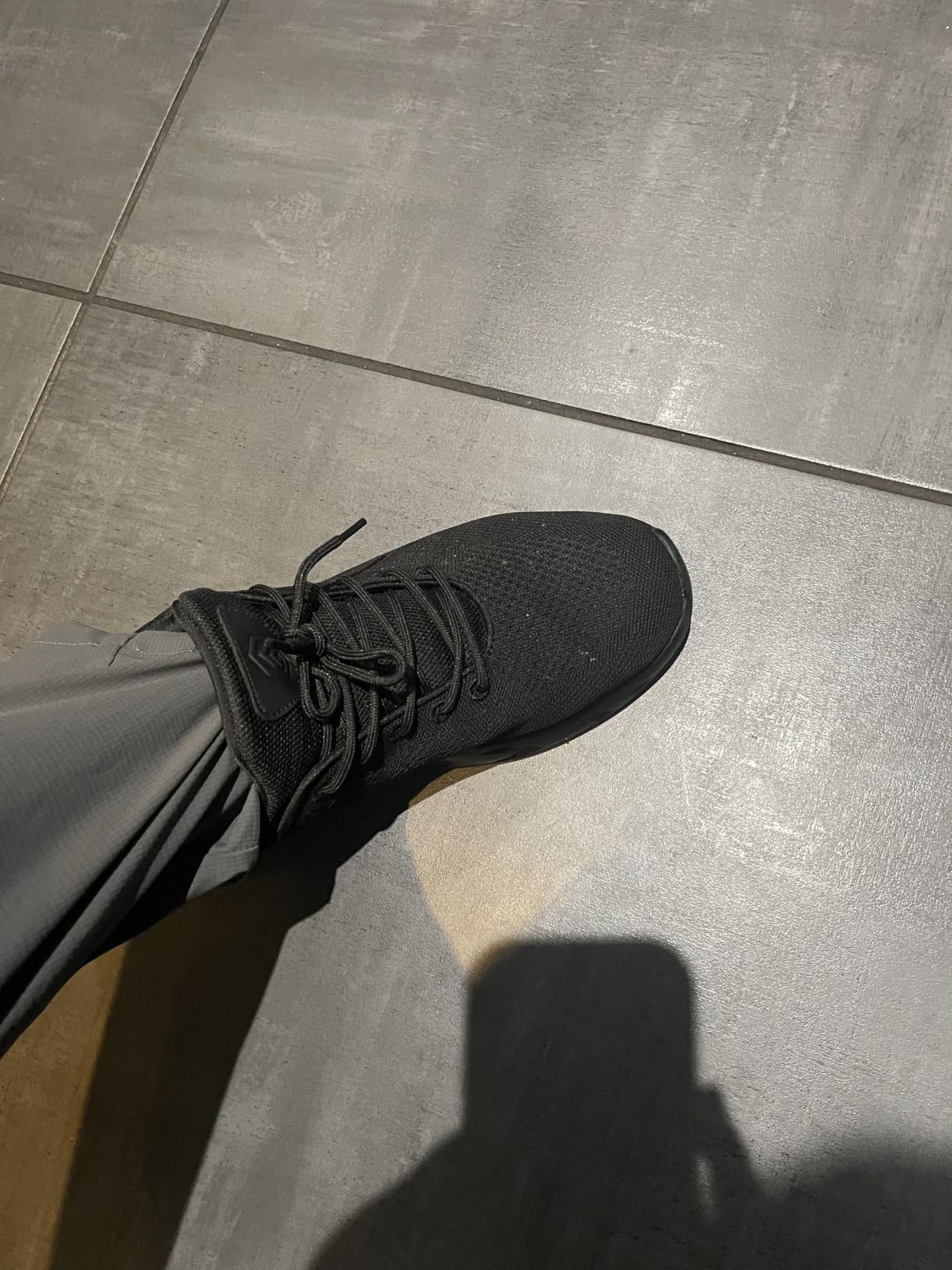
The 4.0 average across more than 9.5k reviews is the lowest rated in this group, and the reason is the waterproof claim. Reviewers report that water gets in after extended exposure, so treat the mesh upper as water-resistant and breathable rather than waterproof. If you are in standing water all day, choose a waterproof clog instead.
Also expect a short break-in. The fit can feel tight on the first wear, and a few reviewers mention foot fatigue setting in after about six hours of standing once the cushioning settles.
Is a mesh upper a bad idea in a kitchen?
It depends on the job. Mesh is excellent for hot line work because it moves air and dries quickly, and it is a real problem in the dish pit where the shoe gets soaked through and stays wet. A mesh upper that never dries is the fast route to an unpleasant shift and an odor problem that follows you home.
Rule of thumb: mesh for the hot dry line, coated synthetic leather or waterproof molded material for anything wet.
What makes an anti-fatigue footbed different?
An anti-fatigue footbed is shaped and cushioned to spread pressure across the whole foot rather than letting your heel and ball take the full load of standing. That difference shows up late in a shift, which is exactly when comfort decides whether you finish strong or limp.
It works best with a supportive heel cup and a rocker profile, which is why shoes built for kitchen work tend to look thicker and more structured at the back than a casual work sneaker.
8. HISEA Non Slip Slip-On Loafers – Cheapest ASTM F1677 Certification
HISEA Men’s Leather Non Slip Food Service Shoes, Water & Oil Resistant, Comfortable, Breathable, Lightweight Slip Resistant Shoes for Men, for Kitchen, Restaurant, Slip-on Chef Walking Shoes Black
Thick slip-resistant rubber outsole to ASTM F1677-05
Shock-absorbing EVA midsole
Removable memory foam anti-fatigue insole
SCC coated water and stain resistant upper
Pros
- Exceptional traction in wet and greasy kitchen conditions
- Lightweight with virtually no break-in
- Removable insole can be replaced or upgraded
- Water and stain coating makes cleanup easy
- True to size with wide options
- One-year quality assurance
Cons
- Runs large so consider sizing down
- Not fully waterproof for heavy water exposure like dishwashing
- Some reports of upper materials separating early
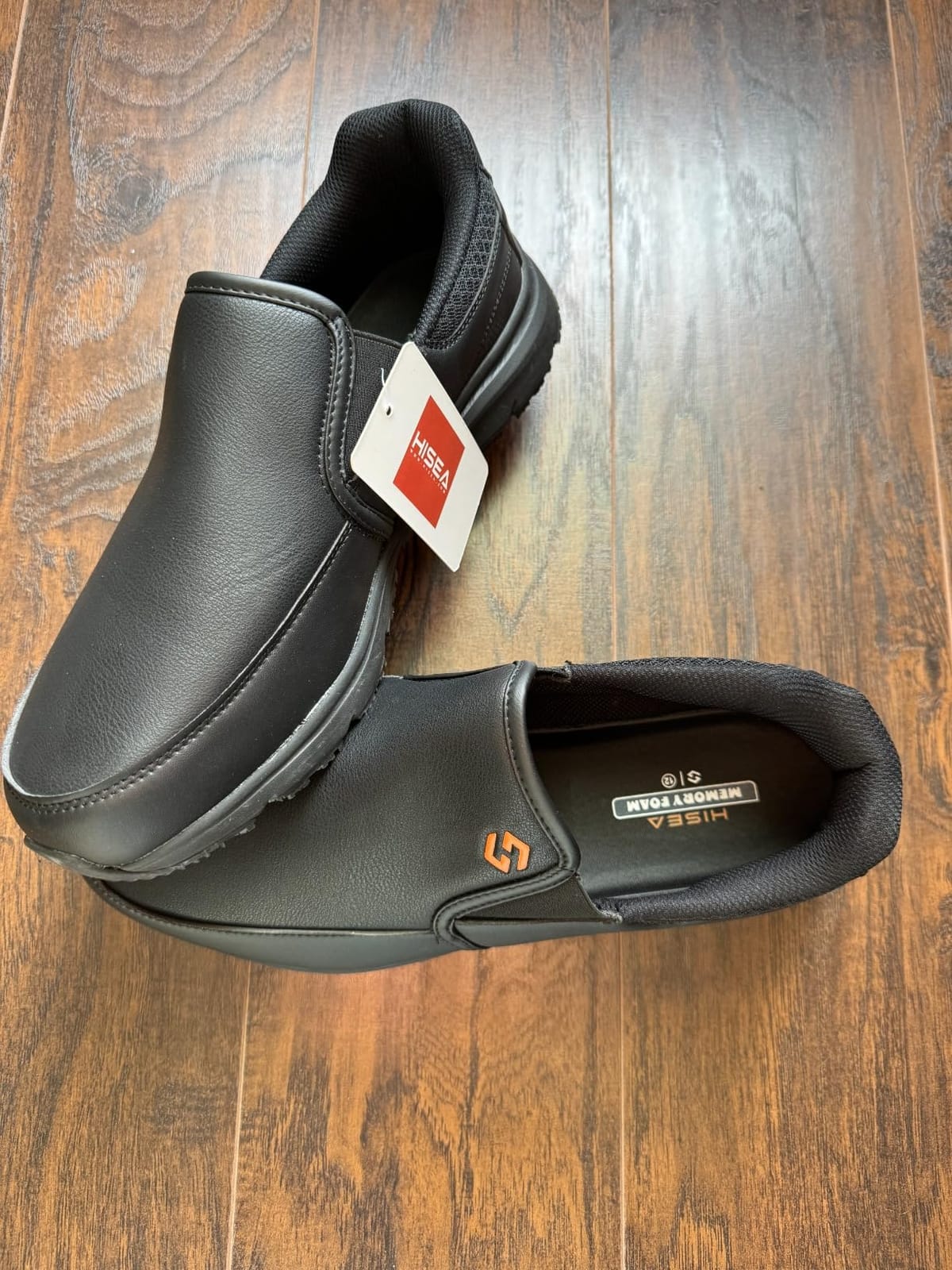
The HISEA is the listing where the ASTM code is stated plainly, and that transparency is the reason to look at it. A thick slip-resistant rubber outsole meeting ASTM F1677-05, plus enhanced non-slip layers for durability in varied environments, is a more verifiable claim than a page that only says non-slip in the title.
Reviewers who work in genuinely wet and greasy hospital kitchens single out the traction as exceptional, and the lightweight build means there is effectively no break-in. A shock-absorbing EVA midsole and a removable memory foam anti-fatigue insole give you a cheap shoe with two comfort adjustments available, which is rare in this tier.
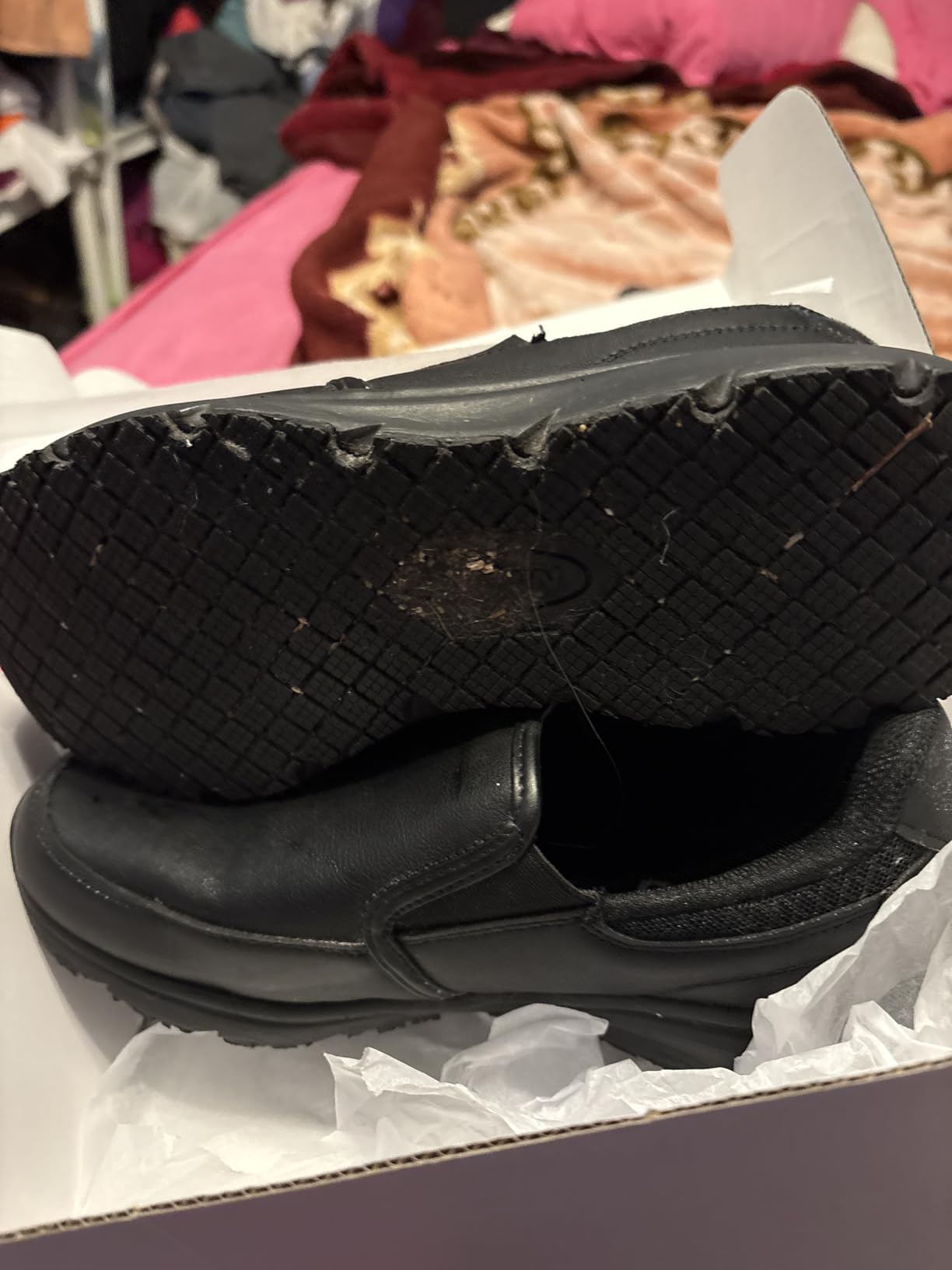
The Special Chemical Coating on the synthetic leather upper beads water and stains, so cleanup is a wipe rather than a soak. Dual side stretch panels make the slip-on entry quick. Men’s sizing runs with wide options available.
It does run large, so consider sizing down. It is not fully waterproof, which rules it out for dishwashing, and some reviewers report the upper material separating early under heavy use. The 1.8 pound listed weight is a package weight, not the shoe itself.
How do I verify a slip-resistance claim before buying?
Look for a standard number on the listing, not a descriptive phrase. ASTM F1677, ASTM F2913, and ASTM F3445 are the codes worth recognizing, and they should appear with a year designation. Phrases like oil resistant, slip resistant, and non-slip on their own are marketing, because oil resistant describes a material property while a standard describes a tested result.
Cross-check against the manufacturer’s own site, where the same model is often described with more detail than the retail listing. If neither surface names a code, assume the claim is untested.
Is a removable EVA insole a good deal on a work shoe?
Yes, if the insole is genuinely removable and the shoe is built with a footbed that sits on a flat surface. You can replace it when it compresses, add an orthotic for arch support, or wash it after dish work, and all three extend the working life of the shoe considerably.
Watch for insoles glued down inside the shoe. Those cannot be swapped, and they are usually the first part to fail.
9. Bruno Marc Non Slip Work Shoes – Built for a Light Weight
Bruno Marc Men’s Non Slip Work Shoes,Black,11
ASTM F1677 certified slip resistance
ASTM 2413 electrical hazard protection
9.88 oz per shoe
EVA midsole with removable PU arch insole
Pros
- Very light at under 10 oz per shoe reducing fatigue over long shifts
- Great traction on wet and greasy restaurant floors
- Removable insole with arch support
- Clean professional black look that works with a uniform
- Strong value for the price
Cons
- Tongue and heel collar can feel tight to some wearers
- Not waterproof and feet get wet in rain
- Some wear at the heel insert and back lip after heavy use
- Sizing runs a touch large for some
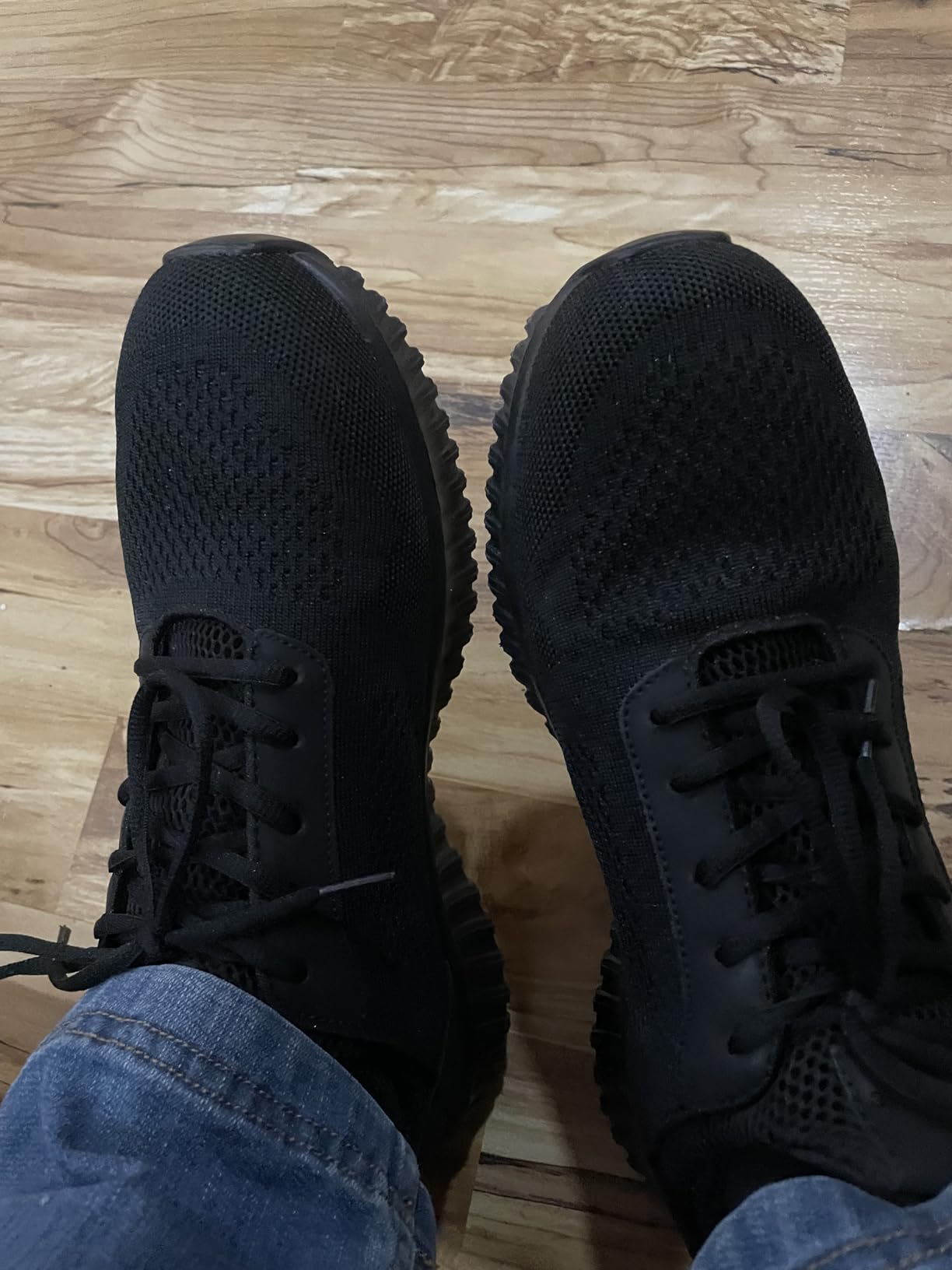
At 9.88 oz per shoe, this is a notably light certified option here, and weight matters more than most guides admit. Every extra ounce on your feet is an ounce you feel at hour ten. Reviewers who run high step counts specifically praise how the low weight reduces fatigue, and they pair it with praise for traction on wet and greasy restaurant floors.
It is also dual certified, which is unusual at this price. Slip resistance is certified to ASTM F1677, and electrical hazard protection is tested to ASTM 2413, so it covers you in a role that touches utility spaces as well as the kitchen.
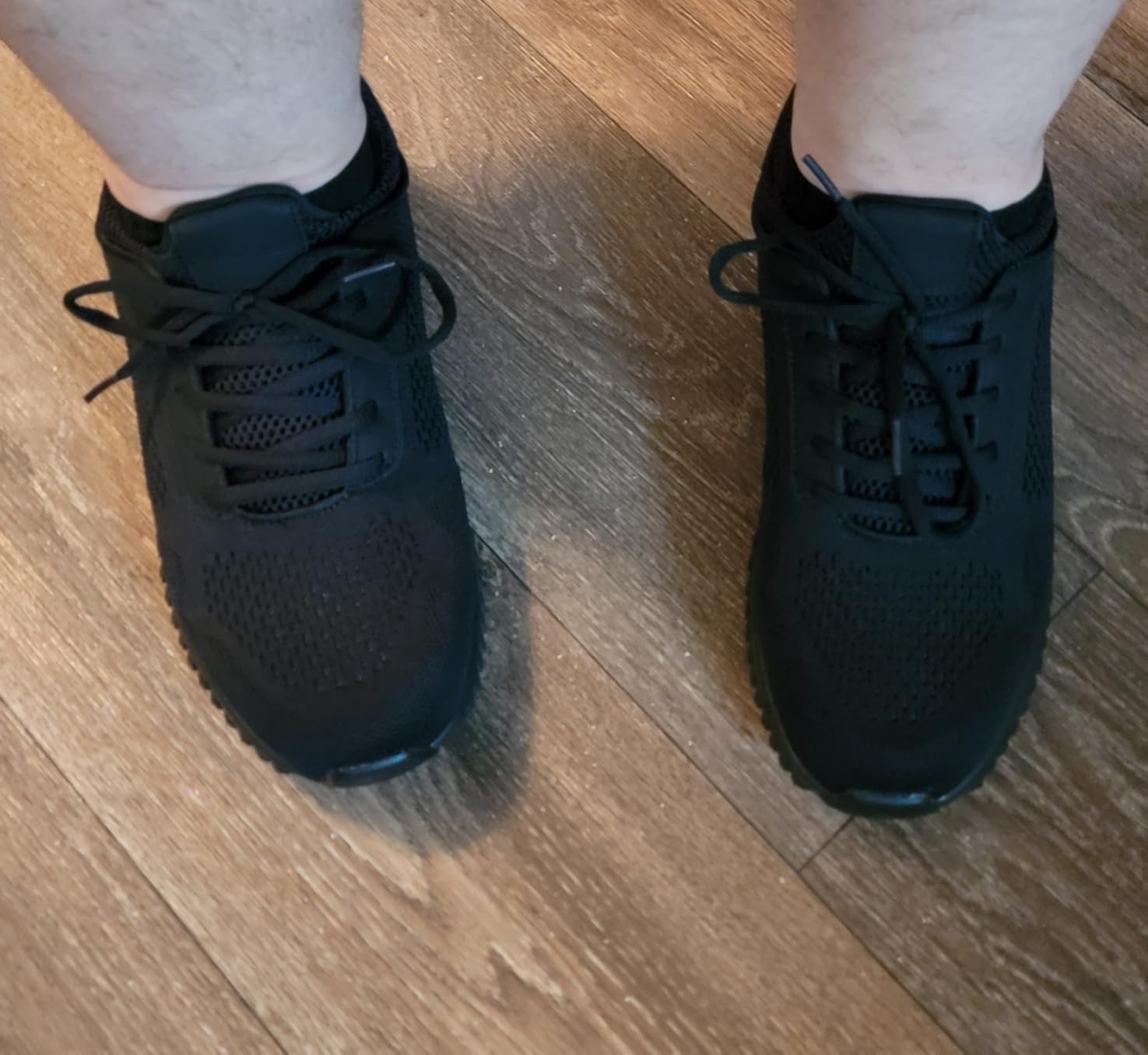
The EVA midsole handles shock, and the removable PU insole has arch support, which is a meaningful combination for a shoe this light. The breathable mesh upper deflects minor spills, and the black styling works with a uniform. Men’s sizing runs 7 to 13 including wide widths.
Fit is the tradeoff. The tongue area and heel collar can feel tight to some wearers, and sizing runs a touch large for others, so this is one to try carefully. It is not waterproof, and some wear appears at the heel insert and back lip after heavy use.
What does an electrical hazard rating actually mean?
It means the shoe is designed to reduce the risk of electric shock when the wearer is standing on a contaminated surface and an electrical fault occurs. It is not the same as a safety toe, and it does not make you electrically safe. Both the Skechers Squad and the Bruno Marc in this guide carry an electrical hazard rating.
It matters in dish pits, utility corridors, and anywhere with damp floors and equipment in the same space. For a standard dining room or line, it is a nice-to-have rather than a requirement.
Does a lighter shoe really reduce foot fatigue?
Yes, and the effect is felt most in roles that involve constant walking. Lower mass means less energy spent lifting and landing each step, and less impact transferred up through the midsole. For a server covering dining room after dining room, that adds up over a double.
Light weight cannot rescue a bad fit, though. If the shoe rubs or your toes touch the front, your feet will hurt regardless of the scale.
10. AEHAO Waterproof Chef Slip-On – Wipe-Clean Entry Pick
AEHAO Mens Non Slip Work Shoes Slip Resistant Kitchen Restaurant Chef Food Service Shoe Slip On Walking Sneakers Casual Waterproof Hospital Comfort,Black 6.5
DURA ANTISLIP outsole with extra grip
Waterproof leather upper that wipes clean
Shock-absorbing EVA midsole
Lace-free slip-on design
Pros
- Waterproof upper wipes clean with detergent and reuses well
- Lightweight EVA midsole for all-day standing
- No laces to tie
- Designed for chefs
- servers
- nurses and bartenders
- Entry-level cost with solid ratings for the tier
Cons
- Less established brand with a smaller review base
- Generic modern styling
- Waterproof upper can restrict breathability in a hot kitchen
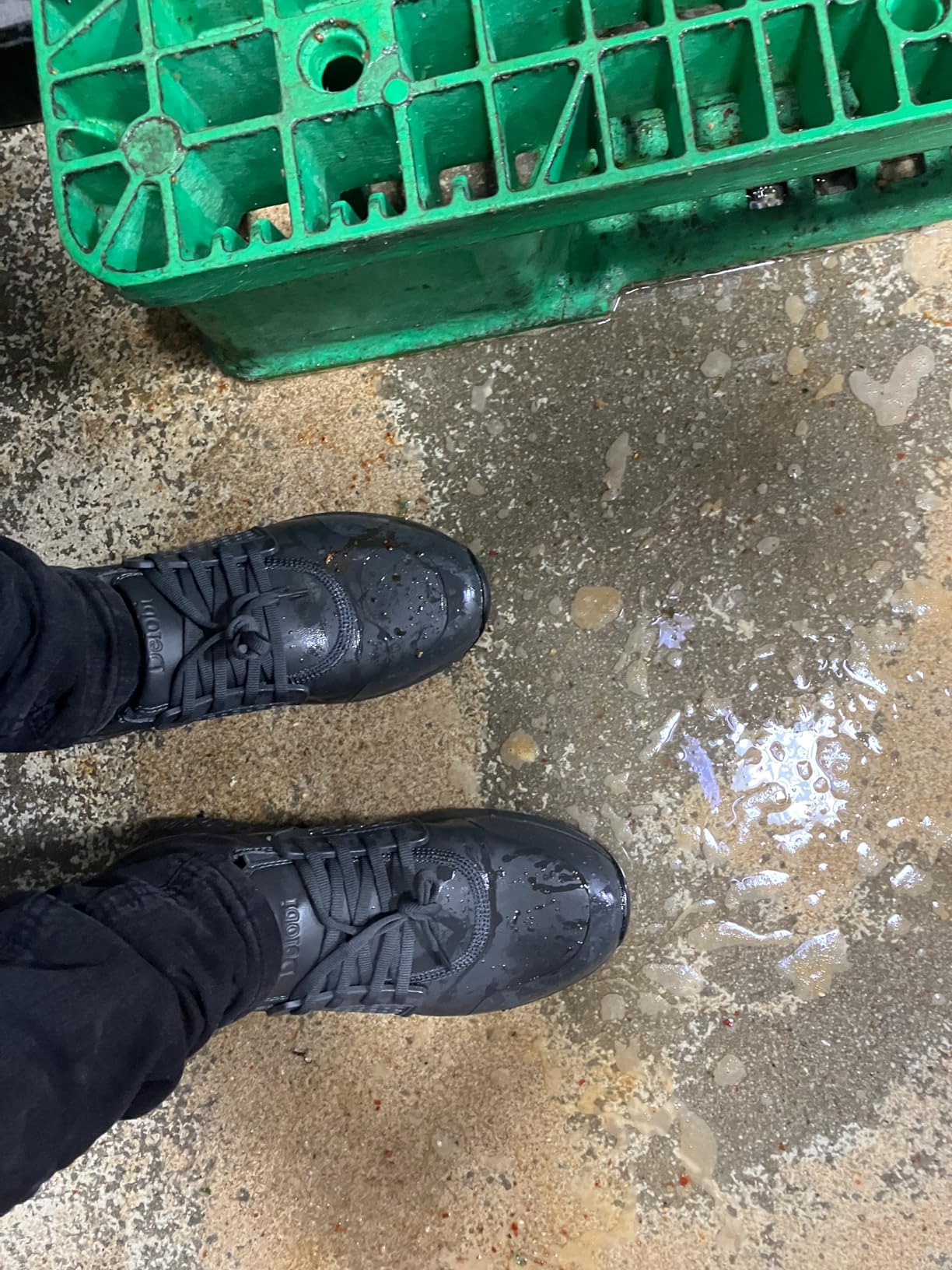
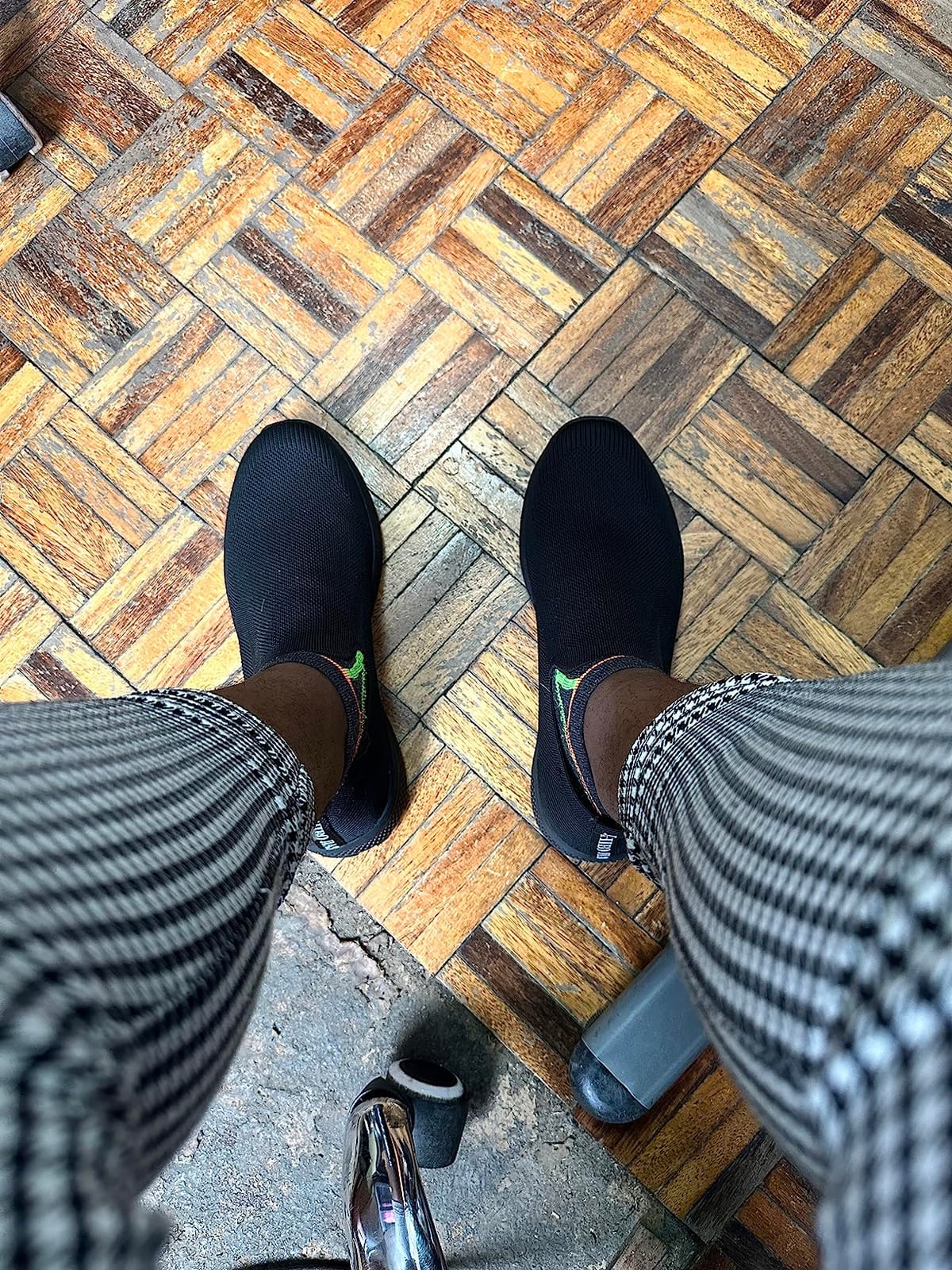
The AEHAO is an entry-level kitchen shoe, and for a first pair or a backup pair that is a reasonable place to start. The DURA ANTISLIP outsole is designed for extra grip on slippery surfaces, and the waterproof leather upper wipes down with water and detergent and dries quickly.
The lace-free slip-on design is genuinely useful in a kitchen, where laces catch on equipment and are a sanitation problem. A shock-absorbing EVA midsole and a premium cushioned insole cover the basics of standing comfort, and men’s sizing runs 6.5 to 14 including wide.
What you give up is confidence in the long term. The review base is smaller than the category leaders, and a less established brand means less predictable quality between pairs. The styling is also generic, which can be an issue in a venue with a front of house dress code.
For a hot line, a sealed waterproof upper can also feel warmer than a breathable mesh over a long service. That is the trade-off for a shoe that survives a hosing down.
Is buying the cheapest certified shoe a false economy?
It can be, but not always. Very cheap unbranded pairs that fail in two or three months are a false economy, because you end up buying three pairs to get one year of use. A well-reviewed mid-tier shoe that lasts a year is often cheaper per year than a premium pair that lasts three, and the review volume on this listing gives you enough signal to judge.
The maths that matters is cost per working month, not the ticket price. If the tread is gone at month four, the shoe was not cheap.
How do I clean non-slip kitchen shoes by material type?
Match the method to the material. Molded foam clogs handle soap and water, a diluted bleach solution, and a scrub brush, then a rinse and air dry away from direct heat. Coated synthetic leather and microfiber uppers just need a wipe with a damp cloth and a little detergent. Knit uppers are the problem case, since they absorb water and dry slowly, so spot clean them instead of soaking them.
Whatever the material, pull the removable insole out and wash it separately, and never machine wash a shoe with an electrical hazard or safety toe rating unless the manufacturer says so.
11. SHULOOK Non Slip Work Boots – When You Want Ankle Coverage
SHULOOK Non Slip Work Boots for Men Slip Resistant Shoes Restaurant Kitchen
Non-slip patch enhanced outsole for oily and wet floors
Water-resistant microfiber leather upper
Soft lining with cushioned insole and shock-absorbing midsole
Mid-cut ankle design
Pros
- Dedicated non-slip patches deliver strong grip on oily and wet floors
- Water-resistant microfiber leather upper
- Simple upper design that is easy to clean
- Soft lining and cushioned insole for long shifts
- Lightweight despite the boot format
- Mid-cut styling pairs well with uniforms
Cons
- Higher cut is less universal with dress codes
- Laces need tying unlike slip-on alternatives
- Newer listing with a smaller review base
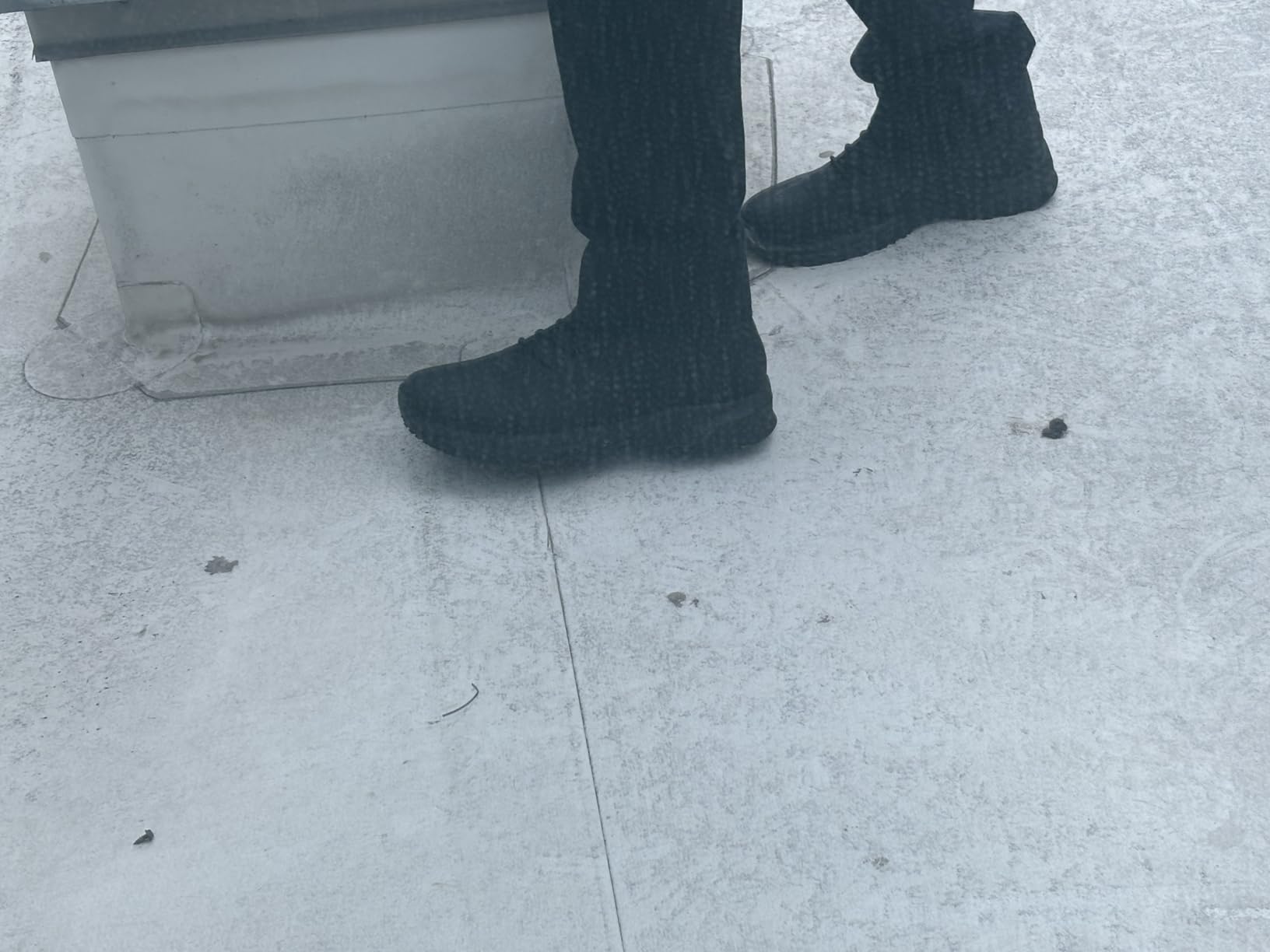
Almost everything in this guide sits at or below the ankle, which is the right choice in a kitchen because low-cut shoes flex and drain. The SHULOOK boot is the option for anyone who wants more coverage than a clog, and its outsole uses dedicated non-slip patches for enhanced grip on slippery and oily floors rather than a single continuous tread.
Inside, a soft lining, cushioned insole, and shock-absorbing midsole take the edge off long shifts, and the mid-cut ankle design is stable without feeling heavy. The water-resistant microfiber leather upper has a simple design that is easy to clean, and it is available in men’s sizing 7 to 14 including wide widths.
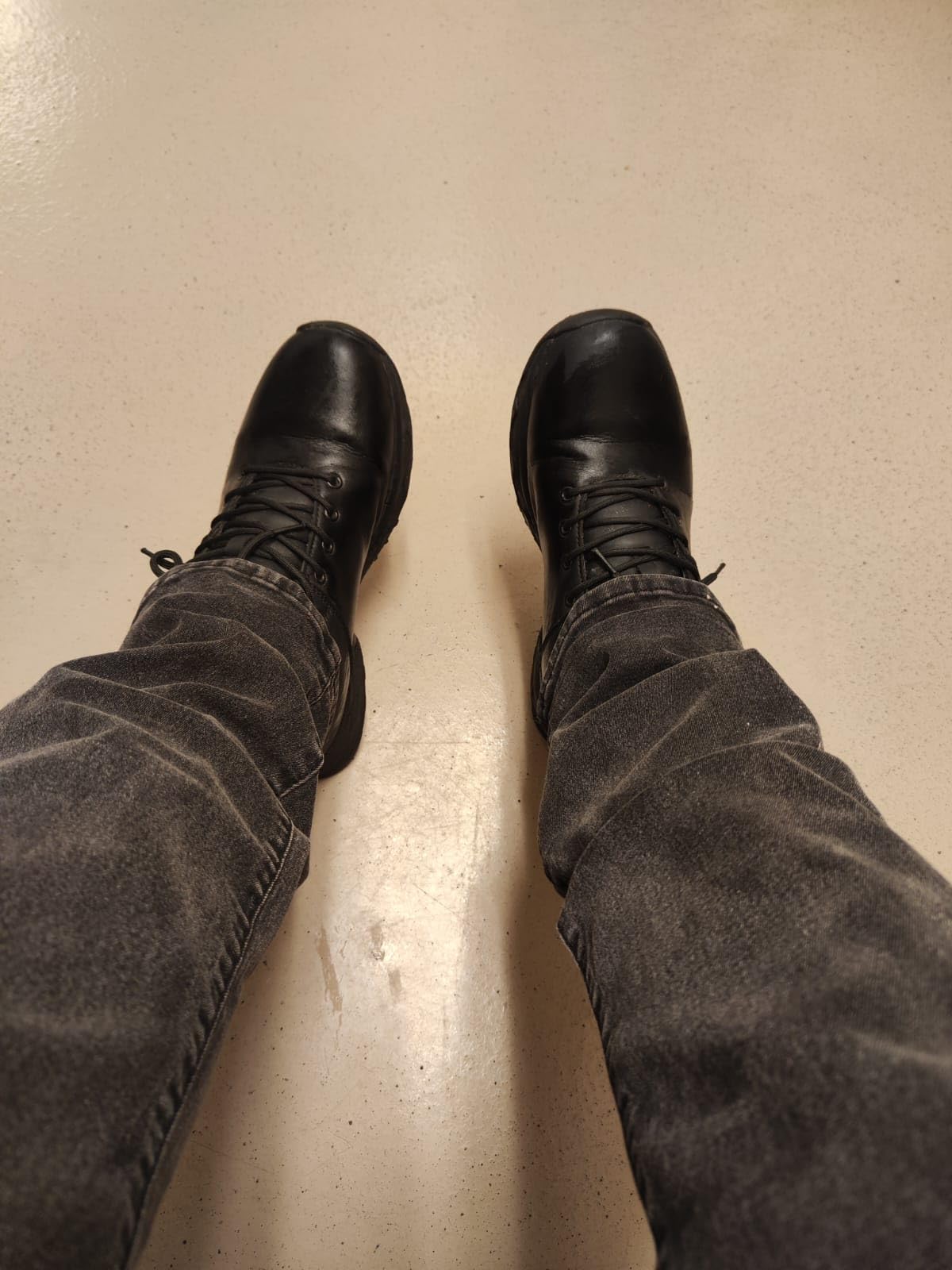
It ties for the highest average rating in this group at 4.5, and reviewers consistently point to the patch-enhanced outsole grip and the easy-clean microfiber upper as the reasons. Adjustable laces give you a snug fit, which is useful when a boot has to stay planted during a wet shift.
Two limits are obvious. A mid-cut is a more pronounced silhouette than a clog or loafer, so it will fail a strict dress code where a low-cut shoe would pass. And it is a lacing shoe, so you are tying something during a double.
Are non-slip work boots necessary for restaurant work?
Usually not. Low-cut shoes flex better, dry faster, and are easier to clean, which is why most restaurant workers choose them. A mid-cut makes more sense if you split time between the kitchen and a loading area, if you work in a cooler, or if you simply prefer the feeling of ankle support during a long standing shift.
Choose a boot for coverage reasons, not for traction. Traction comes from the outsole compound and tread geometry, and plenty of low-cut shoes out-grip a boot with a careless tread design.
What does multi-directional tread do?
It gives the outsole grip in more than one direction of movement. A kitchen worker does not only walk forward, they pivot, sidestep around a hot pan, and step backward out of a walk-in cooler. A tread designed for forward walking loses bite in those sideways and pivoting movements, which is exactly when a fall happens.
Pockets and channels in the tread also move liquid away from the contact patch, so instead of standing in a thin film of water you are standing on a drier rubber surface.
12. ENLEN&BENNA Women’s Food Service Shoes – Soft Cushioning Under a Low Price
ENLEN&BENNA Non Slip Work Shoes for Women Food Service Waterproof Lightweight Comfortable Restaurant Kitchen Chef Nurse Shoe Black Size 8
Oil-resistant outsole with rubber patch traction
EVA midsole for soft lightweight cushioning
Water-resistant microfiber upper
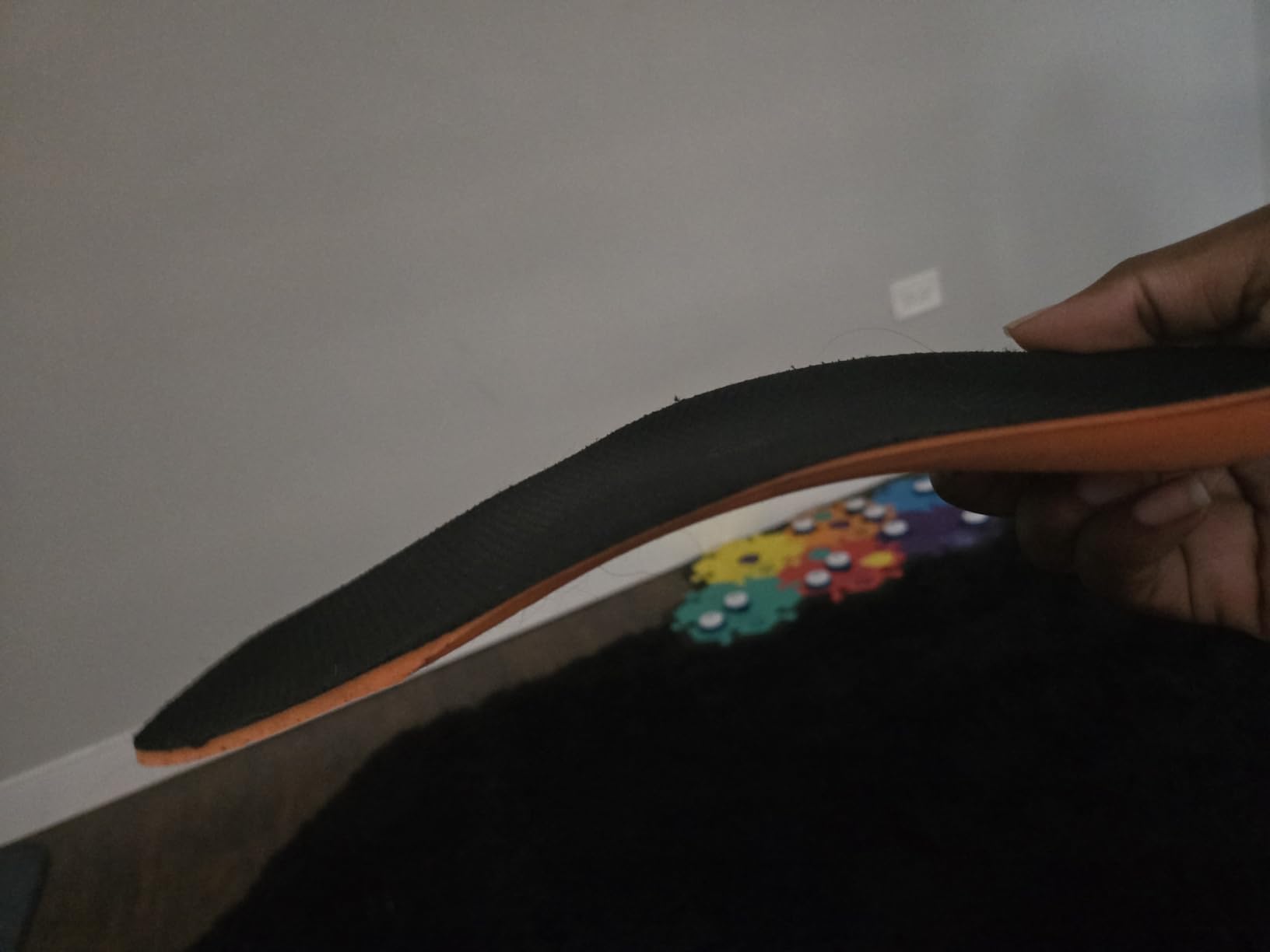
Professional cushioned insole with arch protection
Pros
- Soft slipper-like cushioning from the EVA midsole
- Good oil and water resistance for kitchen and catering work
- Lightweight and ventilated for long shifts
- Water-resistant microfiber upper is easy to clean and quick drying
- Cushioned insole provides arch protection
- Also works as an everyday walking shoe
Cons
- Lowest-rated cluster in this group at 4.1 with 9 percent one-star reviews
- Less durable than premium branded work shoes
- Water resistance protects against light moisture rather than immersion
- Rating spread shows more variability in long-term wear
The ENLEN&BENNA rounds out the list as a light, ventilated women’s food service shoe, and the appeal is comfort over a full shift. The EVA midsole gives a soft, slipper-like feel, and the ventilated lightweight construction works well for long shifts on your feet. The cushioned insole adds arch protection, which is worth having if you spend the shift stationary.
The outsole is oil-resistant and slip-resistant with rubber patch traction, which makes it reasonable for kitchen and catering work where the floor is damp but not flooded. The water-resistant microfiber upper dries quickly and is easy to clean, and women’s sizing runs 5.5 to 12.
Be clear-eyed about the durability trade-off. At a 4.1 average with 9 percent one-star reviews, this is among the least consistent shoes we include, and reviewers report shorter service life than with premium branded work shoes. Treat it as a first restaurant job or a secondary pair rather than a long-term investment.
Also note that the water resistance protects against light moisture, not immersion, so it is not a dish pit shoe. The upside is that the same cushioning works as an everyday walking shoe, which stretches the value if you are only working weekends.
Does women’s sizing actually change the fit of a work shoe?
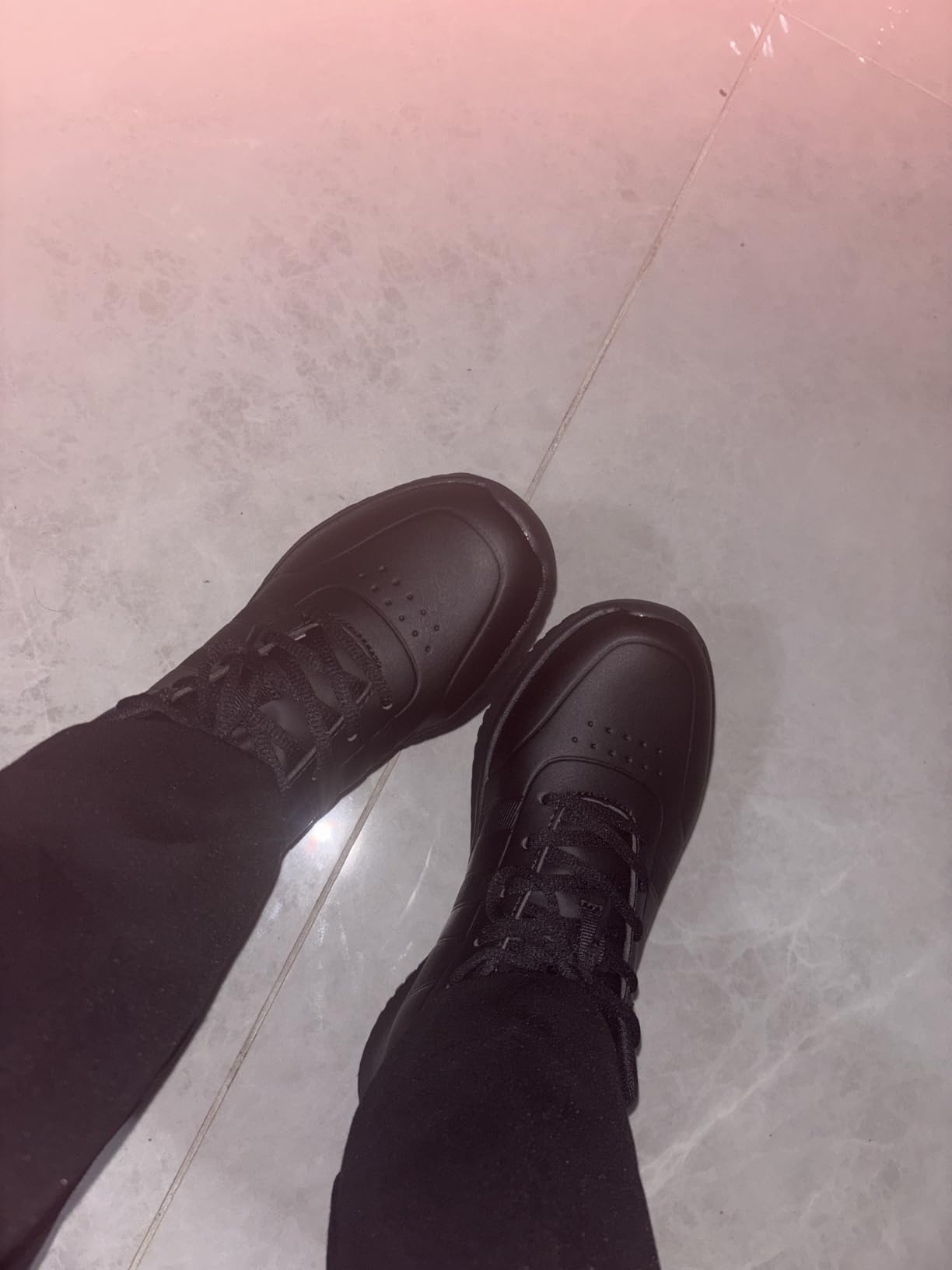
Yes, mostly through width and arch placement. Many unisex work shoes are simply scaled down versions of a men’s last, which leaves a narrow forefoot and an arch position that does not line up with a woman’s foot. A shoe built on a women’s last will have a wider forefoot and a different heel-to-toe taper.
So do not just order your usual women’s size in a unisex model. Check whether the listing is listed under a women’s department, and if you are between sizes or have a wide foot, look for wide and X-wide options, which several shoes in this guide offer.
What should I do about foot pain on hour ten of a double?
Diagnose the source before buying shoes, because the cause changes the fix. Pain under the heel first thing in the morning is a classic plantar fasciitis pattern, and it responds to arch support and a firm heel counter. Pain across the ball of the foot usually means the toe box is too narrow or too short. Ankle and achilles ache points at heel slip.
For heel slip specifically, never size down. A shoe that is too short forces your toes to curl, which creates new problems. Try a different model or add a heel insert, and if pain persists, get it assessed rather than buying a third pair of shoes.
How to Choose Slip-Resistant Restaurant Shoes
What do ASTM F1677, F2913, and F3445 actually mean?
These are independent laboratory test standards for slip resistance, and they are the single most useful thing to check on a product page. A shoe that has been tested to a standard has had its coefficient of friction measured on a contaminated test surface, rather than simply being described with a reassuring word.
ASTM F1677 is the long-established standard used for greasy and soapy wet test conditions, and it is the code carried by the HISEA and Bruno Marc shoes in this guide. ASTM F2913 is the newer standard, and the Pembroke in this guide is tested to ASTM F2913-19 for wet, oily, and greasy surfaces. ASTM F3445 is a further revision in the same family. Some listings also reference SATRA TM63 and TM144, which the Dr. Scholl’s loafer in this guide carries.
The practical rule is simple. If the listing names a number, the traction is tested. If the listing only says non-slip, oil resistant, or slip resistant, you are reading a description, not a certification. Look for the code on the product detail page, and cross-check the manufacturer’s own site when a listing looks thin on detail.
Which cushioning type works best for standing all day?
It depends on how the cushioning is built, not on the label. Memory foam distributes pressure and feels soft, which suits standing work, but it compresses over a long shift and its arch support is whatever you put in it. The Skechers Squad and Dighton use this approach. Croslite foam, used in the Crocs Bistro, is a closed-cell foam that springs back instead of flattening, which is why that clog keeps its feel. EVA is lighter and cheaper, absorbs shock well, and is common in mid-tier kitchen shoes, but it breaks down faster under heat and oil. Geometric and bladder foam midsoles move through their range of motion, which helps when you alternate between standing and walking.
The test that matters is the fourth hour, not the first. Pick whichever holds its shape and still feels supportive when your feet are tired, and do not judge cushioning in a store.
What is the difference between water-resistant and waterproof?
Water-resistant means the material sheds a spill, and a coated or treated upper will bead liquid and wipe clean. Waterproof means the shoe is sealed, so standing water does not reach your foot, and the outsole and upper are both non-absorbent. The Sticky clog in this guide is fully waterproof, while the Pembroke is water-resistant and explicitly not intended for submersion.
Choose waterproof for a dish pit, a bar with ice melt, and outdoor catering in rain. Choose water-resistant for a line cook, because a sealed shoe traps heat in a hot kitchen and a breathable upper will keep you far more comfortable over ten hours.
Which shoe should a server, cook, or dishwasher wear?
Match the shoe to the floor, not to the trend. A server walks constantly on relatively dry dining room flooring, so a professional-looking slip-on with a certified outsole, such as the Skechers Squad or the Dr. Scholl’s loafer, works best. A line cook needs a certified outsole and a wipe-clean upper, so a coated loafer or a molded clog both work. A dishwasher is standing in water, so a fully waterproof clog is the only sensible answer. A host or bartender stands in one place, which makes a cushioned clog or a cushioned slip-on more comfortable than a thin-soled dress shoe. An expeditor or manager moves between front and back of house and needs something that passes a dress code and still has a certified outsole.
Our guide to rugged phones for construction workers covers the same kind of environment analysis for people working in tougher conditions than a dining room.
What is the three-shoe rule for restaurant workers?
It is a rotation habit rather than an official standard, and it is the single most useful piece of advice in this whole guide. Instead of wearing the same pair every shift, you rotate between two or three pairs. The foam in each pair gets a full day or more to recover its shape, the tread gets a chance to shed grease and grime, and the shoe has time to dry fully.
It also removes the single biggest failure mode we found in the review data, which is a smooth sole with no warning before it slips. Rotating means you inspect a pair that has rested, and a worn tread pattern becomes obvious when you see the same outsole fresh each week.
Two pairs is the realistic minimum, and a third pair for dish work or outdoor duty is the version that pays for itself.
How do I know if my work shoes are still slip resistant?
Run a five-step check. First, look at the tread edges for wear, since that is where grip is lost earliest. Second, press your thumbnail into the tread and confirm you can feel the channels. Third, check the bond line at the toe and heel for any lifting. Fourth, look at the insole, and if it is removable, press it down and see whether it has gone flat. Fifth, drag the shoe across a wet tile under moderate pressure and see whether it skates.
Replace the shoe if the tread is smooth, the sole is separating, or the insole no longer rebounds. Do not replace it because a specific number of months has passed, because hours matter more than the calendar.
How should I size and break in restaurant work shoes?
Order the size you would buy for a comfortable walking shoe, then check the fit note on the listing before you click. Several shoes in this guide run large, including the Crocs Bistro, which the manufacturer recommends sizing down a full size, and the HISEA, which runs large. The Skechers Squad runs about a size and a half long. Others, including the Pembroke and the Bruno Marc, are closer to true to size.
Fit for a work shift is about width and heel security, not length. Your toes should have room to spread, your heel should sit still when you lift your foot, and the ball of your foot should not touch the sidewalls. If you have to size down to stop your heel lifting, you have traded a slip risk for a crushed-toe risk.
Allow a break-in period for any leather or foam construction, and wear the new pair alongside your old one for a few shifts before committing. If you swap in your own orthotic insole, confirm the shoe has a removable footbed, because a glued-in insole cannot be upgraded.
Frequently Asked Questions
What are some good non-slip shoes for food service workers?
The strongest all-round choice is a molded clog with an enclosed toe, a tested slip resistance standard, and a one-piece construction, because nothing in it can delaminate. For front of house, a black slip-on with a certified traction outsole passes a dress code and still grips. For dish work, you need a fully waterproof clog rather than a water-resistant one. Match the shoe to the floor rather than to the role title, and check the ASTM code before anything else.
What are the best shoes for standing all day and slip-resistant?
Cushioning that recovers matters more than cushioning that feels soft in a store. Closed-cell foam midsoles hold their shape through a full shift, while memory foam distributes pressure well but compresses by hour six. Look for a supportive heel counter, a wide toe box so your toes can spread, and a removable insole you can upgrade. Add a firm orthotic if you have diagnosed arch pain, and avoid laces if your feet swell late in a shift.
What are the best shoes for standing all day in a restaurant?
A cushioned clog or a slip-on with a thick midsole is the usual answer, because both put the padding between you and hard tile. Choose a molded clog for a hot kitchen, a cushioned slip-on for front of house, and a waterproof clog for a wet dish area. The single biggest upgrade is a supportive heel cup, since heel and ball of the foot absorb most of the load when you are standing still. Replace the insole before you replace the shoe.
What are the most comfortable shoes for working 12-hour shifts?
Comfort comes from three things working together: a midsole that does not bottom out, an insole with real arch support, and a fit that allows for swelling. Memory foam is a good start, but it flattens, so pick a shoe with a removable insole and keep a fresh spare. Sneaker-style uppers breathe better than sealed waterproof ones in a hot kitchen. Above all, rotate two or three pairs so the foam in each one can recover between shifts.
What are the best non-slip shoes for restaurant servers?
Servers need a professional-looking black shoe with a certified traction outsole, and slip-on construction is a real advantage when your feet are swollen and laces are a waste of time. A knit upper with a water-repellent treatment handles spills without looking like kitchen gear. Avoid thin-soled dress shoes with smooth leather soles, which look the part but grip poorly. Wide and extra-wide widths are worth checking if you are between sizes.
What shoes to wear when working in a restaurant?
Wear a closed-toe, slip-resistant work shoe with a tested standard such as ASTM F1677 or F2913, a cleanable upper, and cushioning suited to whether you stand or walk. A molded clog suits a hot kitchen, a certified slip-on sneaker suits a dining room, and a waterproof clog suits a dish pit. Check your employer’s uniform policy first, since some venues restrict open-back footwear. And never size down to fix heel slip, because a crushed toe creates a new problem.
What is the 3 shoe rule for restaurant workers?
The three shoe rule is a rotation habit: never wear the same pair on consecutive shifts. Rotating gives each pair time to dry out fully and lets the foam insole recover its shape, which both extends shoe life and makes worn tread obvious. Two pairs is the realistic minimum, and a third pair dedicated to dish work or outdoor duty stops your main service shoes from sitting in water. It is the most common piece of advice in restaurant worker communities.
What shoes do podiatrists recommend for restaurant workers?
The recurring recommendations are a supportive arch, a firm heel counter, a wide toe box, and a cushioned midsole that has not bottomed out. Standing on hard tile loads the heel and the ball of the foot, so pressure distribution and a stable heel are what reduce strain. Heel pain that is worst in the morning is a classic plantar fasciitis pattern and responds to arch support. Foot pain that develops after hour eight of a shift is usually a fit problem, not a cushioning problem.
Final Verdict
After working through all twelve, the best slip resistant work shoes for restaurant workers come down to what your floor does to you. If you are on a hot line and want the pair that lasts longest, the Crocs Bistro wins on its one-piece molded build and a tested slip-resistant tread. If you serve tables and need to look the part, the Skechers Squad gives you a professional black shoe with a certified outsole and no laces to fight at hour eight.
Pick the Sticky clog if you work in standing water, the Shoes For Crews Pembroke if your uniform is strict and you want a tested ASTM F2913 outsole, and the Bruno Marc if you are on your feet all shift and want the lightest certified option. Whatever you choose, check the ASTM code rather than the wording, buy the width you actually need, and rotate two or three pairs so you notice wear before the floor does.
Our 2026 picks will hold up through a full service, but only if you keep checking the tread. Related guides worth a look include our picks for multimeters for home electrical work and rugged headphones for construction workers.