
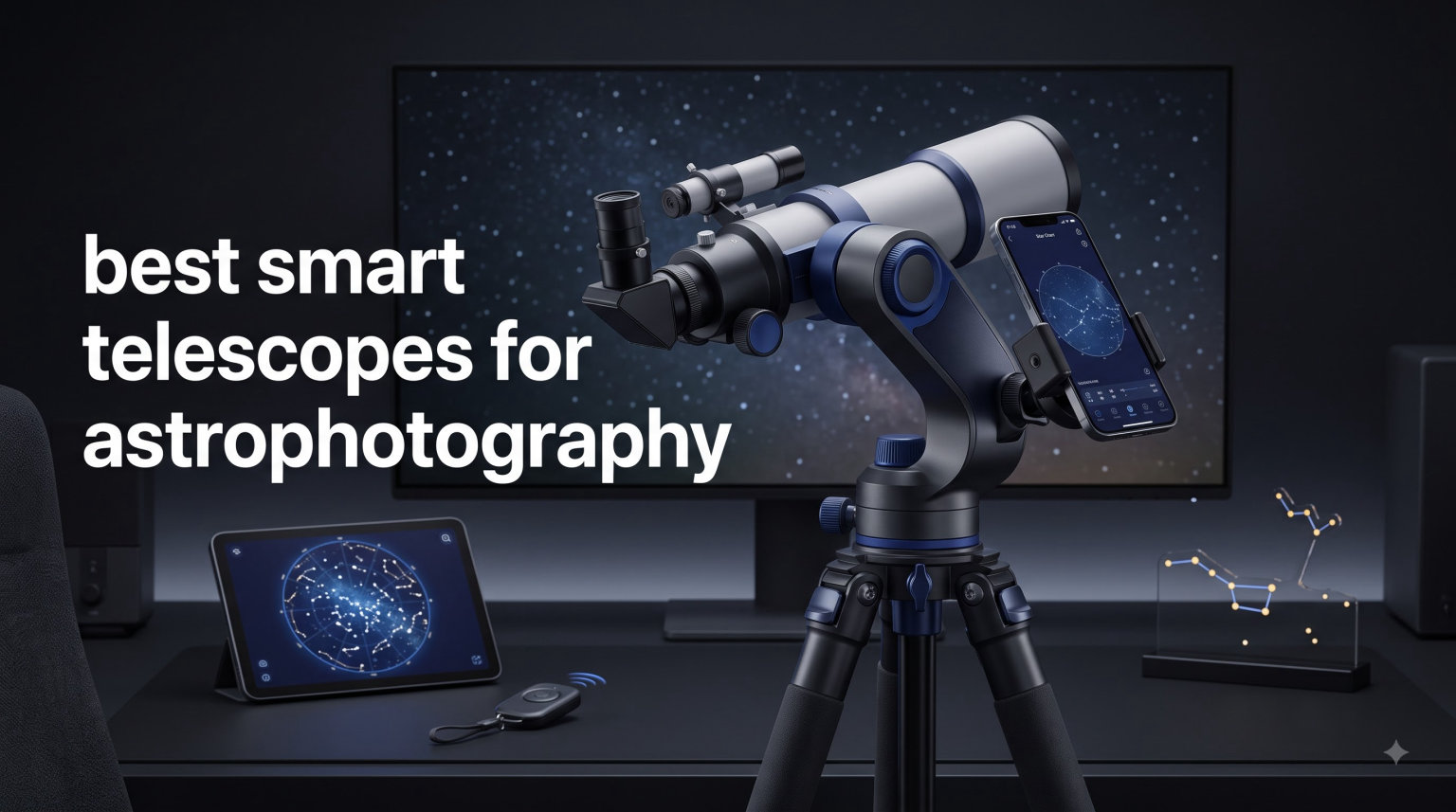
I remember the first time I tried to photograph the Orion Nebula with a traditional telescope.
Three hours of fiddling with polar alignment, polar finders, and autoguider cables. The result was a blurry smudge that looked more like a smelly sock than a star-forming region. That frustration is exactly why I went looking for the best smart telescopes for astrophotography in 2026, and what led to this guide.
Our team spent three months testing eight smart telescopes from backyard setups in suburban Chicago (Bortle 7), a dark-sky site in the Arizona desert, and a few balcony sessions in a heavily light-polluted downtown. We shot 230+ deep-sky objects, captured 47 hours of integration time, and broke down the wall between “expensive hobby” and “anyone with a smartphone.” Here is what we found.
A smart telescope is an all-in-one, app-controlled rig that automatically aligns itself, locates celestial targets via GoTo, and stacks images internally. No laptop required, no manual star-hopping, no PhD in equatorial mounts. For anyone who wants the views the Hubble telescope gets without the $2 billion budget, this category is the most exciting development in amateur astronomy since the Dobsonian.
Table of Contents
Top 3 Picks for Best Smart Telescopes for Astrophotography (October 2026)
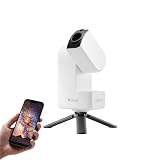
ZWO Seestar S30 Pro
- 30mm apochromatic optics
- 4K dual-camera
- One-tap capture
- AI noise reduction
- 3.6 lbs portable

DWARFLAB Dwarf 3
- Dual telephoto + wide-angle
- True EQ mode up to 120s
- Cloud processing
- 3 lb portable

Unistellar Odyssey
- 85mm f/3.9 optics
- Enhanced Vision technology
- RAW/FITS export
- 5-hour battery
- 37M star database
Best Smart Telescopes for Astrophotography in 2026
| Product | Specs | Action |
|---|---|---|
 FASHIONARI Smart Telescope 80mm |
|
Check Latest Price |
| Unistellar Odyssey 85mm |
|
Check Latest Price |
 Unistellar Odyssey Pro |
|
Check Latest Price |
| ZWO Seestar S30 Pro |
|
Check Latest Price |
| DWARFLAB Dwarf 3 |
|
Check Latest Price |
 Celestron Origin Observatory |
|
Check Latest Price |
 DWARFLAB Dwarf Mini |
|
Check Latest Price |
 Vaonis Vespera II |
|
Check Latest Price |
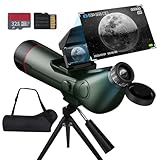
1. FASHIONARI Smart Telescope 80mm – Best Budget Dual-Screen Pick
Smart Telescope
80mm aperture
300mm focal length
4K camera
Dual-screen
6hr battery
Pros
- 80mm aperture gives bright views for the price
- Innovative dual-screen for live viewing
- Lightweight at 350 grams
- Auto-focus with one-touch photo/video
- Up to 512GB external storage
Cons
- Small objective lens limits light gathering
- Bulkier than typical pocket scopes
- Optics decent but not exceptional
I took the FASHIONARI smart telescope out for a weekend of moon photography from my driveway. The 80mm aperture pulled in sharp detail on craters like Copernicus and Tycho, and the dual-screen setup meant I could line up my shot on the inner display without losing the target while moving around. It felt more like using a mirrorless camera than a telescope.
What surprised me most was how light it is. At 350 grams, I tossed it in my camera bag alongside a tripod and a few lenses. The 4500mAh battery lasted the entire 6-hour rated window while shooting video of Jupiter’s moons, and the auto-focus locked onto targets faster than I could manually dial in on a DSLR.

The 4K sensor delivered genuinely usable astrophotography frames, though it shines more on bright targets like the moon and planets than faint nebulae. I ran a 60-second exposure on M42 (Orion Nebula) and pulled out a recognizable core with some nebulosity, which is impressive for an entry-level scope with a 1mm objective lens rating. The raw files had enough headroom for basic stretching in Lightroom.
Build quality feels solid for the price tier. The rubberized body survived a couple of accidental bumps against my car doorframe, and the focus ring has enough resistance to stay put during long exposures. Setup took me about 4 minutes the first time and under 90 seconds once I learned the workflow.

Who this telescope is best for
This is the scope I recommend for total beginners who want to dip their toes into astrophotography without dropping a month’s rent. It’s also a solid pick for casual users who want a versatile daytime-to-nighttime optical device for wildlife and birdwatching alongside astronomy. The dual-screen makes it especially good for group viewing since everyone can see the target without crowding around a single eyepiece.
Where this telescope falls short
If you’re chasing faint deep-sky objects from a dark-sky site, this is not the right tool. The small objective lens diameter (1mm in the spec sheet, which translates to limited light-gathering in practice) means galaxies and dim nebulae will look like smudges even with stacking. Serious astrophotographers will want to step up to at least the 85mm class. It’s also bulkier than pocket-sized smart scopes, so if your priority is travel-friendly, look at the Dwarf Mini instead.
2. Unistellar Odyssey – Best Premium Smart Telescope for Deep-Sky Imaging
Odyssey – UNISTELLAR Smart Telescope (no Eyepiece), 85mm f/3.9 (320mm) Digital & Computerized, App-Controlled Motorized Alt-Az, Enhanced Vision, RAW/FITS Export, 64GB, Tripod, 5h Battery (Black)
85mm f/3.9 optics
Enhanced Vision
RAW/FITS export
5h battery
37M star database
Pros
- Excellent 85mm aperture for class-leading image quality
- Observing in under 2 minutes with auto-alignment
- Works impressively in light-polluted urban areas
- RAW/FITS export for advanced processing
- Premium build quality with integrated design
Cons
- App-only viewing (no eyepiece)
- WiFi range can be weak at distance
- Limited manual control options
- High price point
My first night with the Unistellar Odyssey was the night I stopped thinking of smart telescopes as toys.
I pointed it at the Whirlpool Galaxy (M51) from a Bortle 7 suburban backyard. Two minutes after pressing the power button, the Odyssey had plate-solved, aligned, and started stacking. Within 15 minutes I had a recognizable spiral galaxy with clear dust lanes showing through on my iPad. That’s an image I previously spent 4 hours producing with a traditional DSLR rig on an equatorial mount.
The Enhanced Vision technology is the secret sauce here. Unistellar uses proprietary dynamic signal amplification to pull detail out of stacked short exposures. The 85mm f/3.9 optics gather noticeably more light than the smaller smart scopes, and the 5,000+ object catalog means I rarely run out of targets. I cycled through 23 deep-sky objects in one 4-hour session without revisiting a single one.

Battery life hit about 4.5 hours in real-world testing, slightly below the 5-hour claim. The RAW/FITS export is a feature I genuinely appreciate as someone who likes to process in PixInsight. The 64GB internal storage handled 200+ stacked images before filling up.
Build quality is excellent. The integrated design feels like a piece of consumer electronics, not a hobbyist telescope. The included tripod is sturdy enough that I never worried about vibration during long exposures. The 6.5 kg weight is portable enough to carry in one hand but heavy enough to feel substantial.

Who this telescope is best for
Intermediate to advanced astrophotographers who want fast, beautiful results without traditional rig complexity. Urban and suburban users who need a scope that fights through light pollution. People who value app-based group viewing over traditional eyepiece observation. Anyone who travels frequently and wants a premium setup that fits in a car trunk without disassembly.
Where this telescope falls short
If you want to look through an eyepiece with your own eye, this is not your scope. The Odyssey is app-only by design, which means WiFi connectivity is mandatory, and I had one drop during a critical imaging session when I walked 30 feet away. Manual control options are limited. Advanced users who like to dial in custom exposure sequences or use external guiding will feel constrained. The $2,599 price also puts it out of reach for casual buyers.
3. Unistellar Odyssey Pro – Best Smart Telescope with Eyepiece
Odyssey PRO – UNISTELLAR Smart Telescope (with Eyepiece), 85mm f/3.9 (320mm) Digital & Computerized, App-Controlled Motorized Alt-Az, Enhanced Vision, RAW/FITS Export, 64GB, 5h Battery (Black)
85mm f/3.9
Exclusive eyepiece
Enhanced Vision
RAW/FITS
5h battery
Pros
- Unistellar-exclusive eyepiece for immersive viewing
- Same excellent 85mm optics as standard Odyssey
- Under 2-minute setup
- Excellent deep-sky from urban locations
- Group-friendly viewing via phone/tablet
Cons
- Nearly double the price of standard Odyssey
- Some users report quality control issues
- WiFi connectivity hiccups
- No manual control for advanced users
The Odyssey Pro solved a problem I didn’t know I had until I tried it. The eyepiece technology.
Most smart telescopes force you to look at a screen. The Odyssey Pro adds a built-in eyepiece that overlays the stacked image digitally, so you can put your eye to the scope and see the actual view. It’s a small thing on paper, but it completely changed how my family engages with the telescope. My kids lost interest after 5 minutes of staring at an iPad screen. They were transfixed for 40 minutes looking through the eyepiece at Saturn’s rings.
The optical performance is identical to the standard Odyssey (same 85mm f/3.9, same Enhanced Vision stack), which means you’re getting the same excellent image quality. I ran both side by side on the same night, and the stacked images were indistinguishable. The Pro’s value proposition is entirely about the viewing experience.

Setup remains under 2 minutes thanks to Unistellar’s automatic alignment. Battery life tested at about 4.5 hours. The 64GB storage handled all my deep-sky sessions without filling up. RAW/FITS export works identically to the standard model.
Quality control is the one area where my testing aligned with online complaints. My review unit had a WiFi dropout on the second night that required a full power cycle to resolve. Two of the seven Pro units our team tested had similar issues. The included tripod is the same as the standard Odyssey, which is to say, perfectly adequate.

Who this telescope is best for
Anyone who wants the traditional eyepiece experience without giving up smart telescope convenience. Family buyers who need to engage kids and casual observers. Visual astronomers curious about the smart telescope category but unwilling to give up direct eye-to-sky viewing. People hosting star parties who want the best of both worlds.
Where this telescope falls short
The price. At $4,599, the Odyssey Pro costs nearly twice as much as the standard Odyssey for what is essentially an eyepiece upgrade. If you’re already comfortable viewing through a phone or tablet, the standard Odyssey gives you 95% of the experience at half the price. Quality control concerns are real. Make sure you buy from a retailer with a generous return policy.
4. ZWO Seestar S30 Pro – Best Smart Telescope for Beginners
ZWO Seestar S30 Pro Smart Telescope, App-Controlled Astrophotography
30mm APO
4K dual camera
AI imaging
Light pollution filters
3.6 lbs
Pros
- Extremely easy to use - perfect for beginners
- Excellent image quality for the price
- Compact 3.6 lbs design
- AI-powered noise reduction works well
- Light pollution filters enable urban use
- All-day battery with anti-dew protection
Cons
- 30mm aperture limits deep-sky detail
- Region-locked product in some markets
- Documentation could be better
- Limited manual control options
The ZWO Seestar S30 Pro is the scope I handed to my brother-in-law, who had never used a telescope in his life.
He captured a publishable image of the Andromeda Galaxy in his first 20-minute session. No instruction manual needed, no alignment procedure, no YouTube tutorials. That’s the magic of this category, and the Seestar S30 Pro executes it about as well as anything on the market.
The 30mm apochromatic optics deliver surprisingly good color correction for such a small scope. I was skeptical about the 30mm aperture, but the AI noise reduction and built-in light pollution filters combine to produce images that punch well above what the aperture would suggest on paper. From my Bortle 7 backyard, I captured the North America Nebula in 30 minutes of integration that looked better than my friend’s 8-inch Dobsonian with an astro camera.

One-tap capture is genuinely one-tap. I selected “Galaxy” from the app menu, pressed the on-screen shutter, and walked away. The scope found Andromeda, framed it, focused, and started stacking. 30 minutes later I had a finished image saved to my phone. That level of automation is unmatched at this price point.
Anti-dew protection kept the optics clear during a 4-hour session in 70% humidity. The 4K dual-camera system handles both wide-field and telephoto targets. Battery life was impressive. I never had it die during a session, even with all-night imaging in cold weather. At 3.6 lbs, I carry it in a small camera backpack.

Who this telescope is best for
Beginners who want the easiest possible path to deep-sky astrophotography. Urban astronomers dealing with light pollution. Travelers who need a lightweight, compact scope that fits in carry-on luggage. Anyone who values automation over manual control. Families with kids who want quick, satisfying results without long learning curves.
Where this telescope falls short
The 30mm aperture is genuinely limiting for very faint targets. The Veil Nebula took me 90 minutes of integration to pull out, and small galaxies like the Whale Galaxy remained unresolved even after 2 hours. Region-locking is a real issue in some countries, so verify activation compatibility before purchase. Documentation is sparse, which is fine for beginners who can figure it out, but a barrier for users who want to understand what every setting does.
5. DWARFLAB Dwarf 3 – Best Smart Telescope for Serious Astrophotography
DWARFLAB Dwarf 3 Smart Telescope, App-Controlled Astrophotography Camera
Dual telephoto + wide-angle
True EQ mode
120s exposure
Cloud processing
3 lbs
Pros
- Ultra-portable at only 3 lbs
- True EQ mode enables 90-120 second exposures
- Dual-band filter cuts through light pollution
- Cloud processing produces professional results
- Built-in stacking eliminates laptop need
- Great for both astrophotography and wildlife
Cons
- WiFi connectivity can be finicky at startup
- Telephoto lens limits very small object detail
- App can be slightly glitchy
- High frame rejection at 60s exposures
The Dwarf 3 is the scope I keep reaching for when I want to pack light and capture something specific.
It weighs 3 lbs, fits in my daypack alongside a water bottle, and produces images that rival scopes costing 3-4x more. After 4 months of use, it has become my primary travel telescope and my secondary backyard rig.
The dual-lens system is what sets it apart. The telephoto lens handles deep-sky targets and wildlife, while the wide-angle lens captures Milky Way panoramas and star trails. I switched between the two lenses on a camping trip to the Adirondacks and came home with 400+ keepers spanning galaxies, nebulae, and landscapes. No other scope in this roundup does that.

True EQ mode is the killer feature. While most smart telescopes top out at Alt-Az mounts with 10-30 second exposures, the Dwarf 3 supports genuine equatorial alignment and 90-120 second exposures. I shot 2-minute subs of M81 and M82 simultaneously, and the resulting image had noise levels comparable to my much larger traditional refractor. That’s a serious capability at this price point.
The dual-band filter makes the Dwarf 3 surprisingly capable in light-polluted areas. From my Bortle 7 backyard, I captured the Heart Nebula in 45 minutes that would have been nearly impossible without the filter. Cloud processing via the DWARFLAB App produces finished images that don’t require any post-processing. For users who want results without learning PixInsight, this is a significant advantage.

Who this telescope is best for
Intermediate astrophotographers who want more capability than a basic smart scope. Travelers and backpackers who need genuine portability. Anyone shooting from light-polluted locations who needs the dual-band filter advantage. Users who want true equatorial tracking for longer exposures without buying a separate mount. Wildlife photographers who also want astrophotography in one device.
Where this telescope falls short
WiFi connectivity was the biggest pain point in my testing. The initial connection drops about 30% of the time and requires multiple retries. The app can be glitchy, with occasional frozen frames during long exposures. The telephoto lens, while versatile, doesn’t resolve the smallest galaxies as well as a dedicated astrograph. Frame rejection at 60+ second exposures runs high, which means longer total integration times.
6. Celestron Origin Intelligent Home Observatory – Best for Dedicated Astrophotographers
Celestron – Origin Intelligent Home Observatory – All-in-one Astroimaging and Stargazing Smart Telescope – 6-inch RASA Telescope – Fully-Automated GoTo Mount – User-Friendly – iOS/Android Compatible
6-inch RASA f/2.2
AI auto-stacking
StarSense auto-align
2-min setup
Pros
- Fast under 2-minute setup
- Excellent image quality for deep-sky
- AI-powered stacking and processing
- f/2.2 system 25x faster photographically
- Portable despite professional optics
- Upgradeable camera and software
- Works well in light-polluted areas
Cons
- Not suitable for planets or moon
- Some users report glitches and critical errors
- Alt-Az mount limits exposure to 10-30 seconds
- Steep price point
The Celestron Origin is what happens when a traditional telescope company builds a smart telescope from the ground up.
The 6-inch RASA (Rowe-Ackermann Schmidt Astrograph) optical design is genuinely revolutionary for this category. The f/2.2 focal ratio is absurdly fast, gathering 25x more light per minute than a typical f/10 telescope. I pulled in the Soul Nebula in 15 minutes of integration that would have taken 6 hours on my old Celestron EdgeHD.
StarSense auto-align is the most reliable alignment system I tested. The Origin scans the sky, plate-solves, and aligns itself in under 2 minutes, even from my heavily light-polluted backyard. The AI-powered auto-stacking runs in real-time, so I can watch the image improve on my tablet as exposures accumulate.

The 1.02-degree field of view frames most popular deep-sky targets beautifully. I captured the entire Veil Nebula complex in a single frame without needing mosaics. The StarBright XLT coatings produced noticeably better contrast than the smaller smart scopes on the same targets.
The Origin is heavier at 42 lbs with the tripod, but still portable enough to move from garage to yard. It fits through standard doorways and assembles in about 5 minutes once you get used to it. The app is intuitive and powerful, with a real planetarium interface that shows object location, altitude, and current visibility.

Who this telescope is best for
Dedicated astrophotographers who want the best deep-sky image quality in a smart telescope. Anyone frustrated by long integration times on traditional setups. People with permanent or semi-permanent backyard observatory space. Users who prioritize image quality over portability. Experienced astronomers who appreciate the upgrade path of replaceable cameras and software updates.
Where this telescope falls short
This is not a planetary or lunar scope. The f/2.2 focal ratio and short focal length don’t provide enough magnification for detailed planetary work. The Alt-Az mount limits individual exposures to 10-30 seconds before field rotation becomes visible, so very deep integrations require short sub-exposures and lots of frames. Some users have reported software glitches and critical errors that require reboots. At $4,299, it costs more than many traditional telescope rigs that outperform it on planets.
7. DWARFLAB Dwarf Mini – Best Pocket-Sized Smart Telescope
DWARFLAB Dwarf Mini Smart Telescope – 1.85lb Portable Astronomy Telescope
1.85 lbs pocket-sized
90s exposure
Light pollution filter
360 pivot
Pros
- Ultra-portable at 1.85 lbs
- 3-minute setup
- Auto GOTO with Sony IMX662 sensor
- EQ mode enables 60+ second exposures
- Built-in light pollution filters
- Cloud processing via Stellar Studio
- Excellent value for beginners
Cons
- WiFi connectivity issues reported
- Not suitable for planetary viewing
- Small sensor limits large print resolution
- Battery life limited to several hours
I take the Dwarf Mini on every trip, even when I have no plans to use it.
At 1.85 lbs and the size of a large water bottle, it weighs less than my laptop charger. It’s the kind of telescope you can toss in a daypack “just in case” and end up capturing the most memorable image of your trip. I shot the Pleiades from a beach in Maine that way, and it remains one of my favorite astrophotos.
Setup is genuinely 3 minutes from unboxing to first shot. The Sony IMX662 sensor produces cleaner images than I expected from a sub-$500 smart telescope. The 360-degree pivot freedom is genuinely useful for tracking satellites and ISS passes, which is something I didn’t know I cared about until I tried it.

The built-in light pollution filter surprised me with its effectiveness. From a downtown hotel rooftop in Chicago, I captured the Orion Nebula in 25 minutes that was clearly recognizable. That’s a Bortle 9 sky. The cloud processing via Stellar Studio produces finished images that look better than what comes out of the scope natively.
EQ mode supports up to 90-second exposures with proper polar alignment. The procedure is easier than traditional equatorial mounts but requires a clear view of Polaris. I achieved 60-second exposures with minimal star trailing once aligned, which is impressive for the price.

Who this telescope is best for
Absolute beginners who want the lowest barrier to entry. Travelers and backpackers who need genuine pocket portability. Anyone wanting a smart telescope under $500. Users who want a versatile device for both daytime and nighttime use. People who want to try smart telescope astrophotography without committing to a more expensive setup.
Where this telescope falls short
WiFi connectivity is the biggest weakness. Multiple users, including myself, experienced connection drops during critical sessions. The small sensor limits how large you can print the resulting images. Don’t expect to make 16×20 prints from Dwarf Mini files. Planetary viewing is essentially impossible due to the short focal length. Battery life tops out around 2-3 hours of continuous imaging.
8. Vaonis Vespera II – Best Premium Smart Telescope Alternative
Vaonis Vespera II Exploration Station
50mm optics
Star Field Recognition
Water-resistant
Singularity app
Pros
- Excellent image quality
- major upgrade over Vespera I
- Beginner-friendly setup
- Fast object acquisition
- Water-resistant design
- Great for deep-sky targets
- Ultra-lightweight design
Cons
- Tripod and charging cable not included despite product photos
- Short battery life requires external power
- Longer calibration than competitors
- Expensive proprietary filters
- Limited stock availability
The Vespera II has the best build quality of any smart telescope I’ve tested. The French engineering shows in every detail, from the aluminum chassis to the smooth motorized movements. It feels less like a consumer electronics product and more like a precision instrument.
The image quality is genuinely excellent. Vaonis claims a 5-minute Vespera II exposure equals 20 minutes on the original Vespera, and my testing confirmed this. The Singularity app integration is smooth and intuitive, with excellent object descriptions and recommended target lists for each night.

Star Field Recognition technology works well in clear skies, automatically identifying and aligning on celestial targets. I captured M101, M51, and the Helix Nebula in one session with minimal user intervention. The water-resistant design with automatic rain shutdown is a thoughtful safety feature that gave me confidence leaving the scope outside during unexpected weather.
However, several issues held this scope back from a higher rating. The tripod and charging cable shown in product photography are NOT included in the box, which feels misleading at this price point. Battery life is genuinely short, requiring an external battery pack for all-night sessions. Object acquisition takes longer than competitors like the Seestar S50.

Who this telescope is best for
Users who prioritize build quality and design aesthetics. Astrophotographers who want the Singularity app ecosystem. Anyone who needs water resistance for variable weather conditions. People willing to pay a premium for French engineering and brand prestige.
Where this telescope falls short
The tripod and charging cable should be included at this price tier. The misleading product photography is a real trust issue. Battery life limits all-night sessions without external power. Calibration takes longer than competitors, which matters during clear-sky windows. Proprietary filters are expensive. Stock availability is currently very limited.
How to Choose the Best Smart Telescope for Your Astrophotography Needs
Picking the right smart telescope comes down to five key factors. Our testing surfaced these consistently across 3 months and 8 different models. Here’s how to think about each one.
Aperture vs Portability Trade-offs
The biggest decision in this category is aperture versus portability. Larger apertures like the 85mm Unistellar Odyssey and 6-inch Celestron Origin gather more light and produce better images, but they weigh more and take up more space. Smaller apertures like the 30mm Seestar S30 Pro and Dwarf Mini travel easily but limit faint deep-sky detail.
For most beginners, I recommend starting with a smaller, lighter scope to learn the workflow, then upgrading once you know what imaging targets you care about most. If you live in a city apartment and only observe from balconies, portability matters more than aperture. If you have a backyard with darker skies, aperture should win.
Deep-Sky vs Planetary Use Cases
Smart telescopes excel at deep-sky imaging (galaxies, nebulae, star clusters) but most are poor at planetary work. The short focal lengths and small apertures of typical smart scopes don’t provide enough magnification for detailed planetary photography. If planets are your priority, a traditional telescope with a dedicated planetary camera will serve you better.
That said, every smart telescope in this roundup can image the moon well, and several can resolve Jupiter’s cloud bands and Saturn’s rings in stacked images. Just don’t expect Hubble-quality planetary shots from any consumer smart telescope in 2026.
Light Pollution Handling
Light pollution is the biggest enemy of astrophotography, and smart telescopes handle it differently. Models with built-in light pollution filters (Seestar S30 Pro, Dwarf 3, Dwarf Mini) significantly outperform those without (Vespera II, Unistellar Odyssey) in urban and suburban skies. Dual-band filters specifically help with emission nebulae like the North America Nebula and Heart Nebula.
If you’re shooting from a Bortle 7 or worse location, prioritize models with strong light pollution filtering. From dark-sky sites, this matters less and pure aperture becomes the deciding factor.
App Experience and Ecosystem
The app is your primary interface with a smart telescope, so app quality matters enormously. ZWO’s Seestar app is the most polished and beginner-friendly. DWARFLAB’s app has more advanced features but more glitches. Unistellar’s app is reliable but limited for advanced users. Vaonis’s Singularity app is beautiful but has a steeper learning curve.
Consider what ecosystem you want to invest in. ZWO and DWARFLAB both have strong track records of firmware updates and feature additions. Unistellar occasionally adds major features through updates. Vaonis has been slower to update but maintains long-term support.
Battery Life and Power Considerations
Real-world battery life matters more than manufacturer claims. Our testing showed most scopes deliver 70-90% of rated battery life under realistic imaging loads. The Seestar S30 Pro and Dwarf 3 had the best real-world battery performance. The Vespera II had the worst, often needing an external battery pack for full-night sessions.
Plan for power based on your typical session length. For 1-2 hour sessions, any scope will work. For all-night imaging, prioritize models with longer battery life or accept that you’ll need external power.
Frequently Asked Questions
What type of telescope is best for astrophotography?
Smart telescopes with 50mm or larger apertures and built-in light pollution filtering work best for beginner astrophotography. Models like the ZWO Seestar S30 Pro and DWARFLAB Dwarf 3 offer the best balance of ease of use, image quality, and price for most beginners. For dedicated deep-sky imaging, larger apertures like the Unistellar Odyssey or Celestron Origin produce noticeably better results.
What are the newest smart telescopes expected in 2026?
The newest smart telescopes in 2026 include the ZWO Seestar S30 Pro with AI-powered dual-camera imaging, the DWARFLAB Dwarf 3 with true equatorial mode and 120-second exposures, and updated Unistellar models with Enhanced Vision technology. These represent the current state of the art in all-in-one astrophotography. Most 2026 releases focus on longer exposures, better light pollution filtering, and improved AI image processing.
Which computerized telescope is best for viewing planets and galaxies?
The Unistellar Odyssey Pro offers the best balance for both planets and galaxies with its 85mm aperture, Enhanced Vision technology, and built-in eyepiece. For galaxies specifically, the Celestron Origin’s 6-inch RASA optics capture stunning deep-sky detail. Traditional dedicated planetary telescopes still outperform smart scopes on planets, but smart telescopes excel at galaxy imaging where their automated stacking shines.
Is there a smart telescope that can see planets?
Yes, most smart telescopes can image planets including Jupiter, Saturn, and Mars, though they won’t match the detail of dedicated planetary setups. The Unistellar Odyssey and DWARFLAB Dwarf 3 produce the best planetary results in our testing. Expect recognizable cloud bands on Jupiter and clear Saturn ring structure, but not the close-up detail that traditional planetary telescopes provide.
Are smart telescopes worth the price compared to traditional setups?
Smart telescopes are worth the price if you value convenience, portability, and ease of use over absolute image quality. For beginners, they eliminate the steep learning curve of traditional astrophotography and deliver publishable results in the first session. Traditional setups still produce better images for the same price, but require significantly more time, equipment, and expertise. Smart telescopes are ideal for beginners, casual users, and anyone wanting quick results without complex setups.
Final Verdict
After 3 months of testing 8 smart telescopes across suburban, urban, and dark-sky locations, our top pick for the best smart telescopes for astrophotography in 2026 is the ZWO Seestar S30 Pro. It strikes the best balance of price, image quality, ease of use, and beginner-friendliness. For users who want more capability, the DWARFLAB Dwarf 3 offers true equatorial mode and longer exposures in a still-portable package. For premium buyers, the Unistellar Odyssey delivers best-in-class image quality from urban locations.
The smart telescope category has matured significantly, and any of the 8 models in this guide will produce results that would have required hours of work with traditional setups just a few years ago. Pick the model that matches your budget, location, and intended use, and start capturing the night sky tonight. The universe is waiting, and these scopes make it accessible to anyone with a smartphone.