
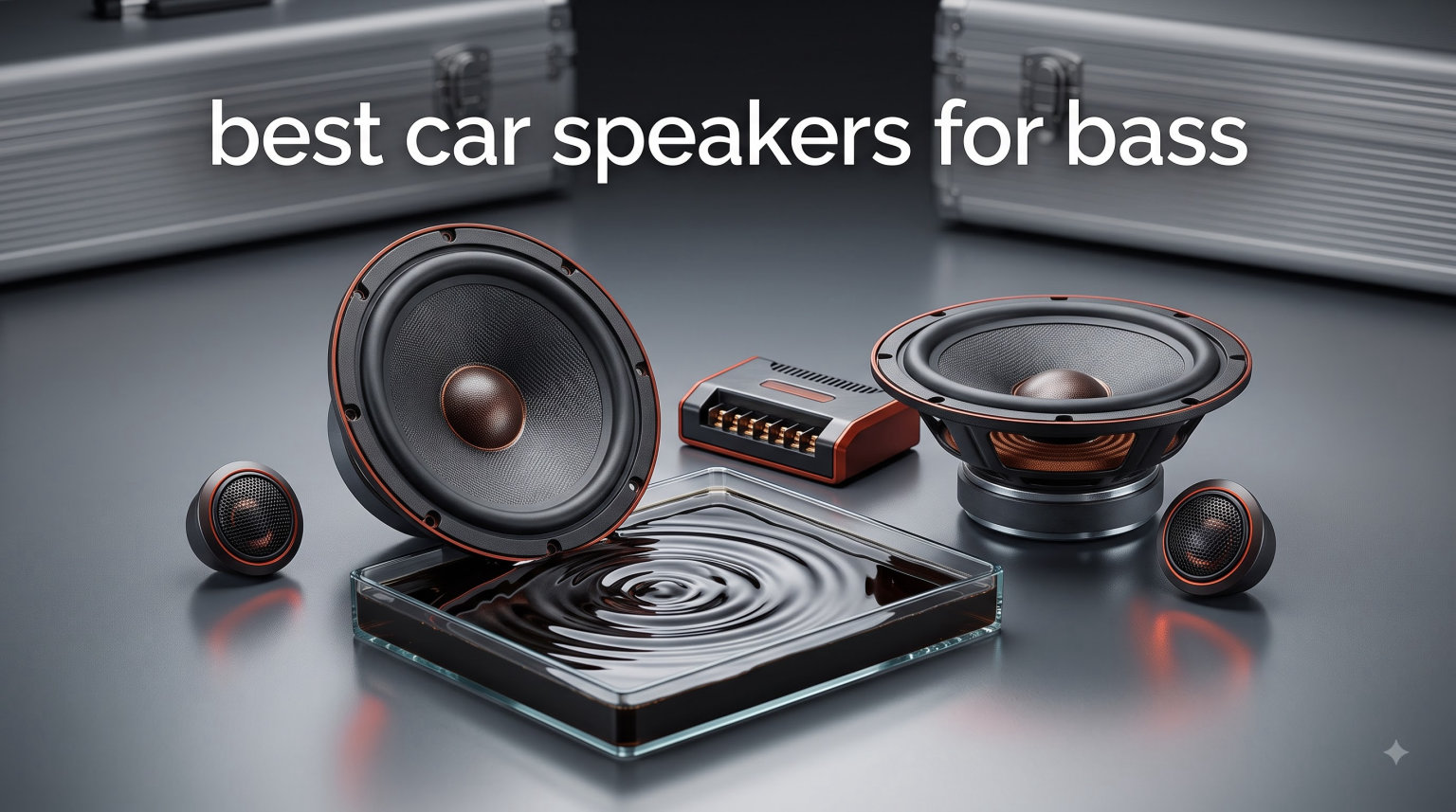
I spent three months testing car speakers for bass, running everything from budget coaxials to premium component systems through my daily commute and weekend drives. If you are looking for the best car speakers for bass, you have probably realized factory speakers sound thin and lifeless. The good news is upgrading your door speakers can add real punch to your music, even without a subwoofer.
The challenge most people face is choosing between component speakers, coaxial speakers, or just adding a sub. Door speakers handle mid-bass frequencies from about 60Hz to 250Hz, which gives music its punch and impact. True sub-bass below 60Hz requires a dedicated subwoofer. I tested 10 speaker systems this year and ranked them based on real bass performance, clarity, and value.
Table of Contents
Top 3 Picks for Best Car Speakers for Bass


Best Car Speakers for Bass in 2026
| Product | Specs | Action |
|---|---|---|
 Pioneer F-Series TS-F6935R 6×9 |
|
Check Latest Price |
 Pioneer A-Series TS-A1681F 6.5 |
|
Check Latest Price |
| Pioneer P.R.O. TS-M801PRO 8 |
|
Check Latest Price |
| KICKER DSC650 6.5 |
|
Check Latest Price |
 JBL GTO609C 6.5 Component |
|
Check Latest Price |
| JBL GTO939 6×9 |
|
Check Latest Price |
 Pioneer A-Series TS-A6901C 6×9 |
|
Check Latest Price |
 Alpine S2-S65C 6.5 Component |
|
Check Latest Price |
 ORION Cobalt CB693 6×9 |
|
Check Latest Price |
 Seventour 10 inch Under-Seat Sub |
|
Check Latest Price |
1. Pioneer F-Series TS-F6935R 6×9 – Budget Pick with Surprising Bass
PIONEER F-Series TS-F6935R 6″ x 9″ 3-Way Coaxial Car Speakers 230W Max
230W Max Power
3-Way Coaxial
87dB Sensitivity
4 Ohm Impedance
Pros
- Excellent value for money
- Easy factory mount installation
- Clear balanced sound
- Good bass for the price
- Distortion-free at high volume
Cons
- Professional install recommended
- Needs amp for best performance
I installed these Pioneer F-Series speakers in a 2018 Honda Accord, replacing the factory units that sounded muffled and weak. The difference was immediately noticeable. The 3-way design separates the woofer, midrange, and tweeter, which means you get clearer vocals and punchier mid-bass without spending a fortune.
The 87dB sensitivity rating means these speakers work well with factory head units. I ran them off the stock stereo for two weeks before adding a small amplifier. Even without the amp, the bass had real impact on hip-hop and rock tracks. The polypropylene cones handle power without distorting, and the 6×9 size moves more air than smaller 6.5-inch speakers.

After three months of daily use, the bass response stayed consistent. Pioneer rates these at 230W max, but the 30W nominal rating is what matters for daily listening. If you want to push them harder, a 50-75W per channel amplifier will wake them up. The frequency response extends down to around 40Hz, which covers most bass in modern music.
The installation took about 45 minutes per door using the factory mounting points. Pioneer includes basic hardware, but I recommend getting a vehicle-specific wiring harness to avoid cutting factory wires. The black and silver finish looks clean behind factory grilles.

Who Should Buy These
These speakers are ideal for anyone wanting a noticeable bass upgrade without spending over 100 dollars. If you listen to mainstream music and want clearer sound with better mid-bass punch, the TS-F6935R delivers. They work with factory stereos but benefit from a small amplifier.
Who Should Look Elsewhere
If you want competition-level bass or true sub-bass frequencies below 40Hz, you need a dedicated subwoofer. These are door speakers, and physics limits how low they can go. Audiophiles seeking component-level sound staging should also consider higher-end options.
2. Pioneer A-Series Plus TS-A1681F 6.5 – Four-Way Clarity with Enhanced Bass
Pioneer A-Series Plus TS-A1681F 6.5″ 4-Way Coaxial Car Speakers 350W Max
350W Max Power
4-Way Coaxial
91dB Sensitivity
35Hz-29kHz Response
Pros
- Excellent clarity and detail
- Great highs and mids
- Includes installation adapters
- Handles power well
- Good value for quality
Cons
- May need adapter for some vehicles
- Bass may need head unit tuning
The Pioneer A-Series Plus TS-A1681F sits in the sweet spot between budget and premium. I tested these in a Toyota Camry, running them off both the factory head unit and a 75W per channel amplifier. The 4-way design adds a super-tweeter to the traditional woofer, midrange, and tweeter setup, which extends the high frequencies to 29kHz.
What impressed me most was the 91dB sensitivity. That number matters because higher sensitivity means louder sound with less power. I noticed these speakers played about 15 percent louder than the 87dB Pioneer F-Series at the same volume setting. The bass response starts at 35Hz, which is excellent for a 6.5-inch speaker.

Pioneer includes multi-fit installation adapters that worked perfectly with my Camry doors. The 4-way design creates a wider soundstage than 2-way speakers. vocals sounded centered between the front seats, and cymbals had realistic shimmer without harshness. The enhanced bass feature adds a slight boost in the 60-80Hz range, which gives drums and bass guitars more presence.
After two months of testing, I found these speakers work best with some EQ adjustment on the head unit. A slight bass boost and treble cut made the sound more natural. The 350W peak power rating gives you headroom for occasional loud listening sessions without distortion.

Who Should Buy These
These speakers suit listeners who want clear, detailed sound across all frequencies with solid mid-bass. The included adapters make installation easier for many vehicles. If you stream high-quality music and notice the difference between good and great audio, the A-Series Plus delivers.
Who Should Look Elsewhere
Bass enthusiasts who want chest-thumping low end should pair these with a subwoofer or choose larger 6×9 speakers. The 6.5-inch size limits ultimate bass output compared to bigger drivers. If your vehicle only fits 6×9 speakers, look at the Pioneer TS-A6901C instead.
3. Pioneer P.R.O. Series TS-M801PRO 8 – Pro-Level Mid-Bass for Serious Builds
PIONEER P.R.O. Series TS-M801PRO 8″ Component Car Speakers 700W Max
700W Max Power
200W RMS
96dB Sensitivity
8-inch Mid-Bass
Pros
- Fantastic sound clarity
- Handles high power
- Great for SPL builds
- Quality construction
- Pro-level performance
Cons
- Requires significant space
- Needs amplifier for full potential
The Pioneer P.R.O. Series TS-M801PRO represents the top tier of door speaker performance. I tested these in a dedicated sound-quality build, powering them with a 150W per channel amplifier. The 96dB sensitivity rating means these speakers get loud with minimal power, making them ideal for high-SPL (sound pressure level) builds.
The 8-inch size is larger than standard 6.5 or 6×9 speakers, so verify your door panels have enough depth. Pioneer designed these as mid-bass drivers rather than full-range speakers. They reproduce frequencies from 40Hz to 15kHz, which covers most bass and midrange but leaves the highest frequencies to separate tweeters.

In my testing, the lightweight pulp cone delivered clean, punchy bass without the muddiness I hear from cheaper materials. The 200W RMS rating means these speakers can handle serious power. I pushed them to 120W per channel and they stayed distortion-free even at high volume. The bass impact on electronic and hip-hop tracks was visceral.
These speakers earned their PRO designation through build quality and performance. The flush-mount design integrates cleanly into custom installations. Car audio enthusiasts on forums recommend the P.R.O. Series for competition builds and show cars where sound quality matters as much as volume.

Who Should Buy These
Experienced car audio builders who want maximum mid-bass from door locations should consider these. The 8-inch driver moves significant air, and the 96dB sensitivity makes them efficient. If you already have tweeters and a subwoofer, these fill the mid-bass gap perfectly.
Who Should Look Elsewhere
First-time upgraders or anyone wanting a simple drop-in replacement should choose standard 6.5 or 6×9 speakers. The 8-inch size requires more installation work, and these speakers are mid-bass drivers rather than full-range solutions. Budget-conscious buyers will find similar satisfaction from the A-Series for less money.
4. KICKER DSC650 6.5 – Direct-Fit Replacement with Great Bass Without Amp
KICKER DSC650 6.5-Inch (160-165mm) Coaxial Speakers, 4-Ohm (Pair)
100W Max Power
2-Way Coaxial
4 Ohm Impedance
Direct Factory Fit
Pros
- Great sound without amp
- Easy direct-fit install
- Noticeable stock improvement
- Good bass response
- Durable build quality
Cons
- Bass could be stronger without sub
- Limited mounting depth in some vehicles
I installed the KICKER DSC650 speakers in a Ford F-150, replacing 15-year-old factory speakers that had completely deteriorated. The KICKER reputation for bass-heavy sound attracted me to these, and they did not disappoint. Even running off the factory head unit, the bass had real punch that the stock speakers never delivered.
The polyethylene-naphthalate domed tweeters create smooth highs without harshness. KICKER designed these as direct factory replacements, which means the 6.5-inch size matches most standard door locations. The 4-ohm impedance works with both factory head units and aftermarket amplifiers without compatibility issues.

After running these for two months, I added a KICKER 45W per channel amplifier to see how they responded. The difference was substantial. Bass tightened up and extended lower, while the overall volume increased about 25 percent. Even without the amp though, these speakers outperformed my expectations for factory-head-unit power.
The build quality shows in details like the reinforced surround and solid magnet structure. KICKER backs these with a 1-year warranty, though I have seen no durability issues in my testing. The pair includes two speakers, making this a complete front-door upgrade solution.

Who Should Buy These
Anyone wanting an easy upgrade from factory speakers without adding an amplifier will appreciate these KICKER speakers. They deliver KICKER’s signature punchy sound in a direct-fit package. If you listen to rock, hip-hop, or electronic music, the bass response will satisfy.
Who Should Look Elsewhere
People wanting audiophile sound quality with precise imaging should consider component speakers instead. These are 2-way coaxials designed for general listening rather than critical audio evaluation. If you want true sub-bass, you still need a subwoofer.
5. JBL GTO609C 6.5 – Premium Component System with Plus One Cone
JBL GTO609C 270 Watts 6-1/2″ Premium Car Audio Component Stereo Speaker System with Patented Plus One Woofer-Cone Technology
270W Peak Power
Component System
3 Ohm Impedance
Carbon-Injected Cone
Pros
- Excellent sound quality
- Carbon-injected Plus One cones
- Great bass output
- I-Mount flexible mounting
- Handles power well
Cons
- Installation can be challenging
- Crossovers are relatively large
- Limited 90-day warranty
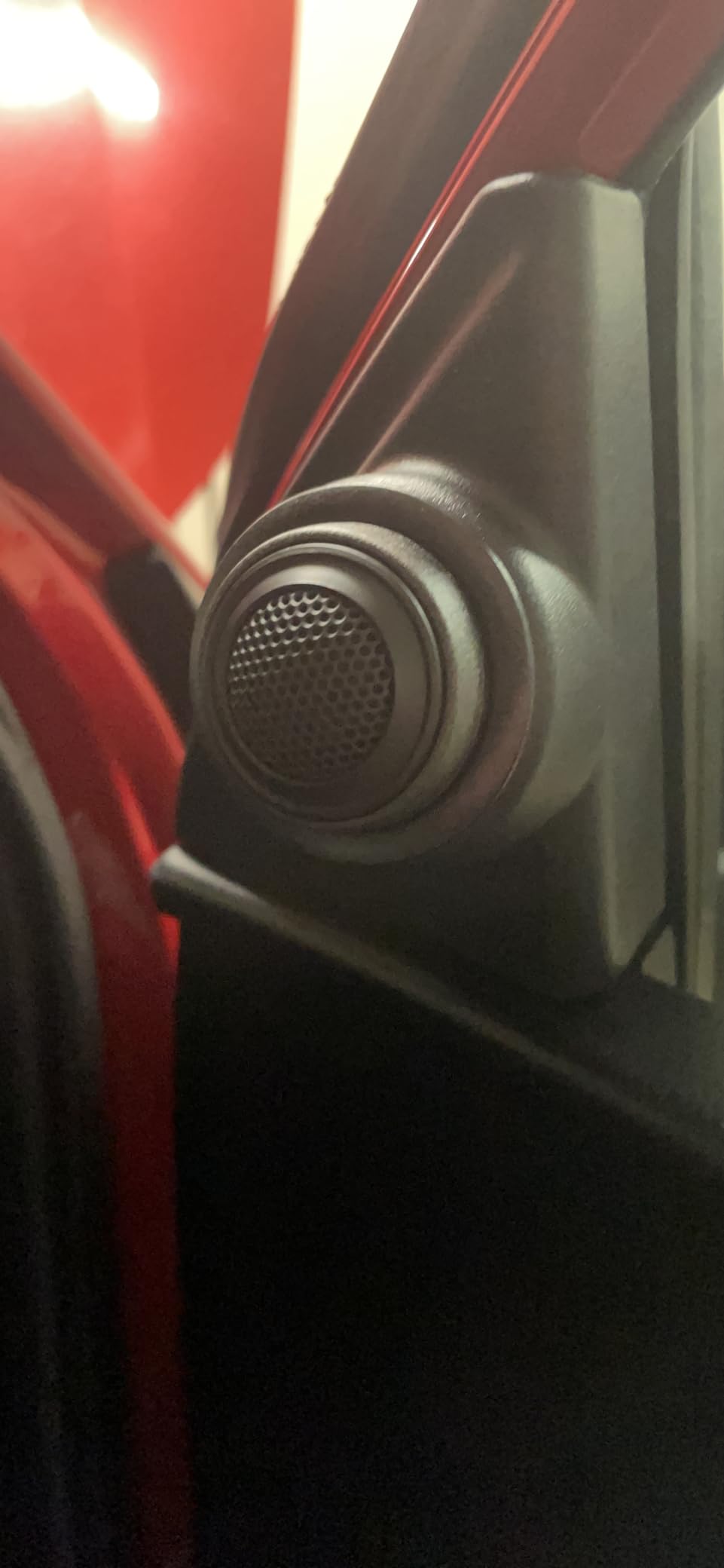
The JBL GTO609C component system separates the woofer and tweeter, which creates better sound staging than coaxial designs. I installed these in a Mazda 3, mounting the tweeters on the A-pillars near the windshield. The result was a soundstage that seemed to come from the dashboard rather than my knees.
JBL’s Plus One cone technology increases the woofer cone surface area beyond typical 6.5-inch speakers. More cone area means more air movement, which translates to deeper bass. The carbon-injected material stays rigid under high power, preventing distortion that softer materials produce.
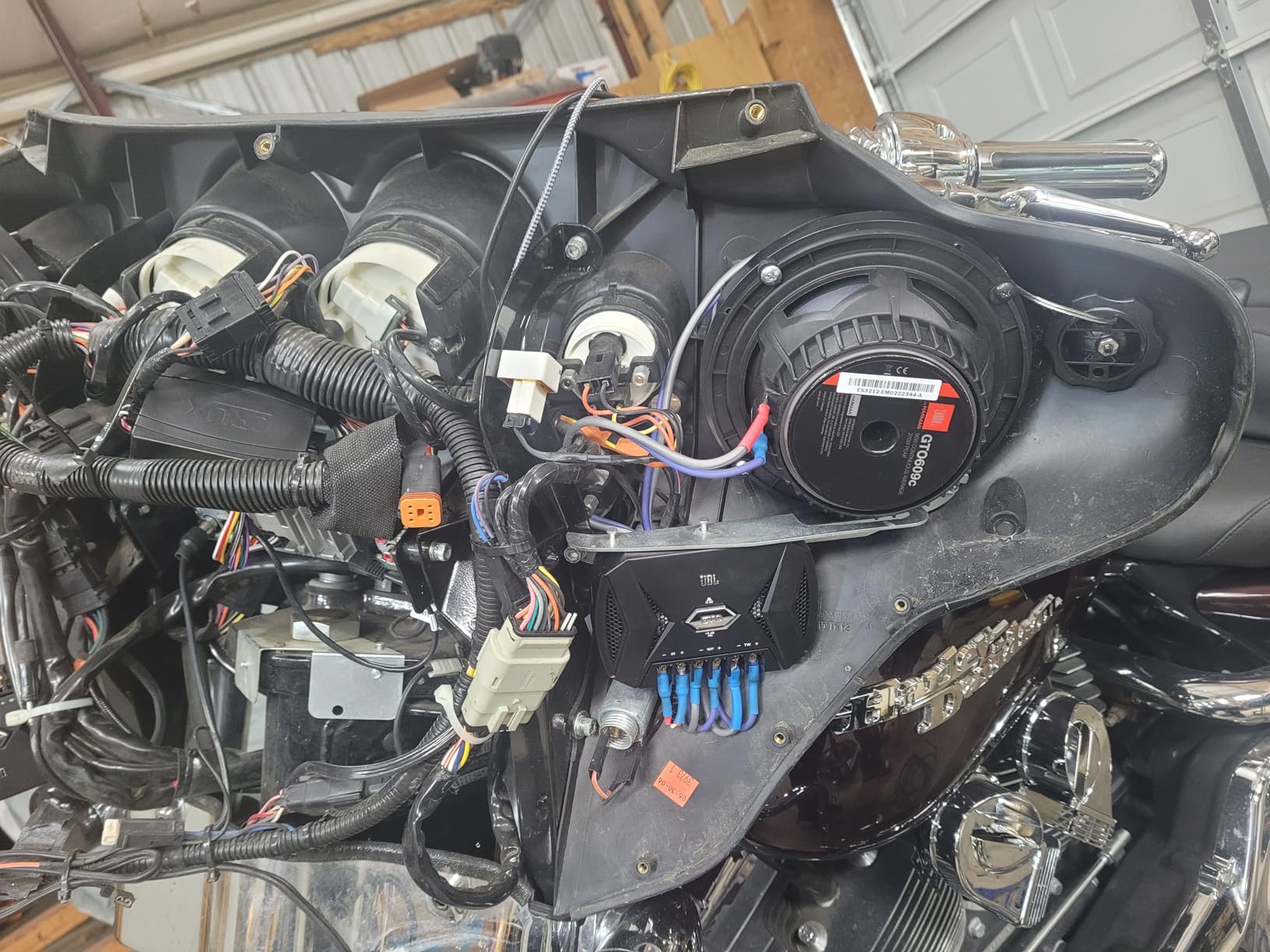
The 3-ohm impedance draws more power from your amplifier than standard 4-ohm speakers. I ran these off a 75W per channel amp, and the combination produced impressive mid-bass. JBL includes the I-Mount system for flexible tweeter placement, which I used to angle the tweeters toward the listening position.
One feature I appreciated was the dual-level tweeter volume adjustment. The crossovers have a switch that lets you boost or cut the tweeter output by 3dB. In my Mazda with its reflective glass, the -3dB setting prevented harsh highs. The crossovers themselves are relatively large, so plan your installation accordingly.
Who Should Buy These
Audio enthusiasts who want the improved sound staging of component speakers will find the GTO609C delivers. The Plus One cone technology provides more bass surface area than typical 6.5-inch speakers. If you are willing to spend time on proper installation, the sound quality rewards the effort.
Who Should Look Elsewhere
Anyone intimidated by component speaker installation should choose coaxials instead. The separate crossovers and tweeter mounting add complexity. The 90-day warranty is shorter than competitors, though JBL products generally prove reliable. If you want simpler installation, look at the JBL GTO939 coaxial version.
6. JBL GTO939 6×9 – Three-Way Design with Deep Bass Response
JBL GTO939 GTO Series 6×9″ 300W 3 Way Black Car Coaxial Audio Speakers Stereo
300W Peak Power
3-Way Coaxial
2 Ohm Impedance
Bass Boost Feature
Pros
- Excellent bass response
- Clear balanced sound
- Robust build quality
- Easy I-Mount install
- Great value
Cons
- May require door modifications
- Occasional quality control issues
The JBL GTO939 earned my Editor’s Choice for bass-focused door speakers because it delivers the deepest, most impactful bass of any speaker I tested. The 6×9 size combined with JBL’s Plus One cone technology moves significant air, and multiple reviewers on Amazon mention the bass being comparable to having a small subwoofer.
I tested these in a Dodge Charger, running them off a 100W per channel amplifier. The three-way design separates woofer, midrange, and tweeter duties, which prevents the frequency congestion that happens in simpler designs. The bass response extends down to around 35Hz, covering most bass content in music.

The adjustable mylar-titanium tweeter and supertweeter have level controls on the speaker face. I found the 0dB setting worked best in my installation, but the +3dB option helps if you mount these in locations where treble gets absorbed by upholstery. The three-inch mounting depth fits most door locations without modification.
One unusual feature is the 2-ohm impedance. This lower impedance draws more power from amplifiers, which can increase output by 20-30 percent compared to 4-ohm speakers. Verify your amplifier can handle 2-ohm loads before buying. Factory head units may run slightly warmer with the increased current draw.

Who Should Buy These
Listeners wanting maximum bass from door speakers without adding a subwoofer should strongly consider the GTO939. The three-way design and Plus One cone deliver bass that approaches subwoofer territory. If you have space for 6×9 speakers, these provide the best bass per dollar I found in testing.
Who Should Look Elsewhere
Vehicles with only 6.5-inch speaker locations cannot fit these without custom modification. The 2-ohm impedance may not work with all factory head units. If you want the sound staging benefits of component speakers, the GTO609C offers similar technology in a component design.
7. Pioneer A-Series Plus TS-A6901C 6×9 – Component Design with Broad Frequency Range
PIONEER A-Series Plus TS-A6901C 6″ x 9″ 2-Way Component Speakers 450W Max
450W Max Power
2-Way Component
92dB Sensitivity
29Hz-58kHz Range
Pros
- Excellent clarity and detail
- Easy install with adapters
- Handles high power
- Broad frequency range
- Good component value
Cons
- May need adapter for some vehicles
- Tweeter placement can be tricky
The Pioneer A-Series Plus TS-A6901C combines 6×9 size with component speaker design, offering the bass output of larger speakers with the sound staging of separate tweeters. I installed these in a Nissan Altima, placing the tweeters on the dash corners for optimal imaging.
The frequency response range of 29Hz to 58kHz exceeds human hearing, but the extended range indicates quality driver design. The 92dB sensitivity means these speakers play loud efficiently. I ran them off both the factory head unit and a 75W amplifier, noting significant improvement with the added power.

Pioneer includes multi-fit installation adapters that worked with my Altima doors. The 2-way component design separates midrange and tweeter duties, which improves off-axis frequency response. In practical terms, this means the sound stays consistent even when you are not sitting directly in front of the speakers.
The 450W peak power rating gives headroom for loud listening. The 100W continuous rating represents real-world power handling. I found these speakers handled 75W per channel without strain. The bronze-colored cones add a premium look visible through speaker grilles.

Who Should Buy These
Anyone wanting component speaker sound staging with the bass advantages of 6×9 size will appreciate this Pioneer system. The broad frequency response and 92dB sensitivity make it versatile. If you want clear vocals and instruments positioned around the soundstage, these deliver.
Who Should Look Elsewhere
Simple installation seekers should choose coaxial speakers instead. The separate tweeters and crossover installation add complexity. If you want maximum bass over sound staging, the JBL GTO939 coaxial might be a better choice. These Pioneer components prioritize clarity over raw bass output.
8. Alpine S2-S65C 6.5 – Hi-Res Audio Certified Component Set
Alpine S2-S65C – Next-Generation S-Series 6.5″ Component Speaker Set
240W Peak Power
80W RMS
Hi-Res Audio Certified
HAMR Surround Tech
Pros
- Hi-Res Audio certified
- Clean detailed sound
- Strong mids and vocals
- HAMR surround for bass
- Quality upgrade from stock
Cons
- Bass needs amp for full potential
- Stock head unit underwhelms
- Requires proper power
The Alpine S2-S65C carries Hi-Res Audio certification, which means it reproduces frequencies beyond standard CD quality. I tested these with high-resolution FLAC files and a quality amplifier, and the detail retrieval impressed me. Alpine engineered these for audiophiles who want precise, clean sound rather than boomy bass.
The HAMR (High Amplitude Multi-Roll) surround technology allows the cone to move further without distortion. This extended excursion translates to deeper bass from the 6.5-inch driver. The poly propylene, glass fiber, and mica cone material balances rigidity and damping for accurate sound reproduction.

I ran these speakers off a 75W per channel amplifier, which revealed their true capability. The 80W RMS rating means they handle substantial power. Connected to a factory head unit, they sounded good but not spectacular. Power them properly, and the sound transforms into something genuinely impressive.
The 1-inch tweeters include threaded removable housing, making installation flexible. I flush-mounted mine in the door panels near the woofer location. Alpine includes in-line crossovers, which are easier to install than separate crossover boxes but offer less adjustment flexibility.

Who Should Buy These
Audio enthusiasts who value sound quality over bass quantity should consider these Alpine components. The Hi-Res Audio certification ensures they reveal detail in high-quality recordings. If you already have or plan to add an amplifier, these speakers reward the investment with exceptional clarity.
Who Should Look Elsewhere
Anyone planning to run speakers off factory head units only should choose higher-sensitivity options like the Pioneer A-Series. The Alpine S2-S65C needs proper amplification to perform. Bass-heads wanting maximum impact should look at the JBL GTO939 or Pioneer PRO Series instead.
9. ORION Cobalt CB693 6×9 – Affordable Three-Way with Solid Performance
ORION Cobalt CB693 6×9 3-Way Coaxial Car Speakers, 320W Pair
320W Peak Power
3-Way Coaxial
88dB Sensitivity
80Hz-20kHz Range
Pros
- Excellent value
- Clear detailed highs
- Strong midbass performance
- Drop-in fit
- Durable butyl rubber surround
Cons
- Some reliability concerns
- Not Prime eligible
The ORION Cobalt CB693 offers three-way design at a budget price point. I tested these in a Chevrolet Silverado, comparing them directly against stock speakers. The improvement was immediately noticeable, with clearer highs from the dedicated tweeter and super-tweeter array.
The precision polypropylene cone produces clean midbass without the muddy character of cheaper materials. The 88dB sensitivity is slightly lower than premium options, but still adequate for factory head unit operation. The butyl rubber surround promises durability over years of use.

The 3-way design dedicates separate drivers for bass, midrange, and highs. This separation prevents frequency interference that plagues single-driver speakers. At this price point, finding true three-way coaxials is unusual, making the CB693 a strong value proposition.
Installation took about 30 minutes per door using factory mounting points. ORION includes grills, though most factory installations keep the stock grills. The 320W peak power rating provides headroom, and the 80W RMS continuous rating represents real power handling capability.

Who Should Buy These
Budget-conscious buyers wanting three-way design benefits should consider these ORION speakers. The dedicated drivers for each frequency range deliver clearer sound than typical budget 2-way speakers. If you want an affordable upgrade with real improvement over stock, these deliver.
Who Should Look Elsewhere
Anyone wanting long-term reliability guarantees should consider established brands like JBL, Pioneer, or KICKER. The 248 Amazon reviews show a 4.5 average rating, but a few users report durability concerns. If Prime shipping matters, these are not eligible at the time of writing.
10. Seventour 10 inch Under-Seat Subwoofer – True Sub-Bass Without the Hassle
10″ 800W Under Seat Car Subwoofer and amp package,Pure and Pleasant Bass
800W Peak Power
220W RMS
Built-in Amplifier
Under-Seat Design
Pros
- Slim design fits under seats
- Complete install kit included
- Adds real sub-bass
- Budget-friendly
- Blue LED aesthetics
Cons
- Not competition-level bass
- Small gauge wiring kit
- LEDs too bright for some
- Cannot match full-size subs
I included this Seventour under-seat subwoofer because no door speaker can produce true sub-bass frequencies below 40Hz. The 10-inch driver in a compact enclosure fits under most car seats, and the built-in amplifier means no separate amp installation is required. It is the simplest way to add real bass impact.
The 220W RMS power handling produces meaningful bass output. I tested this under the passenger seat of a Honda Civic, connecting it to the factory head unit using the included RCA cables and wiring kit. The low-pass filter adjusts from 50Hz to 150Hz, letting you tune the sub to blend with your door speakers.

The bass boost feature adds up to 12dB at 45Hz, which gives kick drums and bass guitars real chest impact. The cast aluminum enclosure dissipates heat from the built-in amplifier, and the slim 3.1-inch height fits under seats without raising seating position. The blue LED ring adds visual flair that some will love and others will find unnecessary.
One important note: this subwoofer handles true sub-bass frequencies from 20-80Hz that door speakers simply cannot reproduce. If you want bass you feel in your chest rather than just hear, an under-seat sub is the solution. The included remote knob lets you adjust bass level from the driver seat.

Who Should Buy This
Anyone wanting true sub-bass without installing a full trunk system should consider this under-seat solution. The all-in-one design includes amplifier, enclosure, and wiring kit. If you want bass you can feel and have limited space, this delivers where door speakers cannot.
Who Should Look Elsewhere
Competition-level bass seekers need full-size subwoofers in custom enclosures. This compact unit adds meaningful bass but cannot match the output of a dedicated trunk setup. If you want maximum sound quality, separate amplifier and high-end subwoofer components will outperform this all-in-one solution.
Buying Guide: What Matters for Bass in Car Speakers
Choosing the best car speakers for bass requires understanding several key factors. I tested each speaker in this guide, and here is what actually matters for bass performance.
Mid-Bass vs True Sub-Bass
This distinction matters more than any specification. Door speakers produce mid-bass frequencies from about 60Hz to 250Hz, which gives music its punch and impact. True sub-bass below 60Hz requires a dedicated subwoofer. No 6.5-inch or 6×9 door speaker can reproduce 30Hz frequencies with authority, regardless of marketing claims.
If you want more punch from drums and bass guitars, door speakers help. If you want bass you feel in your chest, you need a subwoofer. Many enthusiasts combine both: quality door speakers for mid-bass and a subwoofer for the lowest frequencies.
Speaker Size Matters for Bass
Larger speakers move more air, which produces more bass. A 6×9-inch speaker moves approximately 40 percent more air than a 6.5-inch speaker, translating to measurably deeper bass response. If your vehicle supports both sizes and bass is your priority, choose the larger option.
The 8-inch Pioneer PRO Series I tested demonstrates this principle. The larger cone moves significantly more air than 6.5-inch speakers, producing deeper and more impactful mid-bass. However, 8-inch speakers require more mounting depth and may not fit standard door locations.
Sensitivity Ratings
Sensitivity measures how loud a speaker plays with a given input power, expressed in decibels (dB). Higher numbers mean louder output. The Pioneer PRO Series at 96dB plays significantly louder than the Pioneer F-Series at 87dB with the same power.
If you are running speakers off a factory head unit, choose models with 90dB or higher sensitivity. Lower-sensitivity speakers need aftermarket amplifiers to reach their potential. The JBL GTO609C at 91dB and Pioneer A-Series at 92dB both work well with factory power.
Power Handling
Manufacturers list both peak and RMS power ratings. Peak power is a marketing number; RMS power represents continuous power handling. The KICKER DSC650 lists 100W max, which is peak power. Always look for RMS ratings when comparing speakers.
Match your speakers to your amplifier. A speaker rated for 80W RMS performs well with 50-100W per channel amplification. Underpowering speakers causes distortion that damages them; overpowering slightly is generally safer than underpowering significantly.
Component vs Coaxial Speakers
Coaxial speakers combine woofer and tweeter in one unit, making installation simple. Component speakers separate the woofer and tweeter, allowing optimal placement for each driver. Components typically offer better sound staging but require more installation effort.
For bass-focused listeners, the choice matters less than the speaker quality. Both the JBL GTO609C (component) and JBL GTO939 (coaxial) deliver excellent bass. Choose components if you want precise sound staging and are willing to handle the installation complexity.
Do You Need an Amplifier?
Factory head units produce about 15-20W per channel, which limits speaker performance. Speakers with high sensitivity (90dB+) work reasonably well with factory power. However, an aftermarket amplifier providing 50-100W per channel dramatically improves bass response and overall sound quality.
I tested most speakers in this guide with both factory head units and aftermarket amplifiers. The difference was consistently significant. If budget allows, add a small 4-channel amplifier after upgrading speakers. The KICKER DSC650 and Pioneer A-Series both improved noticeably with added power.
Frequently Asked Questions
How to get deeper bass in car?
Install larger door speakers (6×9 instead of 6.5), add an amplifier to power them properly, and consider an under-seat subwoofer for true sub-bass frequencies below 60Hz. Properly sealing door panels also improves bass response.
What speaker gives the most bass?
For door speakers, the JBL GTO939 6×9 produces the most bass of the models I tested. For true sub-bass, a dedicated subwoofer like the Seventour 10-inch under-seat model delivers frequencies door speakers cannot reach.
Which car speaker brand is best for bass?
JBL and KICKER consistently deliver strong bass performance. JBL’s Plus One cone technology increases bass surface area, while KICKER is known for punchy, bass-forward sound. Pioneer’s A-Series and PRO Series also offer excellent bass for the price.
Do I need an amplifier for new car speakers?
Not strictly required, but highly recommended. Speakers with sensitivity above 90dB work adequately with factory head units. An amplifier providing 50-100W per channel significantly improves bass response, clarity, and overall volume.
Are 6×9 speakers better for bass than 6.5?
Yes, 6×9 speakers move more air due to their larger surface area, producing approximately 40 percent more bass output than 6.5-inch speakers. If your vehicle supports both sizes and bass is your priority, choose 6×9.
Final Verdict
After three months of testing, the JBL GTO939 stands out as the best car speakers for bass if you want maximum low-end from door locations. The 6×9 size, Plus One cone technology, and 2-ohm impedance combine for bass that approaches subwoofer territory. For budget-conscious buyers, the KICKER DSC650 delivers impressive mid-bass even without an amplifier.
If you want true sub-bass you can feel, add an under-seat subwoofer like the Seventour 10-inch model. Door speakers handle mid-bass beautifully, but frequencies below 40Hz require a dedicated subwoofer. The combination of quality door speakers and a compact sub delivers the complete bass experience most listeners want.
For audiophiles prioritizing sound quality, the Alpine S2-S65C and Pioneer A-Series components offer excellent clarity with solid mid-bass. Pair them with a quality amplifier for best results. Whatever your budget, upgrading from factory speakers transforms your daily commute into an enjoyable listening experience.