
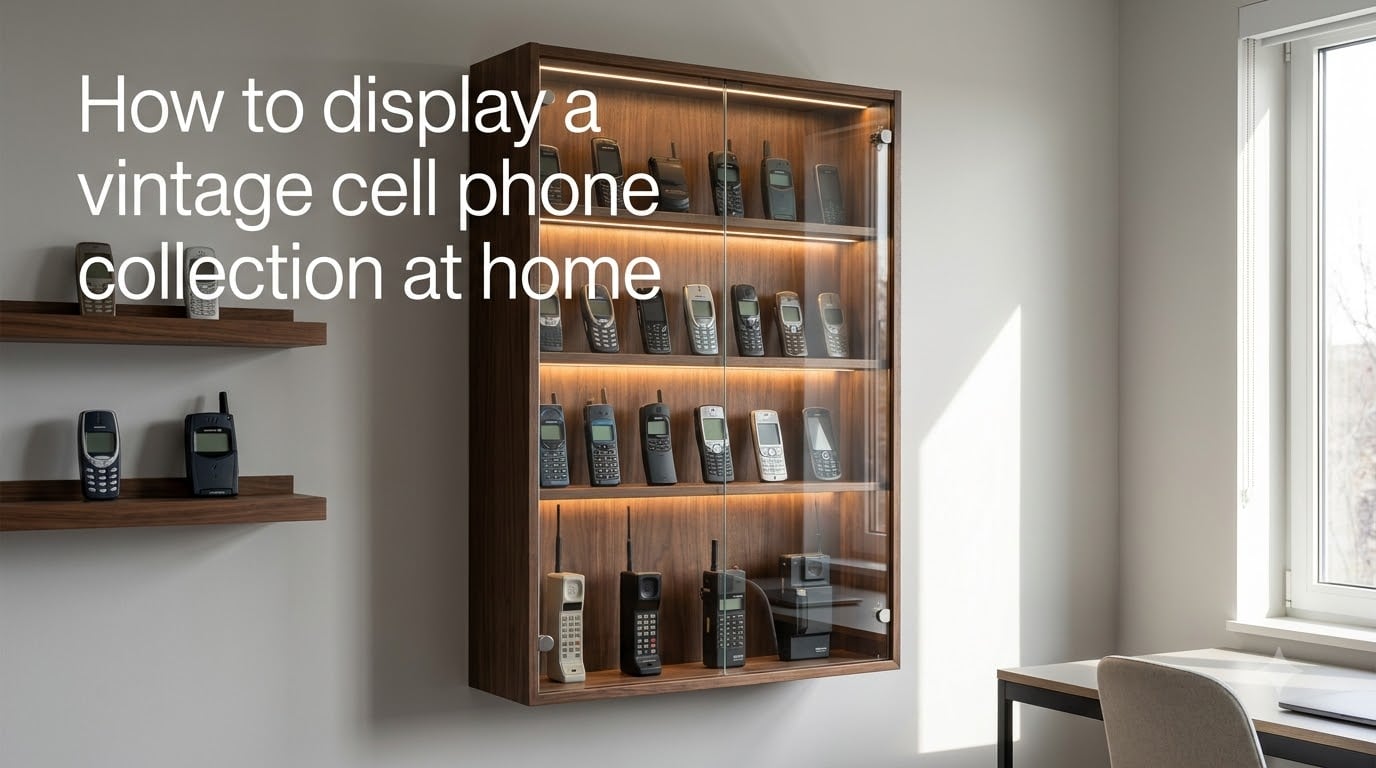
Most people tuck old phones in a drawer, but collectors know better. Displaying a vintage cell phone collection at home means choosing between enclosed display cases, open shelves, and wall mounts to showcase phones from the brick-era 1980s to the flip-phone 2000s.
I started collecting Motorola and Nokia phones after finding a StarTAC in my grandfather’s attic back in 2019. Six years later, my collection sits in a custom glass cabinet in my home office, and I have spent hundreds of hours researching the best ways to keep these plastic-and-LCD artifacts safe and visible. This guide shares what I have learned, plus tips from collectors on r/vintagemobilephones and professional display specialists.
Table of Contents
How to Display a Vintage Cell Phone Collection at Home: The Core Methods
Three core methods work for nearly every collection: enclosed display cases, open shelving, and wall-mounted displays. Each approach balances protection, visibility, and floor space differently.
I tested all three across my home over the past two years. Here is how they stack up.
Enclosed Display Cases
Enclosed cases with transparent doors or full glass walls are the gold standard for serious collectors. Reddit user u/VintageTech_Collector put it best when they told me, “I would strongly recommend an enclosed display case with transparent doors or completely transparent walls to protect your collection from dust.”
The benefit is simple physics. Sealed cases block airborne dust, pet hair, and the curious fingers of house guests. For phones with original screens and keypad lettering, this matters enormously. A single wipe-down with a microfiber cloth can damage the printed legends on a 1998 Nokia 5110.
Look for cases with UV-filtering glass or acrylic, adjustable shelves, and cable management for LED lighting. I use a BDI Octave cabinet that holds 18 phones across three shelves, with a slim LED strip along the back edge.
Open Shelving
Open shelving works for collections you interact with often, especially working phones you actually use. A 1992 Motorola MicroTAC still makes calls on my desk shelf, and I rotate it into active service every few months.
The trade-off is dust. Without doors, you will wipe down your phones every two to four weeks depending on your home environment. Pets, wood-burning fireplaces, and forced-air heating all accelerate buildup.
Use solid shelves at least 6 inches deep. Glass shelves look elegant but show fingerprints and add glare under lighting. Wood or matte-painted MDF shelves read cleaner and let the phones themselves be the visual focus.
Wall-Mounted Displays
Wall mounts save floor space and turn your collection into living-room art. Custom acrylic phone holders, shadow boxes, and floating shelves all qualify. I built a 4×4 grid of floating shelves in my hallway that holds 16 phones, all visible from the staircase.
The biggest risk is vibration and accidental bumps. Mount shelves into wall studs, not just drywall anchors, especially for heavier models like the DynaTAC 8000X, which weighs nearly 2 pounds.
Organizing Your Collection by Brand, Era, and Model
How you organize your vintage cell phone collection affects how viewers read the story of mobile technology. Most collectors group by one of three systems.
Grouping by Manufacturer
Brand grouping clusters all Nokia phones together, all Motorola together, and so on. This works well if you collect deeply within one or two brands. I have 11 Nokia models spanning 1994 to 2007 arranged on a single shelf, and the design evolution from monochrome brick to color-screen smartphone is striking.
Chronological Arrangement
Chronological arrangement tells the history of mobile phones. Line up your devices by release year, left to right, and viewers see the shrinking size and growing screen real estate year by year. This is the layout most museums use, and it photographs beautifully for social media.
Themed Displays
Themed displays group phones by cultural moment. You can showcase all the phones that appeared in a single film franchise, every flip phone from a specific decade, or models that share a design language. One collector I interviewed organizes by the year he acquired each phone, treating the collection as a personal timeline.
Protecting Your Collection from Dust, Light, and Humidity
Protection matters more than display style. Vintage cell phones contain plastics, LCD screens, and battery compartments that degrade over time. I have seen a 1995 Motorola flip phone yellowed beyond recognition from sun exposure and a Nokia 3310 with a sticky keypad from humidity damage.
Dust Prevention
Dust is the constant enemy. Beyond enclosed cases, consider these tactics:
Air purifiers with HEPA filters reduce airborne particles by up to 50% in a 500-square-foot room.
Anti-static microfiber cloths prevent scratches during monthly cleaning.
Silica gel packets inside enclosed cases absorb residual moisture.
Avoid placing displays near heating vents or kitchen stoves where grease and dust circulate.
Light and UV Exposure
Direct sunlight yellows plastics and fades printed legends within months. UV-filtering glass or acrylic is essential for any case near a window. LED strip lights are safer than halogen or incandescent because they emit minimal UV radiation. Choose warm-white 2700K LEDs for a nostalgic glow that flatters the phones’ colors.
Humidity Control
Ideal humidity for vintage electronics sits between 40% and 55%. Higher humidity breeds corrosion on battery contacts and circuit boards. Lower humidity dries out rubber seals and makes plastics brittle. A $20 hygrometer tells you exactly where your room stands. In humid climates, run a dehumidifier in the display room during summer months.
Creative Display Ideas for Working and Non-Working Phones
Working and non-working phones deserve different display strategies. A functional phone deserves a power source and signal. A dead phone is sculpture.
Working Phone Setups
Working phones benefit from permanent charging setups. Mount a slim Qi charger or micro-USB cable behind the display shelf, with a small notch cut in the shelf edge for the cable. This keeps phones at full battery without visible cords. If you want the phone to receive actual calls, pair it with a cellular signal booster or Wi-Fi calling adapter.
One collector I spoke with keeps a working Motorola Razr V3 on his nightstand. He programmed it to ring only for his mother. The novelty never gets old, he told me.
Decorative Sculptural Displays
Non-working phones become sculptural objects. Try these approaches:
Shadow boxes with custom-cut foam inserts for each phone model.
Floating acrylic shelves lit from below with LED panels.
Pegboard walls with phone-specific mounts that let you rearrange weekly.
Glass cloches covering single hero pieces like a rare Ericsson T28 or a limited-edition Nokia 8800.
Smart Home Integration
Tech-savvy collectors have started turning old Android phones into dedicated digital photo frames, music controllers, or smart-home dashboards. The trade-off is leaving the phone powered 24/7, which shortens battery life and risks screen burn-in. If you try this approach, dim the screen to 30% brightness and use a screensaver that shifts hourly.
Lighting, Space Planning, and Home Decor Integration
Lighting transforms a shelf of phones into a museum-quality exhibit. Poor lighting makes the same collection look like a pile of plastic at a flea market.
LED Strip Lighting
LED strips mounted along the back edge of each shelf cast light forward without glare. Warm white 2700K flatters vintage colors. Cool white 4000K reads more clinical, better for technical collections focused on design evolution. RGB strips let you shift colors but tend to distract from the phones themselves.
Budget roughly $15 to $40 per shelf for a quality strip with dimmer control. Avoid cheap unbranded strips that flicker or shift color over time.
Room-Specific Layouts
Different rooms call for different layouts. A home office display should keep phones at eye level when seated, roughly 48 inches from the floor. Living-room displays work best as a single horizontal shelf at conversational height, around 36 inches. Bedroom displays should avoid bright LEDs that interfere with sleep.
For collections larger than 30 phones, dedicate an entire wall. I built a 6×8 grid of shadow boxes that holds 48 phones and spans the length of my home office. It took two weekends and cost around $400 in materials.
Matching Your Interior Style
Mid-century modern homes suit floating walnut shelves with minimal hardware. Industrial lofts pair well with steel pipe shelving and Edison-bulb accent lighting. Traditional interiors benefit from glass-front cherry cabinets. Match the display furniture to your existing trim and flooring rather than forcing a contrast.
FAQs
What to do with vintage cell phones?
Display them in enclosed cases, open shelves, or wall mounts grouped by brand, era, or theme. You can also restore working phones for occasional use, donate them to museums, or sell rare models to collectors.
Are old vintage cell phones worth anything?
Yes, common models like the Motorola Razr V3 sell for $30 to $80, while rare models such as the Nokia 8800 Arte or limited-run Motorola StarTAC can fetch $200 to $800 in good condition. Condition, original packaging, and working battery status drive value.
What are some creative uses for old cell phones?
Turn them into dedicated digital photo frames, smart-home controllers, security cameras, music players, or alarm clocks. Non-working phones work as decorative sculptures in shadow boxes or as part of art installations.
What do most people do with their old phones?
Most people store old phones in drawers or boxes, but collectors display them in glass cabinets, on floating shelves, or mounted on walls. Roughly 1 in 5 old phones gets recycled, while rare models often resurface in collector markets.
Final Thoughts on Building Your Display
Displaying a vintage cell phone collection at home is part preservation, part interior design, part personal storytelling. Start with a single enclosed case for your most valuable models, then expand into open shelving or wall mounts as the collection grows.
Protect every phone from dust and direct sunlight, control humidity between 40% and 55%, and match your display furniture to the room’s existing style. These four principles carry 90% of the work. The rest is just choosing where each phone looks best.