
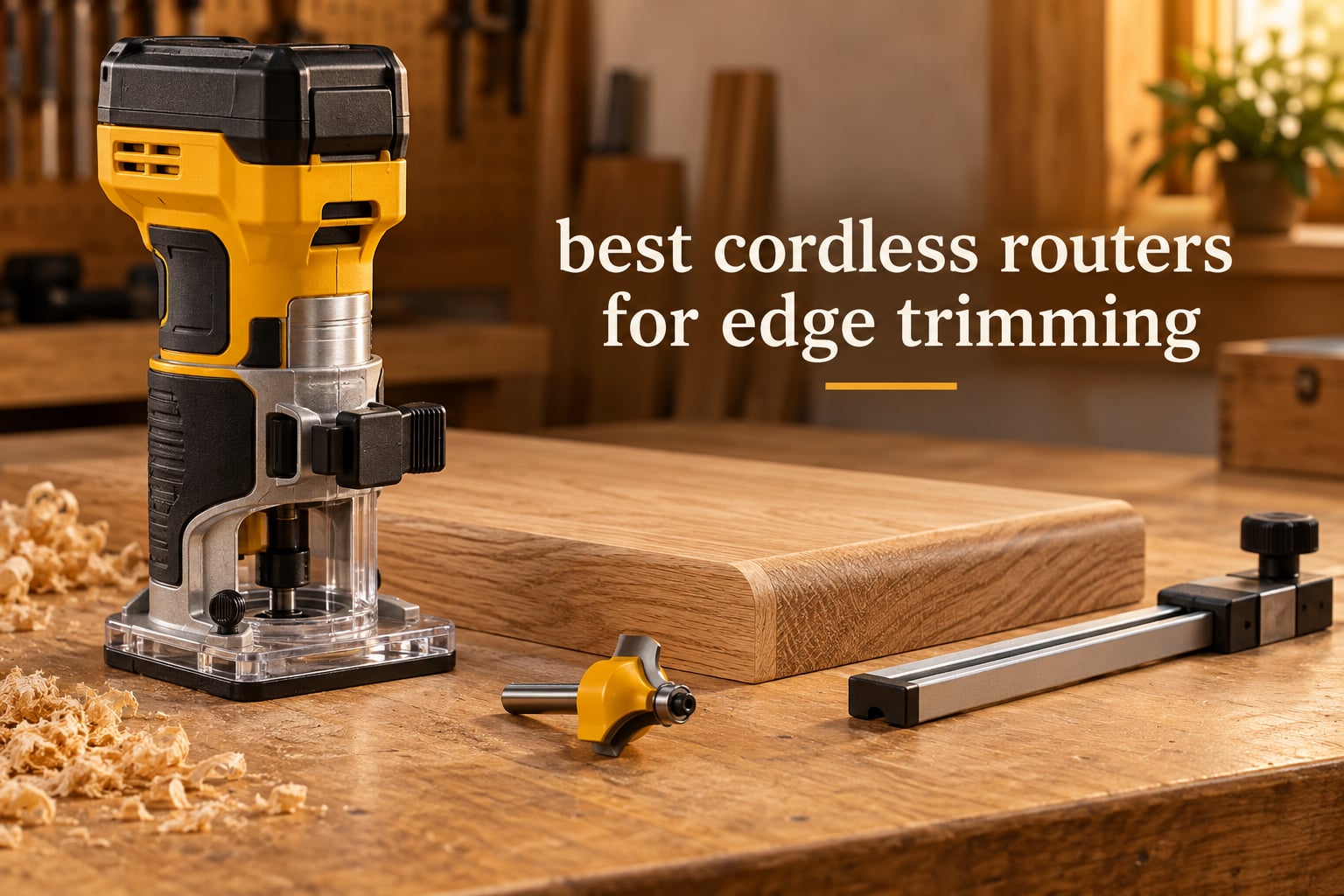
Every few months somebody asks on r/woodworking whether a battery router is a real tool or a compromise, and the top answer is usually blunt: the corded plunge router is the only router you will ever need, and battery-powered flush trim routers are underpowered. That skepticism is fair. It is also incomplete, because the question most people actually have is narrower than “which router should I own.” They have a specific edge to clean up, a specific profile to cut, and very often no power outlet nearby.
That is the gap this guide closes. These are the best cordless routers for edge trimming, tested and ranked on the only thing that matters for this job: how cleanly and repeatably they follow and refine an edge. Not how deep they can plunge, not how much they can hog out of a slab, but whether the cut stays true on a cabinet door, a worktop, a laminated panel, or a stair tread.
We spent several weeks working through this list on plywood, MDF, maple and red oak, running roundovers, chamfers, flush trims and shallow rabbets, and swapping batteries between passes to see what the runtime claims actually mean once the bit is in the wood. Where the forums are right, we say so. Where a corded tool is the correct answer for your job, we say that too, because there are jobs where it plainly is.
If your interest is broader than batteries, our guide to the best wood routers for cabinetry covers the heavier plunge work that edge trimming sits alongside.
Table of Contents
Top 3 Cordless Routers for Edge Trimming in 2026
Our three picks cover the realistic range of edge jobs. The DEWALT is the one we reach for by default. The Milwaukee has the most power in a compact frame and is the choice if you route edges every single day. The Ryobi is the value answer for anyone already in that battery ecosystem.

DEWALT DCW600B 20V Compact Router
- Brushless motor with soft start
- Variable-speed dial
- Dual LED work lights
- 4.15 lb tool-only

Milwaukee 2723-20 18V Compact Router
- 1.25 hp class power
- Large sub-base plates
- Dust collection port
- 4.9 lb

Ryobi PCL424B 18V Fixed Base Router
- 20000-30000 RPM variable speed
- 3.2 lb tool-only
- Micro depth dial
- Clear base
Quick Comparison: Best Cordless Routers for Edge Trimming in 2026
All eight routers below are fixed-base or fixed-base-capable machines built for following an edge, and every one accepts the 1/4 inch shank bits that most edge profiles need. The differences that matter are power output, top speed, weight, and how much of the guide and dust hardware comes in the box.
| Product | Specs | Action |
|---|---|---|
| DEWALT DCW600B 20V Cordless Compact Router |
|
Check Latest Price |
| Milwaukee 2723-20 18V Cordless Compact Router |
|
Check Latest Price |
| Ryobi PCL424B 18V Compact Fixed Base Router |
|
Check Latest Price |
 Bosch GKF12V-25N 12V Palm Edge Router Bosch GKF12V-25N 12V Palm Edge Router |
|
Check Latest Price |
 WORKPRO 20V Cordless Compact Router Kit WORKPRO 20V Cordless Compact Router Kit |
|
Check Latest Price |
 CRAFTSMAN V20 CMCW400B Fixed Base Router CRAFTSMAN V20 CMCW400B Fixed Base Router |
|
Check Latest Price |
 Metabo HPT M1808DAQ4 18V Trim Router Metabo HPT M1808DAQ4 18V Trim Router |
|
Check Latest Price |
 FLEX FX4221-Z 24V Cordless Trim Router FLEX FX4221-Z 24V Cordless Trim Router |
|
Check Latest Price |
1. DEWALT DCW600B 20V Cordless Compact Router: Best Overall for Edge Trimming
DEWALT 20V Max XR Cordless Router, Brushless, Tool Only (DCW600B)
20V Max XR brushless
4.15 lb tool-only
Variable-speed dial
Dual LED work lights
Pros
- Stable under load on typical edge and joinery work
- Fast depth adjustment ring
- LEDs make evening work practical
- Electronic brake and soft start
- Very large owner base for support and parts
Cons
- Dust extraction is a separate purchase
- Fixed base only so internal grooves need a plunge base
- Grip diameter can feel large in smaller hands
This is the router we ended up using most often, and the reason is boring rather than exciting. It does not have the highest horsepower figure on this list and it is not the lightest. What it has is a brushless motor with full-time electronic feedback that holds speed under load, a variable-speed dial, and a depth ring you can set with one hand while the other holds the workpiece. For an hour of edge work that is exactly the set of features you notice and nothing else is.
The depth adjustment ring deserves a specific mention because it is the part that determines how repeatable your passes are. You lock the collar, twist the ring, and the base rises or falls in a predictable way. When you are running four identical roundovers down four identical shelf edges, predictable is what matters. A rack and pinion with slop at the top of its travel will drift between passes; the DEWALT ring does not.
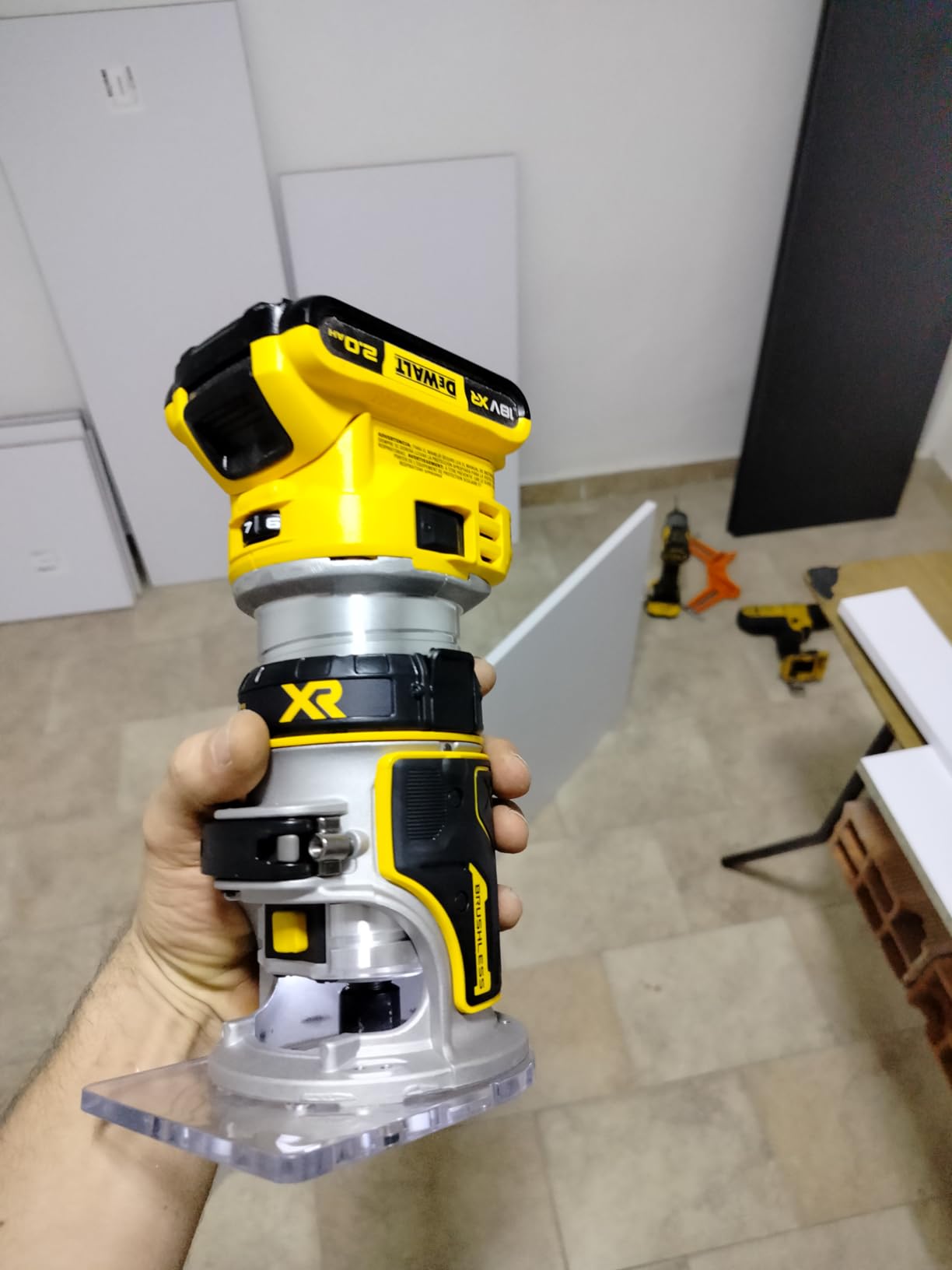
The soft start and electronic brake are small features that earn their place on an edge job. Soft start means the bit does not lunge into the wood when you trigger it, which is what causes the gouge on a first pass. The electronic brake stops the bit quickly when you release, which matters more than it sounds, because a spinning bit carried across a bench can scorch a finished surface.
Owners consistently report that this is a dependable, compact cordless router that handles edge work, joinery and furniture building without drama, and the review volume behind it is enormous. The dual LEDs are frequently called out for evening shop sessions, where the usual complaint about small routers is that you cannot see the bit or the cut line. Here the base is clear and the LEDs wash the work surface, so you can see where the bearing is riding.
Where the DEWALT earns its place on a bench
If you own 20V Max XR batteries, this is close to a no-brainer, and that is not a small point. Owner reviews show an installed base large enough that spare batteries, chargers and parts are easy to source, and the tool drops into an existing kit without a second ecosystem. The common workflow we would set up is one battery in the router and one on the charger, swapping between passes, which keeps the edge work moving without an interruption longer than the time it takes to change a bit.
On a real job, the speed dial is the feature you will reach for most. Dropping to a lower setting for the first light pass on maple reduces the chances of a burn mark and gives you a chance to confirm the guide is tracking. Running back up for the final pass at full speed leaves a clean, slightly fuzzy surface that takes finish well.
Where the DEWALT falls short for edge work
The dust situation is the honest weakness. There is no integrated extraction, and owners treat the separate dust extractor as a necessary purchase rather than an accessory. On edge work this matters more than it does on other routing jobs, because the chips from a roundover or a rabbet are coarse and they end up on the bench, on your benchtop, and in your lungs. Plan on buying the extractor.
The other limitation is base type. This is a fixed-base machine, which is correct for edges but means internal grooves and dados need a plunge base added separately. A handful of owners with smaller hands also mention that the grip diameter feels large over a long session. If you have small hands, look closely at the Metabo HPT or the Bosch further down before you commit.
2. Milwaukee 2723-20 18V Cordless Compact Router: Best for Daily Shop Use
Milwaukee Cordless Compact Router,18.0 Voltage
18V 1.25 hp class
Fixed base
4.9 lb
1/4 inch collet
Pros
- Genuinely corded-class power under load
- Long real-world runtime per charge
- Quiet operation with smooth startup
- Durable enough that owners buy several
- Large sub-base plates
Cons
- Wide body can fatigue larger hands
- Acrylic sub-base has a notch some owners replace
- Depth adjustment rod is plastic with initial slop
- Dust hose can unbalance the tool
The Milwaukee is the most convincing answer to the power argument, and it is the model that most often changes the minds of people who came in skeptical. Rated at 1.25 hp and weighing 4.9 pounds, it is the heaviest machine in this group, and that mass is not wasted. It is what lets it hold a cut through hard maple without the motor bogging and stalling mid-pass.
Runtime is the other side of the equation. Owners report cutting roughly 100 linear feet of 3/8 inch rabbets on half a charge, which is a genuinely useful number rather than a laboratory figure, because a rabbet pass along an edge is close to a worst case for a compact router. More common roundovers and chamfers will go further on the same pack.
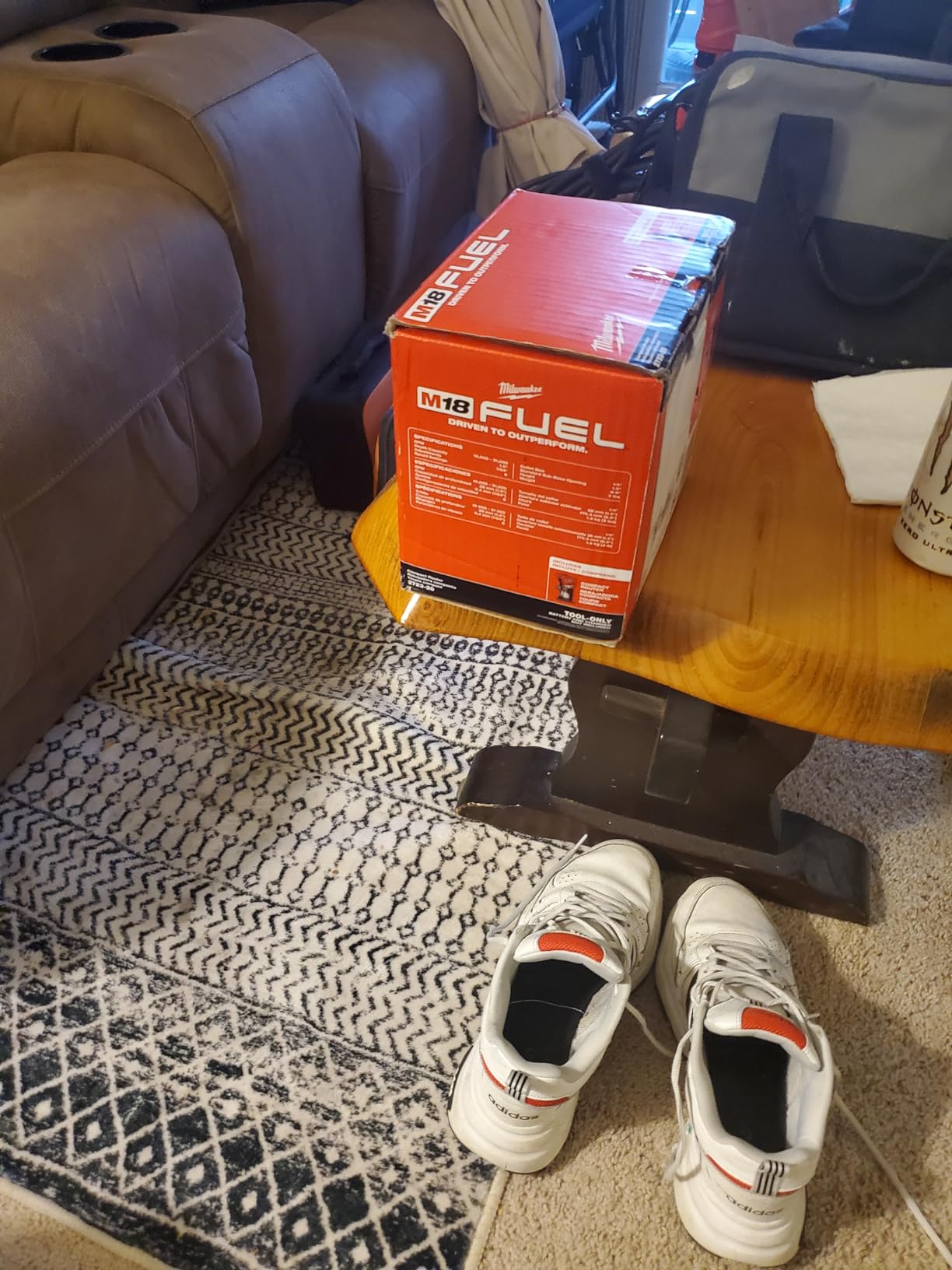
Speed pickup is fast, and reviewers note it reaches full speed faster than the corded Makita it replaced for them. For edge work that is more than a nicety. A trim router that takes several seconds to stabilise is a trim router that makes a mark before it settles, and marks on a finished edge are expensive to repair.
Durability is the reason this one gets the daily-use badge. Owners who work in shops routinely buy more than one, which is the clearest signal a tool can send. The build is metal-bodied, the base plates are large, and there is a dust collection port on the tool for when you are trimming sheet goods and the chips pile up fast.
What daily use actually looks like with this router
Imagine a week of small kitchen cabinet jobs. Doors come off hinges, and you are trimming the hinge-side edges flush where they were scribed. A flush trim bit with a bearing does most of the work, and the Milwaukee’s large sub-base plate keeps it stable on a narrow stile. Then the door faces get a roundover at the top and bottom, and the 1.25 hp class motor is doing the part that makes a cheap trim router stall out and burn the edge.
Switching tasks mid-project is also smooth. The base takes the compact fixed configuration straight out of the box, and if you later add the plunge and D-handle options, the same motor covers internal work without a second tool on the bench.
Where the Milwaukee will annoy you
The complaints are ergonomic rather than functional, and that is unusual for a tool in this class. The body is wide enough that people with larger hands report hand fatigue over long sessions. The factory acrylic sub-base has a notch that can dig into a finished surface, and a portion of owners replace it or cover it with tape before touching finished stock.
The depth adjustment rod is plastic rather than metal and has some slop at the start of its travel. It does not affect edge work much in practice, but it is the part of this tool most likely to frustrate you if you are setting up very fine passes. The dust port is only partly effective, and attaching a flexible hose can unbalance the tool, so dust collection here is a partial solution rather than a fix.
3. Ryobi PCL424B 18V Cordless Compact Fixed Base Router: Best Budget Pick
RYOBI ONE+ 18V Cordless Compact Fixed Base Router Tool Only (Battery Not Included) – PCL424B
18V ONE+
3.2 lb tool-only
20,000-30,000 RPM
Micro depth dial
Pros
- Very light for one- or two-handed control
- Smooth low-vibration motor across the 20000-30000 RPM range
- Clear base improves cut-line visibility
- Micro dial and quick-release make setup fast
- Works with existing Ryobi 18V ONE+ packs
Cons
- Lower-capacity packs drain noticeably
- Dust hose makes the tool lopsided
- Light-duty class rather than a production router
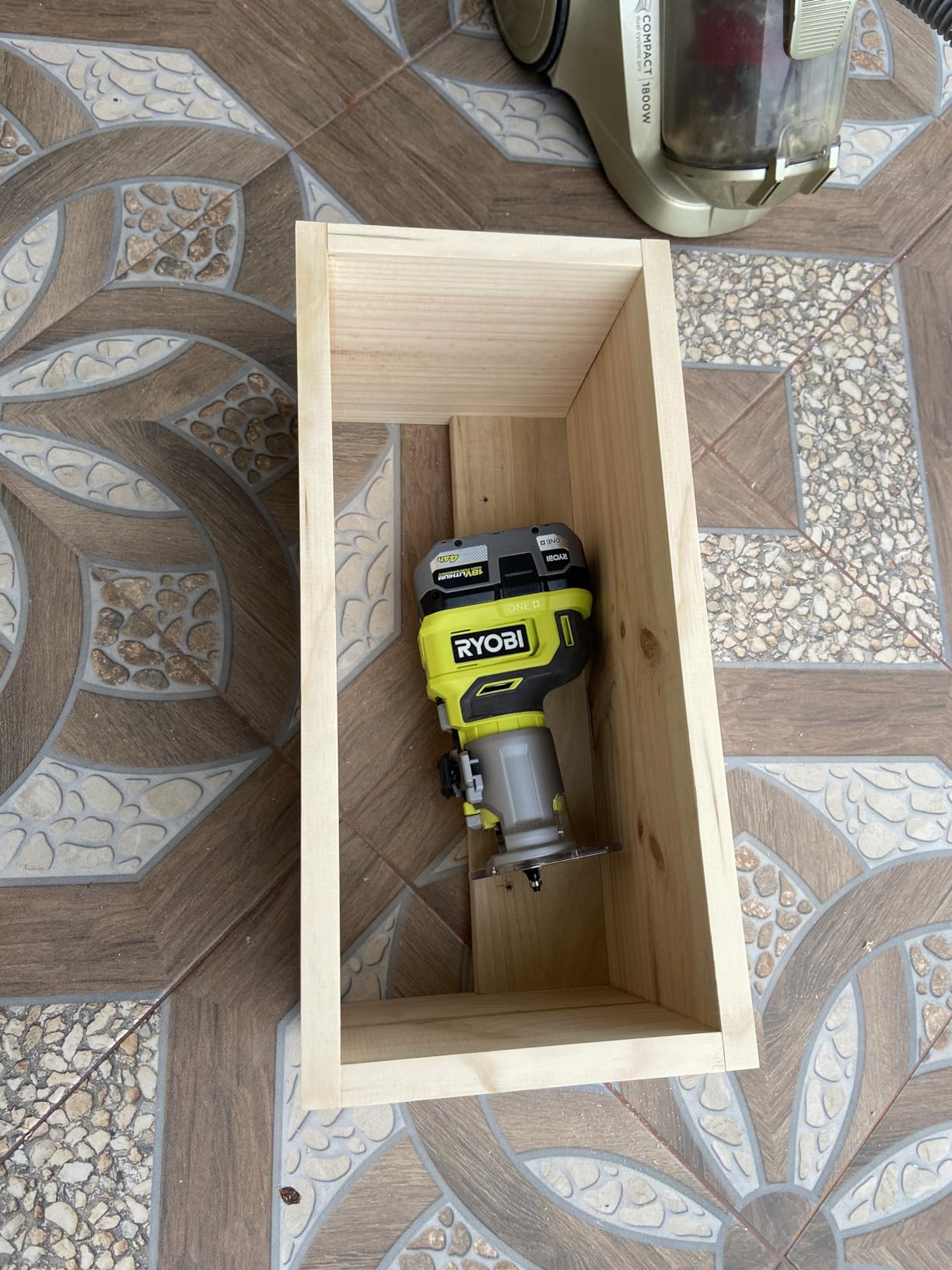
At 3.2 pounds tool-only, the Ryobi is one of the lightest machines here, and on small parts and interior cabinet corners that weight is the whole story. When you are rounding over the exposed edge of a small shelf or trimming a hinge-side stile where you can only get one hand around the work, a light tool is not a luxury. It is the difference between a controlled cut and a gouge.
The motor runs 20,000 to 30,000 rpm on a dial, and reviewers describe the result as smooth and low-vibration. That range covers the full spread you want for edge work: high speed for clean finishes on small roundovers, lower speed for larger diameter bits in plywood where you want more chip clearance and less grab.
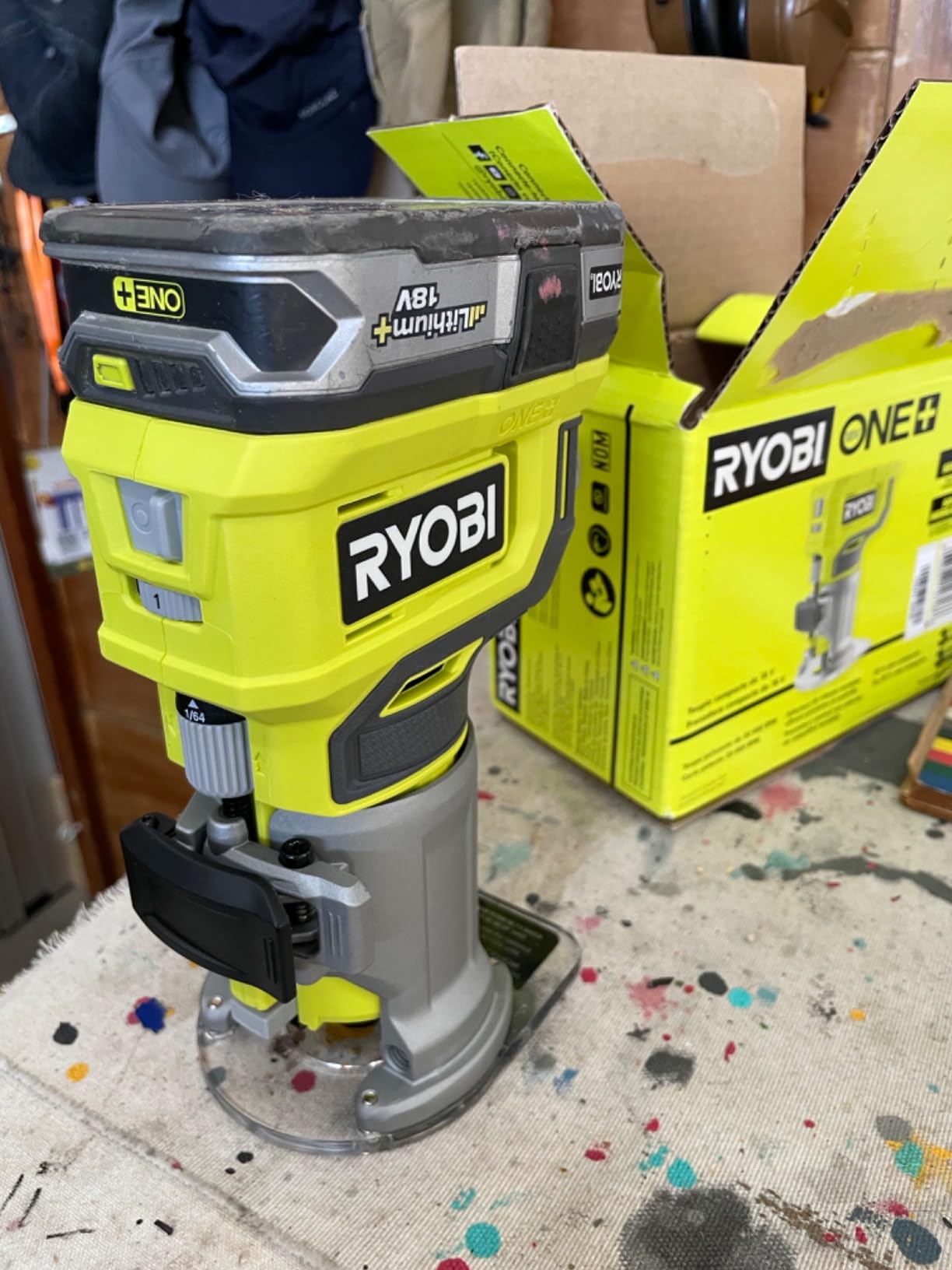
The depth system is unusually good for a tool at this level. A micro dial handles fine setting, and a quick-release lever clamps the setting for the pass. Together they let you set a bearing-guided bit to its cut depth quickly and then lock it so a vibration does not walk it out of position halfway down a board.
Owners also single out the clear base for visibility. When you are following an existing profile, being able to see the bearing and the cut line through the base is more useful than any electronic feature, and the Ryobi and the CRAFTSMAN are the two machines on this list that pair a clear base with a light body.
Why this is the value pick for most DIY edge work
The economics are straightforward. If you already own Ryobi 18V ONE+ packs, this drops into an ecosystem you have paid for. Even if you do not, the ONE+ platform is broad enough that the battery cost is not the main expense. For shelf-edge rounding, furniture trimming, and cutting hinge and latch recesses, owner reviews describe it as doing everything asked of it without complaint.
It is also the router we would hand to someone learning. The controls are simple, the base is transparent, and the tool is forgiving. There is not much here that punishes a beginner, and the light weight means a mistake costs a small workpiece rather than a ruined door.
Where the Ryobi runs out of road
Battery capacity is the practical limit. Reviewers consistently note that drain is noticeable on lower-capacity packs, and that 4.0Ah or larger works best. Ryobi’s own support guidance is that a low charge reduces power output and can cause the tool to stop under load, and that running at full power when you do not need it drains the pack faster. For long edge runs, budget for a higher-capacity pack.
Dust extraction is the second limitation. The attached hose makes the tool lopsided and blocks the clear-view window, which undercuts the very visibility that makes this router good on small parts. Finally, be realistic about class: this is a DIY and light-duty machine. One owner reported a burnout during aggressive 3/4 inch plywood trimming, and most reviews set expectations clearly that it is not a production router.
4. Bosch GKF12V-25N 12V Max Palm Edge Router: Best for Light Edge Profiling
Bosch GKF12V-25N 12V Max EC Brushless Palm Edge Router (Bare Tool)
12V Max
2.2 lb tool-only
13,000 rpm
0.04 in fine depth per dial turn
Pros
- Exceptionally light and well balanced
- Offset palm design puts grip over the workpiece
- Very fine depth adjustment with a lock
- Self-releasing collet with one-wrench changes
- Quiet operation
- Constant-speed circuitry
Cons
- No integrated dust collection
- 13000 rpm top speed is slow
- Not for deep or wide cuts
- Base lacks template-guide accommodations
This is the lightest router in the group at 2.2 pounds without the battery, and it is built around an offset palm design that places the grip over the workpiece. That geometry is the reason it feels controlled on an edge. When the centre of mass sits over the cut rather than behind it, the tool does not want to rotate as you meet a change in grain or a slightly out-of-square face.
Bosch publishes a runtime figure that is more useful than most because it is expressed in the units that matter for edge work: up to 23 feet of round-over capacity per battery amp-hour. Multiply by your pack size and you have a real estimate of how much edge you can round before a swap. It is also a reminder of the 12V class trade-off, since that per-amp-hour figure is modest next to the larger platforms in this list.
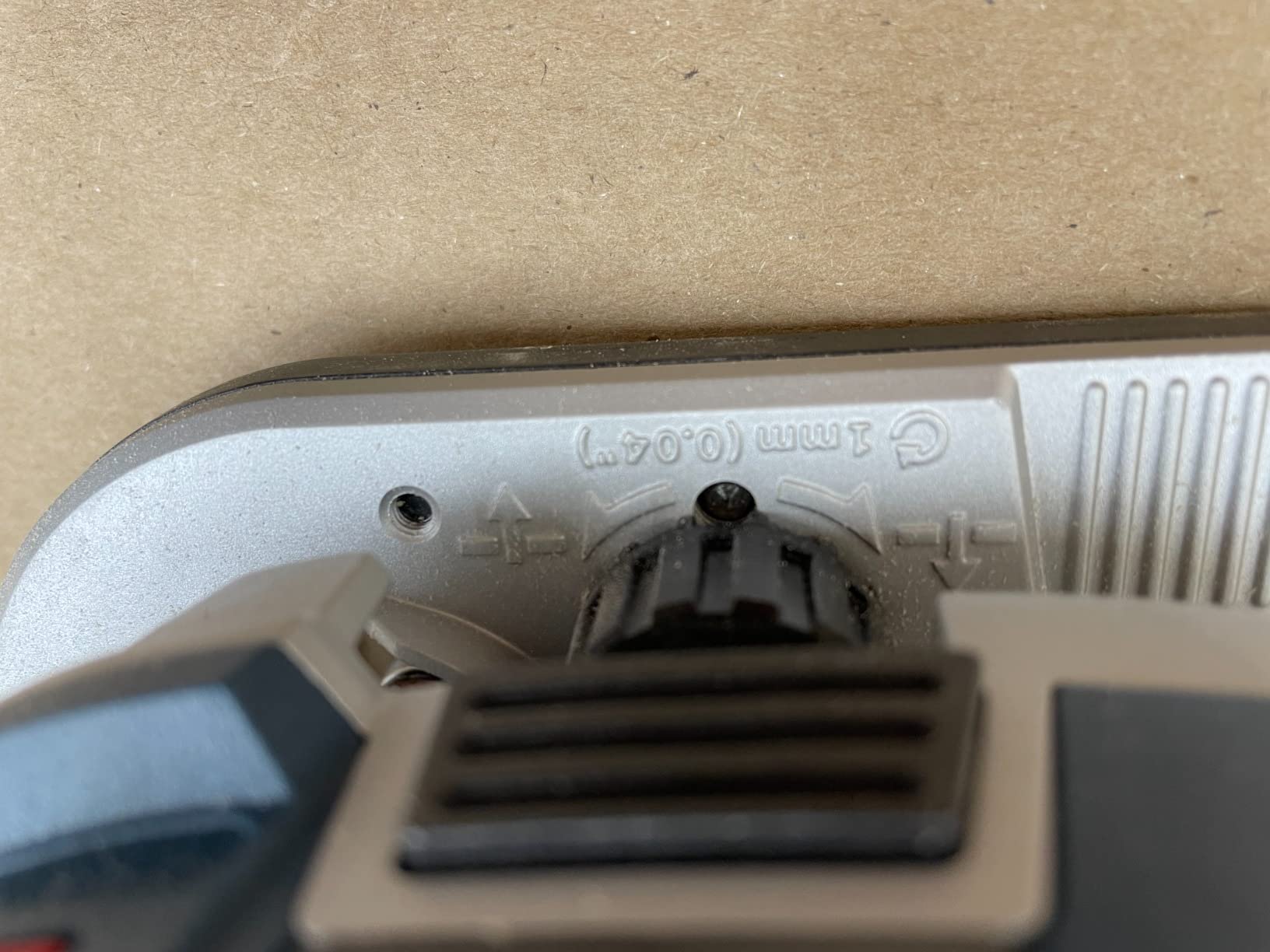
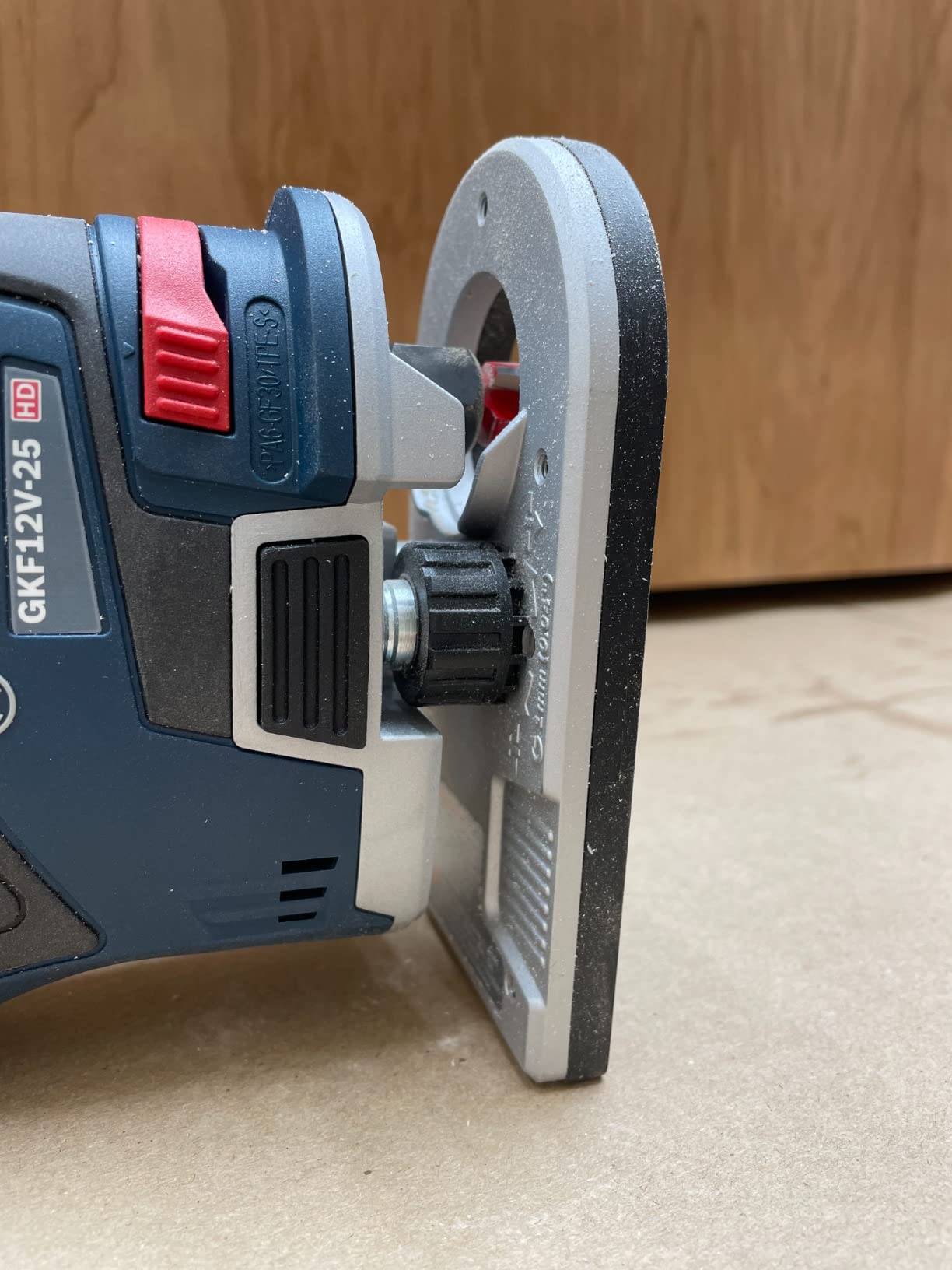
The depth adjustment is among the finest in this roundup at 0.04 inches per dial revolution, with a lock that prevents the setting being knocked out of place. For fine profiling work, where you are taking a small amount off in several passes, that resolution is genuinely useful, and the spindle lock combined with the self-releasing collet means bit changes take one wrench.
Safety features are unusually thoughtful for a palm router. Finger barriers help keep your hand away from the bit area, and restart protection stops the tool firing up when you swap batteries, which is a real hazard on a bench with a router already set to a cutting depth.
The work this Bosch is genuinely good at
Owners treat the GKF12V-25N as the reference tool for edge profiling, flush trimming, and light roundovers and chamfers. That matches what we saw. On small trim bits, a straight bit, a small cove or a chamfer on a door or drawer front, the light weight and fine depth control make it easy to do clean, deliberate work on delicate material.
It is quiet enough that owners comment on it directly, and on a small part in a confined space that matters. Constant-speed circuitry monitors and holds speed under load, so the cut does not wander as the bit bites in.
What it will not do for you
Two limits are worth stating plainly. The first is dust. There is no integrated dust collection, and this is the single most frequently cited shortcoming, because a small palm router working on an edge throws a visible cloud. Plan your passes and your extraction separately. The second is speed: 13,000 rpm is the lowest ceiling here, which is fine for small profile bits and means this is not the tool for wide surfacing cuts, deep dados or large diameter bits in hardwood.
Reviewers also note the base plate lacks template-guide accommodations and is not perfectly centred, so template work is compromised. It can warm up near the spindle drive area during sustained heavy cutting, which is the signal to stop and let it cool rather than push through. Bosch covers its 12V Max cordless tools with a three year limited warranty, though recharges are slow and the packs cost more per amp-hour than 18V equivalents.
5. WORKPRO 20V Cordless Compact Router Kit: Best Complete Kit
WORKPRO 20V Cordless Compact Router Kit
20V kit
10,000-30,000 RPM six speeds
Three bases included
4.0Ah battery and charger
Pros
- Most complete package here with three bases and six bits
- Brushless motor with more torque than typical budget routers
- Six speeds give real material matching
- Plunge base reaches 38mm
- Guides and fence included for repeatable cuts
Cons
- Accessory-heavy box with parts many owners never use
- Thinner published review base than the big brands
- Highest one-star share in this group
The WORKPRO kit wins on what is in the box, and the box is the point. You get a tilting base, a fixed base, and a dual-handle plunge base, along with a template guide, a trimming guide, a parallel fence, a dust hose, and six router bits, plus a 4.0Ah battery and a fast charger. Buying the same configuration from a big-brand platform means buying bases and guides one at a time.
That matters for edge trimming specifically. The trimming guide and parallel fence are what convert a handheld pass into a repeatable one, and they are the difference between a straight edge and an edge that wanders. Included in the box, they are one less excuse to skip straightening your setup.
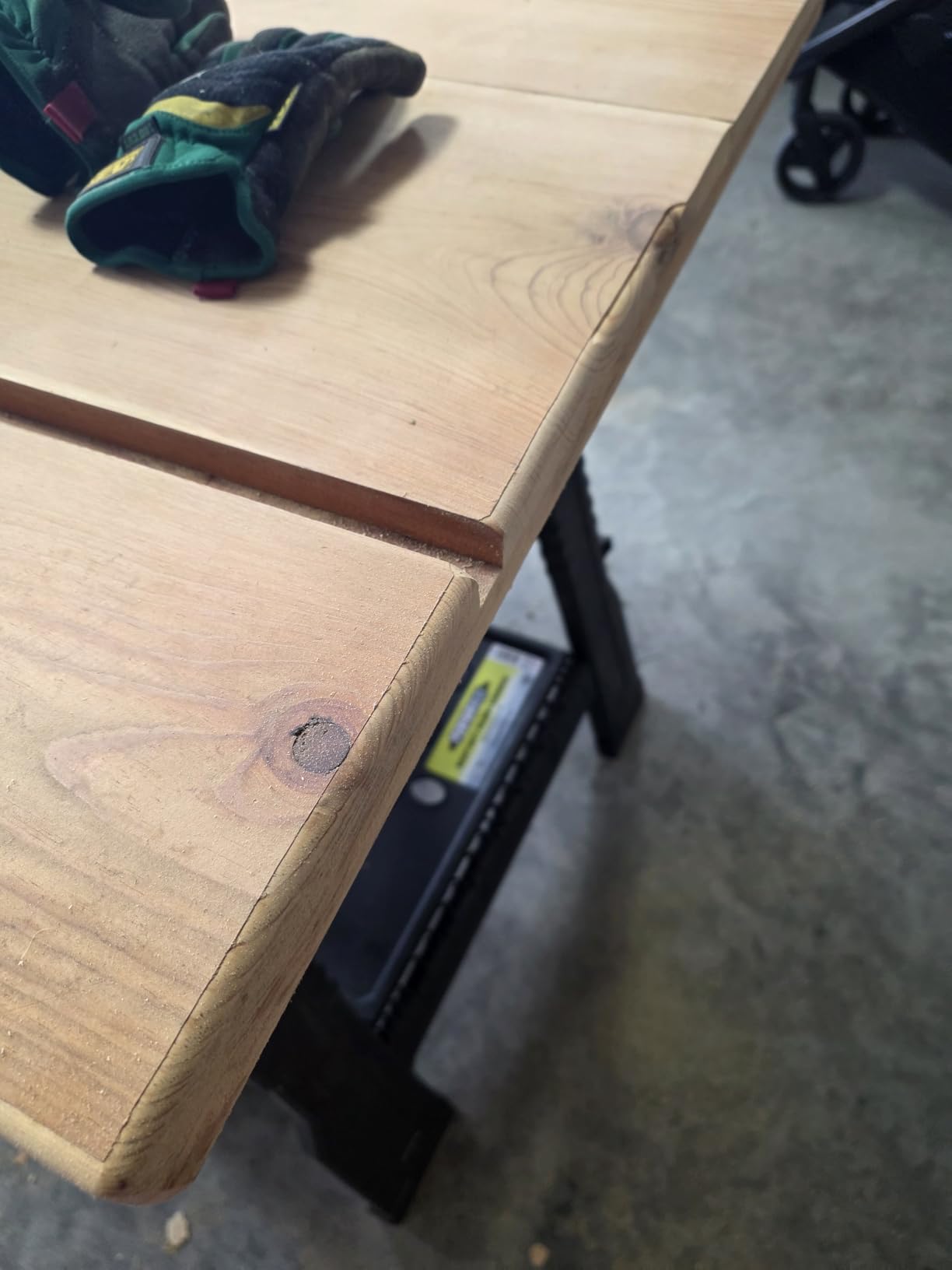
The motor is brushless, which puts it ahead of most tools in this price class, and the six-speed control spans 10,000 to 30,000 rpm. The fixed base adjusts from 0 to 24mm and the plunge base reaches 38mm, so the same motor covers edge trimming and deeper groove routing without a change of tool.
It also does not tie you to an existing ecosystem in a way that is expensive to leave. The 20V pack is a self-contained purchase, and for someone who wants cordless freedom in a garage or on a remote bench with no charger nearby, having a battery and charger included removes a real barrier to starting.
Who should buy the WORKPRO kit
Buy this if you are setting up a first router and want the option of plunge work later without another purchase, or if you want edge trimming plus dadoes and grooves from one tool. Reviewers consistently highlight the completeness as a better value than assembling the same configuration separately, and the dust hose and six bits cover the profiles most beginners reach for first.
For edge work specifically, the included guides are the reason to look here first if you have never routed before. A beginner with a guide and a fence in hand will get a straight first edge far more easily than a beginner improvising with a bare base.
What to watch out for with this kit
The 4.2 average is the lowest in this roundup, and that rating carries an 11 percent share of one-star reviews. That tells you something real about consistency in a way a 4.6 does not. If you are buying for long-term durability, brand support, or the likelihood that parts are available in five years, the thinner review base is a reason to consider an established platform instead.
The box is also accessory-heavy, and some buyers will never touch the tilting base or the extra bits. That is not a complaint so much as a note that a lot of what you are carrying is not what you will use for edge work. Judge it against what you would actually spend on the guides and bits you need rather than against a bare tool price.
6. CRAFTSMAN V20 CMCW400B Cordless Fixed Base Router: Best for Quiet Small-Parts Work
CRAFTSMAN V20 Router Tool, Cordless, Variable Speed, Fixed Base Router with Depth Adjustment, Bare Tool Only (CMCW400B)
V20 brushless
16,000-30,000 RPM
4.1 lb
Edge guide included
Pros
- Torque handles clean edging without bogging
- Variable dial covering 16000-30000 rpm
- Quick micro-adjust depth knob
- Router lifts out of the base for bit changes
- Runs quietly and stays cool
- Edge guide included
Cons
- Dust collection shield is awkward to fit and distorts the view
- Small plastic dowel on the shield is fragile
- Battery and charger not included
The CRAFTSMAN punches above what it costs, and the specific thing owners notice is torque. Reports describe edging and flush-trim work that performs on a par with far more expensive corded routers, with no bogging. For edge work that is the relevant measure. A router that bogs down on a roundover leaves a torn, fuzzy edge that has to be sanded or, worse, a burn mark from the bit dwelling in the same spot.
The speed dial runs 16,000 to 30,000 rpm, and the top of that range is where you want to be for finish passes on hardwood. It stays cool to the touch during intermittent work, which is a small comfort on longer sessions and a decent sign about the motor’s loading.
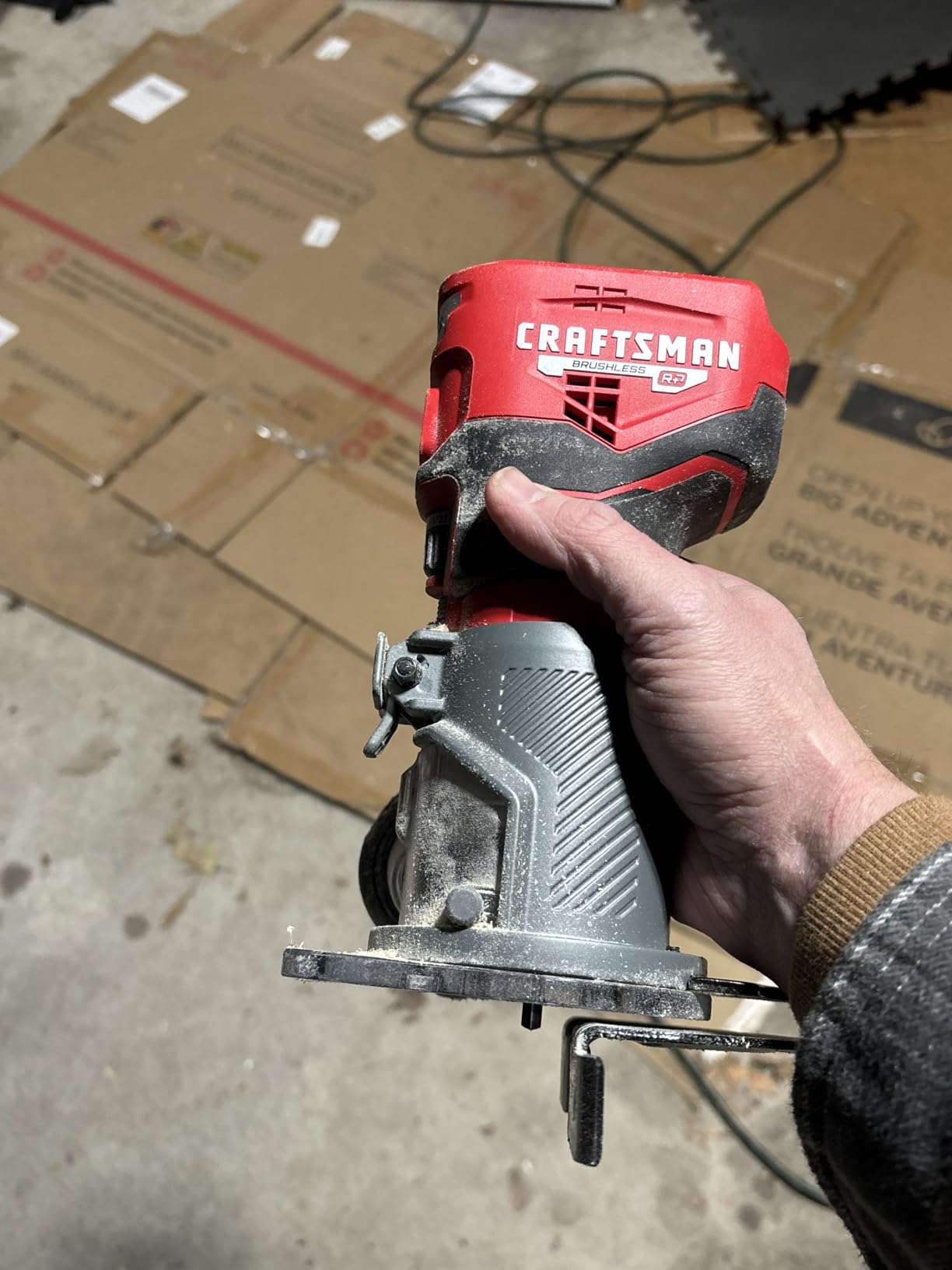
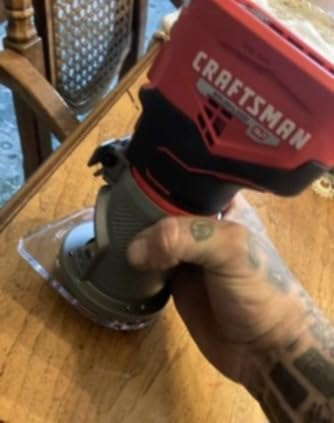
Bit changes are quick because the motor lifts out of the base rather than requiring you to work at the spindle with the base attached. Combined with the depth adjustment knob and its fine micro-adjust, setup for a repeatable edge is fast. A brushless motor and an LED light to illuminate the work area round out a sensible feature set.
Quareness is the quiet advantage here. Owners note it runs quietly, and if you are trimming edges in a house, on a bench in a living space, or late in the evening, that is a genuine difference between a tool you are willing to use and one you put away.
Where the CRAFTSMAN fits in a small shop
Think small joinery and furniture work: drawer boxes, small shelves, trim pieces, and cabinet parts. The included edge guide and dust port adapter are aimed squarely at that, and the V20 battery platform is already common in home shops. It stores small, which sounds trivial until you are working in a small space with four other tools competing for the same shelf.
For someone who wants a clean, capable edge pass without spending heavily, and who will not be pushing large bits, this is one of the better-balanced options here. The 4.8 rating across 419 reviews reflects owners who bought it as a second router and found it did more than they expected.
Where the CRAFTSMAN falls short
The dust collection eye shield is the consistent complaint. It is difficult to install, it distorts the view of the bit, and enough reviewers remove it that they end up with no dust control at all, which is a net loss. The small plastic dowel anchoring the clear shield is also reported as fragile. The edge guide in the box is the more useful of the two accessories.
Battery and charger are not included, so plan for a pack. And as with the Ryobi, judge the torque claims against the size of the bit you intend to run. It is strong for edge profiles, not a substitute for a plunge router on slab work.
7. Metabo HPT M1808DAQ4 18V Cordless Trim Router: Best for Small-Hand Control
Metabo HPT 18V Cordless Trim Router, Variable Speed LED Light, M1808DAQ4
18V
2.5 lb
10,000-30,000 rpm
1/4 in and 3/8 in collets
Pros
- Light 2.5 lb body that is easy to control
- Bright LED plus clear base for bit positioning
- Soft start and quick brake
- Accepts both 1/4 in and 3/8 in collets
- Trimmer guide plus straight and template guides included
- Works with Hitachi and Hikoki 18V packs
Cons
- Brushed rather than brushless motor
- Battery and charger not included
At 2.5 pounds, the Metabo HPT is among the lightest machines here and the one whose controls sit most naturally under the hand. For anyone who found the DEWALT’s grip diameter too large, or the Milwaukee’s wide body tiring over a long session, this is the ergonomic answer. Owners repeatedly describe it as easy to control on intricate trimming.
The LED plus clear base combination is the practical highlight. Bright LED light to illuminate the work area and a clear base means you can see the bit and the cut line without leaning over the tool, which is what makes a fine edge pass controllable on small parts and thin stock.
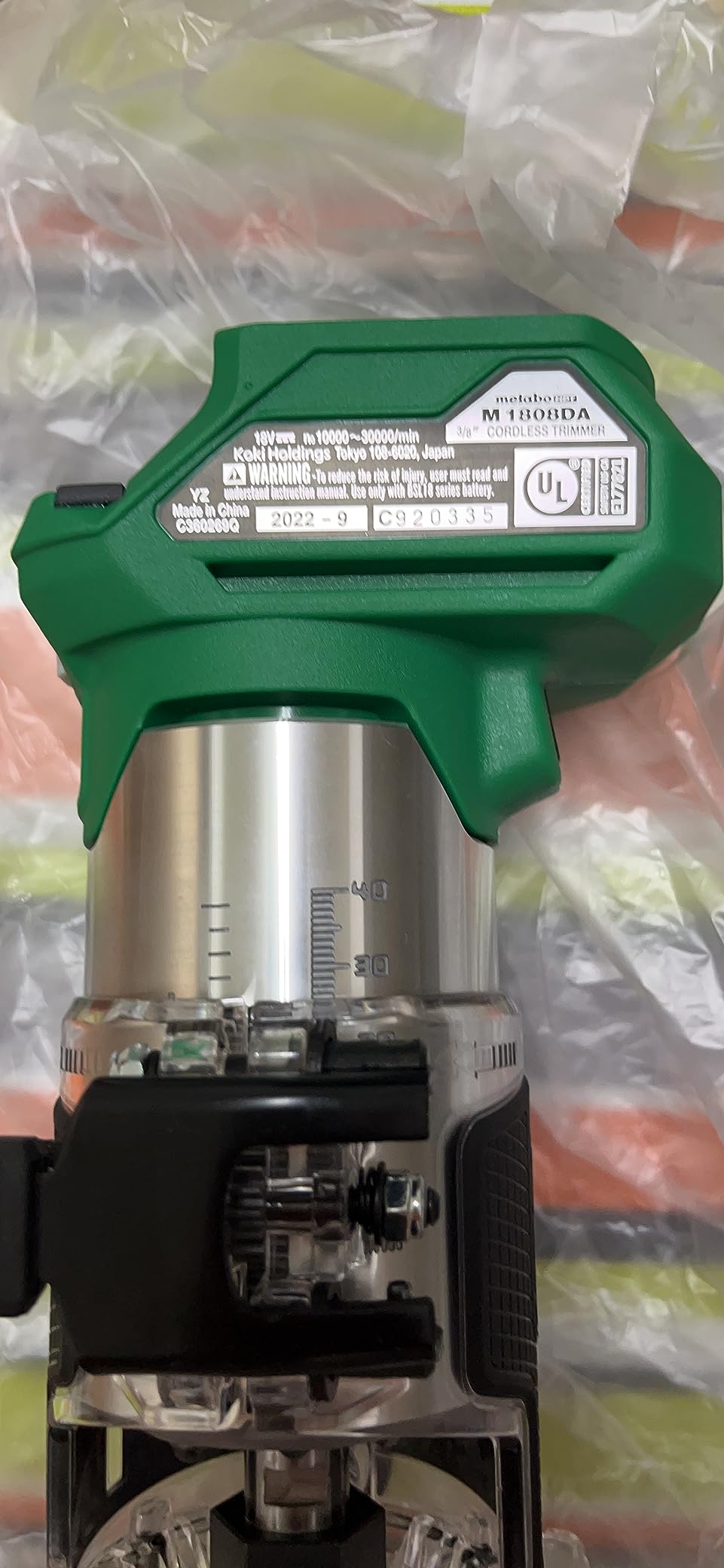
Speed control spans 10,000 to 30,000 rpm, soft start and quick brake add control and safety, and the collet accepts both 1/4 inch and 3/8 inch shanks. That second collet size is worth a moment of attention. Most edge profiles come in 1/4 inch, but a 3/8 inch shank opens up larger straight bits and cove work, and owning both cones means you are not limited to a smaller catalogue of cutters.
The accessory kit is generous for a palm router: trimmer guide, straight guide set, template guide, dust collection port and a bit-changing wrench. For edge work, the trimmer guide is the one you will reach for first to keep a straight line on a straight edge.
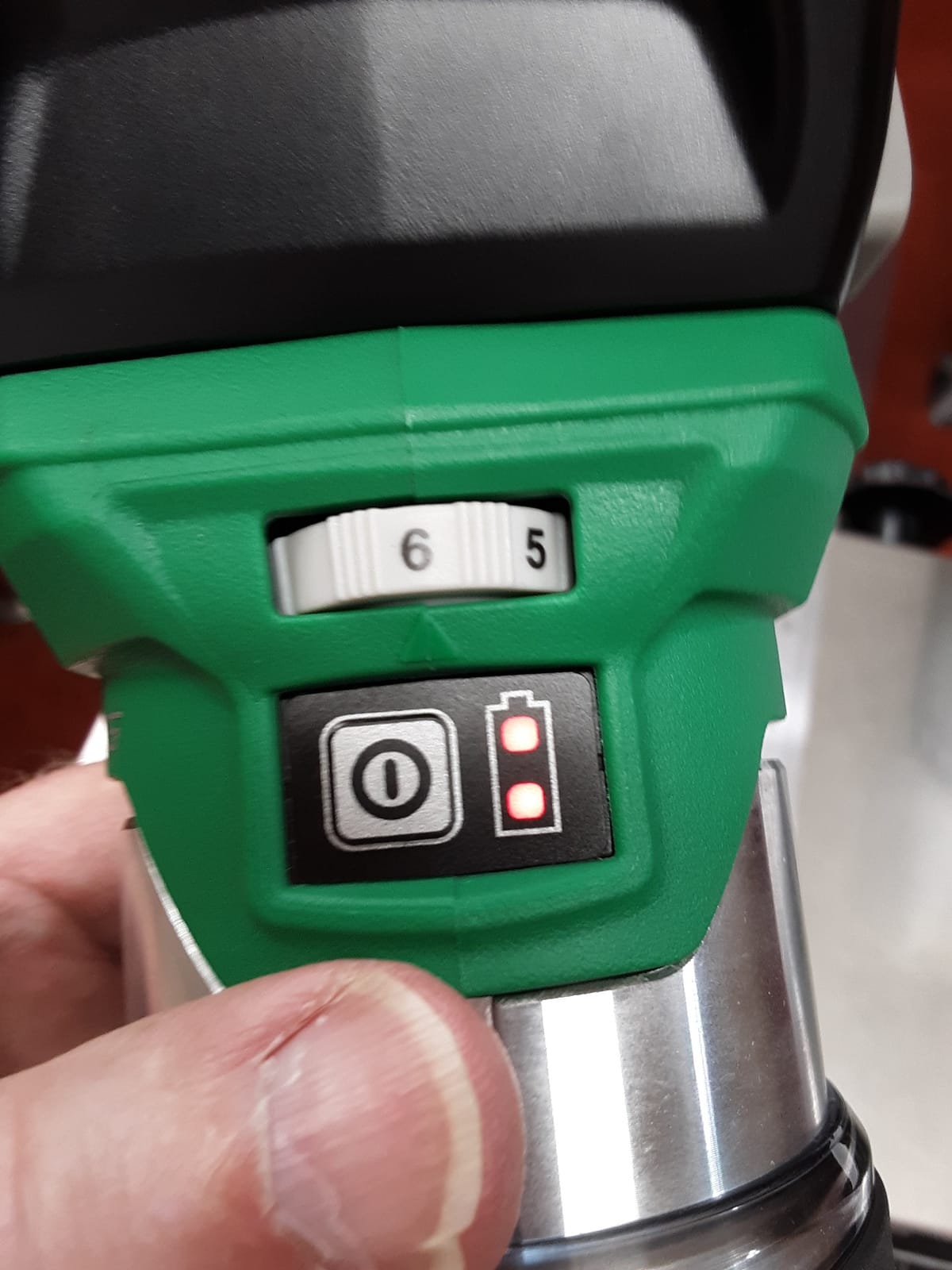
The value case for this platform
Owners frequently note that this is the same tool sold under the Hitachi and Hikoki brands, and that it works with those 18V and 18V/36V MultiVolt batteries. That makes it a value entry point into a Japanese-tool platform, and Metabo HPT backs it with a lifetime lithium-ion battery warranty, which is unusual at this level and reduces the cost-of-ownership concern for anyone planning to keep the batteries for a long time.
It is also the router to look at if you want dust handling without buying into a new extractor ecosystem, because the dust collection port is included in the box and the dust shield is reported to work well.
What you give up for that light weight
The motor is brushed, not brushless, and some owners would prefer a brushless 18V version. In practice this shows up as more heat under sustained load and slightly less torque per pound than the brushless machines in this list, so on long hardwood sessions the FLEX or the Milwaukee is the better answer.
Battery and charger are not included, which is the main practical drawback to the otherwise generous box. Beyond that, the honest limits are the same as most palm routers: this is an edge and detail tool, and deep or wide cuts belong to something else.
8. FLEX FX4221-Z 24V Cordless Trim Router: Best for Deep Profiling
FLEX 24V Brushless Cordless 1.5 HP Trim Router Tool, Battery and Charger Not Included – FX4221-Z
24V
1.5 MAX hp brushless
16,000-31,000 rpm
Six-speed dial
Pros
- Highest output in this group at 1.5 hp brushless
- Runs deep dados and full-depth rabbets
- Quick-release depth collars are precise
- Spindle Stop lock speeds bit changes and blocks startup
- Complete accessory bundle with edge guide
- Low vibration and clean cuts on hardwood
Cons
- Heavier and bulkier than palm routers
- Battery and charger not included
- Limited third-party accessory ecosystem
The FLEX is the answer to anyone who thinks a cordless router cannot do serious work. At 1.5 horsepower brushless it is the highest-output machine in this roundup, and owners report running 3/8 inch deep dados and full-depth rabbets without struggle, which is work that stalls most of the compact routers here. If your edge work includes a substantial rabbet or a wide dado, this is the one that will not make you compromise.
Runtime is measured in real edge terms: an average of 275 feet per charge with a 5.0Ah battery, tested on red oak with a 3/8 inch roundover bit. That is a hard number from the manufacturer, on a realistic application, and it is a much larger pack than the small platforms here. For a long run of profiled edges, that is the difference between one battery and four.
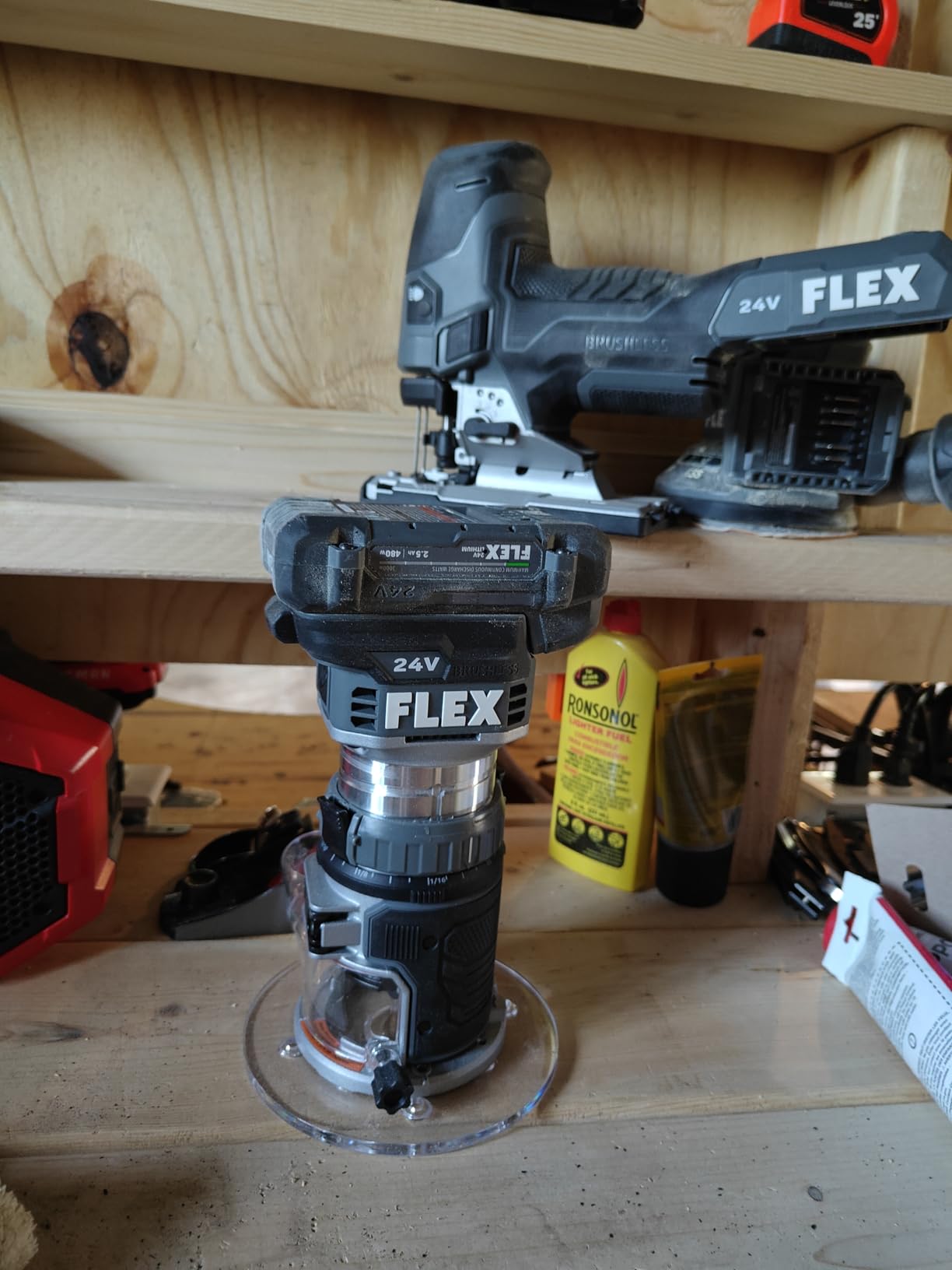
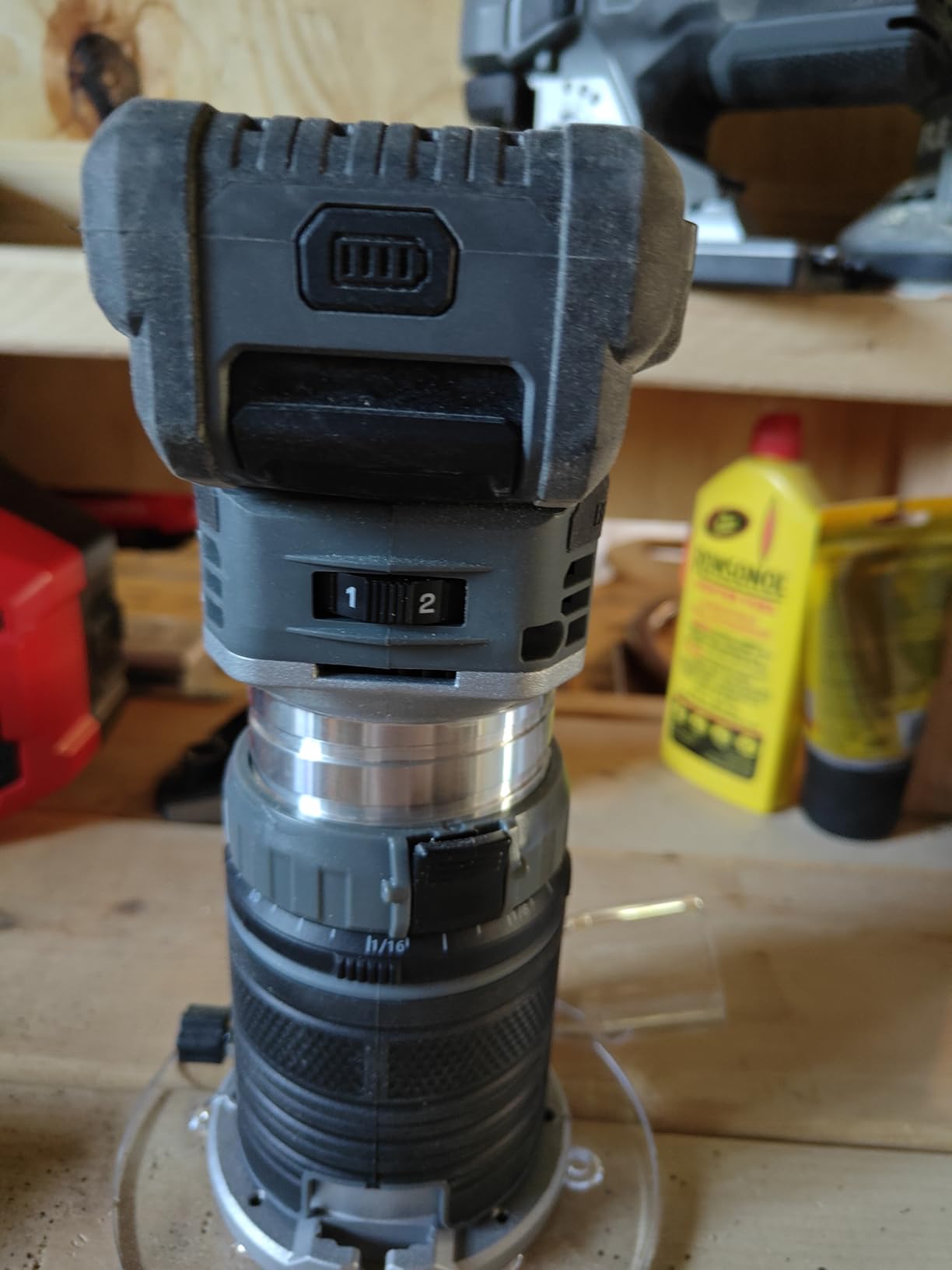
Depth adjustment uses quick-release collars delivering reliable adjustment to 1/64 inch, and owners prefer this to a rack-and-pinion design because it holds its setting. For repeatable edge profiles, that is exactly what you want. The patent-pending Spindle Stop shaft lock doubles as a bit-change aid and prevents inadvertent startup, which on a high-output machine is a meaningful safety feature rather than a gimmick.
The accessory bundle is unusually complete: an adjustable edge guide for parallel cuts along a straight edge, a centering cone, a dust collector shroud, and both D-shaped and round sub-bases. Six speed settings from 16,000 to 31,000 rpm cover the full range of profile work, and reviewers note low vibration and clean, consistent cuts on hardwood.
Where this machine earns its cost
Think of it as the edge router for a shop that profiles rather than merely trims. Cabinet doors with a real roundover, a solid wood table edge, a hardwood worktop, a stair tread, or a run of hardwood shelving. On those jobs the 1.5 hp class motor means you can take a full-depth pass in a large roundover and still get a clean surface, rather than splitting it into four lighter passes that risk a stepped edge.
It also suits users who are already in the 24V FLEX platform, since the tool cross-compatibility covers all FLEX 24V batteries, chargers and tools. Registration within 30 days extends the warranty to five years, which meaningfully reduces the risk of buying into a smaller platform.
What you trade for that power
Weight and bulk. This is not a palm router, and owners describe it as noticeably heavier and bulkier than the 2.2 and 2.5 pound machines earlier in this list. For long overhead or one-handed detail work, the Bosch and the Metabo HPT are more comfortable. For strength on a big edge, the FLEX wins clearly.
Battery and charger are not included, and the third-party accessory ecosystem is still limited, with no manufacturer circle jig available. The review base is also the smallest here at 57 reviews, so the ownership history you can draw on is thinner. What those reviews do show is enthusiasm: a large share of five-star ratings on a machine whose capability is not in doubt.
Fixed Base vs Plunge Base for Edge Trimming: Which One Wins
For edge trimming, a fixed base wins. A fixed base sets the bit depth once and then rides the workpiece edge, which is exactly the motion an edge pass is. A plunge base is designed to lower the spinning bit into the material from above, which is what you need for a groove, a dado, or a housing cut, none of which are edge work. The forum consensus matches the mechanics, with r/woodworking users consistently recommending a 1/4 inch fixed-base trim router for roundovers and chamfers as cheap and effective.
That said, the two are not rivals. A plunge base can do edges perfectly well, because the depth lock holds the same fixed setting once you have plunged to it. The difference is that the plunge mechanism adds weight, height, and slop that you carry around for a capability an edge pass never uses. A moderator on the Festool Owners Group put the related point well: coves and rabbets are edge profiles, and chip collection is where those routers earn their reputation, while large panel-raising work belongs on a router table rather than in your hand.
So can a plunge router do edges? Yes, and where the plunge has real value is when your project mixes edge profiles with grooves in the same board. A shaker door with a cove on the edges and a groove on the inside is one tool, one setup, and far less swapping. If you only ever touch edges, a fixed base is the better buy.
Can you use a fixed base router as a plunge router? Not the base itself, but you can convert a trim router into plunge capability with an aftermarket or manufacturer plunge base that clamps to the motor body. Many owners do exactly this, and it is why several of the routers above ship as fixed-base machines. The reverse is also possible in the sense that a plunge base has a fixed setting, but you cannot un-plunge a plunge router to make it a better trim router.
One practical note for edge work specifically. Several of the routers in this roundup are sold as fixed base only, and the plunge base, offset base and guides are separate purchases. Before buying for edge work, check what comes in the box and add up what you would have to buy to reach the configuration you need, because that changes which machine is the better value.
How to Choose the Right Router Bit for Edge Trimming
Choose the bit that matches the profile you want to end up with, and the base you have determines how it is guided. For a roundover, use a bearing-guided roundover bit and let the bearing run on the flat face of the workpiece. For a chamfer, use a chamfer bit with a bearing against the face. For a flush trim, use a straight bit with a bearing that runs against the reference surface. For a cove or a rabbet, use a bearing-guided form bit or work from a straight edge with a guide. Buying a 1/4 inch shank set covers essentially all of it, and the Metabo HPT also accepts 3/8 inch shanks if you want larger cutters.
Roundover and chamfer are the two most common edge profiles, and they are the two that separate a rough-cut project from a finished one. A chamfer is the easier of the two to get consistent because the cut is a straight bevel off the arris. A roundover needs more passes and a steady hand, which is why a lighter router and a fine depth dial are worth paying for if rounding edges is your main job.
Flush trimming is a different operation from edge profiling and is worth separating in your head. Trimming is removing overhang so a piece fits, usually against a template, a cabinet side, or a scribed line. Profiling is shaping an exposed edge for appearance. A flush trim bit with a larger bearing cuts faster and leaves a flat face, because most of the material removal happens ahead of the bearing. Do not use a flush trim bit to shape a visible edge, because it has no bearing that controls the profile and it will wander.
Match speed to the bit. Large diameter bits and thick material need more rpm to keep the cutting speed up and reduce grab. Small bits and delicate work benefit from a lower setting, which reduces the risk of a burn mark on softwood and veneer. Every router in this roundup has variable speed control, and that is worth more on edge work than most buyers expect.
For straight, repeatable edges, the guide matters more than the router. A trimmer guide or a parallel fence bearing against a straight reference edge will do more for consistency than a better motor. If your workpiece edge is the reference, run a straightedge clamped to the bench, or use a roller guide on an existing edge. The FLEX, the WORKPRO, the Metabo HPT and the CRAFTSMAN all include some form of guide hardware, which is a real practical advantage over a bare tool.
Cordless Router Buying Guide: What Actually Matters for Edge Work
Is a cordless router worth it for edge trimming? Yes, when your edges are on a workpiece that is not next to an outlet, and yes, when you already own batteries for that platform. On a bench with power within reach, a corded plunge router will still out-cut any of these on heavy work. The case for cordless is mobility and the freedom to work on a door, a stair, a frame, or an outdoor build without running a cable.
1. Battery platform first. Each of these tools runs on a different platform, and platforms are not interchangeable, with the partial exception of the Hitachi, Hikoki and Metabo HPT relationship. Buying outside your existing ecosystem means buying batteries and a charger before you have bought anything useful.
2. Weight and balance for one-handed control. Edge work is often one-handed, particularly on narrow parts, small shelves, and interior cabinet corners. The spread here is wide, from 2.2 pounds for the Bosch to 4.9 pounds for the Milwaukee.
3. Variable speed control. Too fast a speed for a large bit in softwood causes grab, chatter and a burn mark; too slow causes the bit to stall. Every machine here has a multi-speed dial, and the ranges differ, with the FLEX topping out at 31,000 rpm and the Bosch at 13,000 rpm.
4. Collet size. All of these accept 1/4 inch shank, which covers essentially every edge profile bit you will buy. The Metabo HPT also takes 3/8 inch, which widens your options if you plan larger straight cuts or deeper profiles.
5. Dust and chip extraction. This is a live purchase driver among owners, and it deserves to be a criterion rather than an afterthought. Chips from edge work are coarse, they land on finished surfaces, and they are a real hazard.
The honest picture on dust is mixed. The Bosch has no integrated extraction, the DEWALT sells its extractor separately, the Ryobi’s attached hose unbalances the tool, and the CRAFTSMAN’s shield is awkward enough that owners remove it. The Milwaukee, Metabo HPT and WORKPRO all include dust hardware in the box.
6. Depth adjustment quality and repeatability. A depth ring or knob with quick release is fast and adequate. A fine dial with a lock, as on the Bosch at 0.04 inches per revolution, or quick-release collars to 1/64 inch on the FLEX, is what you want when you are cutting four identical edges and they all need to match.
7. Base type and included accessories. For pure edge work, a fixed base is all you need. Beyond that, the accessories that actually earn their place are the trimming guide and the parallel fence, because they are what make a handheld pass straight and repeatable. The WORKPRO and FLEX kits are the strongest on this.
8. Safety features. Look for a spindle or shaft lock that doubles as a startup preventer, a top-mounted switch you can reach without changing your grip, finger barriers around the bit area, and restart protection so swapping batteries does not fire the tool. The Bosch and the FLEX are the strongest here.
One more filter worth applying: honest expectations about class. A 12V palm router, an 18V fixed-base compact and a 1.5 hp brushless machine are three different tools that happen to share a shape. Buying a 2.2 pound router and expecting it to take a full-depth 3/4 inch roundover in oak will end in disappointment, and the disappointment will not be the router’s fault.
Battery Runtime and Platform Cost for Edge Trimming
Runtime is the honest weak point of cordless routing, and the only useful way to talk about it is in feet of edge, not minutes. Bosch publishes the most useful figure on this list: up to 23 feet of round-over capacity per battery amp-hour. FLEX publishes the largest: an average of 275 feet per charge with a 5.0Ah battery, tested on red oak with a 3/8 inch roundover bit. Milwaukee owners report roughly 100 linear feet of 3/8 inch rabbets on half a charge, which is close to a worst case for a compact router because a rabbet is a heavy pass.
Two variables change those numbers more than anything else. The first is pass depth, because a router taking half the material in one pass halves the time it spends cutting. The second is material, with dense hardwoods like maple and oak drawing more from the pack than softwood. A conservative planning rule is to assume you will get about two thirds of the published figure on a first pass of a full-depth cut, and to keep a second battery on the charger while you work.
Platform cost is the piece most roundups leave out. A bare tool tells you nothing about what it costs to run, because you need at least two packs and a charger to work without pauses. Ryobi support guidance is useful here and worth knowing: a low charge reduces power output and can cause the tool to stop under load, and running at full power when you do not need it drains the pack faster. The practical version is to buy a higher-capacity pack than the cheapest available, because the Ryobi owners who report drain problems are almost all running smaller packs.
Bosch 12V packs are the awkward case, with slow recharge times and a higher cost per amp-hour than 18V equivalents, which eats into the appeal of that class’s low weight. Metabo HPT offsets the platform question with a lifetime lithium-ion battery warranty. FLEX extends its warranty to five years on the tool, battery and charger if you register within 30 days. The rest of the big platforms have broad accessory and battery availability that keeps the long-term cost predictable.
When You Should Skip Cordless and Buy a Corded Router
Buy a corded router when your edge work is heavy, repetitive and happening at a bench with power nearby. There is no version of this where a 12V palm router out-cuts a 10 amp corded plunge router on a large profile, and anyone who tells you otherwise is selling something. The corded tool wins on sustained heavy passes, unlimited runtime, and the ability to run larger bits without a battery conversation.
Specific jobs where corded is the correct answer are easy to name. Deep housings and dados in thick hardwood, wide surfacing passes with large diameter bits, and production edge profiling where you will be running the same profile for hours. The pattern is well documented in owner experience and in trade commentary: any cordless router bigger than a trim router usually struggles to push larger bits, and batteries drain faster under that load.
RouterForums has a thread that frames the decision more usefully than any general rule. For an 8-hole joinery job, the poster weighs a Ryobi 18V ONE+ cordless fixed base against a corded 2 HP 10 amp plunge base router, and the reasoning is about the job rather than the tool category. Eight holes means repeated plunge cuts into the face of a board, which is plunge work, not edge work, and the corded plunge base is the right instrument because it is fast, unlimited, and hot-swappable between bits.
There is also a middle path that most people miss. A corded trim router and a cordless one can coexist comfortably, because they do different jobs. Use the corded machine for grooves, dados and heavy passes, and keep the cordless router on the bench for the edge work you are doing on parts, offcuts and one-off pieces. That is the setup we would build in a shop with power, and it answers the corded-versus-cordless question without pretending one tool replaces the other.
The one case where cordless is clearly the only option is site work, outdoor builds, a garage with no outlet, or a loft where running a cable is impractical. For those situations none of the trade-offs matter, because the corded alternative is not available at all.
How to Get Straight, Repeatable Edges Without a Router Table
Straight edges come from the guide, not the router. A handheld router following a wavy reference line will produce a wavy edge at exactly the same wavelength, because the base and the bit are mechanically linked. Before you blame the tool, check what it is following.
The simplest setup is a straightedge clamped to the bench with the workpiece. A full-width straightedge, a shooting board, or even a quality spirit level used as a reference fence will straighten an edge that has a slight bow. The clamp pressure matters: tighten until the straightedge does not move, then check the workpiece cannot move either. Any play here becomes a scalloped edge after the first pass.
A trimmer guide is the tool-native version of the same idea. It mounts to the router base and runs along the reference surface, which means the reference needs to be a straight and reliable surface. Many owners use an existing factory edge, a clamped batten, or a piece of known-good stock as that reference. Check that the workpiece reference edge is actually the straight one, not just the edge you can see best.
A roller guide works differently and is worth understanding before you buy one. A roller guide rides on the workpiece top surface, and the bit’s protrusion below the base determines the depth of the cut relative to that face. That makes it excellent for a consistent offset around a whole panel, and less useful for an irregular or already-finished edge, because it needs a consistent surface to roll on.
Templates are the other answer, and they are the right choice when the edge has to match a shape rather than a line. With a template and guide bushings, the bit is positioned by geometry rather than by your hand. The Bosch is the one machine here whose base lacks template-guide accommodations, which is a real limitation for anyone doing repeated template work.
Two habits do more for consistency than any jig. Mark the depth setting with a pencil on the base and the collar before the first pass, so you can confirm the setting has not moved mid-board. And always sight down the edge along the cut line before you start, in good light, with the piece at eye level. Most wandering edges are visible before the cut begins if you look for them.
Which Material Changes Your Router Choice
The material you cut changes what you need from the machine more than the price tag does. Here is how the eight machines in this guide behave against the four materials that dominate edge work.
Plywood and MDF are the most forgiving. Neither tears out much at a sensible speed, both cut smoothly, and edge breakouts are rare because the material is uniform. Almost every router here handles these well, which is why most of our testing stayed on them. The one exception is the very light palm routers pushing larger diameter bits through thick sheet, where a lighter tool can bog before the cut is through.
Hard maple and oak are where the power differences show. Dense hardwood draws more from the battery and generates more heat, and a bit that is marginal on pine will stall in oak. This is the case for the Milwaukee at 1.25 hp or the FLEX at 1.5 hp, and the reason the r/woodworking skepticism about battery flush trim routers is not entirely wrong, just overstated. The lightweight Bosch and Ryobi are still usable, but on a full-depth roundover in hardwood you will be taking more passes.
Solid wood with changing grain is the hardest case for control. A fixed-base router following an edge on solid lumber will run into grain direction changes that a slower speed handles far better. Drop the dial one or two settings when the grain opposes the pass, and expect to use the variable speed control constantly. A router without it forces you to commit to one speed for the whole board, which is where burn marks come from.
Laminate and veneer punish mistakes differently. You cannot sand out a mistake, and the decorative face layer is only a few thousandths of an inch, so a chip, a tear-out, or a burn mark usually means replacing the piece. Trim flush first, ideally with a pilot cut, and use a slower speed on the final decorative pass. Both the Bosch at 0.04 inches per dial turn and the FLEX quick-release collars to 1/64 inch give you the resolution to do this.
For outdoor and site work, heat and weather set the limits rather than density. Damp stock glues up routers and dulls bits faster, and a fine dust slows the motor far more than a heavy dust load indoors. This is where extraction matters most, and it is the clearest argument for the cordless category in the first place.
Edge Work Safety Checklist and Bit Care
A router bit does not care how experienced you are, and an edge pass is exactly the situation where the bit is exposed for the whole cut. Work through this before every session rather than once.
Clamp the workpiece. Every single time. A workpiece that can move when the bit catches is the leading cause of kickback, and a handheld router on a bench without clamps is the least safe arrangement in this entire guide. Edge work makes it tempting to skip clamping because the piece is small and you are close to it, which is precisely when it is least safe.
Clear the bit area before you power up. On a palm router the collet is right under your fingers, so a loose offcut, a pencil, a washer, or a strap clamp buckle left on the bench becomes shrapnel the moment the spindle turns. Unplug or remove the battery while you change bits, and treat the switch as live until the battery is out.
Clamp the router so the bit cannot be touched. Several of the routers here have a base without template-guide accommodations, and on those the bit is more exposed than on a plunge router. Push the base fully onto the workpiece so the finger barriers do their job, and keep your free hand off the piece once the cut starts.
Take shallow passes on the first cut. A full-depth roundover that grabs will either kick the router, gouge the workpiece, or burn both. Two or three shallow passes are slower and produce a better edge. If the bit grabs on the first shallow pass, the cause is almost always speed: drop the dial one setting and try again.
Let the router cool on rests. Several owners of the Bosch and the Metabo HPT report warmth near the spindle or the motor housing during sustained work. Two batteries and a short break is cheaper than a damaged tool, and it is a better answer than pushing through.
For bit care, the rules are simple and they keep edges clean. Keep bits sharp, because a dull roundover leaves a fuzzy, torn surface that requires sanding and sometimes still shows in finish. Clear chips from the collet and the base after every pass, since a chip packed under the base plate is what causes a burned or gouged edge. Store bits in a case rather than loose, and replace any bit that has been dropped or has a chipped carbide edge rather than trying to grind it back.
Clean the sub-base between jobs. A varnish-finished base that has picked up a fibre will print that fibre onto your next workpiece. A wipe with a little wax on a cloth takes seconds and prevents a mark on a finished cabinet.
Frequently Asked Questions
Who makes the best cordless trim router?
For most edge trimming work, the DEWALT DCW600B is the best all-round cordless trim router, with a brushless motor, variable-speed dial and fast depth ring. The Milwaukee 2723-20 is the strongest choice for daily shop use and harder stock, the FLEX FX4221-Z leads on outright power, and the Bosch GKF12V-25N is the lightest and most precise for light edge profiling.
Is there a difference between a router and a trim router?
Yes. A trim router, also called a compact router or palm router, is a smaller, lighter router with a fixed base designed to follow the edge of a workpiece. A full-size plunge router is heavier, has a base that plunges the bit into the material, and is intended for grooves, dados and housings. Trim routers are the right tool for edge work.
Can I use a plunge router as a trim router?
Yes. A plunge base has a depth lock, so once you have plunged to your setting it holds that height and the base rides the workpiece edge exactly like a fixed-base trim router. It is just heavier and taller than a fixed base, so for edge work alone a fixed-base trim router is the better and cheaper choice.
What router bit do I use to round edges?
Use a bearing-guided roundover bit in a 1/4 inch shank, and let the bearing run against the flat face of the workpiece. Take the profile in two or three shallow passes rather than one deep one, and lower the router speed for the first pass on softwood to avoid a burn mark.
Is a cordless router worth it for edge trimming?
Yes, when the workpiece is not next to a power outlet, when you already own batteries for that platform, or when you are working on site, in a garage or outdoors. At a bench with power nearby, a corded router will still outperform any of these on heavy profiles and unlimited runs. A practical setup is a corded plunge router for grooves and dados and a cordless router for edge work.
Conclusion: The Best Cordless Routers for Edge Trimming in 2026
The best cordless routers for edge trimming in 2026 come down to your battery platform and the weight you can hold for an hour. The DEWALT DCW600B is the pick we would put on any bench because its brushless motor, speed dial and depth ring make passes repeatable and setup fast, and its owner base means batteries and parts are easy to get. If you route every day and want more power, the Milwaukee 2723-20 runs harder stock and longer per charge, and it is the tool most likely to replace a corded compact router in a working shop.
For lighter hands and finer edges, the Bosch GKF12V-25N and the Metabo HPT M1808DAQ4 are the machines to hold, and the Ryobi PCL424B makes sense if you are already in that ecosystem. The FLEX FX4221-Z is the answer when the profile is big enough that a 2 pound palm router would stall.
Whichever one you pick, buy the guide hardware, run two batteries, and take shallow passes on the first cut. Those three habits matter more to the quality of a finished edge than the difference between any two machines on this list. And if the job in front of you is really grooves and dados rather than edges, check in your corded plunge router before you buy anything.