
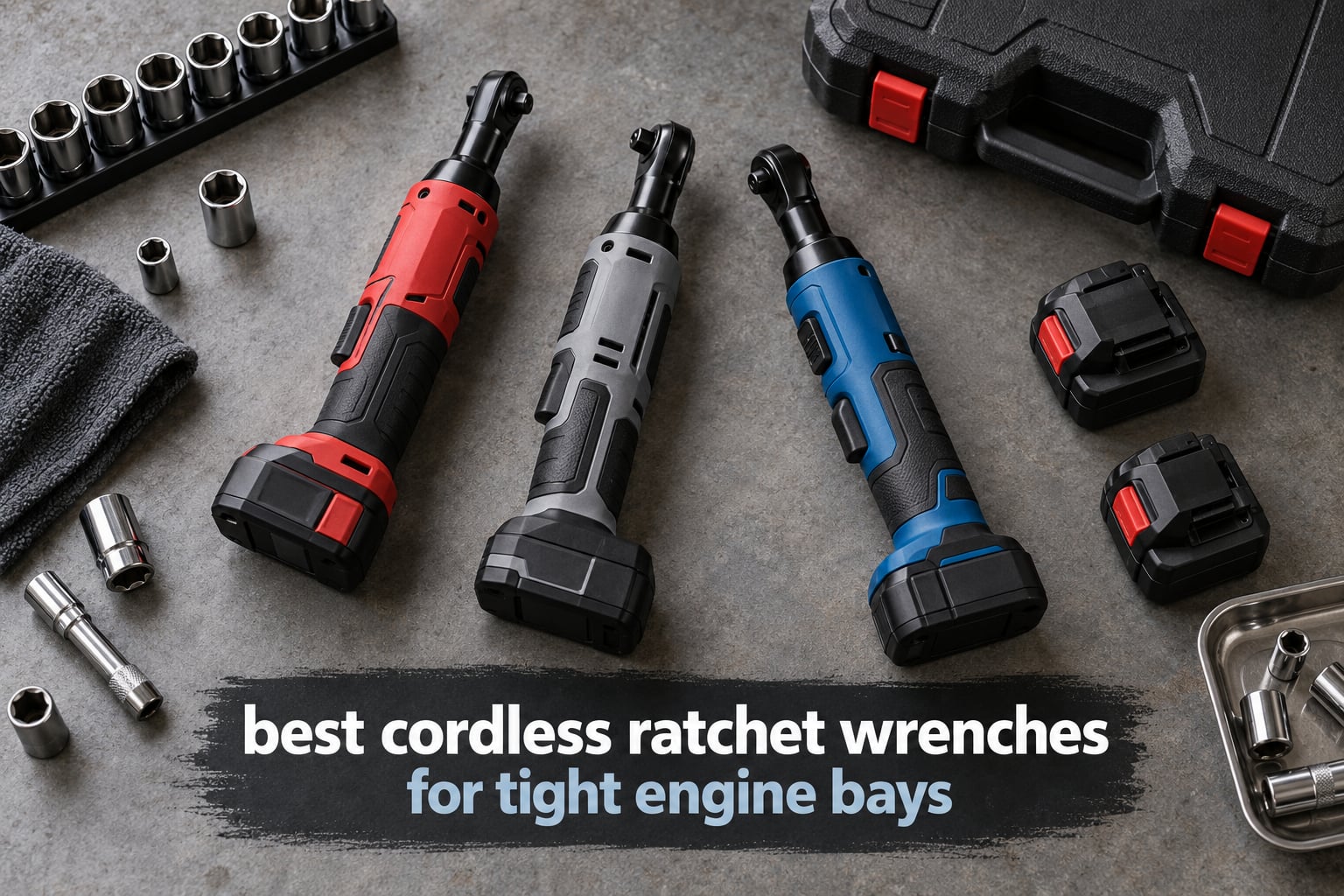
Three picks stand out for cramped engine bays: the KIMO 3/8 Cordless Electric Ratchet for its recessed chrome vanadium head and twin-battery kit, the AOBEN Cordless Ratchet Set for the most complete box at the entry level, and the Milwaukee 2457-20 M12 for the lightest, lowest-profile body of the group.
That ranking came out of comparing 10 cordless ratchets side by side for the specific problem of working under a hood where the intake manifold, strut tower and firewall crowd the fastener. Most roundups rank these tools by torque, and torque is the wrong first question in an engine bay.
Torque decides whether a bolt comes off. Head height decides whether you can reach the bolt at all. If the ratchet head is half an inch too tall to pass between the intake plenum and the firewall, no amount of torque gets you there, and you are back to a hand ratchet and scraped knuckles.
We spent weeks reading owner reviews across all 10 tools, comparing published torque, run-down speed, weight, head geometry and battery platform, and mapping each tool to the engine-bay jobs it actually suits. The results also explain where a cordless ratchet stops and an [impact wrench takes over](https://www.benq-siemens.com/best-cordless-impact-wrenches-for-automotive-work/).
Table of Contents
Top 3 Cordless Ratchets for Tight Engine Bays in 2026
The three below are the ones we would reach for first in a crowded bay, in the order we would grab them.
KIMO 3/8 Cordless Ratchet…
- Recessed head for narrow bays
- 400 RPM variable speed
- Twin 12V 2.0Ah batteries and charger
AOBEN 12V Cordless Ratchet Set
- Rear reverse switch
- 280 RPM variable speed
- Two 2000mAh batteries plus six sockets and extension

Milwaukee 2457-20 M12 Ratchet
- Lowest profile head in the group
- 16 oz sub-compact body
- REDLINK protection on M12 packs
10 Cordless Ratchet Wrenches for Tight Engine Bays (October 2026)
Every ratchet below appears with the specs that decide engine-bay fit. Head-to-head height in inches is not published by any of these manufacturers, so measure your own bay before buying on any other basis.
How We Ranked Ratchets for Engine Bay Access
We scored each tool on five things, in this order: access geometry first, then the torque ceiling, then run-down speed, then battery platform fit, then owner review volume and rating. Access geometry comes first because it is the only criterion that decides whether the job is possible.
Two things shaped how we handled the data. First, no manufacturer in this group publishes head-to-head height in inches, so we rank on the proxies that track it: published overall length, head style (recessed, sealed, extended, swiveling) and bare-tool weight. Where a maker describes a head as recessed or low profile, we took that as a claim about clearance. Second, we did not bench test these tools, and every torque figure quoted here comes from the listing or the owner review record, not from a dyno.
Torque ratings across this group run from 35 ft-lb to 75 ft-lb. That range matters less than buyers expect, because a ratchet is a run-down tool. Once a fastener is moving, most of this torque range is more than enough for sensor, solenoid and valve cover hardware.
1. KIMO 3/8 Cordless Electric Ratchet – Recessed Head, 12490 Owner Reviews
KIMO 3/8 Cordless Electric Ratchet Wrench, 40Ft-lbs, 400RPM Variable Speed
12V
40 ft-lb torque
400 RPM variable speed
1.7 lb
11.4 inches long
Pros
- Recessed head clears narrow bays and undercarriages
- Variable speed up to 400 RPM reduces stripped threads
- Two 12V 2.0Ah batteries plus fast charger in the box
- Chrome vanadium steel head resists corrosion
- LED light and fuel gauge for dark bays
Cons
- 40 ft-lb ceiling is modest for exhaust and suspension fasteners
- Two small packs total roughly 40 minutes of combined runtime
- Fixed head cannot swivel to reach angled fasteners
This is the ratchet I would hand to someone who owns no batteries at all and wants a working tool the same day. You get the ratchet, two 12V 2.0Ah lithium-ion packs, a 60-minute fast charger, seven sockets from 10mm to 17mm, a 3/8-to-1/4 inch adapter and a hard case in one box.
At 1.7 lb and 11.4 inches, it is one of the lighter tools in this group, and the recessed head is the reason it earns the top spot. Reviewers repeatedly describe using it for oil changes and general engine-bay work, where the head slides under a heat shield or behind a hose loom that blocks a taller ratchet.
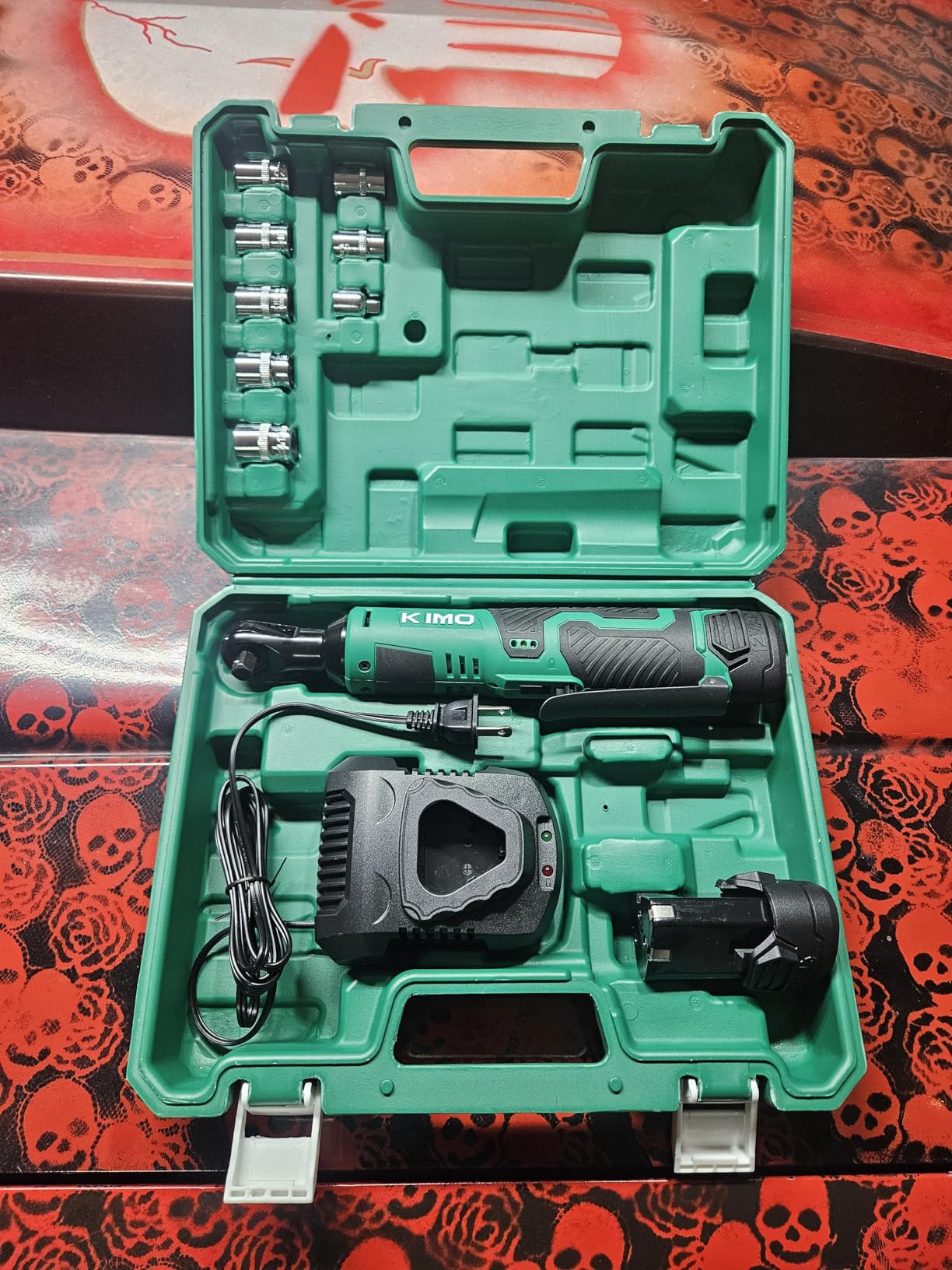
The variable speed trigger is what separates this from a plain 12V ratchet. Instead of one fixed speed, you feather it from a slow start to the full 400 RPM, which is what keeps threads from stripping on small 8mm and 10mm fasteners found on intake runners and sensor harnesses.
The forward/reverse rocker sits where your palm naturally falls, so you can change direction without regripping. The chrome vanadium head is a real material choice rather than a marketing word, and the LED plus fuel gauge cover the two things you always need in a dark bay.
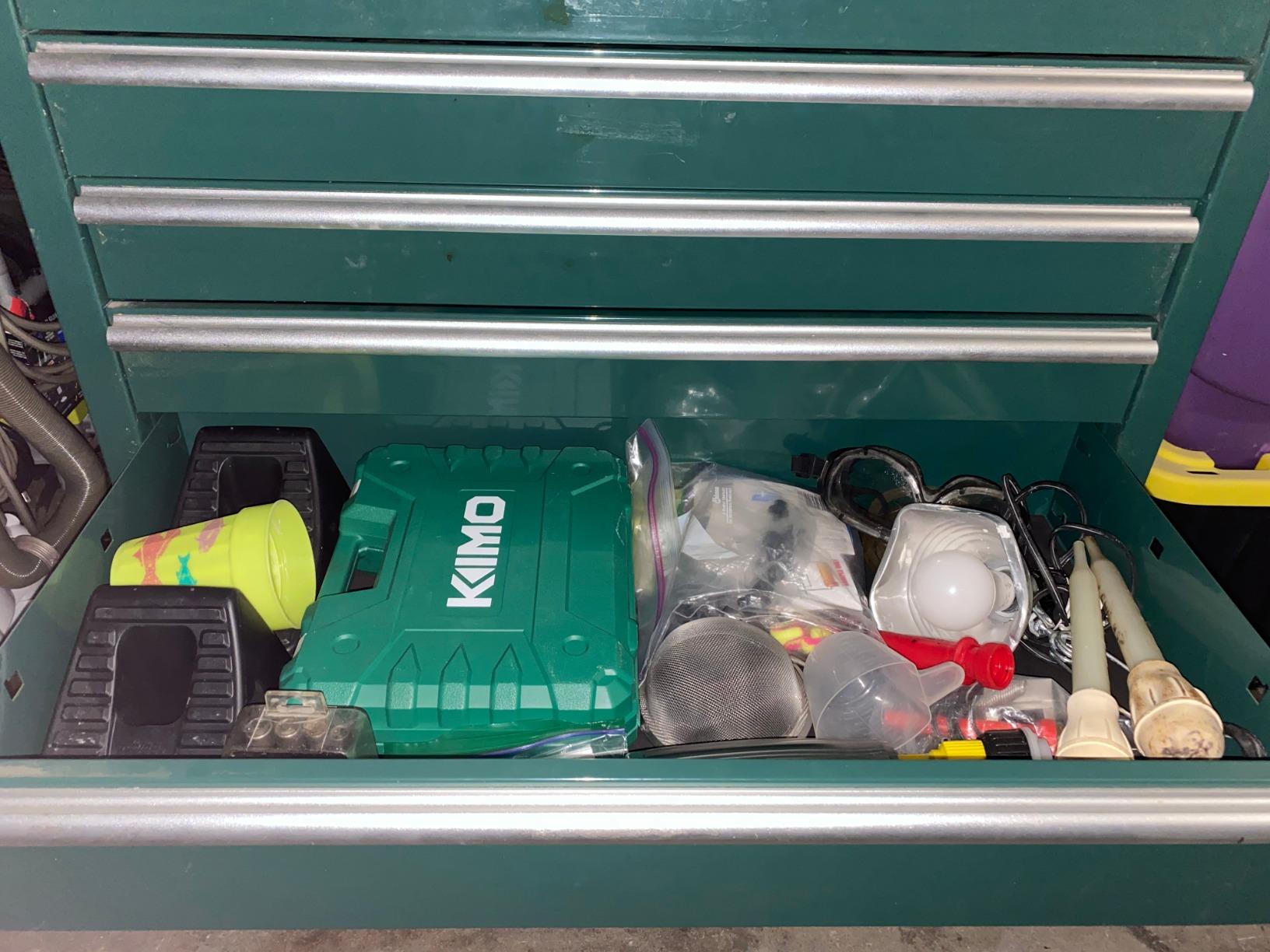
When the recessed head pays off
The design shows itself on jobs where a taller head simply will not seat: battery cable tray brackets, the ground strap on the firewall, starter mounting bolts behind the bellhousing, and intake manifold fasteners where the runner is the only line of sight.
If you are removing and reinstalling an engine, the 400 RPM run-down speed cuts the time on each fastener noticeably compared with slower 170 to 280 RPM tools, and the twin-pack setup means you can swap batteries mid-aisle.
When it will not be enough
Forty foot-pounds is a real ceiling, not a marketing floor. Exhaust manifold studs, rusted suspension hardware and anything that has sat for a decade will stall it, and the stall reads as tool failure when it is really a torque limit. Keep an impact wrench on hand for those.
Total runtime across both packs is around 40 minutes, which is fine for an evening service and short for a full weekend teardown. Plan battery breaks on big jobs.
2. AOBEN Cordless Electric Ratchet Set – Batteries, Sockets and Extension in the Box
AOBEN Cordless Electric Ratchet Wrench Set, 3/8″ 12V Power Ratchet Tool Kit With 2 Packs 2000mAh Lithium-Ion Battery And Charger
12V
40 ft-lb torque
280 RPM variable speed
12 inches long
2 kg kit weight
Pros
- Most complete kit in the roundup
- Reverse switch on the rear prevents accidental actuation
- Front LED plus side battery indicator lights
- Air-cooled motor with heat sinking
- Includes 3 inch extension bar and 1/4 inch adapter
Cons
- 40 ft-lb is thin for seized or heavily corroded hardware
- 12V platform runs out of runtime on larger jobs
- Heavy in the hand at 2 kg with batteries
The AOBEN wins on what arrives in the case rather than what is printed on the side of the head. You get the ratchet, two 2000mAh packs, a charger, six sockets, a 1/4 inch adapter, a 3 inch extension bar, a manual and a carry case.
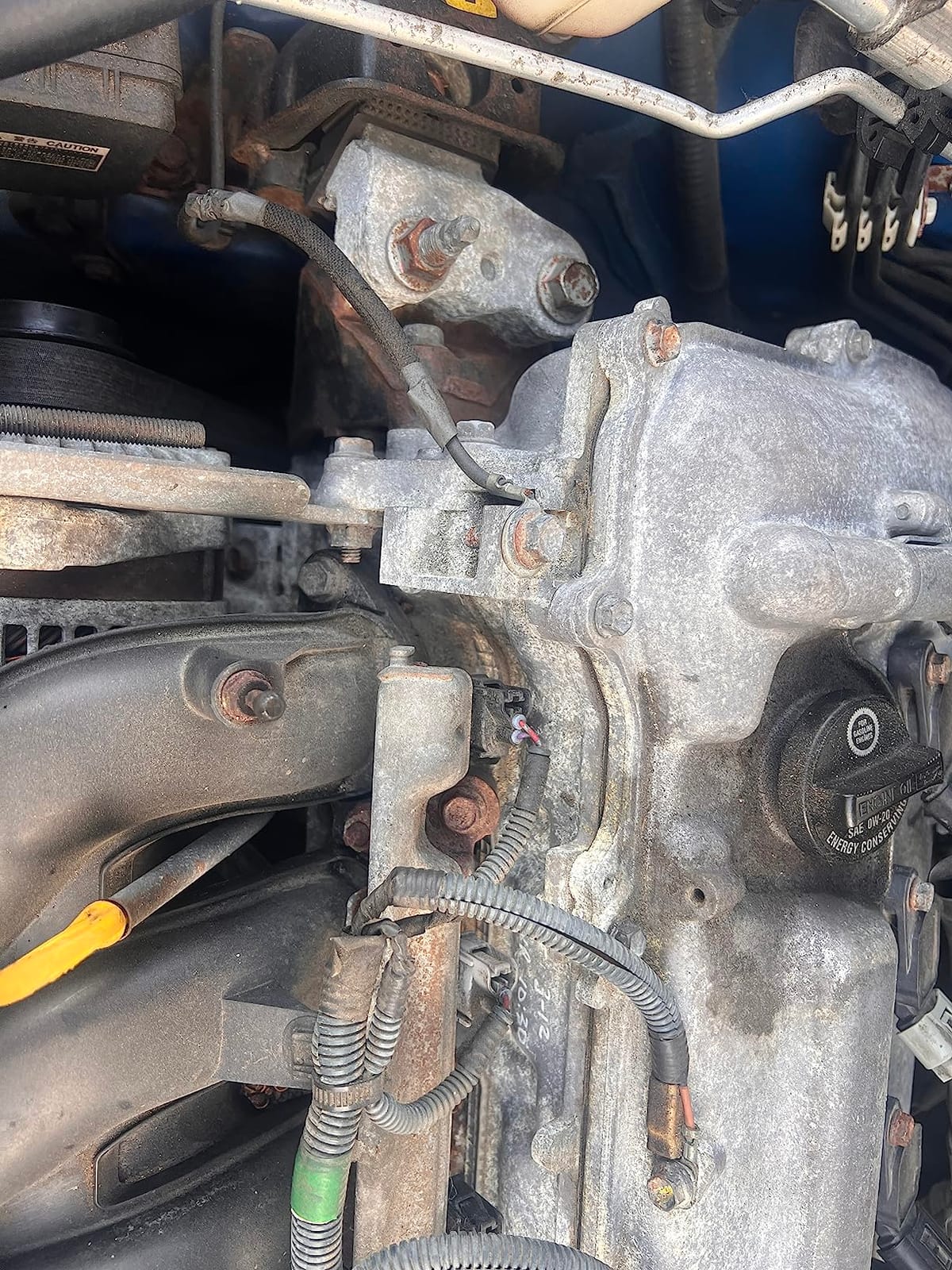
For an engine bay, the extension bar is the sleeper item. When a fastener sits at the bottom of a deep recess behind the intake, a 3 inch bar converts an awkward angle into a straight-in approach, which is the difference between finishing the job and abandoning it mid-way.
Owners single out the rear-mounted backward switch, which keeps the tool from running when it is set down or handed to someone else. That is a small design choice that matters more than it sounds in a bay full of hoses and wiring where you constantly brace the tool against something.
The air-cooled motor with heat sinking keeps battery temperature stable on longer sessions, and the front LED with side indicator lights gives you both the light and the remaining charge in one glance.
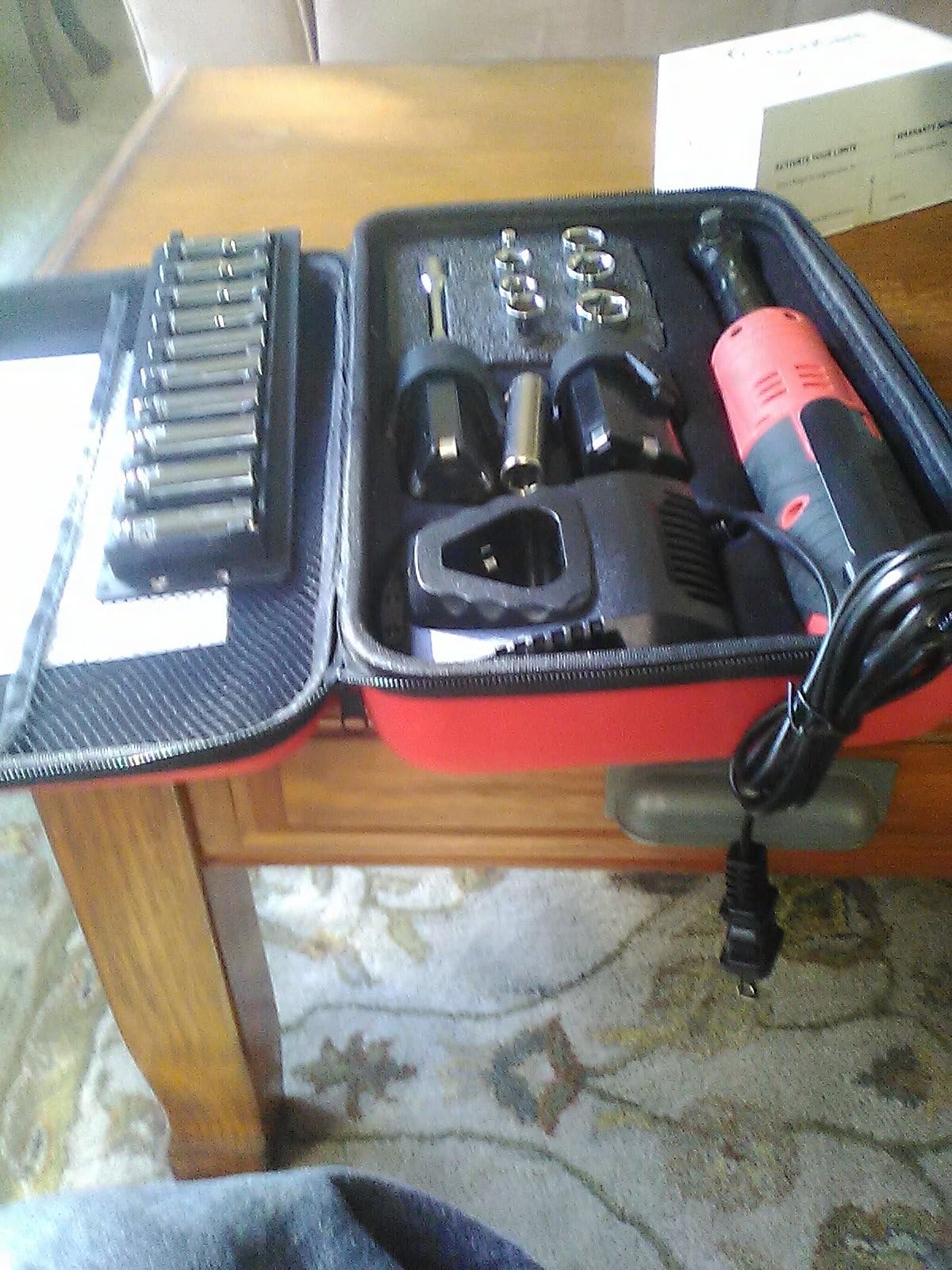
Best fit for a first cordless ratchet
If you own nothing yet, this is the lowest-friction way into the category. One box covers the tool, the power, the sockets and the storage, so you are not assembling a starter setup from four separate purchases.
For a weekend mechanic on a modern transverse engine, the 280 RPM variable speed handles sensor connectors, harness grounds and small intake fasteners with good control.
Where the kit falls short
Two kilograms with batteries installed is the heaviest handling in this roundup, and you feel it during a long under-hood session. If you plan to work overhead in a bay, the lighter bodies here will be kinder to your wrist.
The 40 ft-lb ceiling is the same limitation the KIMO has. Neither tool is the answer for a seized exhaust stud.
3. Milwaukee 2457-20 M12 – Lightest Body and Lowest Profile Head
Milwaukee 2457-20 M12 Cordless 3/8″ Sub-Compact 35 ft-Lbs 250 RPM Ratchet w/ Variable Speed Trigger
12V M12
35 ft-lb torque
250 RPM
16 oz bare tool
9.47 inches long
Pros
- Lowest profile head in the roundup for engine bay access
- Extremely light at 16 oz for overhead work
- Recessed reverse switch prevents accidental start
- Onboard fuel gauge and front LED
- REDLINK protects against overheating on M12 packs
Cons
- Power tool only
- battery and charger sold separately
- 35 ft-lb is the lowest torque listed
- Fixed head with no extension included
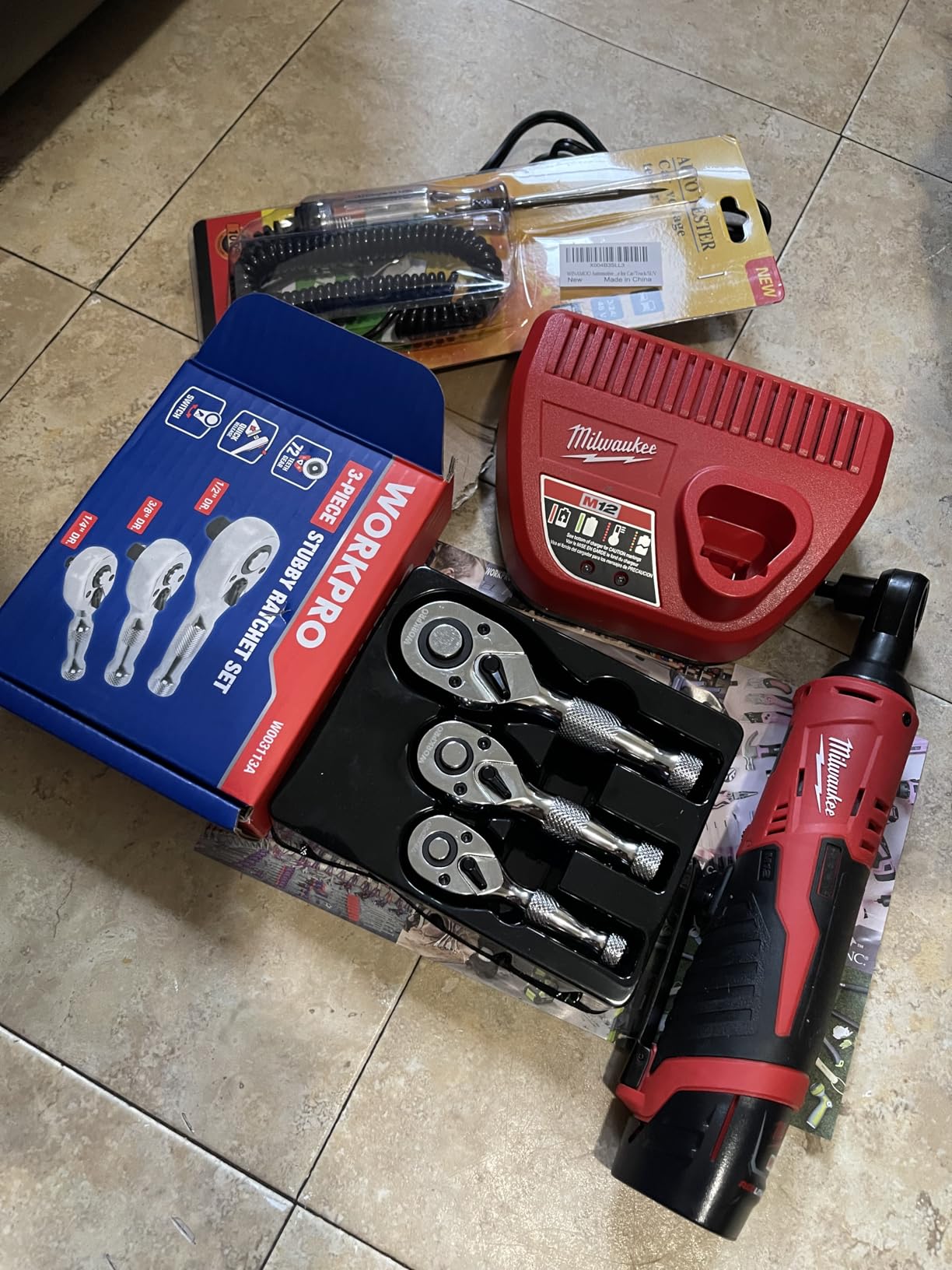
Sixteen ounces is the number that makes this the reach tool for cramped work. When you are holding a tool up under a hood, upside down over a fender well, the weight difference between a 16 oz ratchet and a 3 lb one is the difference between working and complaining.
The head is the lowest profile in this group, and owners call it out specifically for engine-bay access. At 9.47 inches overall, it is also the shortest tool here, which matters when your working room is measured in inches between a plenum and a shock tower.
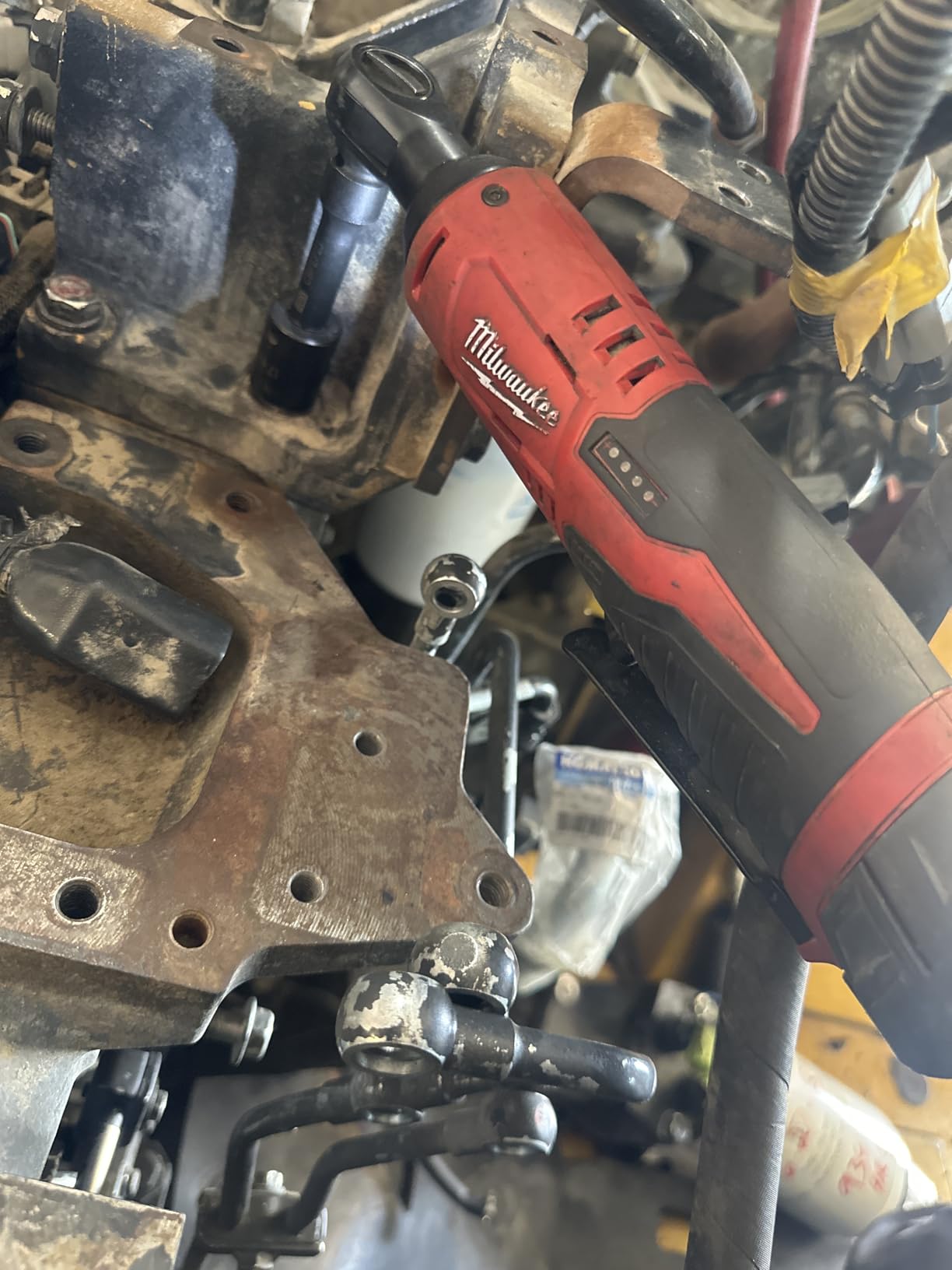
The recessed forward and backward switch on the back of the head is a deliberate placement. Your hand never crosses the trigger to change direction, so mid-job reversals do not require releasing your grip or re-establishing your fingers on the tool.
REDLINK Intelligence communication with M12 packs guards against over-powering and overheating, which matters because a 12V pack being asked for 35 ft-lb will heat up on a long job if the tool has no protection.
Why it is worth buying into M12 for this
Forums are consistent on this point. Buyers who already hold M12 packs treat the ratchet as a cheap way to use batteries they own, and the light body plus low head is why it gets used daily rather than occasionally.
The 3/8-inch drive matches the ratchets in this group, and the front LED covers the dark recesses where intake brackets hide.
What the tool-only format costs you
This is a bare tool. If you have no M12 pack or charger, you are buying three things to get one working tool, and that is the whole platform lock-in problem in miniature.
Thirty-five foot-pounds only handles fasteners that are already loose or light from the start. Owners consistently describe it as a run-down tool rather than a breaker.
4. ACDelco ARW1209P G12 – Extended Head for Recessed Fasteners
ACDelco ARW1209P G12 Series 12V Li-ion Cordless 3/8” 45 ft-lbs. Ratchet Wrench Tool Kit
12V
45 ft-lb torque
170 RPM no-load
10 inches long
0.2 kg listed weight
Pros
- Extended head gives reach into recessed fasteners
- 45 ft-lb is the highest figure among the 12V kits here
- Alloy steel 3/8 inch head with built-in LED
- Soft-grip handle over long sessions
- Kit includes 8-piece socket set
- battery and fast charger
Cons
- 170 RPM is the slowest run-down speed in the group
- 12V platform runtime trails higher voltage systems
- Extra head length complicates very tight corners
This is the depth answer to the bay. The extended head moves the square drive further out from the body, so the tool body does not collide with whatever is in the way when the socket has to travel straight down a well.
That solves a specific problem: a fastener at the bottom of a recess behind the valve cover or deep under an intake runner, where a standard ratchet will fit the socket but the handle will not clear the obstruction. Forty-five foot-pounds also gives it the strongest torque figure among the 12V kits in this group.
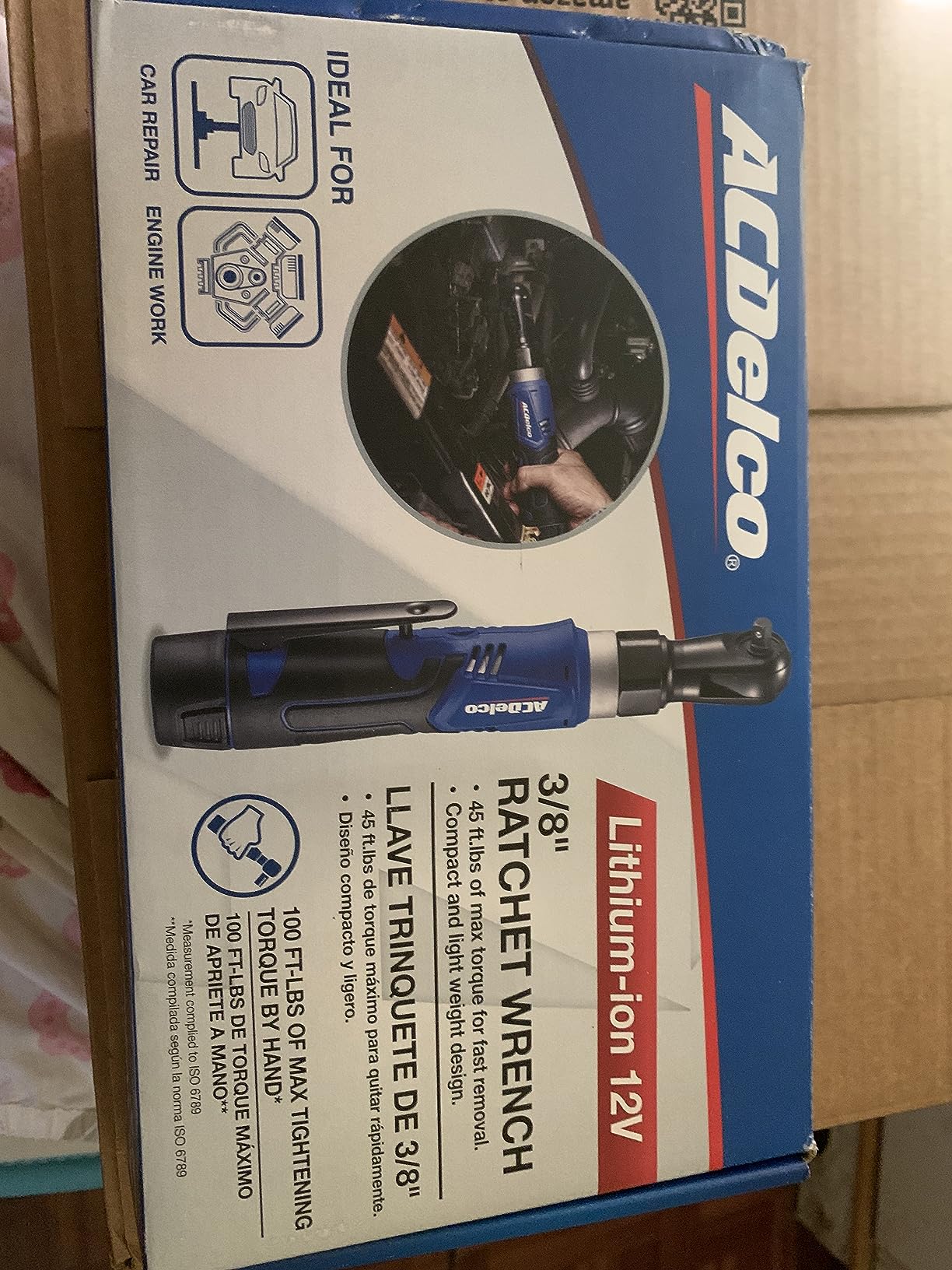
The slim body is molded to balance hand torque up to 100 ft-lb, which means you can still use the tool manually if a fastener is barely started or if you need to feel resistance. The soft-grip handle matters on long service sessions.
The kit ships with the ratchet, an 8-piece socket set, an interchangeable 12V lithium-ion battery and a fast charger, so it is a complete one-box entry like the AOBEN.
Pick this when depth beats diameter
Reach and head height pull in opposite directions. If the fastener is deep but the bay is not narrow, the extended head is the right tool, and the 45 ft-lb rating gives it more working margin than other 12V kits.
It suits under-dash and firewall work too, where the socket path is long and the visible space is generous.
Where slow speed and length hurt
At 170 RPM no-load, run-down on a soft fastener takes noticeably longer than the 400 and 550 RPM tools here. If you remove and reinstall dozens of small engine bolts in a row, you will feel the difference in your wrist before you feel it in your results.
That same extra length is a liability when you need to angle the tool into a genuinely narrow gap, so it is a complement to a compact ratchet rather than a replacement for one.
5. DEWALT DCF513B ATOMIC 20V – 70 Ft-lb Brushless Power in a Compact Body

DEWALT ATOMIC 20V MAX* Cordless Ratchet, Brushless, 3/8 in., Tool Only (DCF513B)
20V MAX
70 ft-lb torque
brushless motor
low-profile head
tool only
Pros
- Brushless motor with 70 ft-lb of torque
- Low-profile head built for engine bays and under dash
- Glass-filled nylon housing resists oils and solvents
- Variable speed trigger and trigger lock
- Onboard LED work light
- Runs on all DEWALT 20V MAX packs
Cons
- Tool only
- battery and charger sold separately
- 20V platform carries higher ownership cost than 12V
- Nearly 16 inches long limits very deep recesses
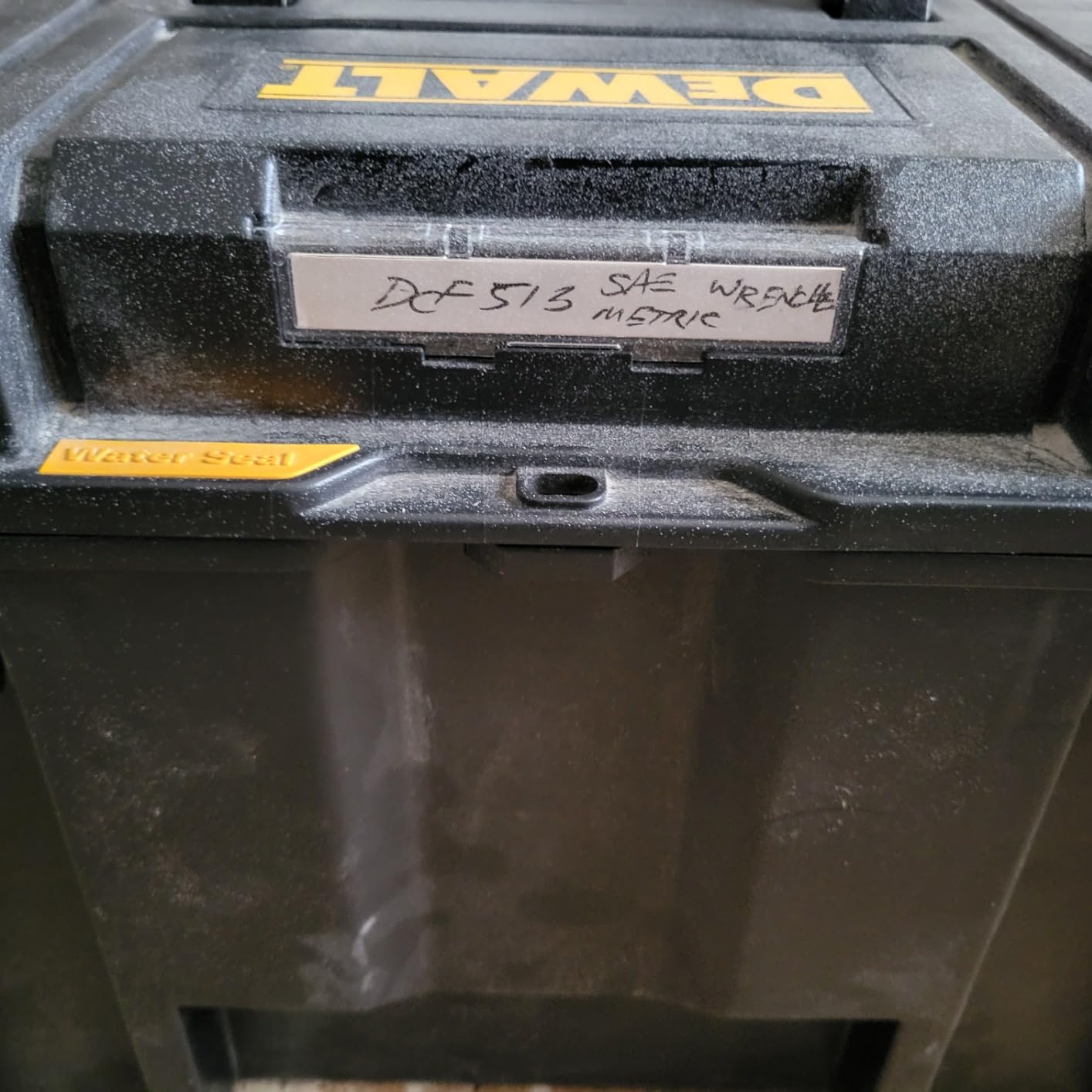
The ATOMIC series is the answer when you want real torque and a compact head in the same tool. Seventy foot-pounds from a brushless motor is close to the top of the range here, and the listing describes the body and head as compact and low profile for exactly the mobility this roundup is about.
The glass-filled nylon housing is worth knowing about. Bay tools live in an environment of oil, coolant, brake cleaner and solvent, and a housing that tolerates that chemistry ages better than a bare plastic shell.
Variable speed lets you creep onto a fastener before committing to full output, and the trigger lock stops the tool running when it is clipped to a belt or set on a fender cover. The onboard LED handles the dark recesses behind the firewall.
Owners rate this one of the strongest performers in the group, with particular praise for under-dash and engine-bay work where the combination of torque and head size matters.
Best fit for a 20V MAX owner
If you already run DEWALT 20V MAX packs across drills, drivers and impacts, this drops straight onto that platform and the tool-only price is a small addition rather than a new ecosystem.
Seventy foot-plbs covers the rusted hardware that the 35 to 40 ft-lb tools stall on, which makes it the practical step up when your work starts involving exhaust and subframe fasteners.
What you give up for that torque
At nearly 16 inches, this is one of the longer tools in the roundup, and that length works against you in the deepest recesses where a compact body would seat. The ACDelco extended head and a short 3/8 drive handle those better.
Tool-only means battery and charger come separately, and the 20V platform is the more expensive one to enter cold.
6. RYOBI ONEAND 18V P344 – Four-Position Swiveling Head

ONEAND 18V Cordless 3/8 in. 4-Position Ratchet Tool ONLY
18V
35 ft-lb torque
4-position swiveling head
12 inches long
2 lb
Pros
- Swiveling four-position head improves access in confined spaces
- Uses existing 18V RYOBI batteries you likely already own
- Lock-off lever prevents unintended starting
- Includes 4 inch extension for added reach
- Bolt can be started by hand then powered off
Cons
- Tool only
- no battery or charger included
- 35 ft-lb means nuts usually need starting by hand
- No adjustable clutch so over-tightening is possible
- Ships in a plain envelope with no paperwork
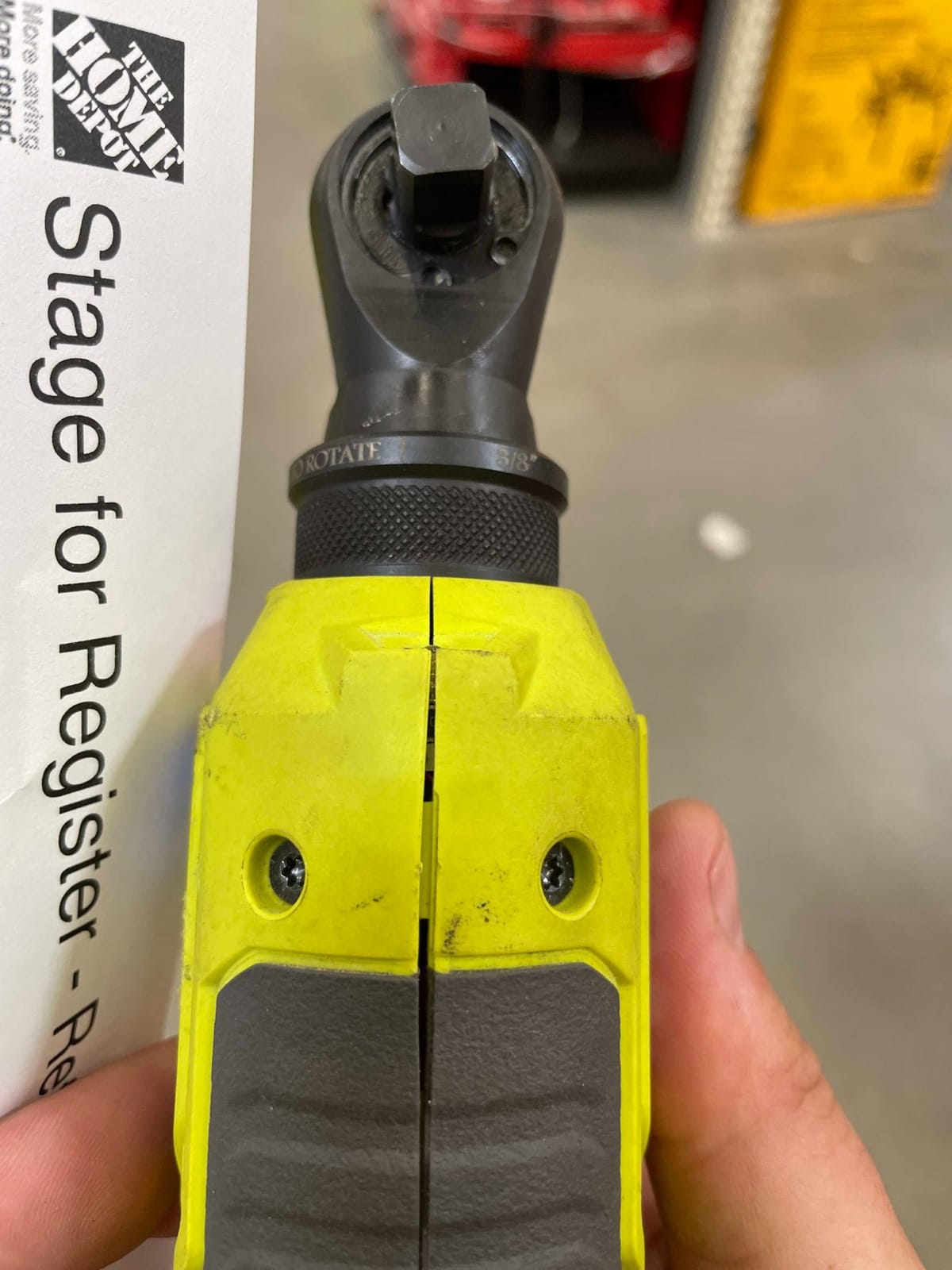
Every other ratchet here fixes the head at one angle. This one swivels through four positions, which is the single most useful feature for awkward geometry in a bay. Owners working confined engine-bay spaces point to that head as the reason the tool gets used.
When a bolt sits directly above a line of hoses, you can angle the head to match the fastener instead of rotating your wrist into a position that does not exist. The swiveling head and the 4 inch extension cover both of the two hardest bay problems: reach and angle.
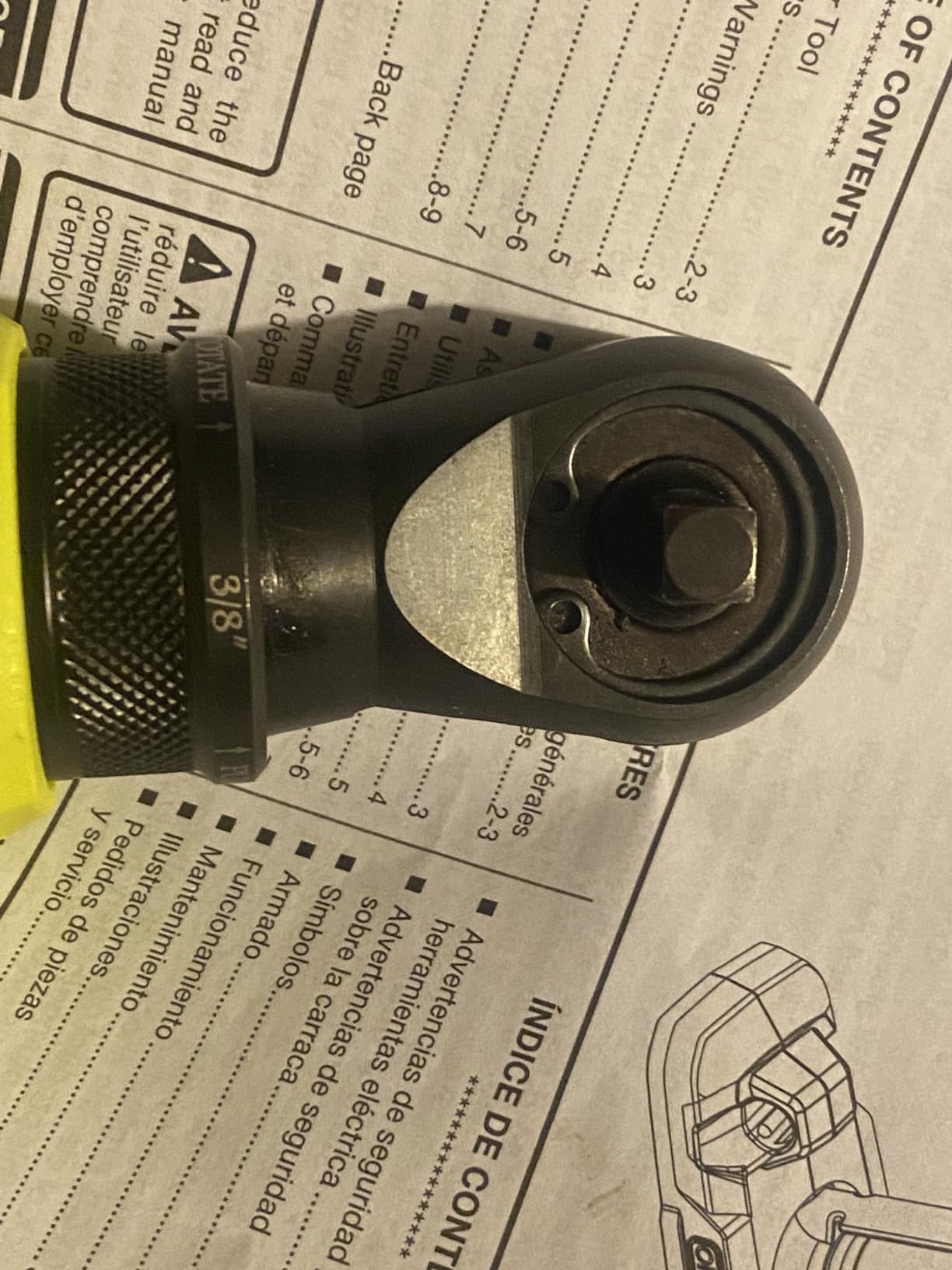
The operating lever has a lock-off position, so the tool cannot be triggered while it hangs on a belt or lies on a tray. The ability to start a bolt by hand, then power off and finish it manually, gives fine control that tools with fixed heads and no clutch cannot offer.
Owners also report the 2 lb body as barely noticeable in use despite the larger 18V battery, which is not what an 18V ratchet usually feels like.
Best fit for angled fasteners
Any ratchet works on a bolt straight in front of you. This one also works on a bolt at an angle, behind a strut brace, or up under a manifold where the socket has to approach from the side.
If you already own 18V RYOBI tools, the battery question disappears, and the included extension adds the depth the head itself does not provide.
What you give up for the swivel
Thirty-five foot-pounds is the joint-lowest torque figure here, and owners report that a nut usually has to be started by hand before the tool can back it off. On rusted hardware you will be reaching for an impact wrench anyway.
There is no adjustable clutch, so over-tightening is your responsibility, and the tool arrives with minimal packaging and paperwork. Budget for an instruction manual from another source.
7. DEWALT DCF510B 20V XR – 75 Ft-lb With Swappable 3/8 and 1/2 Anvil
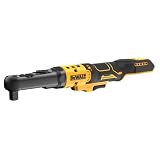
DEWALT 20V MAX XR Cordless Ratchet, 3/8″ and 1/2″ Sealed Head Ratchet, Bare Tool Only (DCF510B)
20V MAX
75 ft-lb torque
0-300 no-load RPM
sealed head
tool only
Pros
- Highest torque figure in the roundup at 75 ft-lb
- Interchangeable anvil swaps between 3/8 and 1/2 inch drives
- Sealed head resists dirt in automotive use
- Torque sensor cuts power at maximum to protect knuckles
- Glass-filled nylon housing resists oils and solvents
- LED
- variable speed
- trigger lock
Cons
- Bulkier and heavier than compact 3/8 ratchets which limits access
- No on-tool storage for the unused anvil
- Head can feel flexible when used manually on a tight fastener
- Bare tool only
- battery and charger sold separately
This is the torque end of the roundup, and it has one feature none of the others do: a swappable anvil. The square drive changes between 3/8 and 1/2 inch, so one tool covers the two drive sizes a car actually uses instead of one drive and an adapter.
The sealed head is the automotive-specific touch, resisting the dirt and grit that come with under-car and engine-bay work. At 75 ft-lb and 0-300 no-load RPM, it handles the seized and corroded hardware that stalls everything else here.
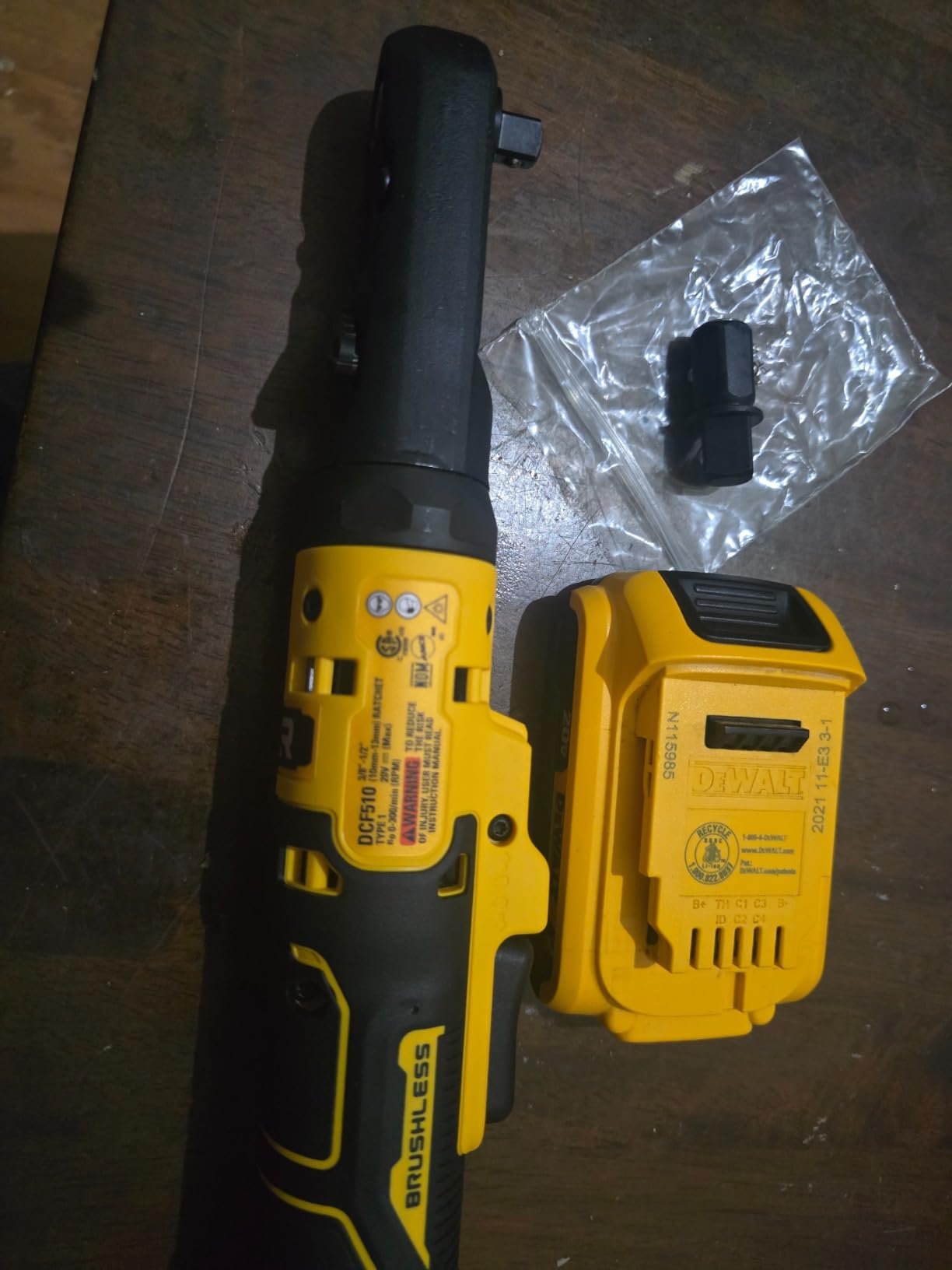
The torque sensor cuts power when the head reaches maximum, which is a safety feature with a real purpose: it stops the ratchet from driving a fastener straight through and into your knuckles on a stuck bolt. Reviewers who work in engine bays and under dashes often recommend the ATOMIC model instead when clearance is the binding constraint.
The glass-filled nylon housing, onboard LED, variable speed trigger, forward and reverse switch and trigger lock round out a feature set aimed squarely at shop work.
Best fit for a working technician
If you turn bolts all day across a mix of vehicles, the interchangeable 3/8 and 1/2 anvil removes a swap that otherwise breaks your flow mid-job, and the 75 ft-lb ceiling covers the rusted work.
The torque sensor is worth more than it sounds in a confined bay, where your off hand is nowhere near a safe distance from the fastener line.
Where the bulk shows up
This is the bulkiest ratchet in the roundup, and reviewers working in tight engine bays specifically recommend a smaller model instead. It is a torque tool that tolerates tight spaces, not a tight-space tool.
There is no on-tool storage for the anvil you are not using, so keep a small parts bag on the tool. Reviewers also note the head can feel like it flexes when you back a tight fastener up manually, which is a reason to finish the job powered rather than hand-cranking.
8. CRAFTSMAN CMCF930B V20 – 300 RPM on a Lightweight Body
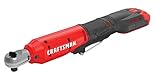
CRAFTSMAN V20 Cordless Ratchet Wrench, 3/8 inch Drive, 300 RPM, up to 35 ft-lbs of Torque, Bare Tool Only (CMCF930B)
35 ft-lb torque
300 RPM
2.3 lb
14.6 inches
alloy steel with powder coat
Pros
- 300 RPM is faster than most 12V ratchets here
- Lightweight ergonomic body shaped for tight spaces
- LED work light adds visibility in confined areas
- Variable speed trigger for control
- Alloy steel with powder-coated finish
- Also offered in an extended head version
Cons
- Bare tool only
- battery and charger sold separately
- 35 ft-lb is modest for large or corroded fasteners
- No adjustable clutch or manual override for fine control
The CRAFTSMAN pairs a 35 ft-lb output with 300 RPM, and that combination is unusual. Most tools at this torque level in this roundup run between 170 and 280 RPM, so this one clears fasteners roughly twice as fast as the ACDelco and still stays within a weight you can hold overhead.
At 2.3 lb and 14.6 inches it is a mid-size body, and the listing describes the ergonomic shape and lightweight build as intended for tight spaces. Buyers rate it highly for confined-space work and recommend it repeatedly for that reason.
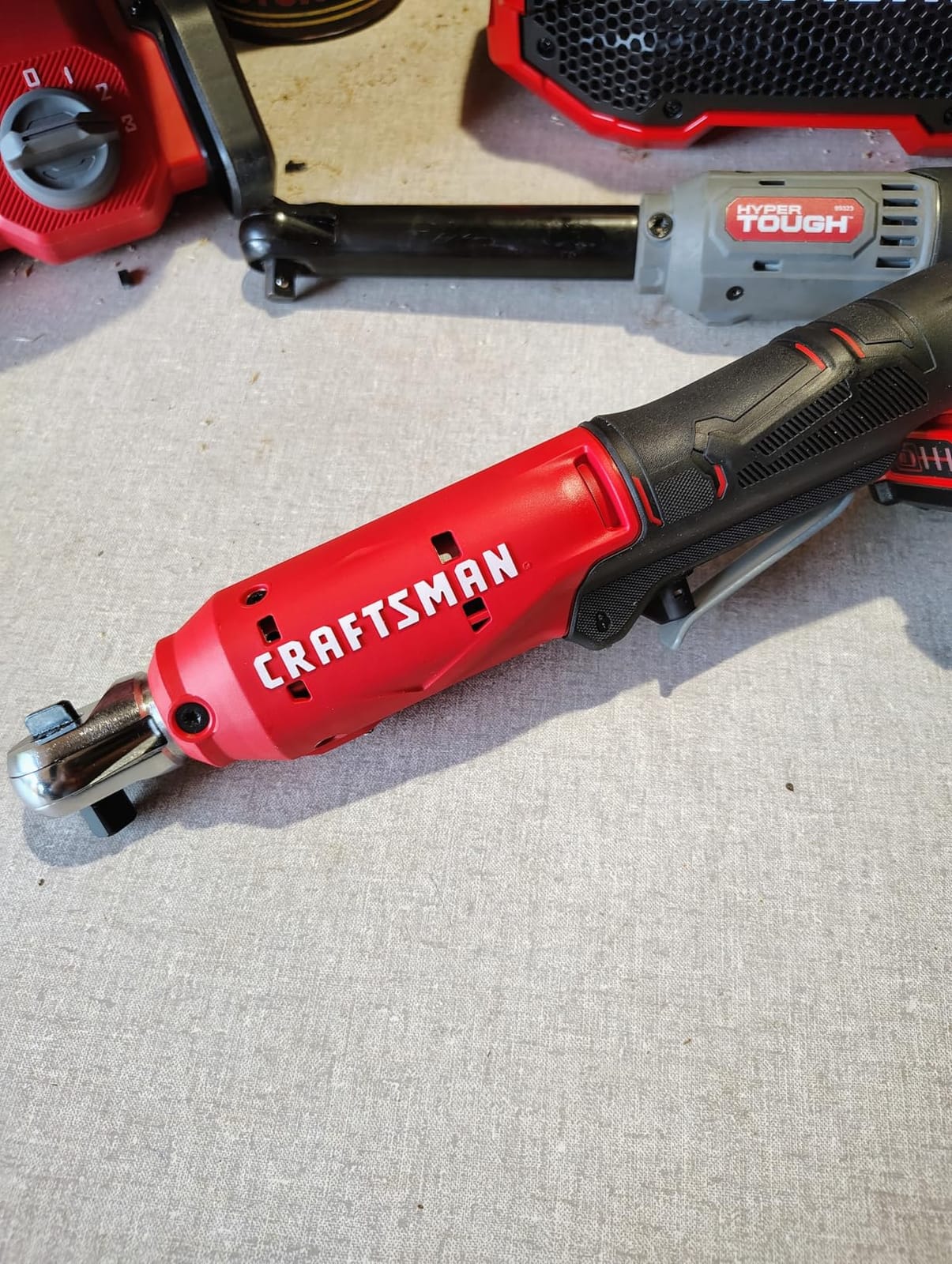
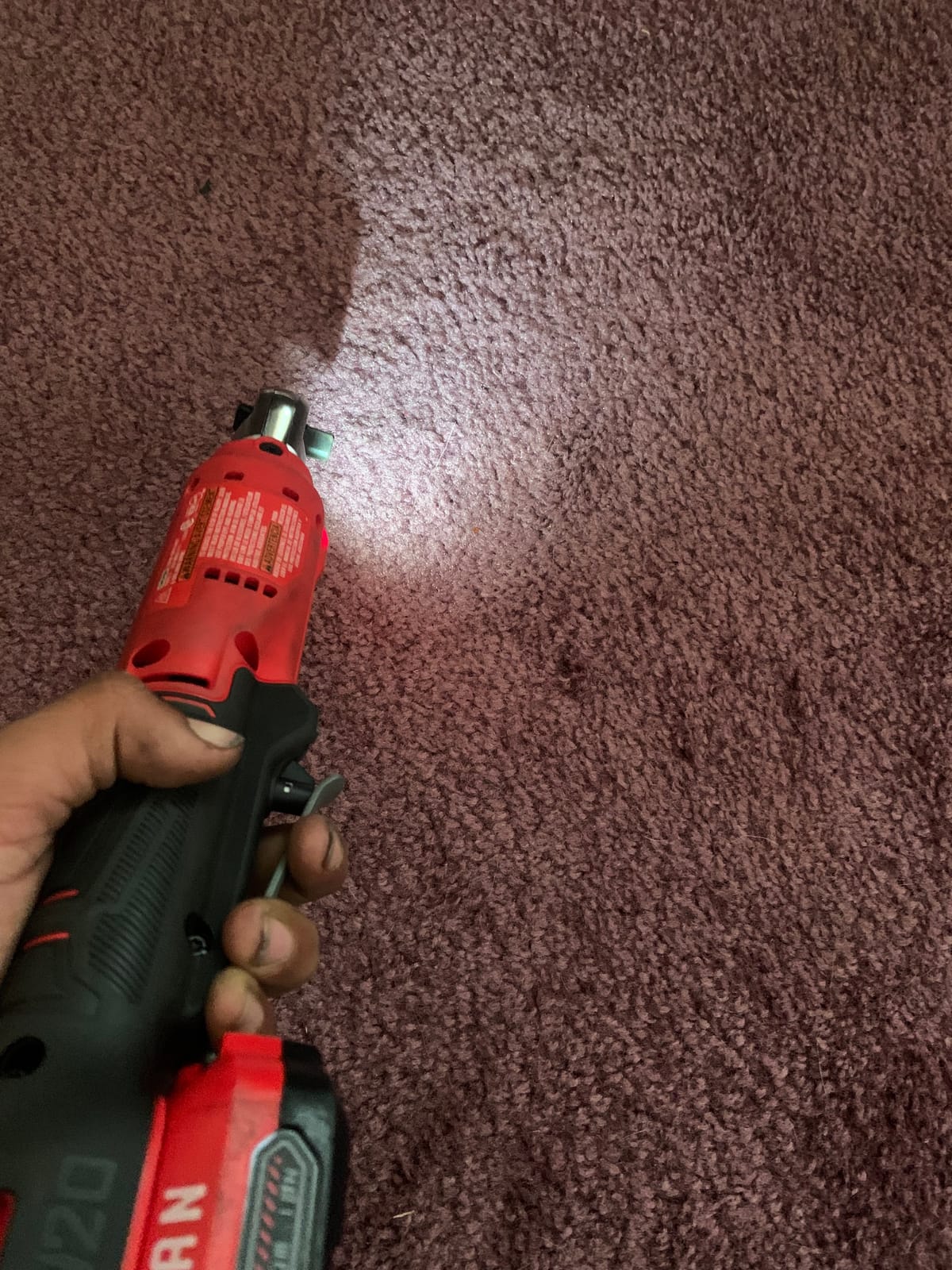
The LED work light matters more in a bay than it does on a bench. When the fastener sits down behind a bellhousing or under an intake runner, the difference between working by touch and working by light decides whether you strip the head of the bolt or back it out cleanly.
Alloy steel with a powder-coated finish gives it corrosion resistance, which matters for a tool stored in a damp garage between jobs.
Best fit for high-volume light fasteners
Valve cover fasteners, intake runners and repeated sensor work are the ideal use. When you are cycling the same size of soft bolt in and out a dozen times, 300 RPM shortens each cycle noticeably.
It also works well as a second ratchet if you already own a slower tool and want a fast one for small fasteners.
What you give up for the speed
Thirty-five foot-pounds is a light ceiling, so it is aimed at lighter fastening jobs and will stall on large or corroded hardware.
There is no adjustable clutch and no manual override for fine tightening, so controlling final torque on delicate fasteners means switching to a torque wrench. It is a bare tool, and CRAFTSMAN also offers an extended head version if you want more reach on the same platform.
9. ACROPOW AC-RW01-DW – 74 Ft-lb on Existing DEWALT 20V MAX Batteries

3/8″ Cordless Ratchet Wrench for Dewalt 20V Battery, Brushless Motor
20V MAX compatible
74 ft-lb torque
0-250 no-load RPM
15.6 inches
brushless motor
Pros
- Brushless motor with 74 ft-lb and 0-250 RPM
- Slim compact body with low-profile head for tight locations
- Aluminium alloy housing resists oils and solvents
- Rubberized non-slip grip reduces vibration
- Variable speed
- forward and reverse switch and trigger lock
- Includes 1/2 and 1/4 inch adapters plus a 3 inch extension
Cons
- Tool only
- no battery or charger
- and not a DEWALT-manufactured product
- Compatible only with DEWALT 20V MAX packs so it excludes other platforms
- Reviewers report inconsistent quality across individual tools
This is the platform play. If you already own DEWALT 20V MAX batteries, this tool gives you 74 ft-lb of brushless torque on the packs you already have, without buying into a second ecosystem and without adding another tool to a brand lineup you have already bought into.
The aluminium alloy housing is the detail that separates it from plastic-bodied budget tools. Bay work means contact with oil, coolant and solvent, and aluminium shrugs that off better than most shells in this price range.
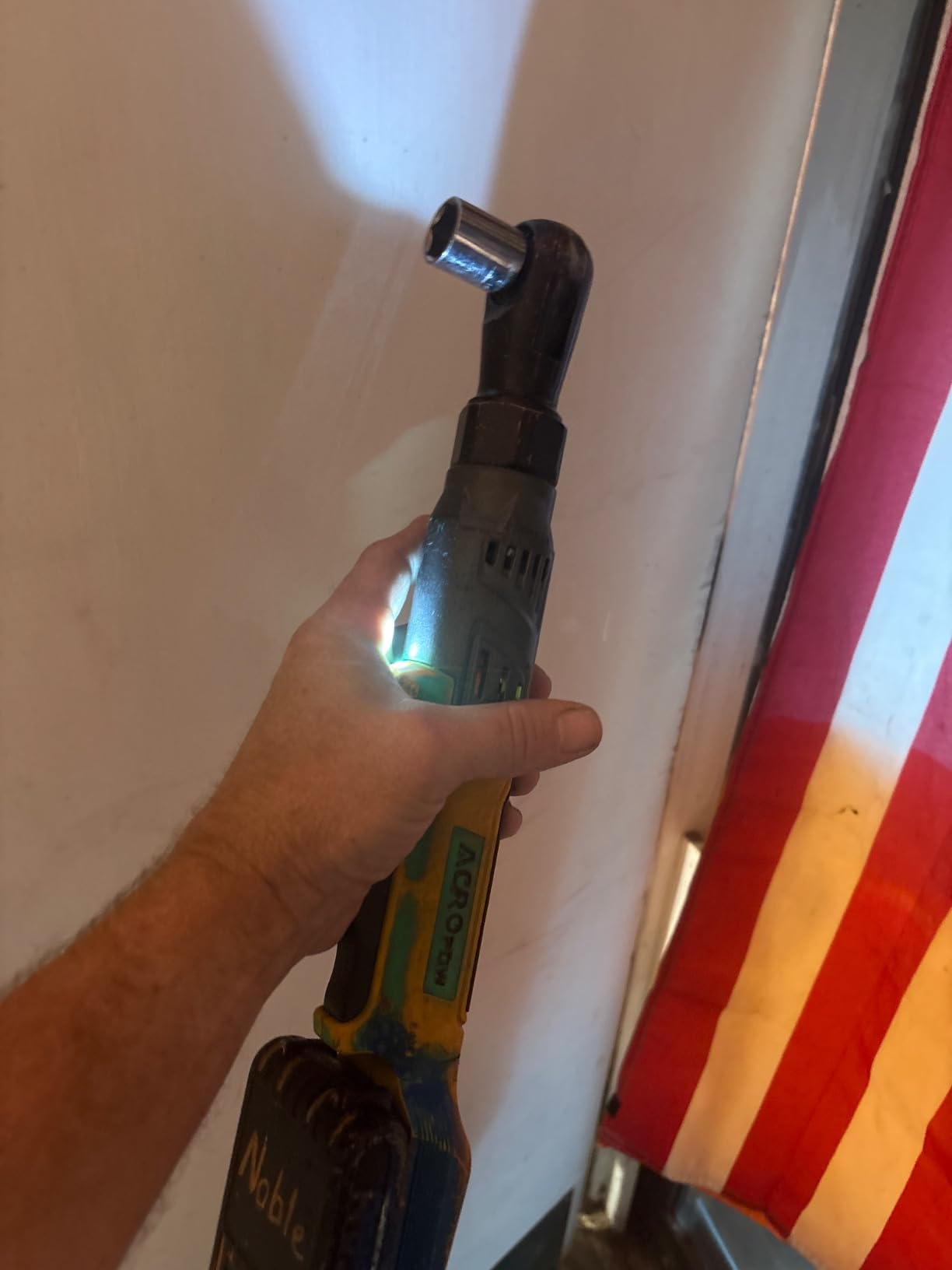
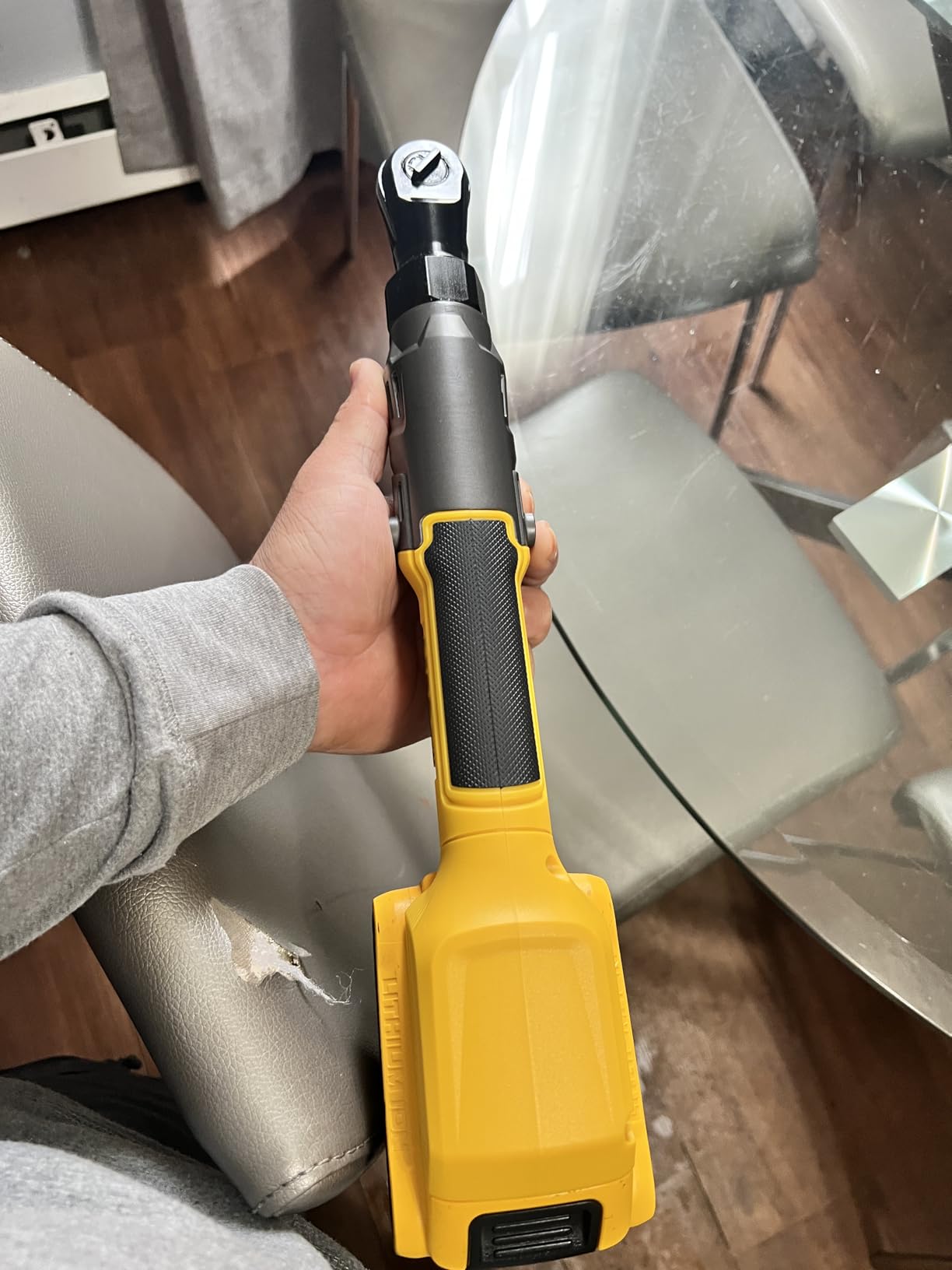
The slim body and low-profile head are aimed at the same mobility problem as the ATOMIC, and reviewers highlight that pairing of compact body with oil-resistant construction as strong value, especially for existing 20V MAX owners.
Variable speed, a forward and reverse switch and a trigger lock cover the control basics, and the rubberized grip reduces slippage and vibration on long jobs.
Best fit for 20V MAX pack owners
The adapters and the 3 inch extension are included, which softens the tool-only format considerably. You can drive 1/4 inch work and add depth without buying anything else.
It suits the same owner as the ATOMIC and the XR: someone doing rusted hardware and oily engine-bay jobs on an existing battery platform.
What you give up for the value
Compatibility is narrow. It runs only on DEWALT 20V MAX packs, so anyone on M12, 18V LXT or a 12V pack cannot use it at all.
Reviewers also report inconsistent quality between individual tools, which is the main reason the average rating sits below the branded picks. It is also not a DEWALT-manufactured product, so brand warranty support is not a factor.
10. FULLYEA FRW101-001A – 550 RPM and an Ultra-Slim Head

FULLYEA 3/8″ Cordless Electric Ratchet Wrench Set, 45 Ft-lbs,Variable Speed
18V
45 ft-lb torque
550 RPM variable speed
2.2 lb with battery
alloy steel construction
Pros
- 550 RPM is the fastest run-down speed listed
- Ultra-slim head designed for narrow confined spaces
- Two 18V 2.0Ah packs rated for 1000+ charge cycles
- Bidirectional heat channel stabilises battery temperature
- LED light and power indicator by the switch
- Non-slip rubber grip
- 2.2 lb with battery
Cons
- Lowest average rating in this roundup
- Reviewers report inconsistent build quality across tools
- 45 ft-lb is modest for suspension and exhaust fasteners
- Case and charger appearance can differ from the photos
On paper this is the fastest run-down tool in the roundup, with 550 RPM of variable speed, and the ultra-slim head is described by the manufacturer as built for narrow spaces. Two 18V 2.0Ah packs rated for at least a thousand cycles and a fast charger come in the kit, along with a case and seven sockets from 10mm to 17mm.
The bidirectional heat output channel is an unusual engineering detail aimed at keeping battery temperature stable during sustained work, and the 2.2 lb weight with battery installed keeps it usable overhead.
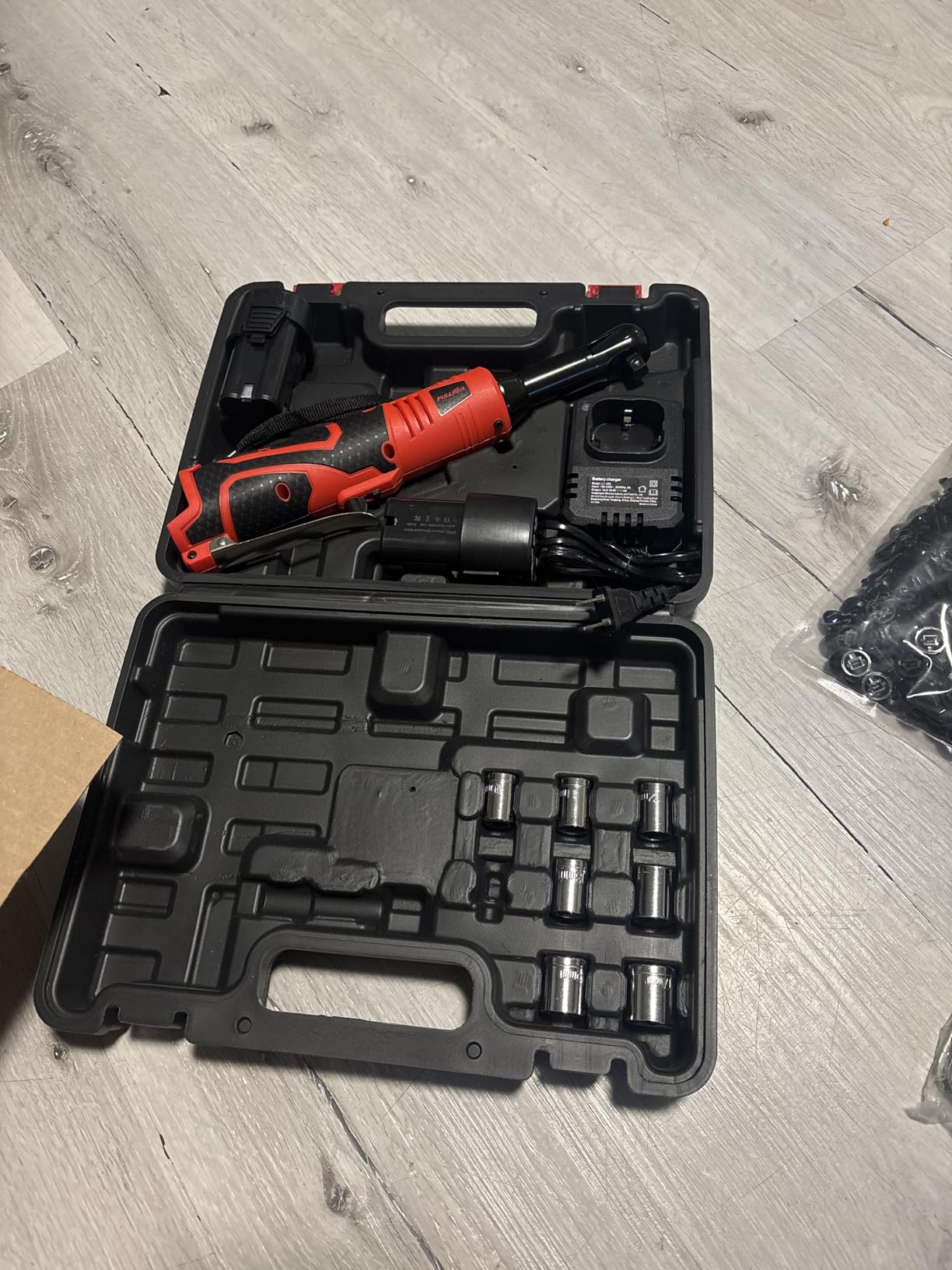
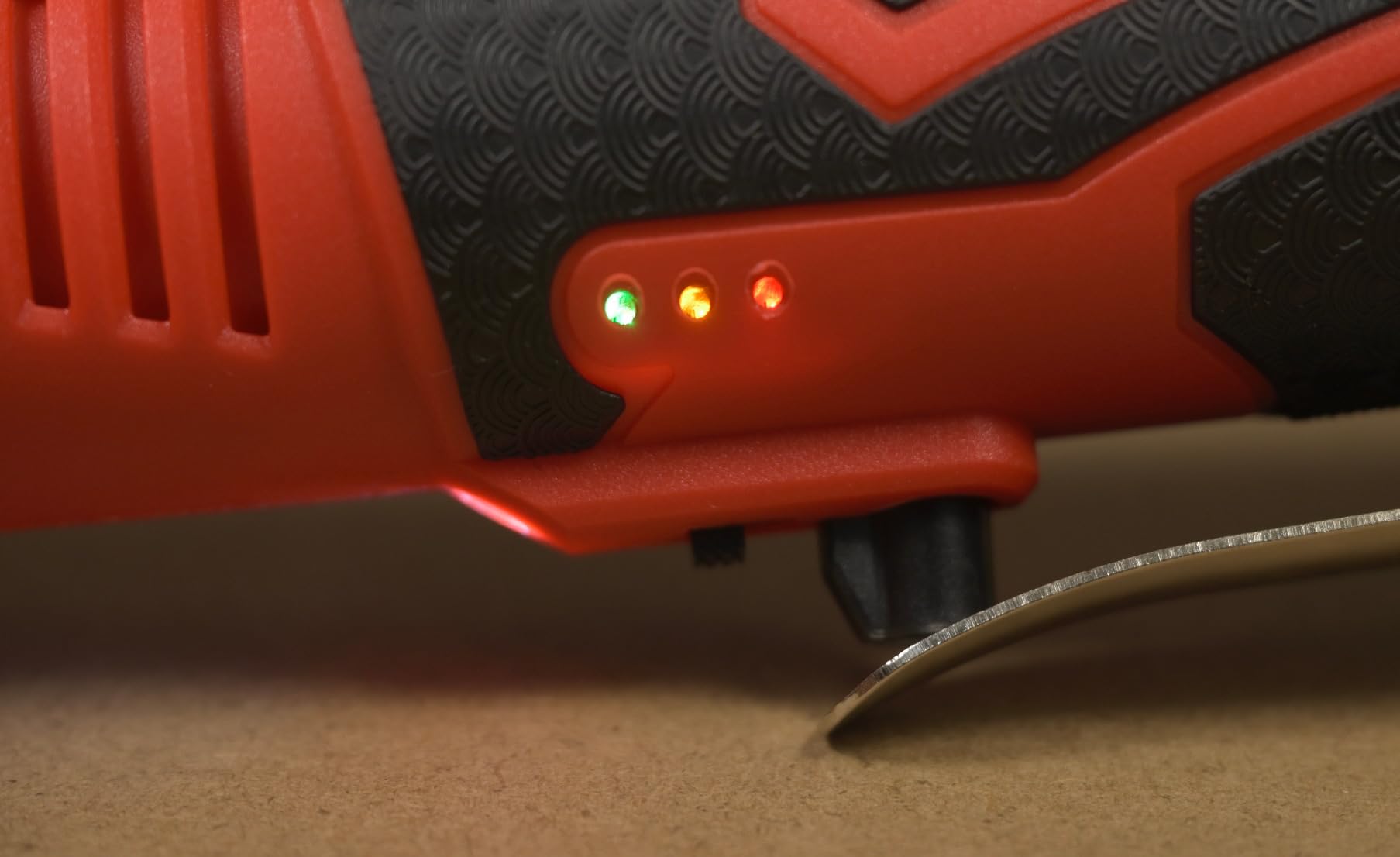
Owners appreciate the slim head, the twin-battery kit and the speed, and for quick jobs on a budget that combination is genuinely capable. The LED and the power indicator next to the switch cover the two things you always need in a dark bay.
This is also one of the few 18V options here, which makes it a bridge option for owners of an 18V platform that does not include ratchets.
Best fit for quick jobs on a budget
At 550 RPM, this clears small fasteners faster than anything else listed, which suits sensors, brackets and hose clamps where you cycle the same bolt repeatedly.
The ultra-slim head is the reason it works at all in the tightest gaps, and the rubber grip reduces hand fatigue on longer sessions.
What the rating gap tells you
A 4.1 average is the lowest in this roundup, with a noticeably higher share of critical reviews than the established brands. Reviewers report inconsistent build quality and motor performance between individual tools, which is the honest reason this sits at number ten despite the attractive speed figure.
Forty-five foot-pounds is also modest for heavy suspension and exhaust fasteners, and the case and charger may not match the product photos. If consistency matters more than raw speed, the branded kits above are the steadier bet.
How to Choose a Cordless Ratchet for a Tight Engine Bay
Measure your head clearance before anything else
Head-to-head height is the spec that decides whether the tool fits, and it is the one number no manufacturer in this roundup publishes. Measure it yourself: put a ruler against the lowest part of the ratchet head and record the depth from the square drive down to the head, then compare that against the gap between the fastener and whatever is in the way.
If the gap is under an inch, weight and reach stop mattering and only the narrowest head will work. That is the whole argument for the Milwaukee 2457-20 in this list.
Stubby, standard, or extended reach
Stubby bodies are the narrowest and usually the lightest, which makes them right for gaps between a plenum and a shock tower. Standard bodies add a little bulk for a better grip and usually more speed. Extended-reach heads push the drive out further to handle depth but add length, which works against you in genuinely narrow corners.
No single body type does both. Forum consensus treats a stubby and a longer-reach ratchet as different tools for different jobs rather than duplicates, and that is how we would buy it too.
3/8 inch versus 1/2 inch drive
For most cars, 3/8-inch drive covers the majority of engine-bay fasteners and it is the standard on eight of the ten tools here. 1/2-inch drive is the choice for suspension, steering and larger fasteners, which is why the DEWALT DCF510B with its swappable anvil covers both.
The 1/4-inch adapter that several kits include is for small fasteners and fittings rather than for main engine work.
How much torque you actually need
Between 35 and 75 ft-lb, a ratchet is a run-down tool. Once a fastener is turning, you are removing it, not breaking it free. Thirty-five to 40 ft-lb covers sensors, solenoids, harnesses and valve cover hardware; 70 to 75 ft-lb adds margin on corroded threads.
Above roughly 50 ft-lb you are starting to want an [impact wrench](https://www.benq-siemens.com/best-cordless-impact-wrenches-for-automotive-work/) for the break-loose stage, then the ratchet to run the fastener off cleanly.
Tooth count and swing arc
A 72-tooth ratchet moves 5 degrees per stroke, a 90-tooth moves 4. More teeth mean a tighter arc, which means less hand movement to remove a bolt once it is loose. On cordless tools this matters less than on hand ratchets because the motor supplies the rotation, but a higher tooth count still helps when you are back-driving a fastener by hand at the start.
Most manufacturers do not publish tooth count for these tools, which is worth noting before you assume a specification you cannot verify.
Battery platform and brushless motors
Platform lock-in is the deciding long-term cost factor, more than torque. If you own M12 packs, buy into M12; if you own 20V MAX, buy there. A bare tool plus a battery and charger from an orphaned platform often costs more over time than a mainstream kit.
Brushless motors run cooler and hold speed under load, and they last longer than brushed units in a tool that spends its life in an engine bay. The DEWALT ATOMIC, DCF510B and the ACROPOW all use brushless motors.
Cordless versus air, and the engine-bay job map
An air ratchet is faster and lighter for pure run-down, and it never runs out of power mid-job, but it needs a hose and a compressor. A cordless ratchet wins on mobility in a bay where dragging a hose costs you more time than the speed saves.
Matching body type to job: solenoid and sensor removal rewards a compact head, valve cover and intake runners reward a light body with speed, oil pan and deep recesses reward extended reach, and rusted exhaust or subframe hardware rewards torque or an impact wrench. For visibility where the camera would otherwise go, see our [inspection camera picks for tight spaces](https://www.benq-siemens.com/best-inspection-cameras-for-tight-spaces/), and for working under the car, our [engine hoist guide for home mechanics](https://www.benq-siemens.com/best-engine-hoists-for-home-mechanics/).
Frequently Asked Questions
What is the best ratchet wrench for tight spots?
A stubby-bodied 3/8-inch cordless ratchet is the best tool for tight spots, because head height decides whether it fits. In this roundup the Milwaukee 2457-20 M12 has the lowest profile head and weighs 16 ounces, while the KIMO offers a recessed head with more torque at 40 ft-lb. Measure your gap first, since manufacturers rarely publish head-to-head height.
What type of wrench is best for use in tight spaces?
For tight spaces, match the tool body to the constraint: a stubby or swiveling body when the gap is narrow, an extended-reach head when the fastener is deep, and a standard body when both room and depth are available. An offset box end or a ratchet with a swiveling head handles angles that a fixed-head tool cannot reach.
What is the best cordless ratchet for automotive work?
For automotive work, torque and head size both matter. The DEWALT DCF510B delivers 75 ft-lb with a sealed head and a swappable 3/8 and 1/2 inch anvil, while the DEWALT ATOMIC DCF513B pairs 70 ft-lb with a more compact low-profile head. In tight bays the compact ATOMIC is usually the better fit.
Is a 72 tooth or 90 tooth ratchet better?
A 90-tooth ratchet is better for confined spaces because its 4-degree swing arc needs less hand movement per stroke than the 5 degrees of a 72-tooth. The difference matters most when back-driving a fastener by hand. On cordless tools the motor supplies rotation, so the gap between the two narrows considerably.
Is a 1/2 or 3/8 ratchet better?
For most cars, 3/8-inch drive covers the majority of engine-bay fasteners and is lighter and narrower for tight access. Choose 1/2-inch drive for suspension, steering and larger fasteners. The DEWALT DCF510B covers both with an interchangeable anvil, which removes the need to commit to one drive size.
How much torque can a ratchet wrench handle?
Cordless ratchets in this roundup are rated from 35 ft-lb to 75 ft-lb. Treat that as a run-down figure rather than a break-loose figure: it is enough to remove fasteners that are already moving, but a seized bolt needs an impact wrench, and final tightening always needs a torque wrench.
Do cordless ratchets strip bolts?
They can, and the usual cause is speed rather than the tool itself. Running a small fastener at full speed with a fixed socket risks rounding the head, so use the variable speed trigger to start gently, make sure the socket is a proper fit, and hand-start a tight or corroded fastener before applying power.
Final Verdict for Engine Bay Work in 2026
The best cordless ratchet wrenches for tight engine bays come down to geometry first. The KIMO 3/8 Cordless Electric Ratchet takes the top spot with a recessed chrome vanadium head, 400 RPM of variable speed and a twin-battery kit that lets you start working without buying anything else.
Buy the Milwaukee 2457-20 M12 instead if your gaps are measured in fractions of an inch, and the AOBEN set if you want a complete kit at the entry level. Add an extended-reach tool such as the ACDelco ARW1209P when depth, not width, is the problem, and keep an impact wrench for anything that refuses to break loose.