
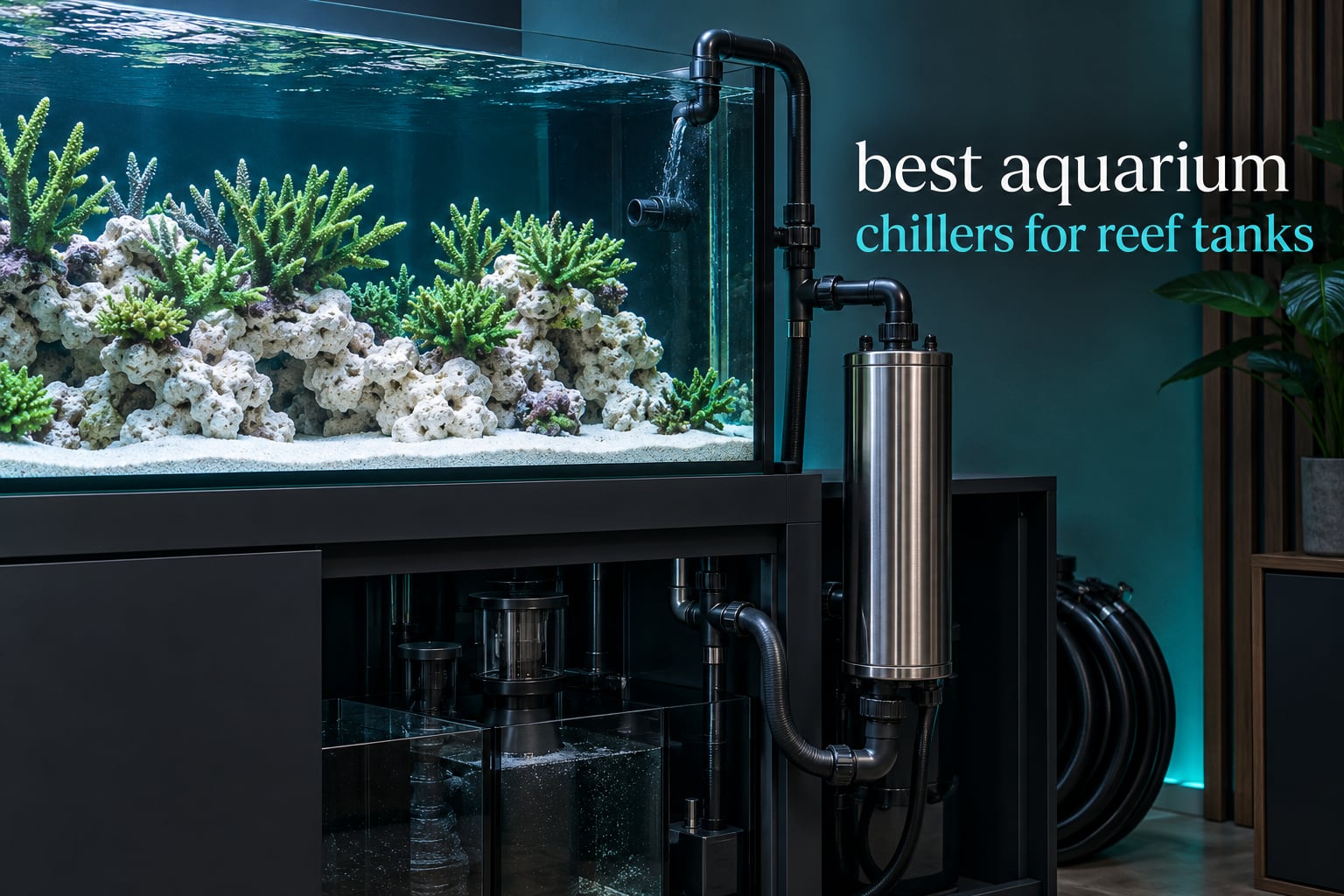
A reef aquarium chiller is a refrigeration unit that pumps your tank water through a titanium evaporator coil and chills it with a compressor, holding a saltwater reef near 78F so corals and fish stay out of thermal stress. Most reef keepers plumb one into the return line, dial in a set point, and let the built-in controller cut the compressor on and off through the summer.
That last part matters more than the brand name. Above roughly 82 to 84F, warm water holds less dissolved oxygen, coral starts bleaching, and fish become stressed and disease-prone. A chiller is the only dependable way to hold a safe temperature on the hottest nights when the room air conditioning is already working hard and losing.
We compared ten aquarium chillers built for reef duty, from a 1/15 HP nano unit to a commercial 1.5 HP floor-standing machine. We weighed rated cooling capacity against real tank volume, compressor type, titanium evaporator construction, reported noise levels, the fittings you actually have to plumb, and the failure patterns that show up in long-term owner reports. Pick a chiller slightly larger than your peak-summer load and it will run rarely; undersize it and it runs constantly, works harder, and may never reach set point.
Nine of the ten products here use a pure titanium evaporator, which is close to a requirement in salt water. Copper and aluminum coils pit and corrode, and a failed coil means a tank at ambient temperature in July. The one exception is the IceProbe, a thermoelectric unit whose probe is coated but not described as titanium, and it is also the smallest cooling capacity in the group. All of these chillers run on 110V household current, so check your circuit before you commit.
If you want the fastest answer, start at our aquarium heater guide to see how heating and cooling have to share a sump, then come back to the picks below.
Table of Contents
Top 3 Reef Chiller Picks for 2026
BAOSHISHAN 1/3 HP Chiller
- 79 gallon rated
- Titanium evaporator
- 45-50dB
- Pump and tubing included


The BAOSHISHAN 1/3 HP is the one we would put on a standard mixed reef. It rates to 79 gallons, drops water 8 to 15F below room temperature, and arrives with the pump, tubing and clamps already in the box.
The Active Aqua 0.25 HP is the right call for a 40 to 90 gallon system where you want more cooling headroom and a boost function for fast pull-down. The Active Aqua 0.10 HP covers small tanks up to 40 gallons where the boost function matters more than capacity.
Owners on reef2reef report a JBJ Arctica 1/3 HP still running after more than two years of service, which is the kind of long-term record we look for. We could not source one of those units for this roundup, so the picks below reflect what we were able to compare side by side on spec sheets and owner reports.
Best Aquarium Chillers for Reef Tanks (October 2026)
| Product | Specs | Action |
|---|---|---|
| BAOSHISHAN 1/3 HP Up to 79 Gal |
|
Check Latest Price |
| Active Aqua 0.10 HP with Boost |
|
Check Latest Price |
| Active Aqua 0.25 HP Titanium |
|
Check Latest Price |
 IceProbe Thermoelectric 50W IceProbe Thermoelectric 50W |
|
Check Latest Price |
 Poafamx 1/3 HP 40-80 Gal Poafamx 1/3 HP 40-80 Gal |
|
Check Latest Price |
 Poafamx 1/13 HP 26 Gal Poafamx 1/13 HP 26 Gal |
|
Check Latest Price |
 Fitnet 79 Gal Touch Screen Fitnet 79 Gal Touch Screen |
|
Check Latest Price |
 FIIRUS 42 Gal with WiFi FIIRUS 42 Gal with WiFi |
|
Check Latest Price |
 EcoPlus 1.5 HP Commercial EcoPlus 1.5 HP Commercial |
|
Check Latest Price |
 JBJ Arctica 1/15 HP JBJ Arctica 1/15 HP |
|
Check Latest Price |
1. BAOSHISHAN 1/3 HP Chiller – The One We Would Put on a Standard Reef
BAOSHISHAN 1/3 HP Aquarium Chiller Up to 79 Gal, Drops Down 8-15F 110V
1/3 HP compressor
Rated to 79 gallons
Pure titanium evaporator
45-50dB at 1 meter
Pros
- Holds set point in hot rooms
- Complete kit with pump and tubing
- Titanium evaporator resists saltwater
- Multi-year operation reported
Cons
- Printed instructions are hard to follow
- Included pump creates a strong current in small tanks
- Thermostat can read 1-3 degrees off
The BAOSHISHAN 1/3 HP is the unit we kept coming back to while assembling this roundup. It is rated to 79 gallons and drops water 8 to 15F below the surrounding room, which covers the gap between a comfortable 78F and a hot August afternoon. The listing suggests 63 gallons as the peak-summer figure, and that is the number we would size against.
Owners running 20 to 55 gallon systems report water holding in the 55 to 73F range even in rooms above 80F. Long-term owners of both fresh and salt tanks describe steady cooling and sturdy construction, and the 499-review pool is the largest we evaluated.
Two details decide whether this install goes smoothly. The kit includes a stainless steel shaft pump, water pipe and hose clamps, so you are not shopping for a pump on the same day you unbox a 39 pound machine. And the dual high-speed fans with enlarged side vents need 6 inches of clearance on the exhaust side to reject heat properly.
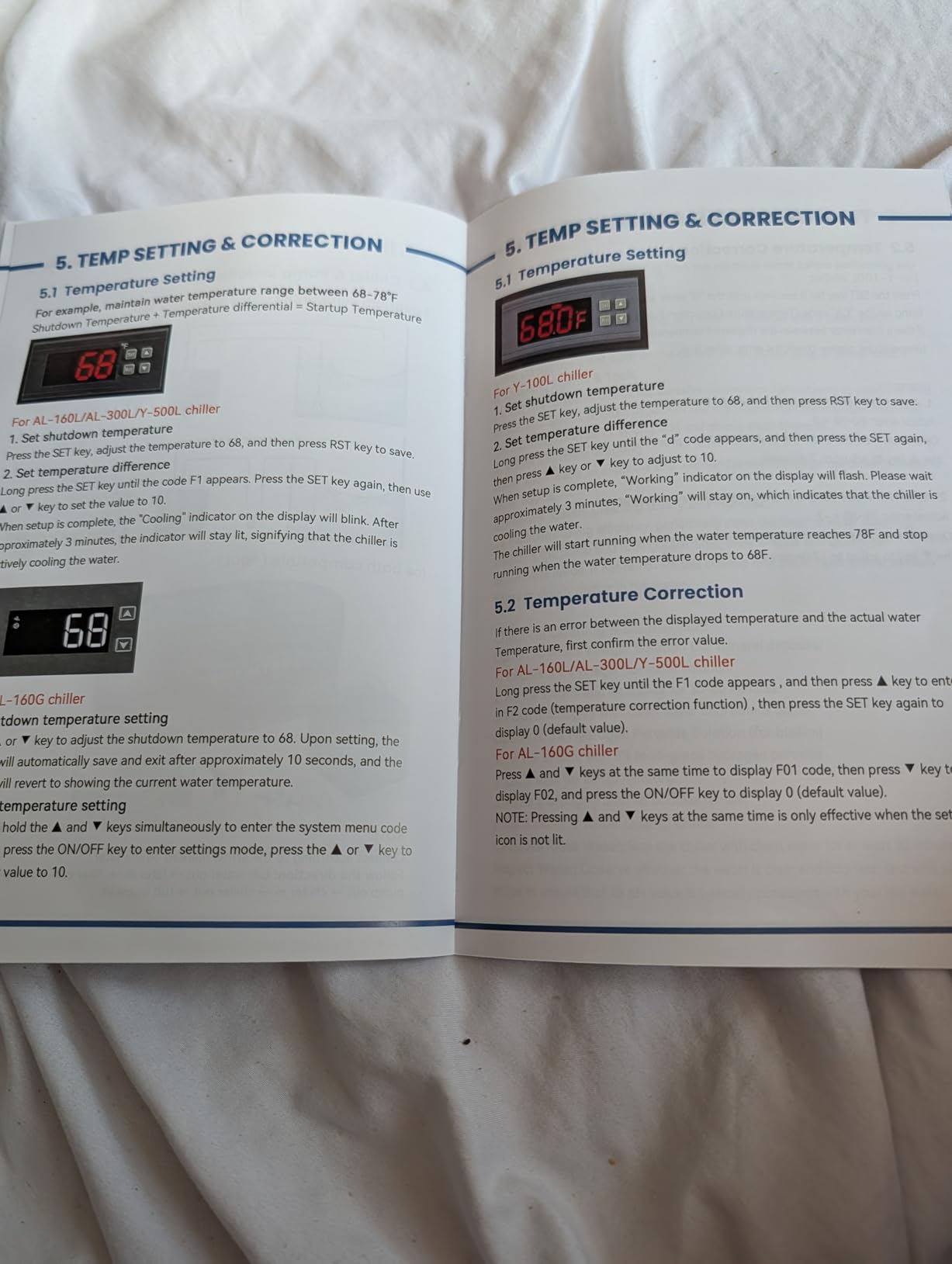
The single biggest practical complaint is the instruction manual. Reviewers consistently describe it as close to unusable and point to owner-written guides instead. Budget an extra evening, and write down your tank’s real temperature with a calibrated thermometer before you trust the display.
What we like about it in real use
At 45 to 50dB at one meter, it is quiet enough for a bedroom wall as long as you give the exhaust path room. Owners compare it to a mini fridge rather than a window air conditioner, and the titanium evaporator is the same material you would want in a sump full of salt.
The 800 liters per hour flow rate is more than a small mixed reef needs, so you will want a spray bar or diffuser downstream to break up the current before it hits coral. Get that right and the flow is a feature, not a problem.
When you should skip it
Skip it if your tank is above 80 gallons in peak summer, because the manufacturer recommends 63 gallons in hot weather and the compressor will cycle hard trying to close the gap. It also dumps exhaust heat into the room, so it does not belong in a sealed equipment cabinet.
Budget owners report a cluster of reliability failures around the one-year mark in extreme heat, and the display shows Chinese characters rather than English. Neither is a dealbreaker, but both are fair warnings if you are buying on a tight budget and cannot service the unit yourself.
2. Active Aqua 0.25 HP Titanium Chiller – Best Fit for 40 to 90 Gallon Reefs
Active Aqua Hydroponic Water Chiller, 0.25 HP, Pure Titanium, 40-92 Gallon
0.25 HP
40-92 gallon range
396-925 GPH flow
Titanium evaporator
Pros
- Large cooling headroom for SPS systems
- Handles 40 to 92 gallon volumes
- Titanium coil resists saltwater
- Boost function speeds pull-down
Cons
- Pump and hoses sold separately
- 17 percent of ratings are one-star
- Several chillers stopped within the first year
The Active Aqua 0.25 HP is the middle of the range and the one most mixed reefs should look at first. Its refrigeration capacity covers 40 to 92 gallon volumes, and the 396 to 925 gallons per hour flow range means you can run it as a dedicated loop or tie it into a high-flow return.
Owners with enough room generally report capacity well beyond what their systems needed, which is exactly what you want in a tank full of SPS. The boost function cuts a warm tank down to set point faster than a standard duty cycle, which matters when a heat wave arrives before you have the unit dialed in.
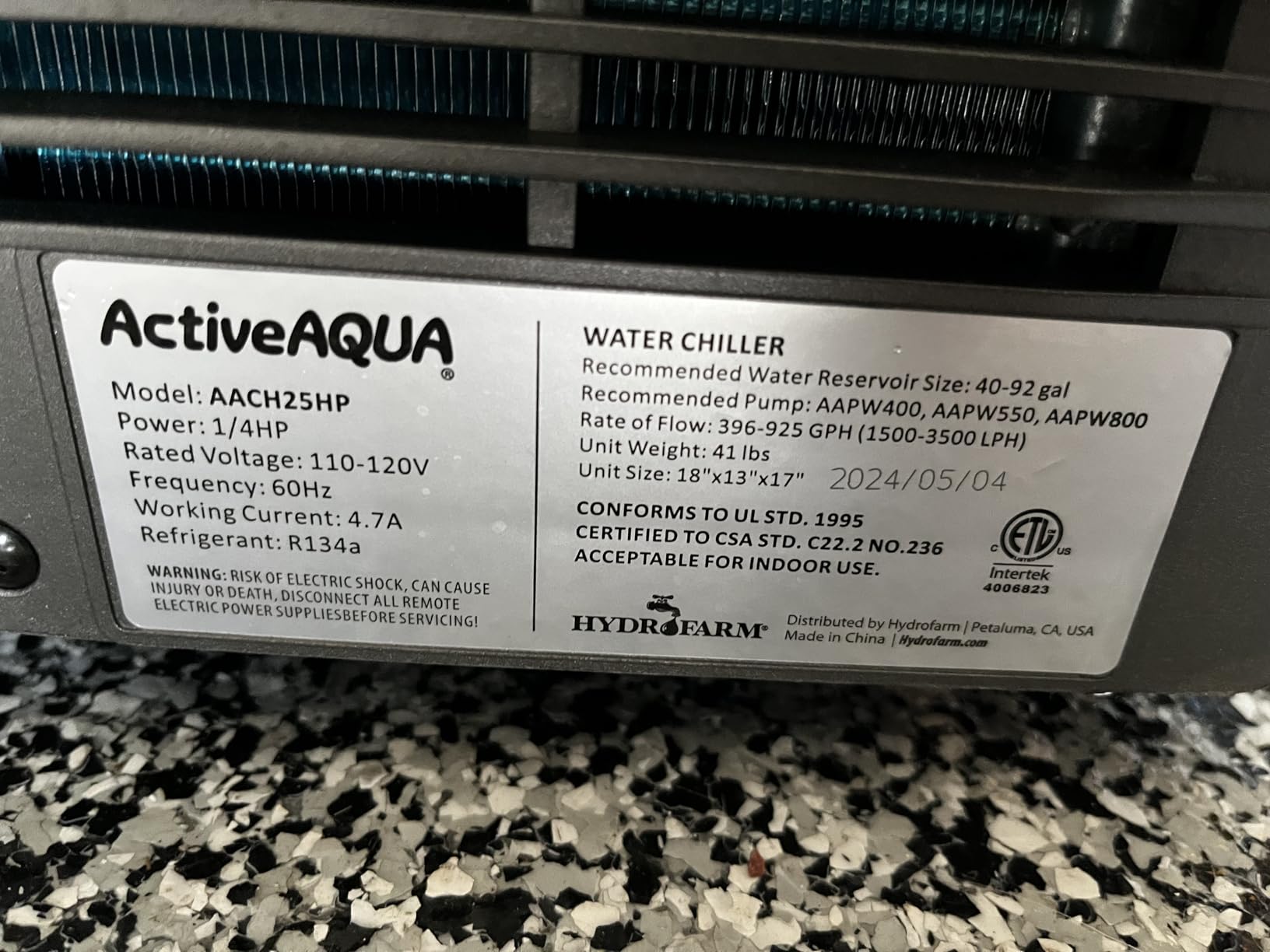
Plumbing is the one real friction point. This chiller is designed to pair with the AAPW400, AAPW550 and AAPW800 pumps, and neither a pump nor hoses are included in the box. Budget for a pump sized to your return line and a set of fittings that match your sump, not just the chiller.
The 19 by 14 by 19 inch body is a floor unit rather than a cabinet unit, so plan where it lives before the box arrives. It is a freestanding design that expects floor or shelf space next to the stand.
Where it earns its keep
This is the right chiller for a 60 to 90 gallon SPS-dominant system in a room that regularly runs warm. The extra capacity means the compressor cycles off for long stretches rather than grinding, and cycling behavior is the single biggest factor in how long a chiller lasts.
The anti-corrosive pure titanium evaporator handles salt and fresh water equally, so the same unit works if you ever convert to a mixed system. Buyers moving a large volume of water around a 300 gallon reservoir or aquaponic loop get the same benefit.
What gives us pause
Review data shows a bimodal experience. Owners who receive a good unit praise the capacity and the build, while 17 percent of ratings sit at one star. Several of those reports describe a chiller that stopped chilling within the first year.
Its cost sits well above the smaller Active Aqua, and the accessory list is thin for what you pay. If your tank is 40 gallons or less, the 0.10 HP model covers the same volume and the missing-pump issue costs you the same either way.
3. Active Aqua 0.10 HP with Boost – Best for Nano and Small SPS Tanks
Active Aqua Water Chiller with Boost, 0.10 HP, 10-40 Gal, Cold Plunge
0.10 HP
1020 BTU
10-40 gallons
Titanium evaporator
Pros
- Accurate within 1-2 degrees
- Boost drops temperature fast
- Compact enough for small systems
- Quiet over an air pump in some installs
Cons
- No pump or hoses included
- Hose barbs larger than 1/2 inch
- Compressor noise is noticeable
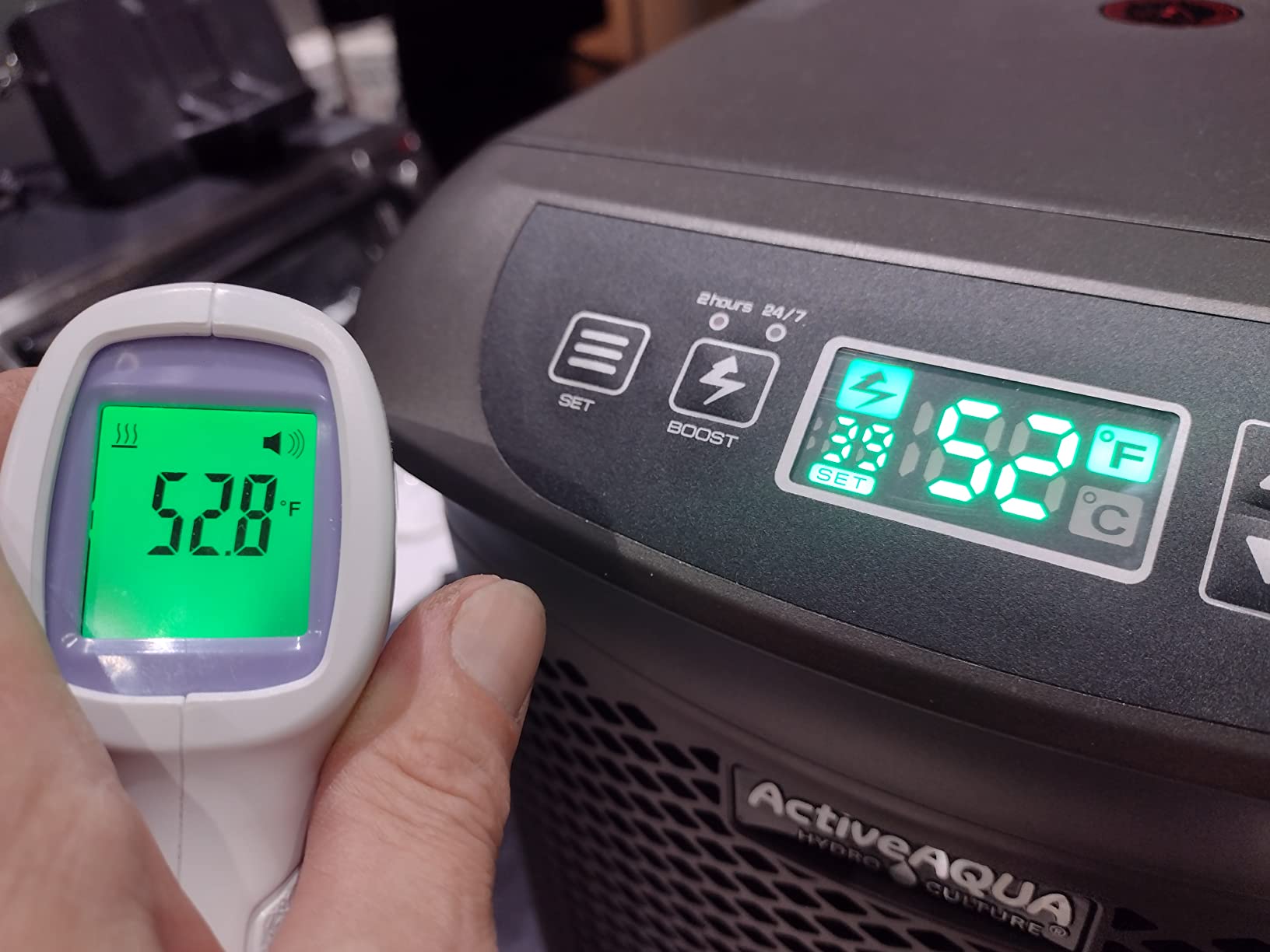
The Active Aqua 0.10 HP covers 10 to 40 gallon volumes at 1,020 BTU rated, which is a lot of cooling packed into a small box. It is also the smallest unit here we would consider for a nano SPS system with a demanding acro colony, where a 2 degree drift over a summer afternoon is the difference between thriving and bleaching.
Reviewers running axolotl tanks, nano reef systems and cold plunge tubs report the set point holding accurately, typically within 1 to 2 degrees. Several owners have units that have run for years without trouble, which is a good sign for a compressor that spends most of its life switched off.
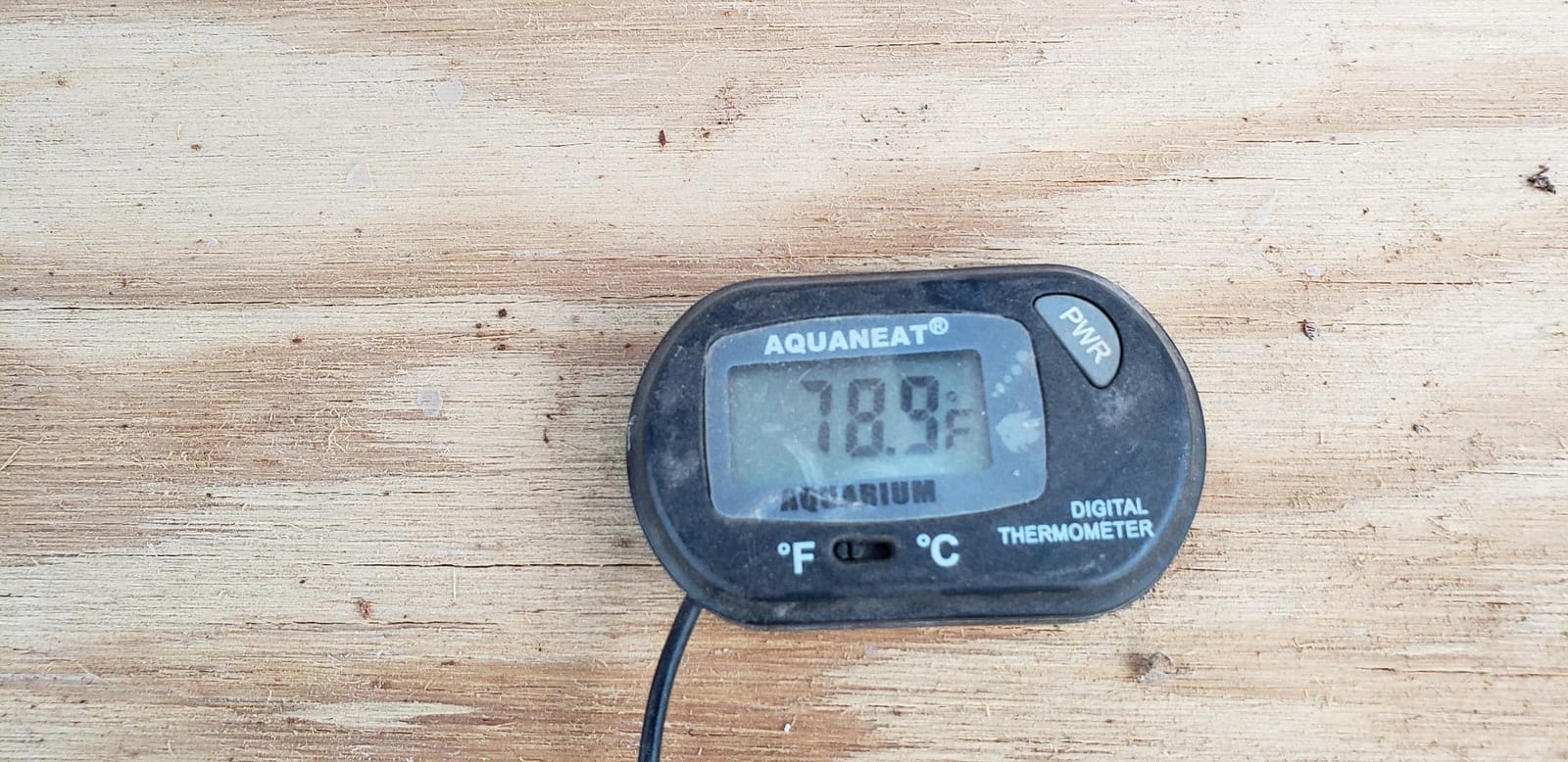
Two numbers are worth knowing before you plan the install. The unit is listed at 510 watts, though owners measuring actual draw while cooling report closer to 180W. And the adjustable differential setting on the digital control decides how far the water must drift from set point before the compressor starts, which is how you stop it from short-cycling in a small sump.
Watch the fittings. The hose barbs are larger than 1/2 inch and the 1/2 inch barb kit is not included, so buy clamps to match what is actually on the housing. Reviewers of replacement units report leaking fittings that are difficult to seal, which is a fitting problem more than a chiller problem.
Why small-tank owners like it
The form factor is the headline. It fits where a 1/3 HP compressor cannot, and in some installs the compressor noise is lost under an air pump. It also works with hydroponic reservoirs, so a single unit can serve a grow room and a nano display if you plumb it carefully.
The boost function is more useful on a small tank than a large one. A 20 gallon system has very little thermal mass, so the ability to pull the water down quickly after a door stands open is genuinely valuable rather than a gimmick.
Where it falls short
It dumps noticeable heat into the surrounding space, and several owners describe compressor noise comparable to a window air conditioner. That rules it out for a bedroom even though the capacity is right.
A meaningful minority of units have failed within a few months to a year, and replacement fittings reportedly leak. With 10 percent of ratings at one star, keeping a spare pump and clamp set on hand is sensible insurance.
4. IceProbe Thermoelectric 50W – Quiet, Compact Cooling for Small Tanks
IceProbe Thermoelectric Aquarium Chiller – 4 in. x 4 3/4 in. x 7 1/2 in.
Thermoelectric 50W
No refrigerant circuit
4 by 4.75 by 7.5 inch
External controller required
Pros
- Quieter than any compressor chiller
- Hides in a nano sump or cabinet
- No refrigerant and low power draw
- Repairable by swapping the Peltier module
Cons
- No built-in thermostat or off cycle
- Only 3-5F of cooling at full power
- Requires drilling for the probe
The IceProbe is a thermoelectric Peltier unit, not a compressor, and that single fact changes everything about how you use it. There is no refrigerant, no compressor and essentially no moving parts, which is why it sits in the quietest tier of this roundup. At 3.9 average across 261 reviews, it also sits at the bottom of the rating range in this group, and the reason is capacity.
At full power it produces roughly 3 to 5F of cooling. That is enough to hold a nano marine tank within 1 to 3 degrees when paired with a temperature controller, and not much more. It is not rated by the manufacturer for reef-scale temperature drops.
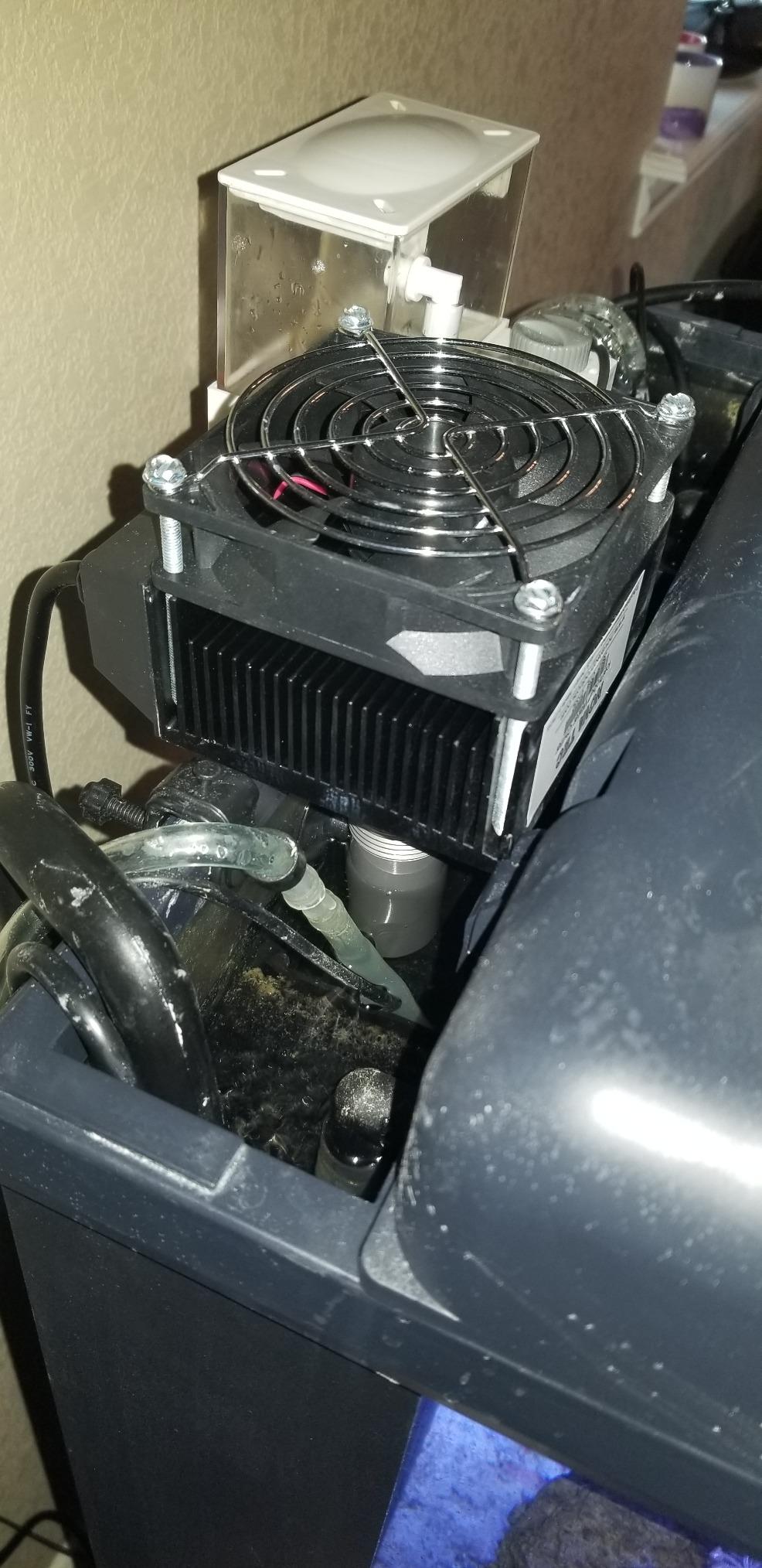
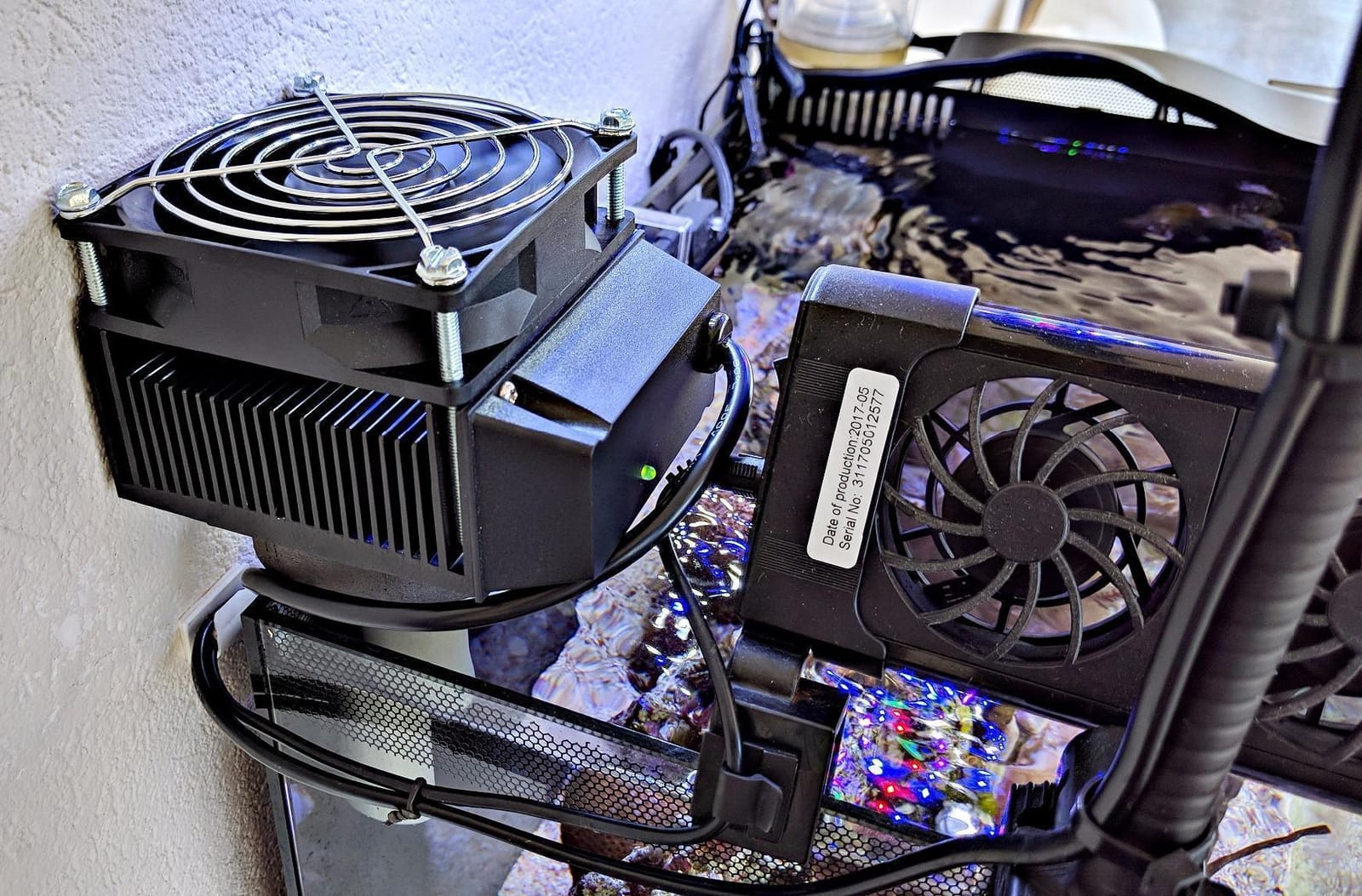
Installation is the part you need to plan around. There is no built-in thermostat and no off cycle, so once plugged in it runs continuously at full power until something external switches it. The probe has a 6 foot cord and requires a hole drilled in the tank or reservoir, which makes it a poor fit for a display tank you love and a good fit for a sump crate or a separate reservoir.
Owners who wire an external controller report holding a nano tank steadily. Owners who skip that step end up with a unit that either does nothing or runs flat out, which is where the one-star reviews come from.
Who it suits
If noise is the deciding factor, this is the answer. A bedroom, a home office or a shrimp and fry tank in a quiet room is exactly where a Peltier module makes sense. The body is small enough to disappear inside a nano sump, and the coated probe suits hydroponic nutrient solution.
It is also genuinely repairable. When the Peltier element eventually fails, the module can be replaced rather than the whole unit, and one year of warranty coverage is standard for a component of this type.
Who should pass
Any tank over about 20 gallons in a warm room. A 3 to 5F delta cannot hold a display reef at 78F when the room sits above 85F, and no controller fixes a physics problem. It also heats the surrounding air rather than removing heat from the room, so it is a poor choice in an already warm space.
The Peltier element is a known failure point that can go before the advertised 3,000 hour life. For reef work, compressor chillers deliver far more cooling per dollar, and our cold plunge chiller guide covers the larger cooling side of the same question.
5. Poafamx 1/3 HP 40 to 80 Gallon Chiller – Best Complete Kit
Poafamx 1/3 HP Aquarium Chiller, Quiet Fish Tank Water Chiller 40-80 Gal
1/3 HP
40-80 gallon rating
Cools 18F below ambient
Under 45dB
Pros
- Complete kit with pump hose and clamps
- Zero-leak install reported by owners
- Cools up to 18F below room temperature
- R290 refrigerant with low GWP
Cons
- Included pump is weak at 158 GPH
- Several chillers stopped before one year
- Thermostat can read several degrees off
The Poafamx 1/3 HP is rated 40 to 80 gallons and cools water up to 18F below room temperature, the deepest pull-down figure in this roundup. It maintains a 65 to 80F range, which brackets the reef target with room to spare on both ends, and the R290 refrigerant has a low global warming potential with zero ozone depletion.
Owners in hot conditions report tanks staying under 67F in 90F indoor heat, and several reviewers mention a zero-leak install on their first attempt. Under 45dB with an energy-efficient compressor, it is quiet enough for a bedroom wall if you can route the exhaust.
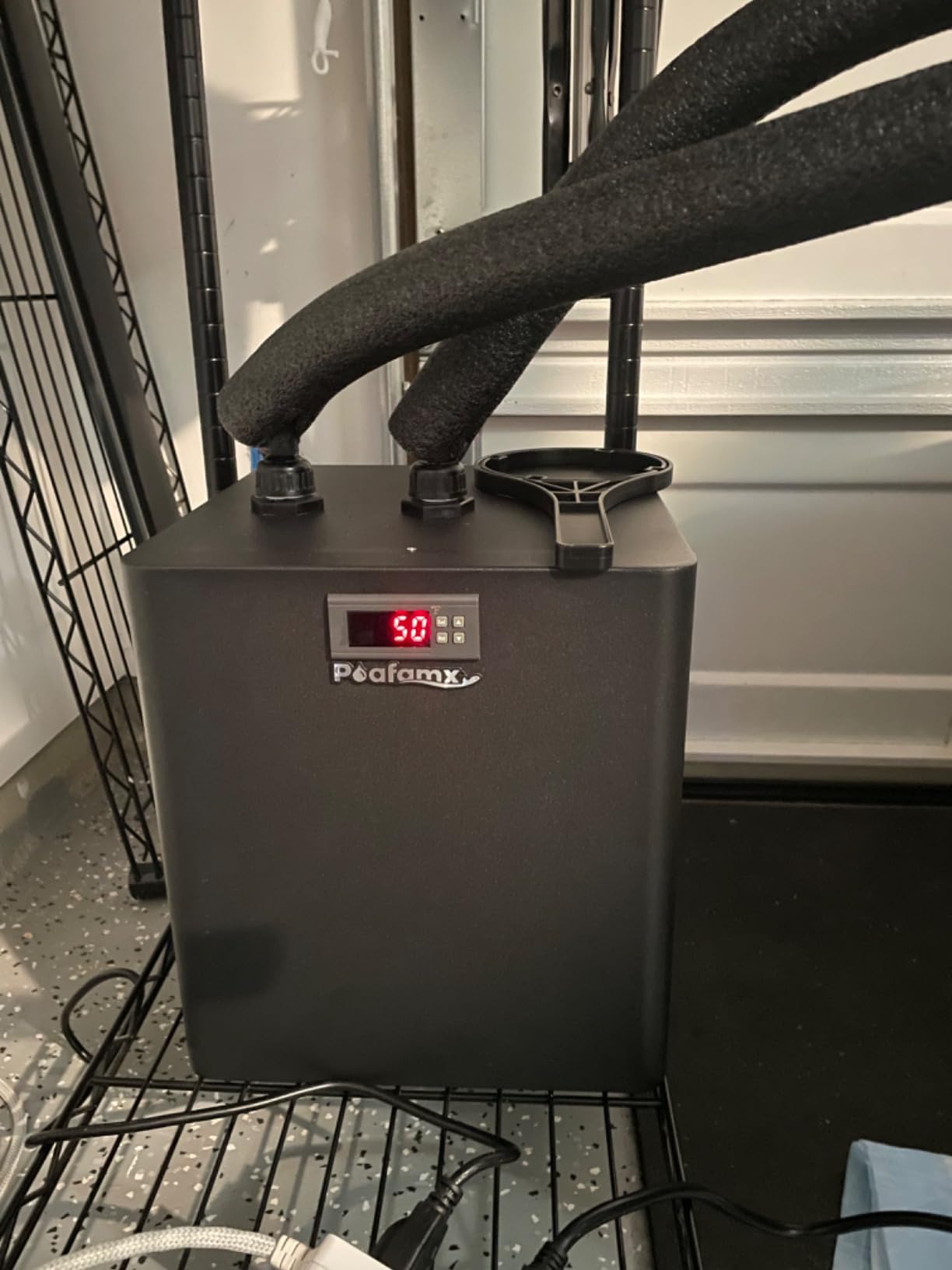
The box includes the chiller, pump, hose, connectors and clamps, which makes this a straightforward install among the 1/3 HP units we looked at. The included pump is the weak link, moving roughly 158 GPH. On a reef that is not enough turnover on its own, so most owners either add a return pump or accept a gentler circulation than their coral expects.
At 12.6 by 12.6 by 7.28 inches it is among the flattest 1/3 HP units in the group, which helps in a shallow cabinet. The rear exhaust releases a noticeable amount of heat into the room, so do not tuck it into an enclosed space.
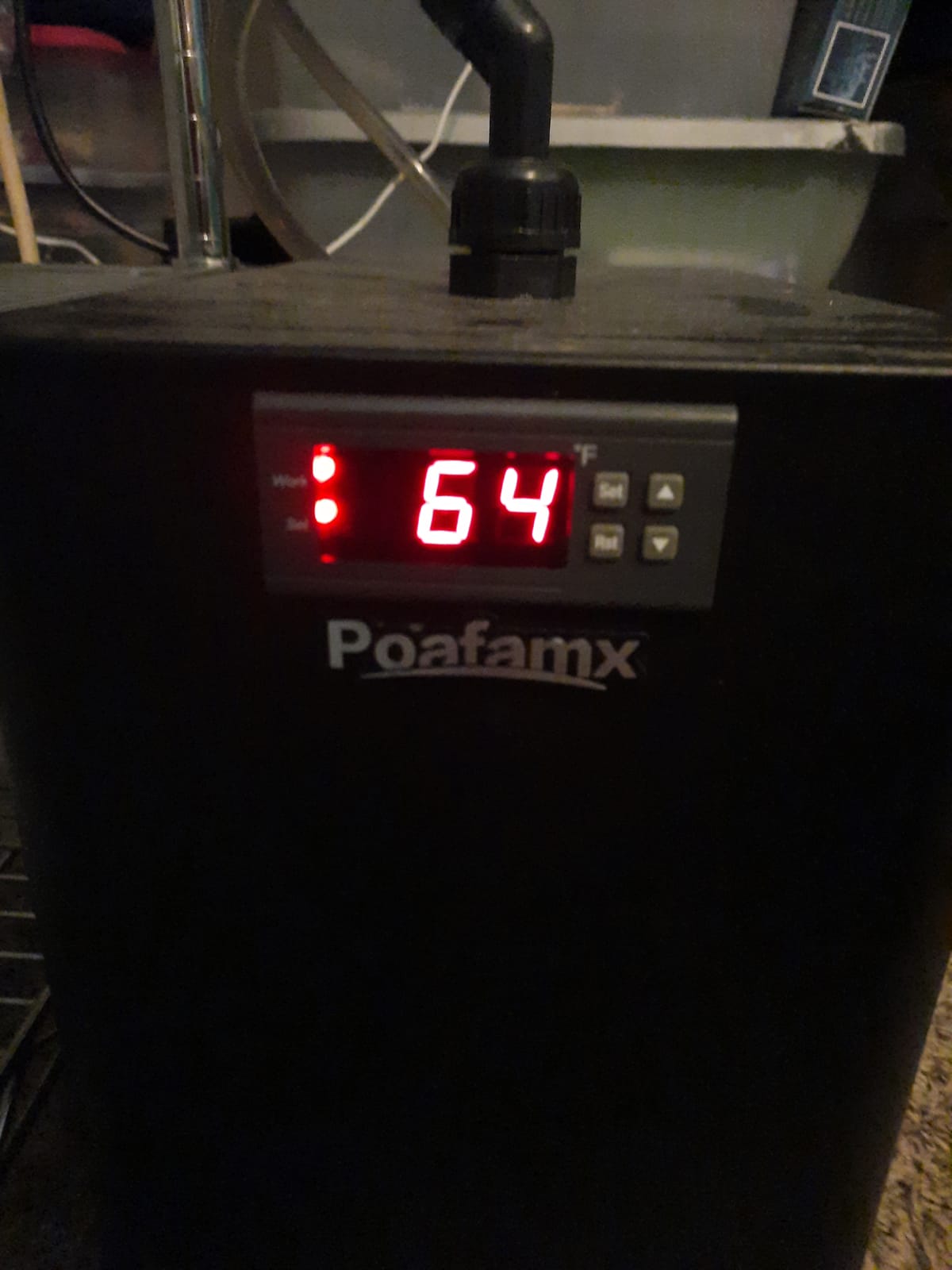
Strengths worth paying for
R290 refrigerant is a real differentiator in 2026. It is a hydrocarbon refrigerant with a low GWP, and units using it are easier to service in a region where older refrigerant regulations complicate repairs. The titanium evaporator covers both fresh and salt water.
The manufacturer also includes a one-year warranty with dedicated support, and the same brand sells a much smaller model for tanks under 30 gallons, so a single brand can cover two rooms.
The catch
Reliability reports are mixed. A notable group experienced compressor or power switch failures within 8 to 12 months, including one report of burnt internal wiring. That is 14 percent of ratings at one star, and it is the main reason this unit sits below our top pick despite strong cooling numbers.
Cooling pull-down on large cold plunge volumes takes many hours, and the thermostat needs calibration against a real thermometer. If your tank is under 40 gallons, the smaller 1/13 HP is the sensible buy.
6. Poafamx 1/13 HP 26 Gallon Chiller – Small Footprint, Full Compressor
Poafamx Aquarium Chiller 26gal, 1/13 HP Small Water Chiller for Axolotl
1/13 HP
20-30 gallon sizing
210 GPH included pump
65-80F range
Pros
- Quiet compressor in small setups
- No drilling or tank modification
- 62-68F setpoints hold reliably
- Some running after nearly three years
Cons
- Intake and outlet ports are not labeled
- Ejects a lot of hot air behind the unit
- Several failures within about a year
This is the unit we would put in a jellyfish tank or a 20 to 30 gallon reef where cabinet space is the real constraint. At 13.4 by 7.9 by 11.8 inches and 22.1 pounds, it is the smallest compressor chiller in the roundup, and it still runs a proper refrigeration circuit with R134a and a 210 GPH circulation pump.
Owners report holding 62 to 68F setpoints reliably in nano axolotl and reef setups, with a quick pull-down. The included water pipe and pump mean no extra shopping, and the titanium evaporator is safe for saltwater and coral.
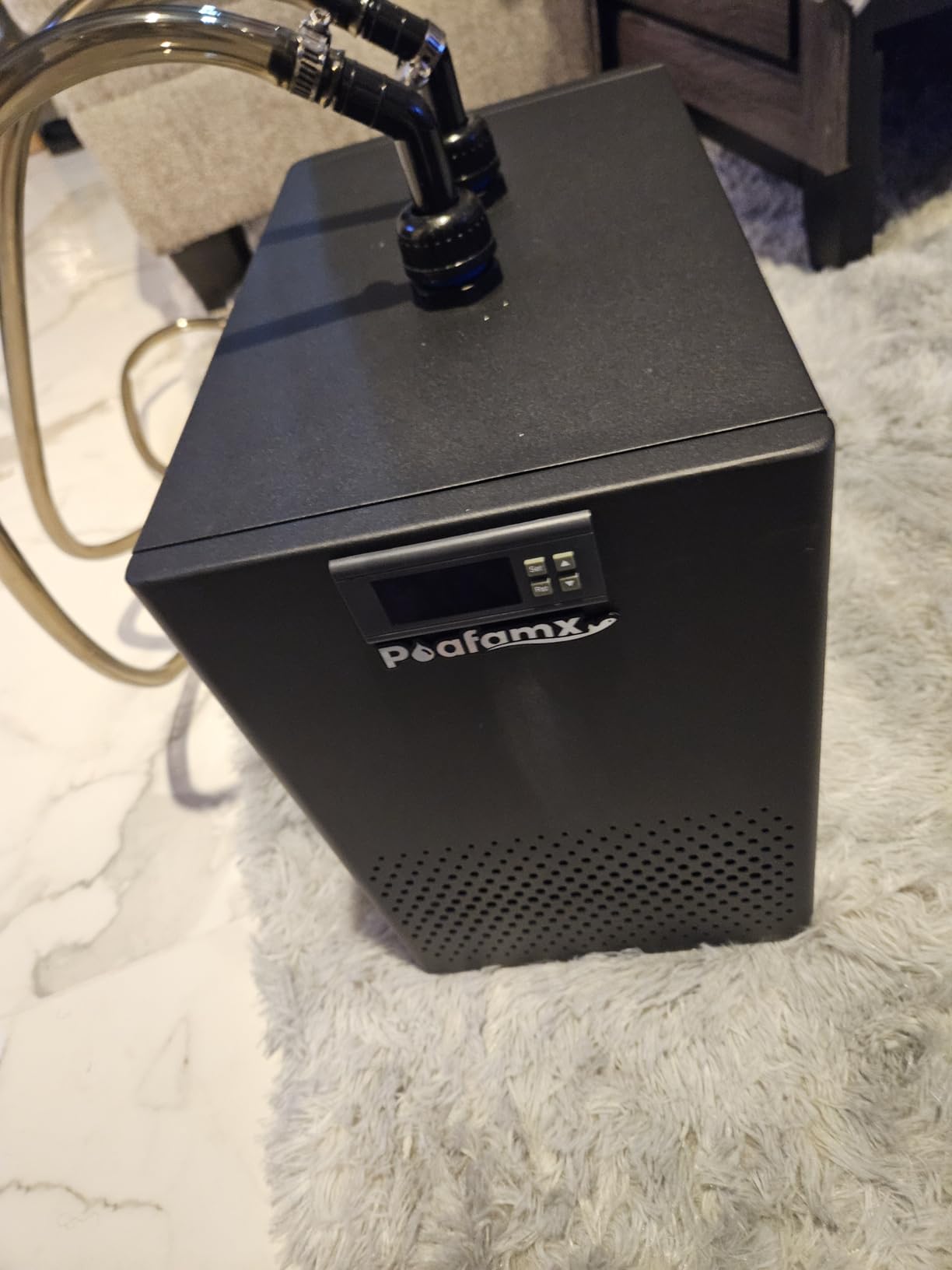
Plan the clearance before you choose a spot. Front and side cooling vents plus dual rear high-performance fans mean it needs at least 6 inches around the vents, and it ejects a large amount of hot air directly behind the housing. Point that into a room, not into a wall cavity.
One practical detail catches people out: the intake and outlet ports are not labeled on the housing. The 210 GPH pump moves a lot of water relative to a small tank, so sending it the wrong way can create a strong surface current that stresses jellies or pushes loose rock around.
Why it earns a place on this list
It is one of the few compressor chillers in this category that needs no drilling, no sump modification and no controller wiring. A nano keeper with a 20 gallon display can have it plumbed in an afternoon, which matters more than maximum capacity at that scale.
Front and side vents give you more freedom in a tight stand than a unit that only breathes out the back. Several owners report units still running after nearly three years.
When to skip it
With only 48 reviews the long-term record is thin, and 20 percent of those ratings sit at one star. Reported failures include units dead within about a year and one case of a compressor cycling off after roughly 10 seconds from overheating while a condenser fan shorted out.
Initial setpoint calibration is also confusing out of the box. Verify with an independent thermometer before you trust the readout, and use a digital aquarium thermometer in the return line for the first week.
7. Fitnet 79 Gallon Touch Screen Chiller – Best Interface in the Group
Fitnet 79 Gal Aquarium Chiller, 1/3 HP Fish Tank Water Chiller, Hydroponic Water Chiller with Touch Screen, Hydroponics System Axolotl Jellyfish Coral Reef 300L
1/3 HP
79 gal / 300L capacity
Touch screen with memory
R290 refrigerant
Pros
- Touch screen keeps the prior setpoint after power loss
- Strong pull-down on larger volumes
- Quiet enough for a living space
- Calibration matches chiller to tank temp
Cons
- Printed and online instructions disagree
- Random beeping and cooling loss on some
- Not recommended for a bedroom
The Fitnet is the newest unit in this roundup, listed as available from April 2026, and it has the highest established rating profile among the units with a meaningful review pool. The 4.4 average comes with 73 percent five-star and 14 percent four-star ratings, and only 8 percent at one star.
Its 1/3 HP compressor is rated to 79 gallons or 300 liters, and users report chilling axolotl tanks and cold plunge tubs hard, into the low 40s and low 60s. On a reef system that headroom translates into a compressor that switches off for long stretches rather than running continuously.
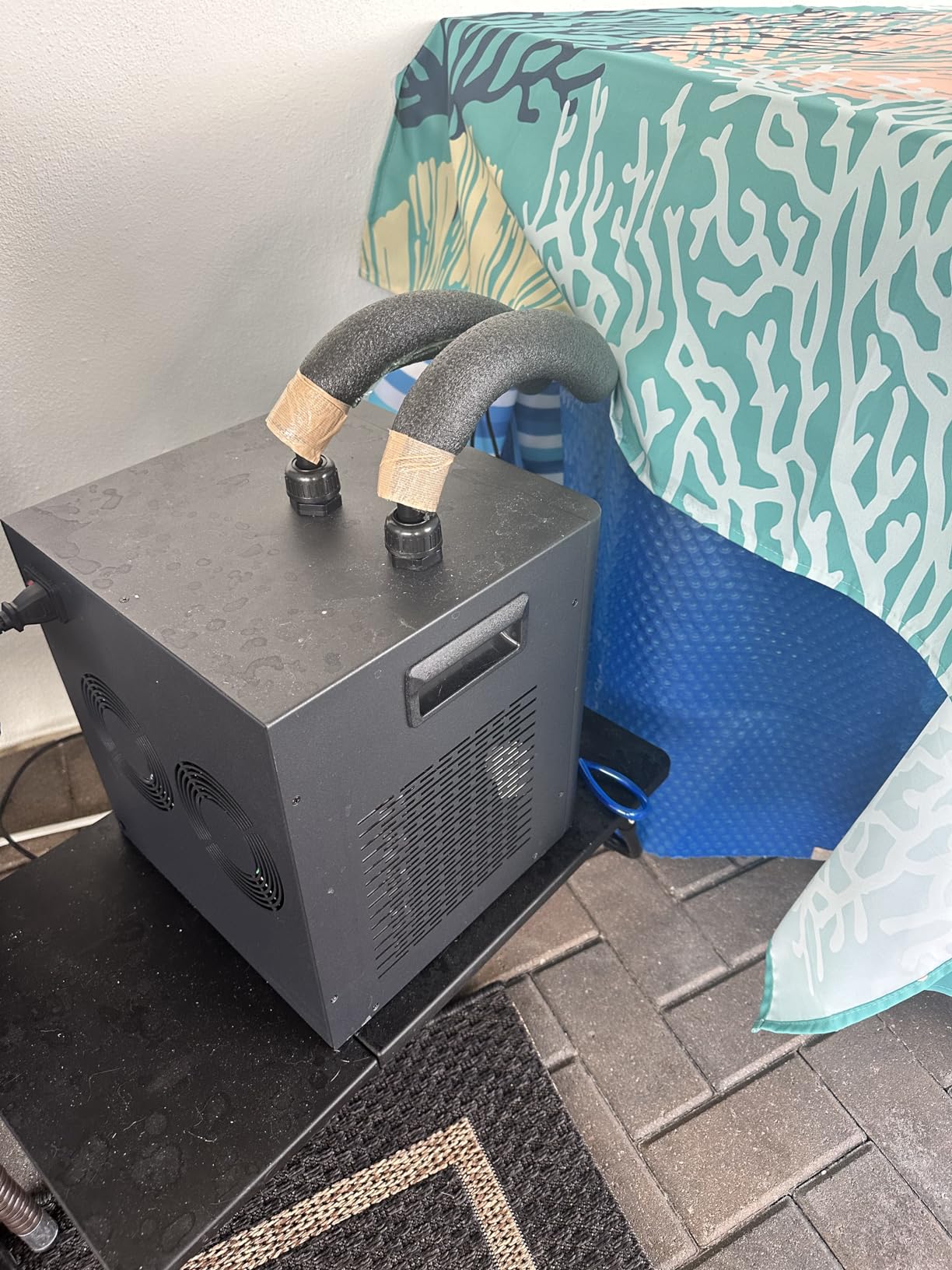
The touch screen is the reason to pick this one. It holds your setpoint in memory across power cycles, which sounds minor until your summer power flickers and the chiller forgets. It maintains 68 to 79F automatically, and a calibration feature lets you match the chiller readout to your actual tank temperature instead of guessing at a fixed offset.
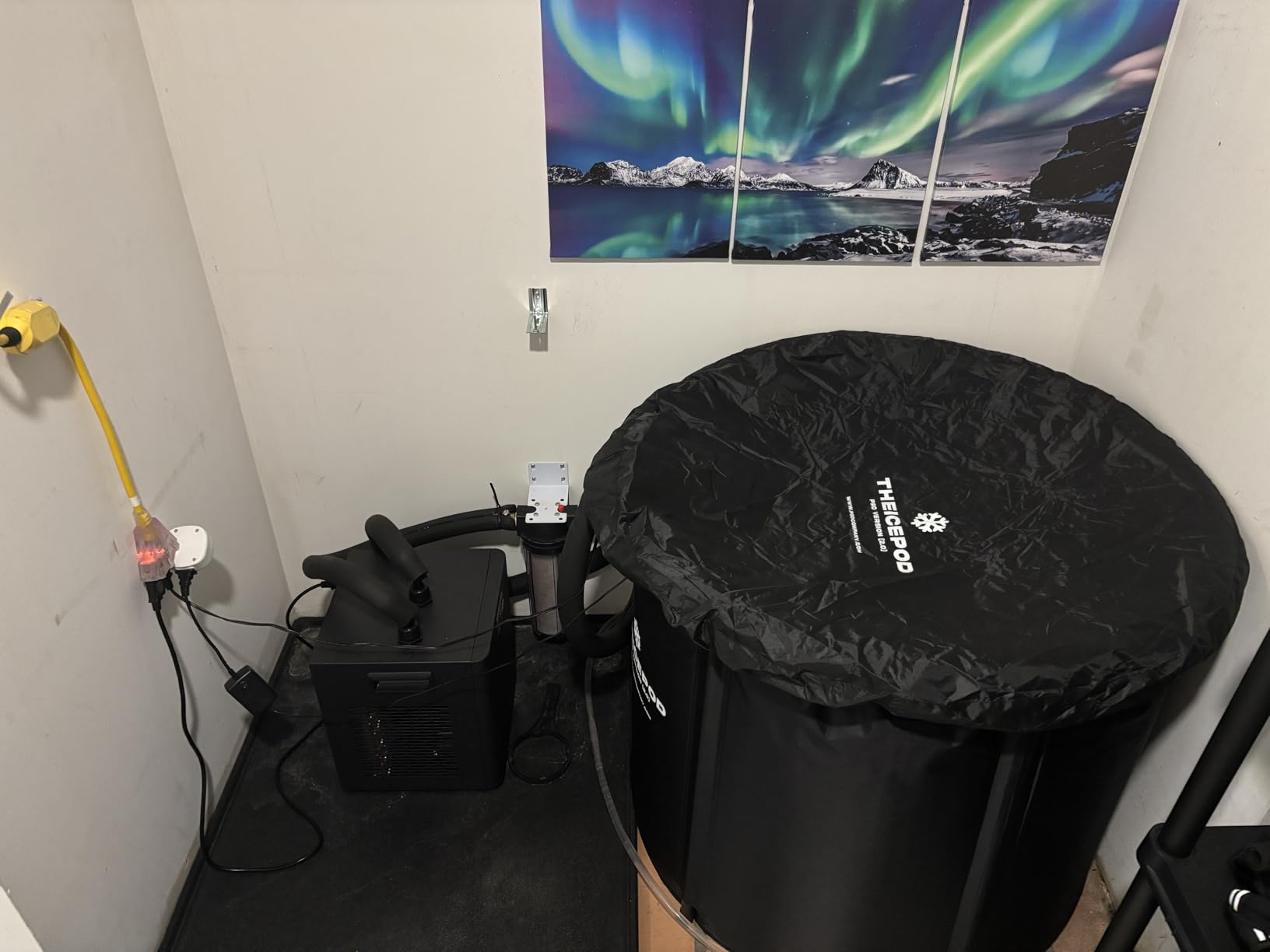
The complete set includes the water pump, water pipe and connectors. Two built-in cooling fans and a perforated housing need 6 inches of clearance, and a silent fan design is used to reduce compressor vibration noise.
Where it stands out
Responsive support is a genuine advantage on a newer listing. Owners report the company sending missing parts and issuing partial refunds, which is worth real money when a chiller is holding your coral at temperature and something has gone wrong mid-summer.
The pure titanium pump and corrosion-resistant components suit salt water, and the stated range covers reef tanks, jellyfish tanks, axolotls, shrimp and hydroponics with one appliance.
What to watch
Instructions are the weak point. The printed manual differs from the online version, and the F1 temperature-difference setting is confusing enough that several owners had to work it out before the unit behaved. Budget time to set it up properly.
There is no inline filter, so pump intake debris is your problem to manage. One owner reported a short at the power plug connection that shut the unit off from vibration, and others mention random beeping and lost cooling that needed a reset. It also exhausts enough heat and noise that reviewers do not recommend bedroom placement.
8. FIIRUS 42 Gallon WiFi Chiller – the Only App-Controlled Pick Here
Aquarium Chiller 42 Gallon, 1/10 HP Quiet Water Chiller
1/10 HP
Up to 42 gallons
Built-in WiFi app control
59-80F setpoint range
Pros
- Only chiller here with app-based temperature control
- Pump tubing clamps and fittings included
- Pure titanium evaporator for salt and fresh
- Quiet fan and compressor design
Cons
- Smallest review pool with 19 reviews
- Emits heat and noise so no bedroom installs
- Needs 8 inches of vent clearance
The FIIRUS is the only chiller in this roundup with a built-in WiFi module and a companion app for remote temperature monitoring and adjustment. For anyone running a chiller in a basement, garage or equipment room, seeing the water temperature from a phone is a practical upgrade rather than a gimmick.
The 1/10 HP compressor is sized for tanks and hydroponic reservoirs up to 42 gallons, with an adjustable setpoint range from 59 to 80F. That range comfortably covers a reef target of 78F with enough margin to handle a cold room in winter.
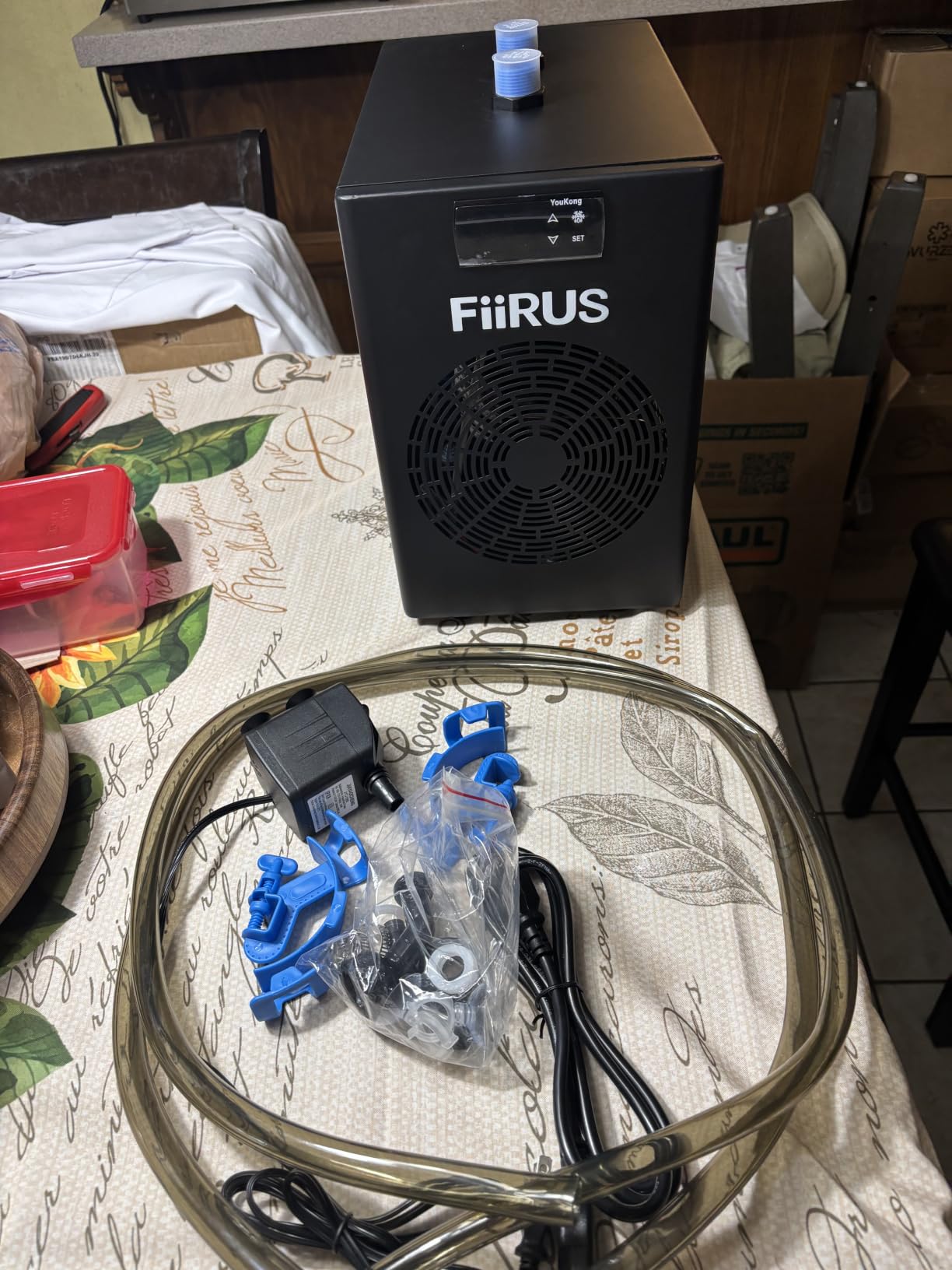
The complete kit includes an 800L/H water pump, 12mm tubing, hose clamps and fittings, so the install is a hose clamp job rather than a shopping trip. The titanium evaporator resists saltwater corrosion and outlasts copper coils in reef tanks, according to owners who have run both.
Clearance is the trade-off. The unit needs at least 8 inches around the vents, and at 13.7 by 8.2 by 11.7 inches plus that clearance, plan the footprint before you commit. A 1/3 HP variant exists in the same range if you outgrow 42 gallons.
Why the 4.6 rating deserves a caveat
Its 4.6 average is the highest in the roundup, but it rests on 19 reviews with no one-star ratings at all. The listing is recent, first available in July 2025, so the long-term reliability record simply has not been established yet. A perfect score on a small pool is a promise, not a track record.
Feedback otherwise centers on easy setup, quiet operation and saltwater compatibility, with the WiFi app as the standout feature. Owners report it holding reef-appropriate setpoints reliably across the stated range.
Where it does not fit
It emits heat and noise, which makes bedroom placement unsuitable even though the compressor is quiet. It is also sized for smaller systems, so a 60 gallon mixed reef in a hot room is beyond what this compressor can hold.
If you need more than 42 gallons and want app control, the honest answer is that you are choosing between a proven larger compressor and an unproven control feature. We would pick the capacity first and manage with a remote temperature alarm.
9. EcoPlus 1.5 HP Commercial Chiller – for 300 to 500 Gallon Systems
EcoPlus Commercial Grade Water Chiller, Cooler for Reservoirs, Hydroponics, and Aquariums, 1 ½ HP
1.5 HP commercial grade
300-500 gallon range
30 foot cord remote
R410A refrigerant
Pros
- Largest cooling capacity in the roundout
- Remote controller on a 30 foot cord
- Auto restart with temperature memory
- Titanium construction resists corrosion
Cons
- Very high cost for the category
- External pump required and not included
- 94 pound floor standing footprint
The EcoPlus 1.5 HP is the only unit here built for serious commercial duty, and it is the only one we would consider for a reef system above 200 gallons. Hawthorne Hydroponics recommends it for 300 to 500 gallon aquariums or a 300 gallon hydroponic reservoir, which puts it at the far end of this roundup.
The remote controller on a 30 foot cord is the feature we like most. You can change the setpoint from a wall panel without walking to a machine that weighs 94 pounds, and at 15 inches wide by 41 inches long by 24 inches high it is a floor-standing unit, not a cabinet unit.
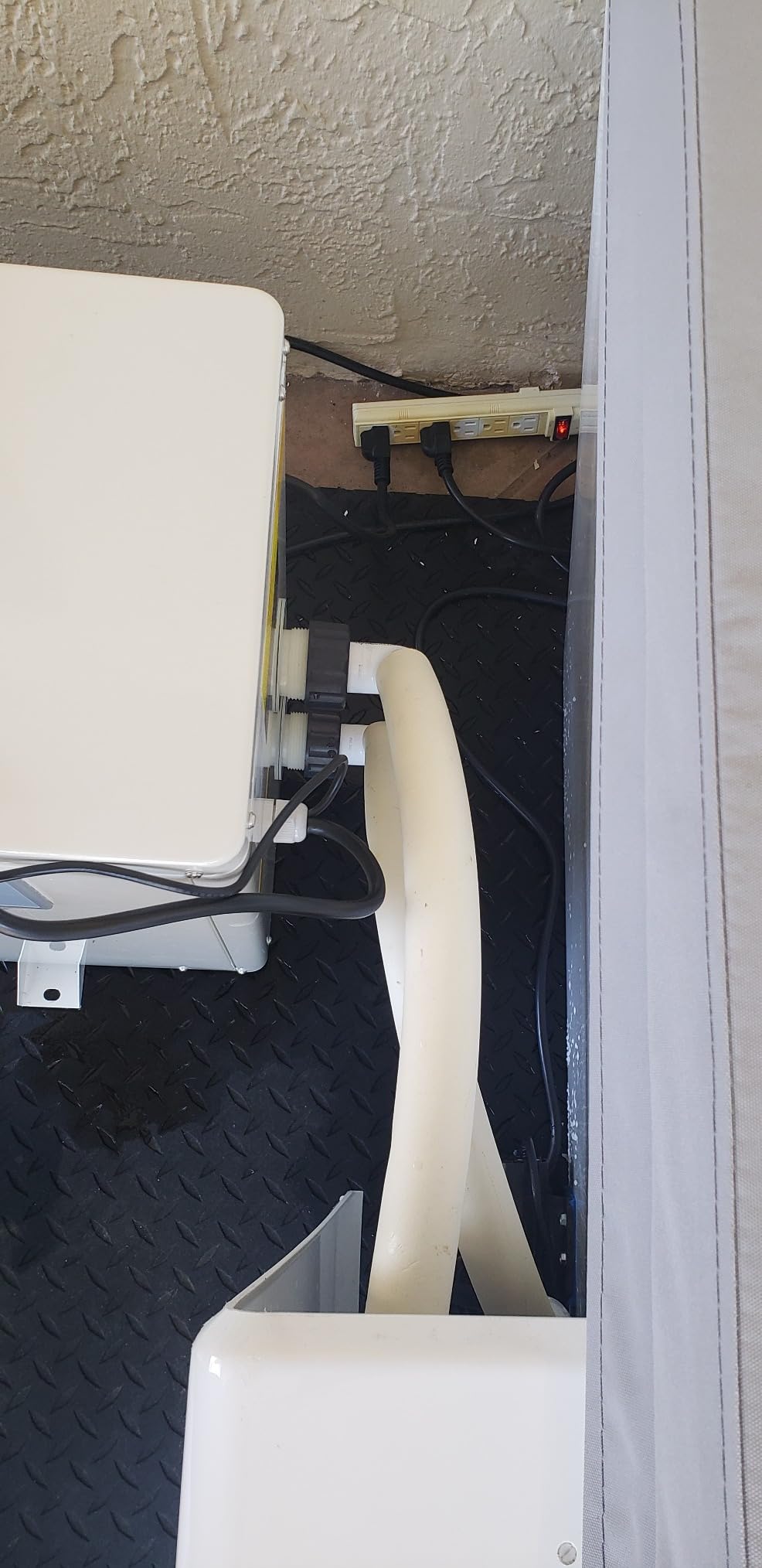
Plumbing is straightforward for a hard plumbed system. It includes two fittings for 1 inch hard PVC or flexible tubing, and auto restart with temperature memory protects your settings if power goes out. A 300 watt draw on 120V 60Hz means a normal household circuit, but a dedicated one is wise.
You will need your own pump. Hawthorne recommends the EcoPlus 1267 gph, and it is not included, which is a real addition to the total cost of an install that already runs into four figures.
What you gain at this size
Capacity is the whole point. When your system volume passes 300 gallons, the load on a chiller grows faster than its rating, and a unit that once cycled gently starts running continuously. At 1.5 HP commercial grade, the compressor is built for sustained duty rather than occasional summer duty.
The R410A and R140A refrigerant circuit is described as environmentally friendly, and titanium construction handles salt water without the corrosion problems that end smaller coil lives. Buyers cooling big reservoirs value the commercial framing and the power-failure restart.
Why most reef keepers skip it
It costs considerably more than everything else here, and a 94 pound floor-standing footprint does not fit under a standard cabinet stand. If your system is under 200 gallons, this capacity goes unused and the external pump requirement adds a failure point you would not otherwise have.
The rating is 3.9 across 55 reviews, with 19 percent of ratings at one star. Several of those owners report units that failed within the warranty period, so check the warranty terms closely before committing.
10. JBJ Arctica 1/15 HP – the Long-Running Nano Choice
JBJ Arctica Aquarium Chiller, 1/15 HP
1/15 HP in-line
Titanium coils
12 by 16 by 15 inch
Quick in-line install
Pros
- Recognized as one of the quietest chillers made
- Titanium coils for heat exchange and corrosion resistance
- Compact footprint beside nano and cabinet setups
- In-line series install is quick
Cons
- 1/15 HP capacity limits it to nano volumes
- Premium cost for the cooling delivered
- No WiFi or digital remote monitoring
The JBJ Arctica 1/15 HP is a thermoelectric in-line chiller, and it is on this list because the Arctica name has a long production history and an established owner base. First available in 2004, the design has been refined over two decades rather than launched last year.
Owners consistently praise the near-silent titanium-coil design for nano reef, shrimp and fry tanks where noise is the deciding factor. The in-line series installation is quick and straightforward, and at 12 by 16 by 15 inches and 25 pounds, it fits beside a nano tank or inside a cabinet.
The titanium coils are used for efficient heat exchange as well as corrosion resistance, and the high-efficiency condenser is designed for lower energy use. There is no WiFi or digital remote monitoring, so you are relying on a local controller or your own probe.
Capacity is the limitation. At 1/15 HP, owners describe it as suited to small nano and shrimp tanks, and 15 percent of ratings sit at one star, most often because the cooling simply was not enough for the volume it was asked to handle.
The case for a proven design
Where noise decides the outcome, a thermoelectric unit wins outright. A nano tank in a bedroom or a shrimp and fry system where a compressor hum would be maddening is exactly the environment this unit was built for. It is also one of the quietest aquarium chillers available.
Long-running designs have another advantage: parts and service knowledge accumulate. A design that has been in production since 2004 is a safer bet than a new listing with a 19-review pool when your coral depend on it through August.
When it is the wrong choice
Premium cost for the cooling delivered is the honest headline. Newer compressor units give you more BTU and more features for less money, so a nano keeper on a budget can reasonably argue against it. Owner reports on reef2reef do note that Arctica models run quieter than AquaEuroUSA units, at a higher cost.
Skip it for anything beyond a nano volume. A 1/15 HP thermoelectric cannot hold a display reef at 78F in a warm room, and once you need a compressor anyway, the size options open up considerably.
How We Picked and Ranked These Chillers
We built this list from manufacturer specification sheets and long-term owner reports rather than from a single controlled lab bench, and it is worth being upfront about that. Nobody publishes repeatable chiller test data for reef tanks, so the honest method is to compare rated capacity against real tank volumes and then weight the things owners consistently report.
Four things decided most of the ranking. First, cooling headroom, because a chiller that cannot reach 78F in a warm room is a decoration. Second, whether a pump is included, because a missing pump is the most common complaint across this entire category and it turns a weekend install into a hardware run.
Third, the failure profile in the reviews. Where a meaningful share of owners report the compressor dying inside the first year, that moves a unit down the list no matter how good the specification sheet reads. Fourth, physical fit, since a 94 pound floor-standing machine and a 12 inch nano box solve completely different problems.
Noise, warranty length and control features broke ties. We treated titanium evaporator construction as close to a requirement rather than a preference, since salt water destroys copper coils, and 9 of the 10 models here have one.
How Big a Chiller Does Your Reef Tank Need?
Size on your peak summer load, not your average. The heat load on a reef comes from the room, the lighting, the pumps and the biology, and a chiller only has to cover the gap between what the room delivers and the 78F you need. Here is the method we would use.
1. Add up your total system volume in gallons, including the sump, not just the display tank. A 90 gallon display with a 20 gallon sump is a 110 gallon system, and sizing on the display alone is the most common sizing mistake we see.
2. Find your peak room temperature, not your average. Check what the room hits on a hot afternoon, and add a margin if that room has a west-facing window or a door that stays open.
3. Match volume to rated capacity, and choose the larger unit when two sizes are close. A 1/3 HP rated to 79 gallons performs best in peak summer well below 79 gallons, so the manufacturer recommended figure of roughly 63 gallons is the honest number to shop against.
4. Check headroom for the type. Thermoelectric units give you 3 to 5F and only suit small volumes. Compressor chillers drop water 8 to 18F below ambient depending on the model, which is what lets a larger system recover from a hot afternoon.
5. Plan the plumbing before you finalize the size. A unit too large for the sump may need a separate loop with its own pump, and that changes the install more than the chiller size does.
The rule of thumb to remember: slightly oversizing a chiller is better than undersizing it. An undersized unit runs longer, works harder, and may never reach the set temperature. Compressor cycle hours are what wear a chiller out, and a unit that can coast at 30 percent duty will last years longer than one fighting at 100 percent.
Compressor vs Thermoelectric vs Drop-In Designs
Compressor chillers are the default for reef work, and 8 of the 10 models here use one. A refrigerant gas is compressed, expanded through a titanium coil sitting in the return water, and absorbs heat from the tank water before the cooled water is pumped back. The controller then cuts the compressor on and off at your set point. You get 8 to 18F of pull-down, which is the range a display reef needs.
Thermoelectric units such as the IceProbe and the JBJ Arctica 1/15 HP use a Peltier module instead of a refrigerant. There is no compressor, so they are quiet and compact, but they move only about 3 to 5F and they add heat to the room rather than removing it. That makes them nano-tier tools, and the JBJ is one of the quietest models here.
Drop-in designs are the third option and none of the units in this roundup use them. A drop-in chiller sits in the sump and chills a small reservoir of water that mixes into the system, which is attractive when you cannot hard plumb a return line. The trade-off is a small cooling surface and slower response, so most reef keepers end up moving to an in-line unit once the system grows.
Where to Install Your Reef Chiller
The most common install is in-line on the return, after the sump and before the display tank. Hard plumbing with bulkhead fittings gives you the cleanest look and lets the chiller sit on a shelf or a stand outside the cabinet. Several of the units here use barb fittings instead, which reviewers repeatedly flag as an annoyance, so buy clamps and adapters sized to what is actually on the housing.
Sump installation works when the chiller is small and the sump has a dedicated bay for it. A nano sump takes a thermoelectric unit happily, and the JBJ Arctica fits this pattern. A 1/3 HP compressor unit will not, which is why the larger units here are all freestanding floor machines.
Split units are the answer for a tight or unventilated equipment room, and none of these picks use that design. If your chiller must live in a closet with no airflow, plan for a condenser unit elsewhere rather than cramming a compressor into a sealed cabinet. Remember that every chiller here exhausts heat, and in a small room that heat comes back into the water you are trying to cool.
How Quiet Is a Reef Chiller?
The quietest options here are the thermoelectric units, full stop. The JBJ Arctica 1/15 HP and the IceProbe both run without a compressor, and the JBJ is described by owners as one of the quietest aquarium chillers available. The IceProbe is quieter still, but at 50W of cooling it belongs on a nano tank.
Among compressor units, the Poafamx 1/3 HP is listed under 45dB and the BAOSHISHAN 1/3 HP at 45 to 50dB at one meter. Owners describe the BAOSHISHAN as comparable to a mini fridge, and the Poafamx as quiet enough for a bedroom. Reviewers of the Active Aqua 0.10 HP describe compressor noise comparable to a window air conditioner, which is the more common experience for small compressor units.
Placement matters as much as the unit. A chiller measured across the room in a shop reads very different sitting on a cabinet two feet from your chair. Give it the manufacturer clearance, point the exhaust into a room rather than a wall cavity, and mount it on a surface that will not amplify compressor vibration.
Will a Chiller Work in a 90F Garage?
Partly, and the limit is worth understanding before you buy. A chiller has to move heat from the water into the room, and the room is already near the temperature you are trying to escape. In a garage or equipment room that regularly sits between 85 and 90F, a chiller runs almost continuously and still may not reach 78F.
Our honest answer for a 110 to 120F space is that air conditioning the room first is not a luxury, it is the mechanism that makes a chiller work. Chillers also generate exhaust heat, so a sealed hot room gets worse, not better. If the room cannot be held near 78 to 80F, no chiller on this list will rescue the tank, and the answer is evaporative cooling, a portable AC unit, or moving the system indoors.
For a 110F garage holding a nano tank, a thermoelectric unit or a small compressor chiller with a 10 to 15F rated delta is often enough. For a 100 gallon SPS system in the same space, plan on cooling the room.
Chiller and Heater Set-Point Conflicts
Running a heater and a chiller together is normal, and problems only start when they fight over the same set point. If your heater is set to 78F and the chiller controller also targets 78F with a narrow differential, the two appliances can alternate, cycling the compressor for minutes at a time and shortening its life.
The fix is deliberate separation. Set the heater a degree or two below the chiller target, and put both on the same controller or probe so they read the same water. A controller that averages multiple probes and holds a wider differential also helps. Our aquarium heater guide covers the heating side, and the same logic applies when you are balancing two appliances.
Most reef keepers we spoke to run the heater in a climate-controlled room and the chiller in summer only, which removes the conflict entirely. If your room swings seasonally, a chiller with a wide adjustable differential setting, like the Active Aqua units, is easier to tune than one with a fixed cycle.
What to Check When a Reef Chiller Stops Cooling
A chiller that stops holding temperature comes down to a short list of causes, and you can diagnose them in order. Work through the list before you assume the compressor is dead.
1. Check the room temperature first. If the ambient has climbed near what the unit is rated against, the chiller may be working correctly and simply out of headroom. A chiller rated to drop 15F in a 75F room has far less to give in a 92F room.
2. Confirm the water is actually flowing. A failed pump, a kinked hose or a blocked intake stops circulation through the coil, and a stationary chiller will not chill anything. Several models here come with undersized or weak pumps, which makes this a common cause.
3. Look at the air filter and condenser fins. Blocked airflow across the condenser is the leading cause of compressors tripping out or running hot. Cleaning the filter and vacuuming the fins restores the heat rejection the unit was designed around.
4. Rule out a leak at the connections. Leaks are usually at the hose barbs, not at the titanium evaporator. Retighten or reseat the suspect fitting and watch the water level for a day before condemning the coil.
5. Inspect for scale on the coil in salt water. Over years, scale insulates the titanium and cuts transfer efficiency. A descale with a citric acid solution, run through the loop on a schedule, restores performance and is the single best thing you can do for coil longevity.
6. Listen and look at the compressor. A unit that runs continuously without audible cycling may have a failed refrigerant charge, a seized compressor or a control board that is no longer switching the relay. This is where a warranty claim or a technician comes in.
On longevity, well-maintained compressor chillers commonly run for many years, and several owners here report multi-year continuous operation on the same unit. The factors that most affect lifespan are cycle hours, ambient temperature, coil scale and filter cleanliness. Rinse the loop every two to three months on units that specify it, and keep the intake screen clear of debris. The nano chiller we looked at is a useful model here: its spec sheet calls for rinsing the loop every two to three months, and that habit is what keeps a small salt-water loop from scaling up.
Power Draw and Breaker Load
Compressor chillers draw real current, and a household circuit shared with a dehumidifier or a space heater is where trips happen. The Active Aqua 0.10 HP is listed at 510 watts with owners measuring closer to 180W while actively cooling. The EcoPlus 1.5 HP lists 300 watts, and the BAOSHISHAN 1/3 HP runs on 110V as a standard compressor load.
The key point is that a chiller cycles rather than runs flat out. A compressor that reaches set point in 30 minutes and then switches off for an hour may draw peak current briefly a few times an hour, which is easy on a circuit. A chiller that never reaches set point draws continuously, which is the configuration that trips breakers on a warm evening.
Forum users have reported breaker trips specifically with some lower-cost units, and our practical advice is to confirm the unit is on a dedicated outlet with nothing else heavy on that circuit. Owners also note that the exhaust heat from a constantly-running chiller warms a small room, which raises ambient and makes the problem worse. Two of the picks here mention this plainly as a limitation, and it is worth planning for wherever the chiller lives.
Cooling Alternatives Before You Buy a Chiller
A chiller is seasonal insurance, not a permanent need, and the honest first question is whether cheaper measures will get you through the summer. A fan blowing across the surface of the tank drives off evaporation, and evaporative cooling is genuinely effective in a dry climate. It does almost nothing in humid weather, which is exactly when you need it most.
Reducing heat at the source matters more than people expect. LED lighting throws far less heat into the tank than metal halide fixtures, and shifting your filtration to a cooler basement or garage can drop room temperature enough to remove the need entirely. Dropping your target from 78F to 80F also shrinks the gap a chiller has to close.
For a tank that gets hot only occasionally, frozen water bottles and a night of running the air conditioner can hold the line. None of these scale to a 100 gallon SPS system through a two-week heat wave, and that is the point at which a chiller becomes the right purchase rather than an expensive luxury.
Frequently Asked Questions
What is the average lifespan of an aquarium chiller?
A well-maintained compressor aquarium chiller commonly runs for 5 to 10 years, with many owners in this roundup reporting multi-year continuous operation. The biggest factors are compressor cycle hours, ambient room temperature, coil scale in salt water and how clean the air filter stays. A chiller fighting a room that is too hot runs constantly and wears out years earlier, so sizing with headroom and cleaning the condenser fins on schedule matter more than the purchase date.
Which aquarium chiller is the quietest?
Thermoelectric chillers are the quietest because they have no compressor. The JBJ Arctica 1/15 HP and the IceProbe are the quietest units in this group for that reason, and owners describe the JBJ as one of the quietest aquarium chillers available. Among compressor units, the Poafamx 1/3 HP is listed under 45dB and the BAOSHISHAN 1/3 HP at 45-50dB at one meter. Placement matters as much as the unit, so give it full vent clearance and keep it off an amplifying surface.
What are some common problems with chillers?
The most common problems are a chiller running continuously because it is undersized or the room is too warm, a failed or kinked circulation pump, blocked condenser airflow from a dirty filter, leaking hose barbs, scale on the titanium coil in salt water, and an early compressor failure. Owners also report thermostat readings that run a few degrees off, which is why verifying against a calibrated thermometer is standard practice. Most of these are diagnosable without opening the unit.
Is 82 degrees too hot for a reef tank?
Yes. Above roughly 82 to 84F, warm water holds less dissolved oxygen, coral begins bleaching, and fish become stressed and disease-prone. The usual reef target sits between 77 and 80F, with 78F the number most keepers aim for. If your tank is sitting at 82F, start a chiller, open a fan across the surface, drop evaporation, and cut heat sources such as metal halide lighting, which add significantly more heat than LED fixtures.
Can an aquarium chiller handle a 120 degree room?
No. A chiller moves heat from the water into the surrounding room, so a room near 110 to 120F leaves almost no headroom and the compressor will run continuously without reaching set point. It also exhausts heat into that space, making a sealed hot room worse. Air conditioning the room first is what makes a chiller viable, and for extreme heat evaporative cooling or moving the system indoors is the only reliable answer.
The Best Aquarium Chillers for Reef Tanks in 2026
Start with the BAOSHISHAN 1/3 HP for a standard mixed reef. It rates to 79 gallons, drops water 8 to 15F below room temperature, and comes with the pump, tubing and clamps in the box, which removes the most common install complaint we saw across this category.
Move up to the Active Aqua 0.25 HP if your system is between 40 and 90 gallons and full of demanding coral, or the Active Aqua 0.10 HP if you are under 40 gallons and want a boost function in a small box. If silence decides it, the JBJ Arctica 1/15 HP holds a nano tank and barely makes a sound.
Whatever you choose, size it against your peak summer room temperature rather than your tank’s nominal volume, remember that slightly oversizing beats undersizing, and keep a clean air filter and an unscaled titanium coil. Those two habits decide whether your chiller is still running in five years. You can compare all ten picks in the table above, or check how your lighting adds to the heat load in our LED controller guide.