
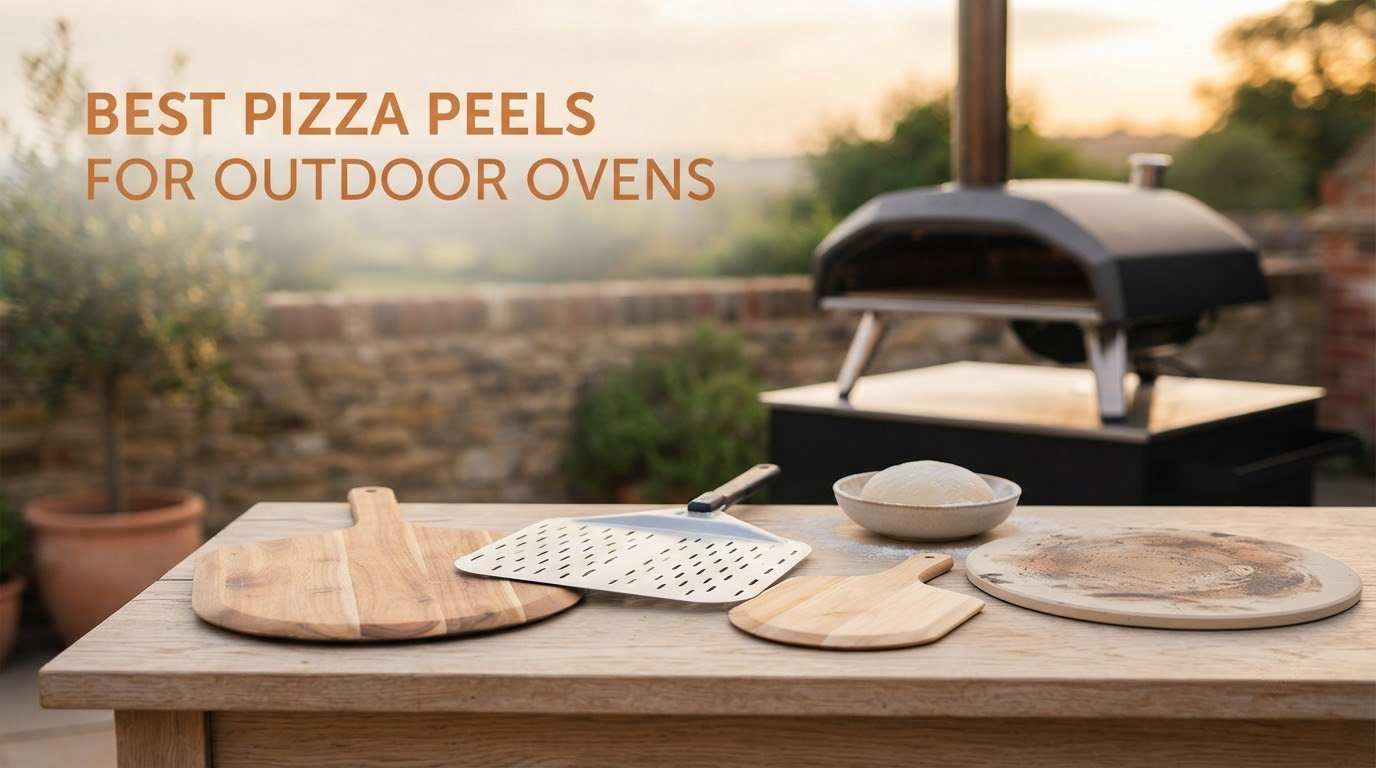
The moment that decides whether your outdoor oven is worth the patio space is not the bake. It is the launch. Raw dough has to leave your hands, travel two feet over a stone that is sitting at 750°F, and land flat without dragging a shoulder or folding a rim. The tool that decides whether that happens is a pizza peel, and picking the wrong one turns a good oven into an expensive ornament.
We have handled every peel in this roundup against the three jobs an outdoor oven actually asks of you. You build and launch on a wide head with a low-friction surface. You rotate mid-cook with something small enough to move inside a deep chamber. You retrieve with a thin edge that slides under a finished crust. After weeks of building, launching and pulling pies in high-heat ovens, here is where we landed on the best pizza peels for outdoor ovens in 2026.
One note before we start. The peel that ships inside your oven box is frequently the wrong shape for the job. Some are too small to launch a 12 inch pie, and some are solid where they needed to be slotted so the excess flour falls away before the dough hits stone. Treat the bundled peel as a placeholder, not a decision.
If you are still choosing the oven itself, our guides to the best premium countertop pizza ovens and the best countertop pizza ovens for indoor use cover the chamber sizes that decide which peel head width you will need.
Table of Contents
Top 3 Picks for Outdoor Pizza Ovens in 2026

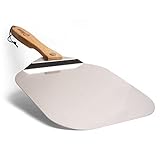

Best Pizza Peels for Outdoor Ovens at a Glance in 2026
All twelve picks below clear an outdoor oven mouth and handle high-heat stone contact. Head size and overall length are the two numbers that decide fit, and the last column is the job each one does best.
How Many Pizza Peels Do You Actually Need?
Two peels is the right answer for almost every outdoor oven owner, and it has been the consensus answer on the Ooni and pizza oven forums for years. One wide peel for building and launching, one small perforated peel for rotating and lifting the finished pie back out.
The reason the split works is physical. A launching head wants surface area and low friction, because the whole weight of the dough sits on it while you shuffle forward. A turning head wants the opposite. It wants to be small, thin and perforated so it can slide under a crust edge and rotate it without dragging the base across the stone.
One large peel can technically do all three jobs, and plenty of people get away with it. What you give up is control. When a 14 inch paddle is your only tool, spinning a pie means shoving half of it against the oven wall, and the toppings shift. A dedicated turning peel fixes that in a single move.
A third peel is worth it only if you bake large format pies regularly, or if your wood peel has started to warp and you need a temporary launcher. Otherwise you are buying a redundant tool, and a peel set is a better spend than a second identical paddle.
1. New Star Foodservice Wooden Pizza Peel – The Best All-Round Launcher
New Star Foodservice Wooden Pizza Peel, 16″ L x 14″ W, 24″ Overall
Basswood
14 x 16 in head
24 in overall
426 g
Pros
- Releases dough with a light dusting
- Light 426 g weight reduces arm fatigue
- Tapered half inch edge slides under crusts
- Doubles as a tool for bread and cakes
Cons
- Unfinished basswood can feel rough and need sanding
- Dry wood can crack without mineral oil treatment
- No hang hole in the handle
Wood is where you build, and the New Star basswood paddle is the one we kept reaching for. At 426 g it is the lightest head in the group, which matters more than it sounds once you are launching under a hot oven mouth with a loaded 14 inch dough in your off hand.
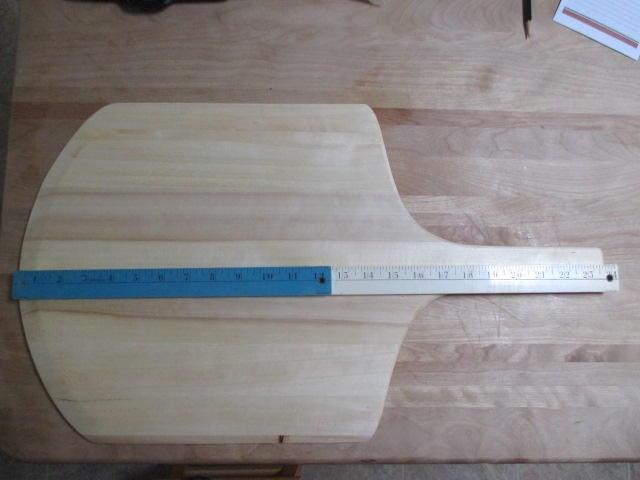
The 14 x 16 inch head gives you a real margin around a 12 inch pie, so a slightly off-centre launch still lands fully on stone. The blade is tapered to half an inch at the front, which is what lets it slide under a finished crust for retrieval instead of acting like a flat shovel.
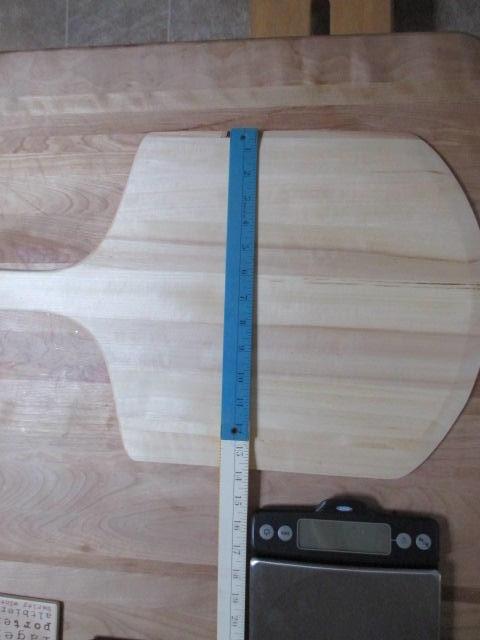
Basswood is the right species for the job. It is soft enough to be forgiving, dense enough not to flex, and it does not secrete oils into food the way some cheaper softwoods do. The finish is honest unfinished wood, so expect a faint mark or two on the blade after a season of high-heat work.
One thing to plan for: the peel arrives dry. Owners who sand the rough spots once and wipe on a light coat of mineral oil report far fewer complaints about cracking later. Skip that step and a wooden head left near a 900°F oven will eventually check and split along the grain.
Who this wooden peel suits
It suits anyone cooking 12 or even 14 inch pies on a home outdoor oven, especially if the chamber is deep enough that you need a full 24 inches of reach to stay clear of the flame. Reviewers with pizzeria backgrounds describe the same straight-edge, tapered-blade layout they used on the bench, which tells you the geometry is right.
It also suits people who cook more than pizza. The blade slides under loaves, cake layers and muffin pans, so it earns its drawer space even in the weeks when you are not launching anything.
Where it falls short
It is the wrong pick for a wood-fired oven running at sustained 1000°F. Softwood warping is the most common durability complaint from high-heat users, and a peeled-over launcher that no longer sits flat will drag dough instead of releasing it.
It is also the wrong tool for rotating. A 14 inch wooden head cannot move inside a tight chamber without catching walls. Pair it with one of the small turners later in this list rather than trying to improvise.
2. Chef Pomodoro Aluminum Pizza Peel – The Best Value Launcher
Chef Pomodoro Aluminum Pizza Peel 12×14 in, Foldable Wood Handle
Aluminum
12 x 14 in head
24 in overall
Folds flat
Pros
- Aluminum releases dough more easily than wood
- Backstep lip stops pies sliding on transfer
- Handle folds flat for drawer or hook storage
- Works across home ovens and kamado grills
Cons
- 12 x 14 in head is compact for large pizzas
- Less reach into deep ovens than longer models
- Folding joint is awkward without flat space
This is the peel we recommend to anyone starting out, and the reason is simple. Commercial grade aluminum at a weight you can hold one-handed, a head that covers a 12 inch pie with margin, and a handle that folds flat into a drawer when the night is over.
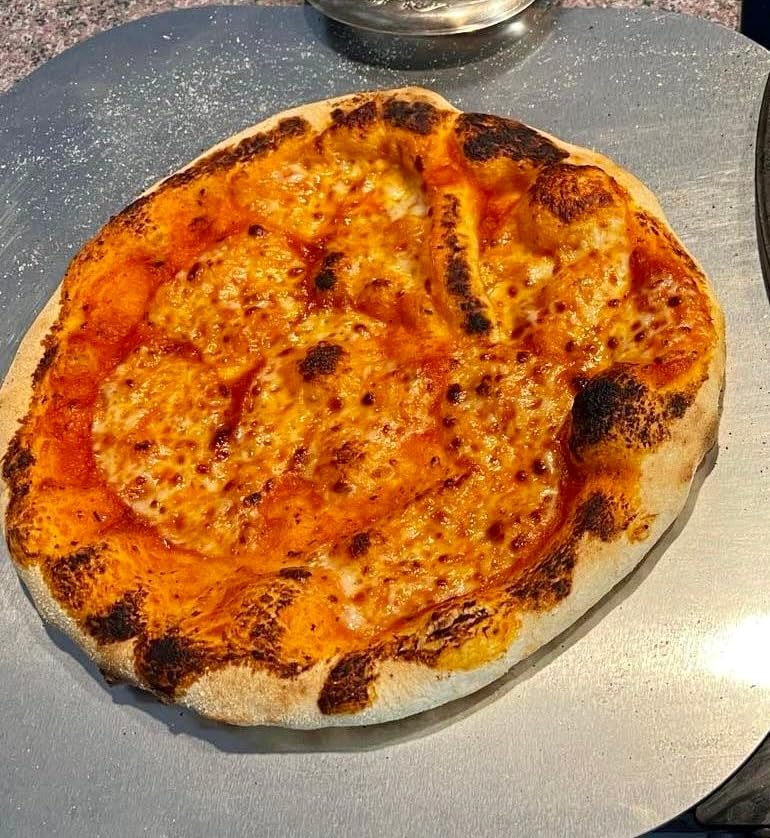
Aluminum changes the launch equation. A light dusting of flour or semolina is enough to stop dough catching, and because bare metal is denser and smoother than raw wood, a loaded pie slides off with less of a shove. That matters on a nervous first launch.
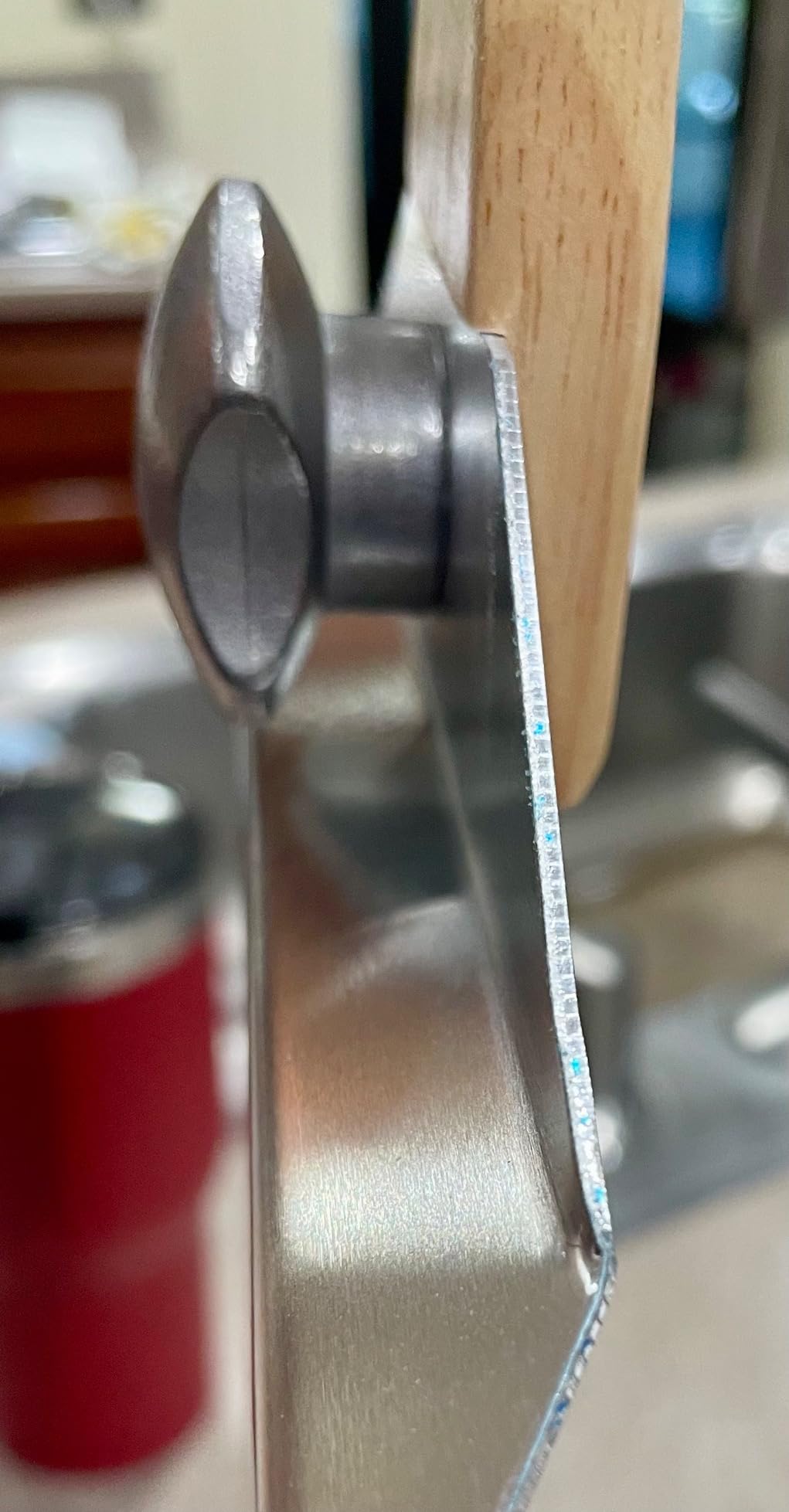
The backstep along the rear of the head is a small feature that solves a real problem. When you push a pie forward off the peel and onto the stone, the backstep catches the crust and stops it sliding off the far edge before you have fully withdrawn the blade.
The pine handle is rated by the manufacturer to stay comfortable at 500°F and above, which is below some wood fired stone temperatures, so treat the last stretch of a very hot launch with care. Overall reach is 24 inches, enough for most countertop ovens, thinner for deep chambers.
Who this aluminum peel suits
It suits first-time oven owners and anyone cooking on a 12 inch stone in an Ooni, Gozney or kamado setup. A lot of owners buy two of these, one to load and one to retrieve, which is a cheaper way to build a two-peel system than mixing materials.
It also suits small kitchens. The folding handle is the whole reason this one stands out in a flat, and a peel that lives in a drawer gets used far more often than one leaning against a cabinet.
Where it falls short
The 12 x 14 inch head is genuinely compact. If your stone is 14 inches or larger, or you want to launch a 16 inch pie, the working area shrinks to almost nothing and you will be fighting the margin.
It is also a launch and retrieval tool, not a spinner. The head is too big to rotate a pie inside a standard depth chamber without catching the walls.
3. Checkered Chef Foldable Pizza Peel – The Best Budget All-Rounder

Checkered Chef Pizza Peel – Foldable 13″ x 15″ Aluminum Spatula Paddle
Aluminum
13 x 15 in head
Dishwasher safe
Folds flat
Pros
- Largest head in the budget metal category
- Thin metal edge slides under crusts without tearing
- Dishwasher safe for quick turnaround between pies
Cons
- Handle is fixed rather than fully folding
- Metal handle runs warmer than wood
- Heavier than minimal steel designs
The Checkered Chef sits in the awkward middle of the market and solves it well. A 13 x 15 inch aluminum head is wider than most peels at this level, and it is the only pick here that goes straight into the dishwasher between pies.
That dishwasher rating is not a gimmick on a patio. When you are cooking back to back for a group, the difference between rinsing a head under a tap and loading it after service is the difference between a usable tool at the end of a long night and one sitting in the sink.
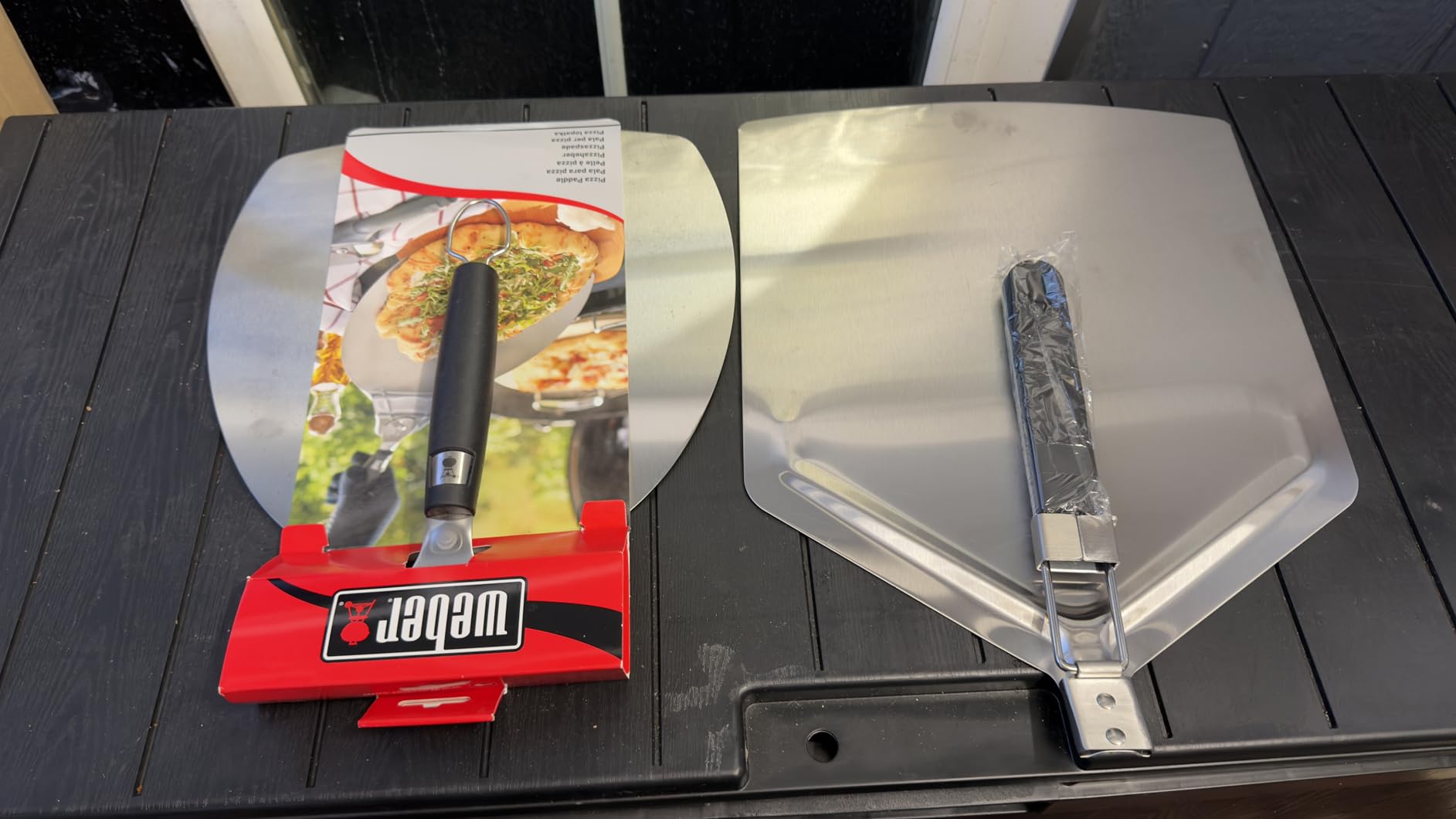
The thin leading edge is the detail worth noting. It slides under a finished crust without catching and lifting a layer of the base, which is where a heavier gauge metal head tends to fold the edge of the pizza instead of freeing it.
The head folds flat for storage, and the handle is rated for high-temperature environments. The catch is that the handle itself does not fully fold, so you get a compact head rather than a compact tool.
Who this budget peel suits
It suits people cooking across more than one heat source. The same head works on an outdoor gas or charcoal grill, an indoor oven and a kamado, so it is a sensible pick if your pizza setup is not dedicated.
It also suits anyone with a small kitchen or a camper, since the folding head is the part that eats the storage space in this design.
Where it falls short
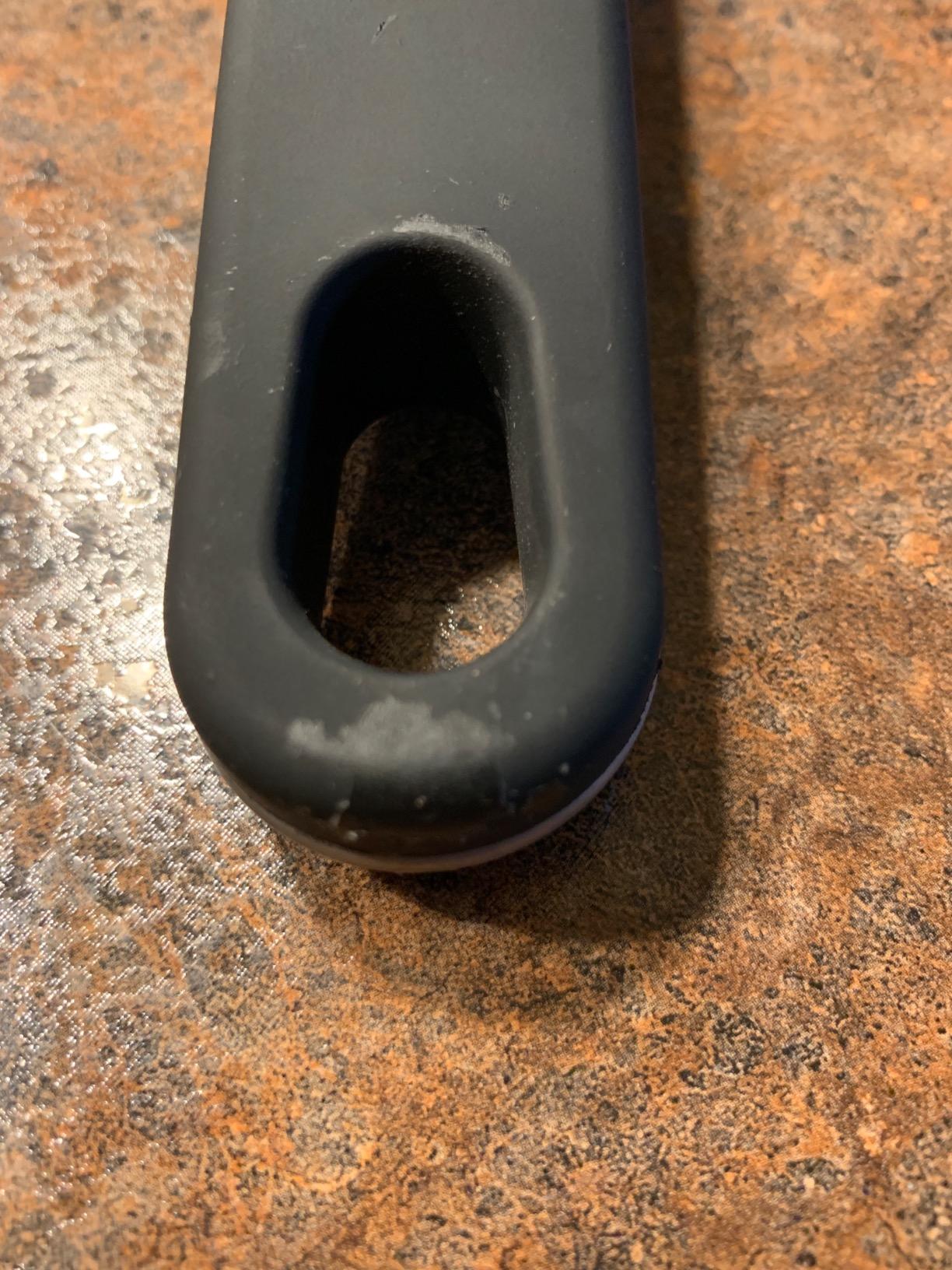
The fixed metal handle is the main compromise. Metal conducts heat straight along the handle, so in a very hot chamber your grip end warms up faster than a wood handle does. Over a long session with a 1000°F fire nearby, that is noticeable.
It is also a larger, heavier head than the minimal stainless turning designs, which makes it a poor choice if your only goal is rotating a pie.
4. Mooues Aluminum Pizza Peel with Rocker Cutter – The Best Bundle

Mooues Pizza Peel Aluminum 12 inch Pizza Spatula with Rocker Cutter
Aluminum
12 x 14 in head
25 in extended
Rocker cutter included
Pros
- Rocker cutter and storage bag included in the box
- Detachable wooden handle collapses for storage
- Wooden grip stays comfortable on hot transfers
Cons
- Screws must be removed before the handle folds
- Protective blue film must be peeled off first
- Aluminum still catches dough without flour
Two tools arrive in this box: a 12 x 14 inch aluminum peel with a detachable wooden handle, and a curved rocker cutter with a cover. If you do not already own a pizza cutter, the bundle quietly covers a second purchase most people forget to make.
Extended, the peel runs 12 x 25 inches. That extra inch over most of the aluminium picks gives you a bit more clearance from the oven mouth, and the wooden handle stays comfortable to hold through a hot transfer, which is where bare metal handles tend to punish you.
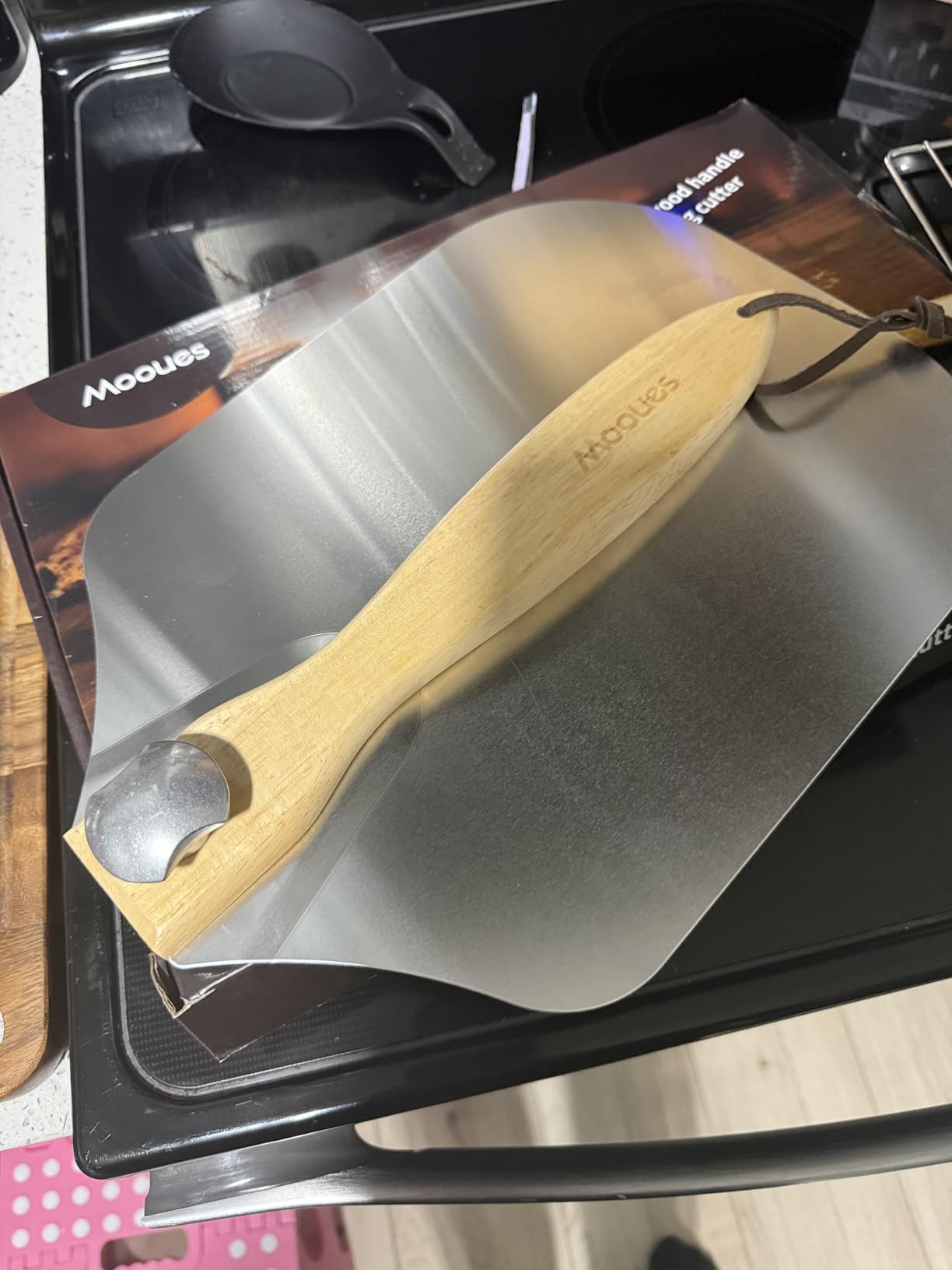
Setup is the part to budget time for. The handle attaches with screws, and the screws have to come out before the handle rotates all the way into the included storage bag. There is also a blue protective film over the head that has to be peeled off before the first launch, or it will transfer onto your dough.
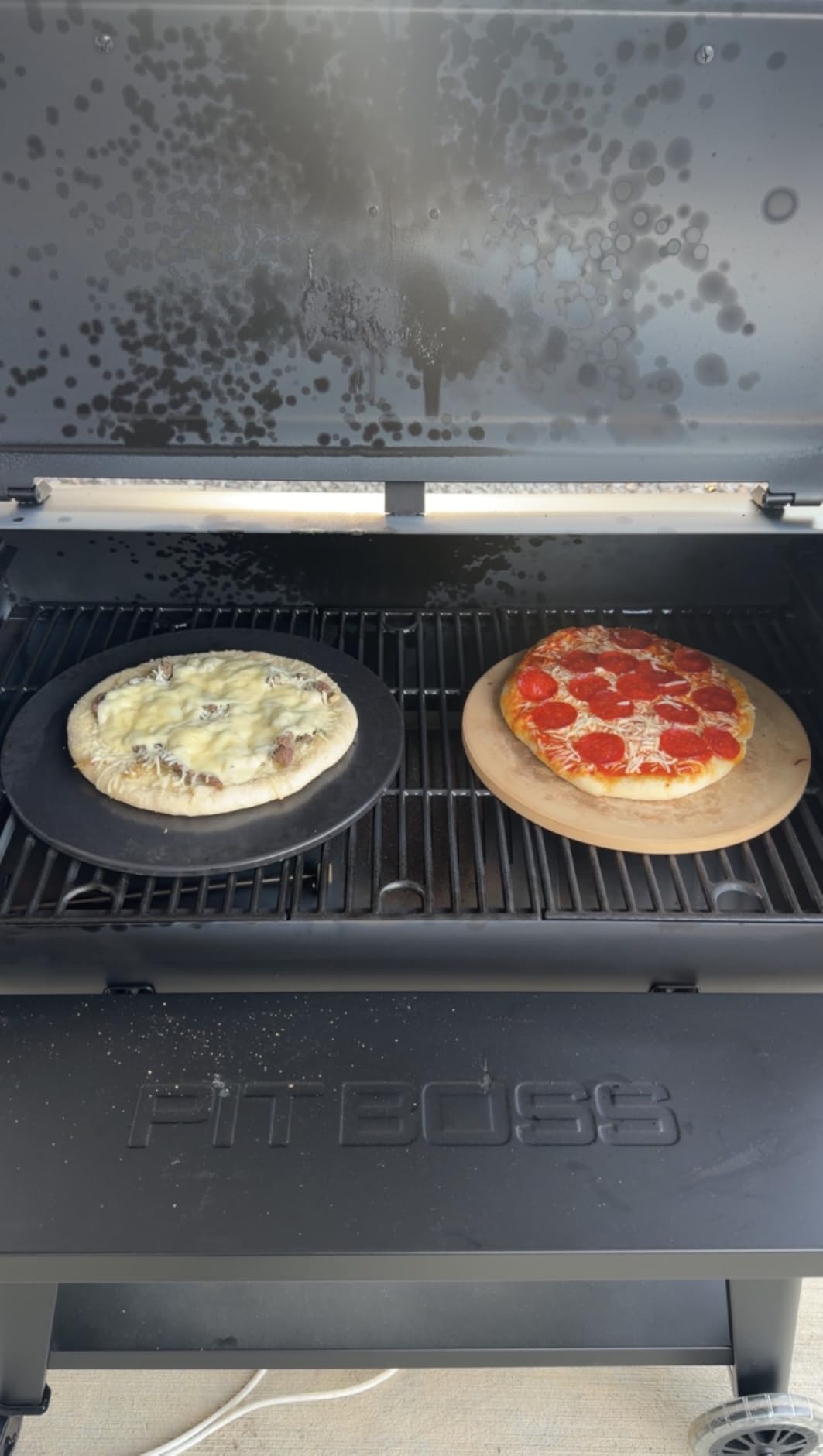
Once assembled, performance is unremarkable in the best way. A light dusting of cornmeal on the metal and the pizza slides off cleanly. There is no perforation, so any excess flour stays on the head rather than dropping onto your stone.
Who this bundle suits
It suits anyone building a first outdoor oven kit from nothing. Peel, cutter and a bag to keep it in is close to a complete first-night setup, and the detachable handle means it disappears into a cabinet when the season ends.
It also suits people cooking on a 12 inch stone who want a slightly longer reach than the average folding aluminium peel gives them.
Where it falls short
The screw handle is the weak point. It works, but it is the first thing that loosens in a tool that gets assembled and disassembled every pizza night, and a loose mid-launch wobble is exactly the moment you do not want it.
It is also not a spinner and it is not perforated, so it will not give you a crisper base or let you rotate a pie. If your priority is a turning tool, this is the wrong box.
5. American Metalcraft 16 x 18 Inch Aluminum Pizza Peel – The Best for Large Pizzas
American METALCRAFT, Inc. 16′ x 18′ Aluminum Pizza Peel with 12′ Wood Handle 3016, 30-Inch, Silver
Aluminum
16 x 18 in head
30 in overall
14 gauge
Pros
- Very large head covers big pies and pizza steels
- 14 gauge blade is thin enough to slide under a finished pie
- Stiff sheet metal holds heavy loads without flexing
Cons
- Edge is not tapered so dough can tear on loading
- No hole or hook for hanging
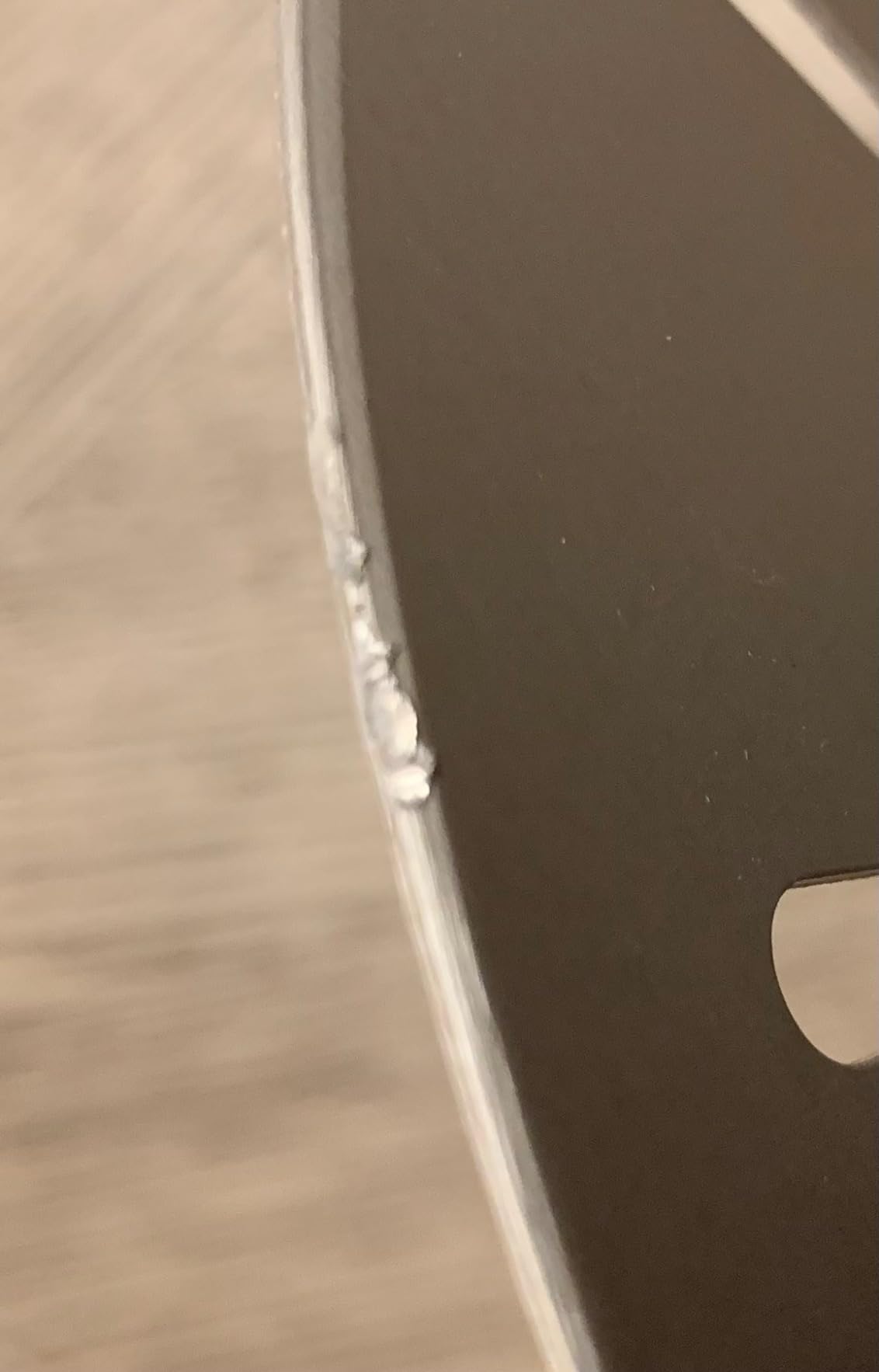
- Protective film leaves fragments near the logo
Most peels in this roundup are sized for a 12 inch pie. This one is not. A 16 x 18 inch head on a 30 inch overall length is built for large format cooking, pizza steels and the wider stones that come with bigger outdoor ovens.
The 14 gauge aluminium is thin enough to do the retrieval job properly. A thick, stiff metal head is fine for launching but tends to shove a finished pizza rather than glide under it, and this gauge is light enough to slide without flexing the crust edge.
Owners with commercial kitchen backgrounds tend to recognise the design immediately. It is the same flat sheet paddle shape used on pizzeria benches, and the whole line comes in multiple head sizes and handle lengths, so if you outgrow this one you stay in the same system.
It also works as a general serving tool for large roasts, which is a genuine bonus if you use the oven for more than pizza.
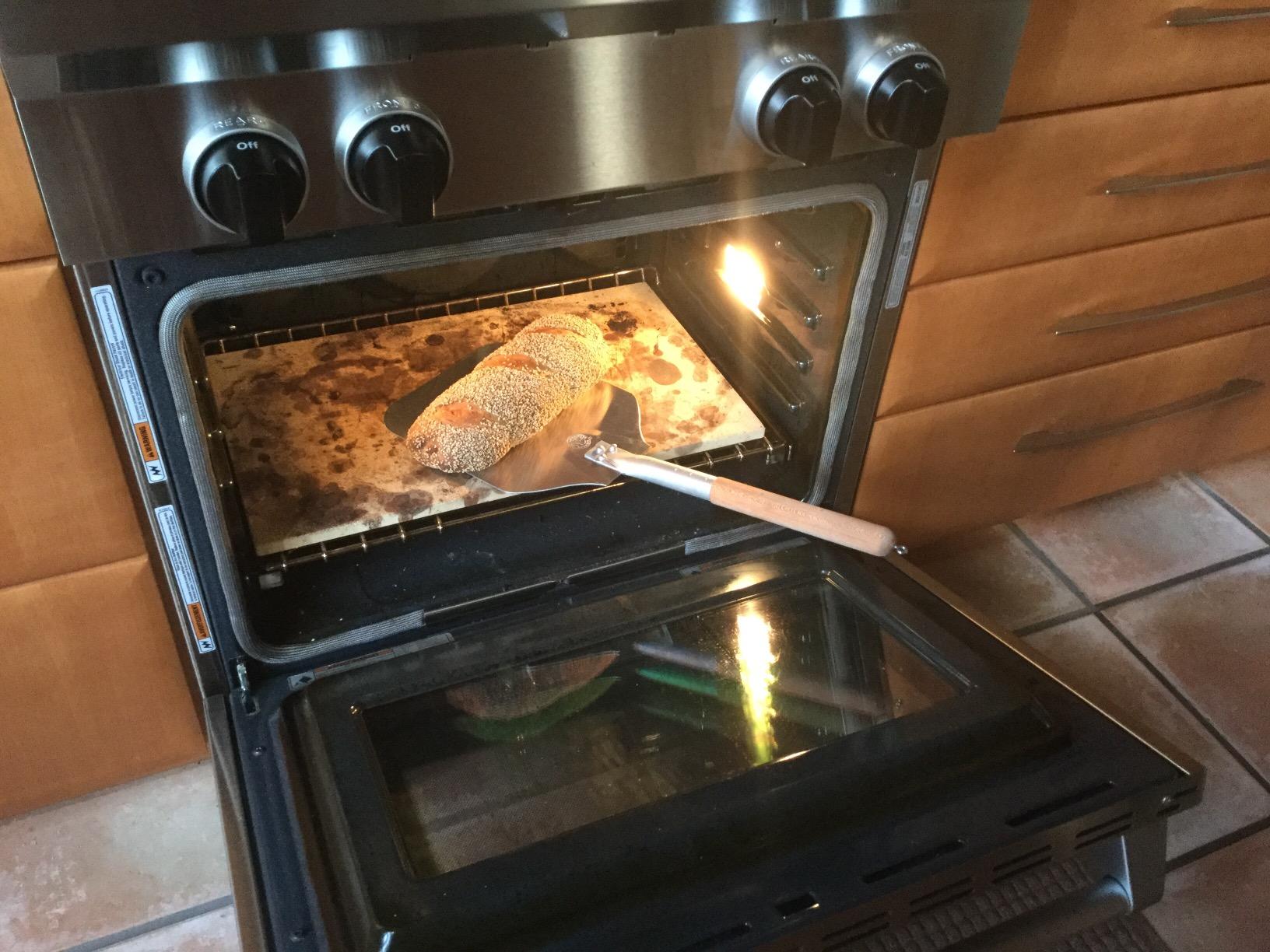
Who this large peel suits
It suits anyone with a 16 inch stone or a 16 inch pizza steel. The head gives you a proper working margin around a large pie, and the 30 inch length keeps your knuckles away from the flame on a long forward reach into a deep chamber.
It suits people who cook in volume. The sheet metal does not flex under a heavily topped pie, which is where lighter wood and thin plastic heads start to bow.
Where it falls short
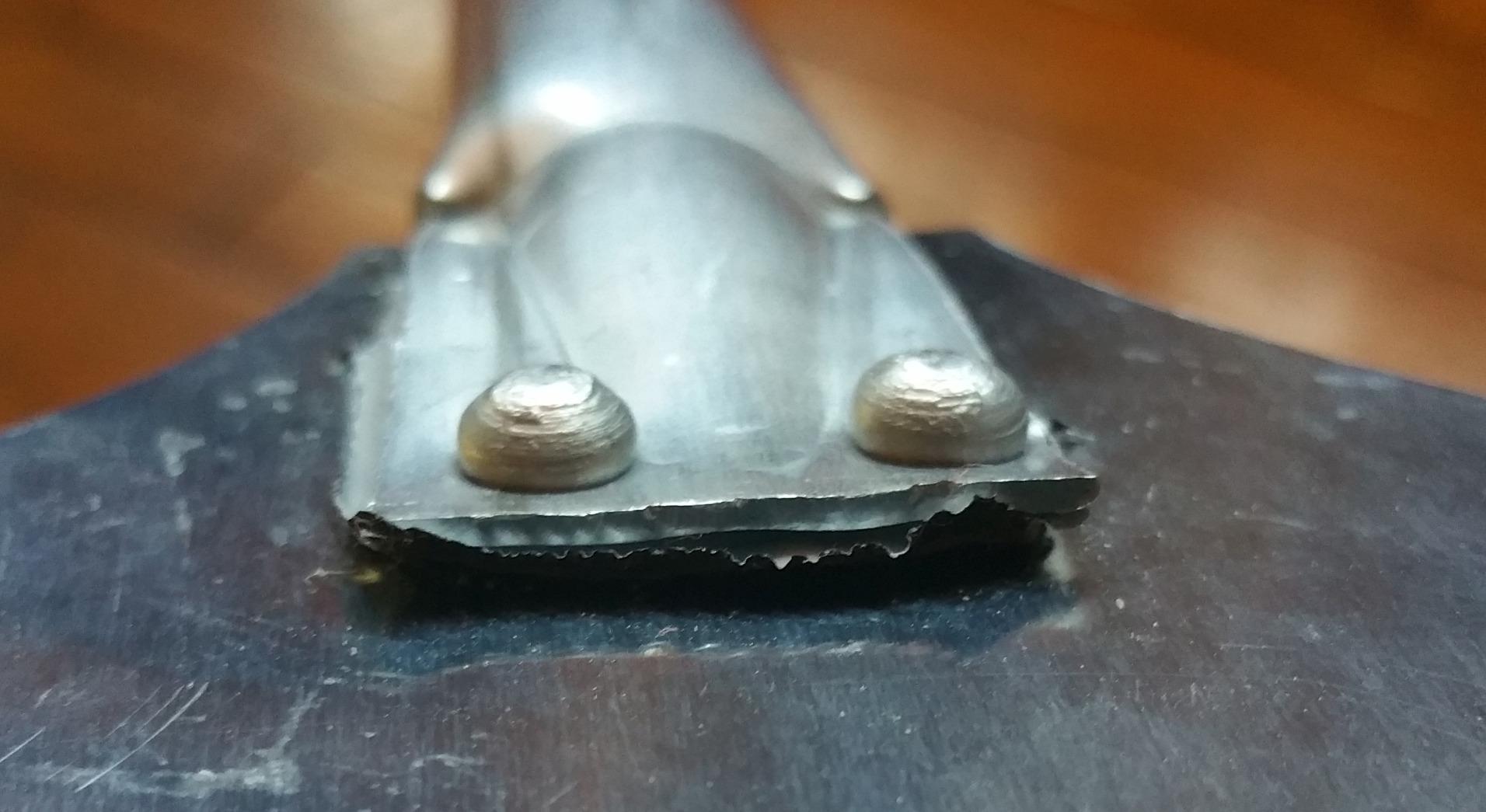
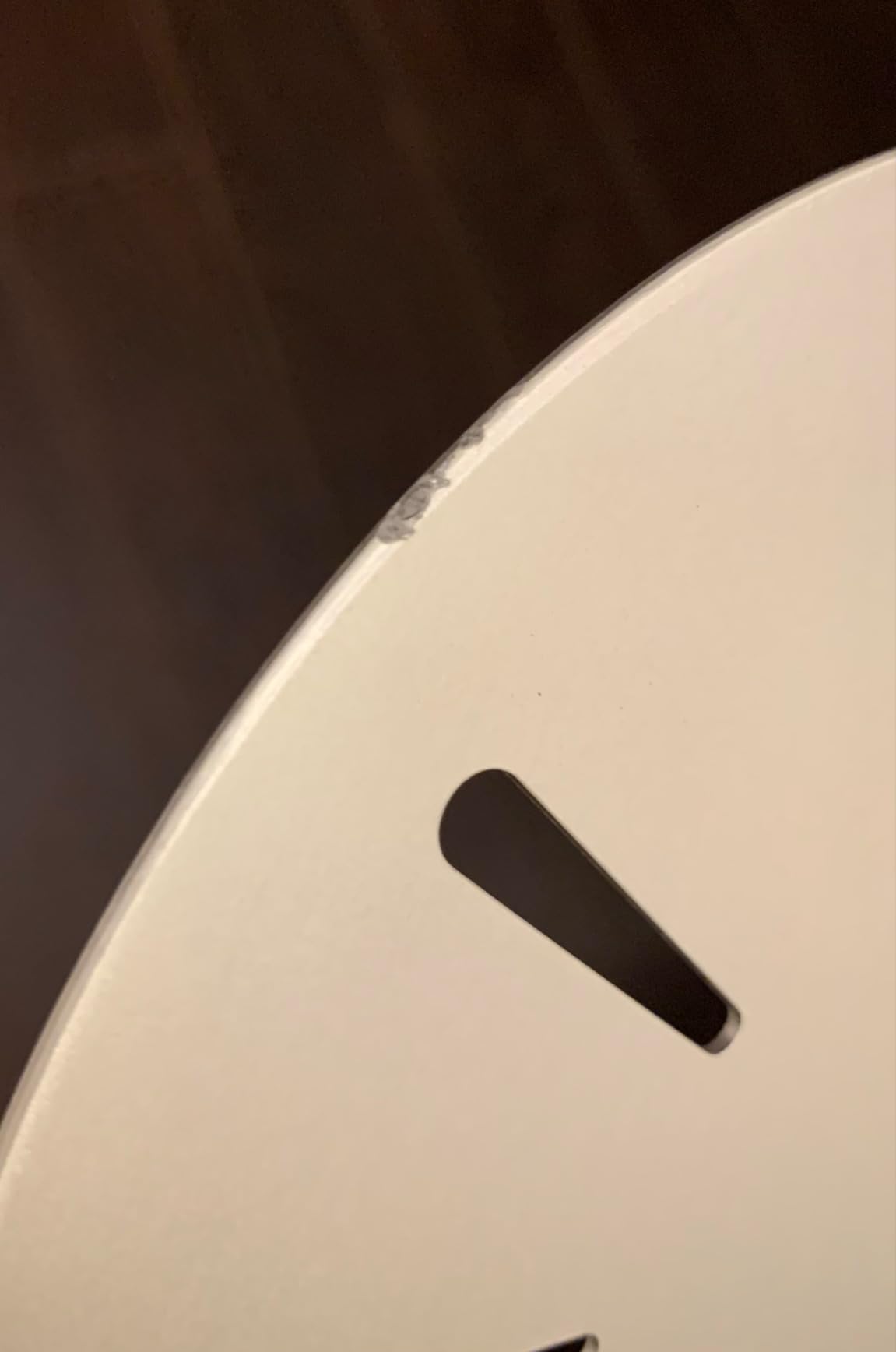
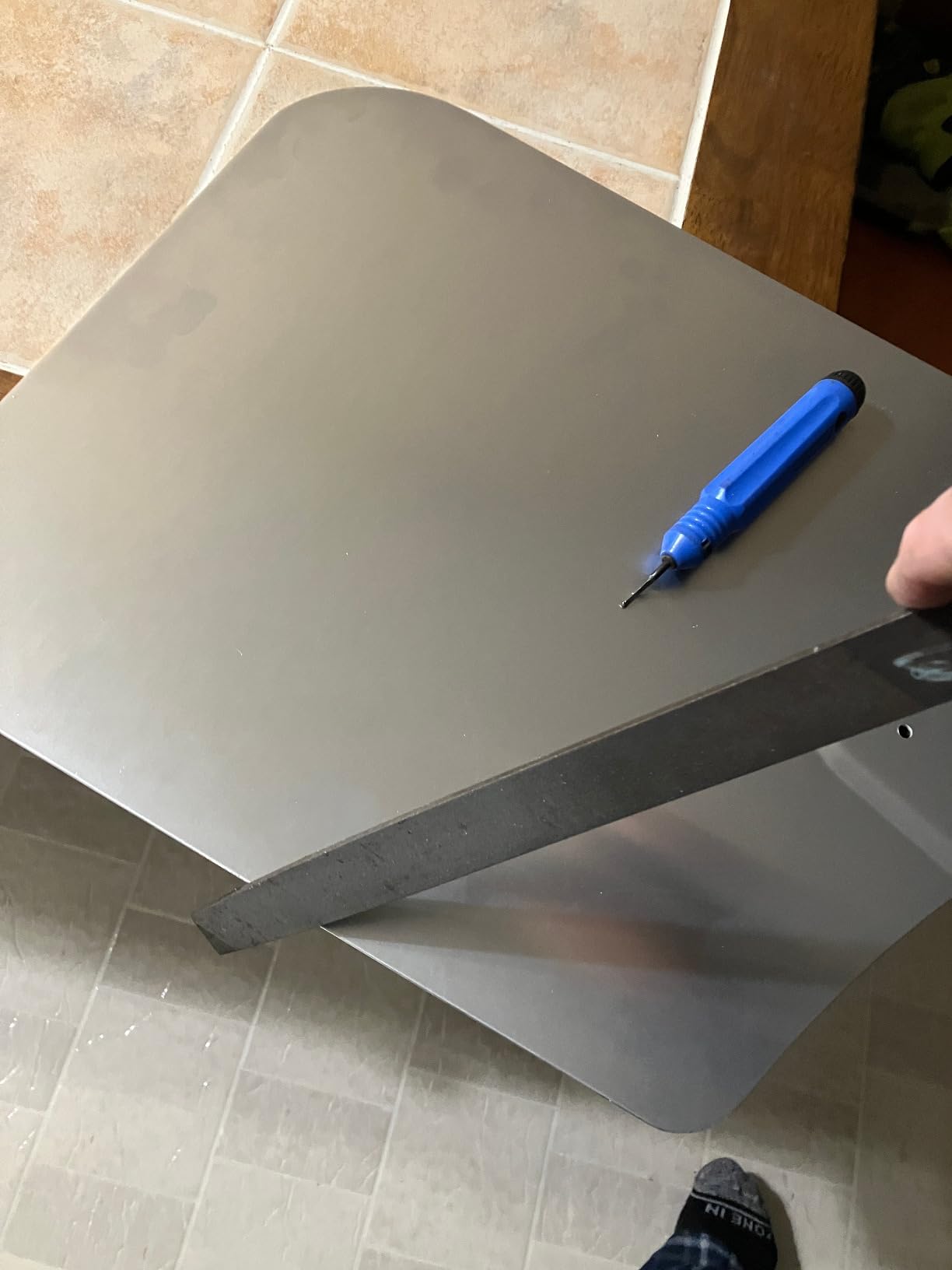
The leading edge is a straight cut with no taper. On a raw dough launch that means the front edge can catch and drag a shoulder of dough as you push forward. Smoothing the edge with a file on day one fixes it, and most owners do it, but it is a step not everyone takes.
There is also no hang hole, so this is a tool that lives in a cupboard or leans in a corner, and the shipped protective film tends to leave small fragments caught in the engraved logo.
6. OUII Aluminum Swivel Handle Pizza Peel – The Best for Retrieval

OUII Aluminum Pizza Peel Metal – 12 x 14 Inch. Pizza Spatula for Oven with Foldable Wood Handle. Pizza Oven Accessories Tools. Turning Peel, Bread, Pastry, Dough, Cake Spatula
Aluminum 2mm
12 x 14 in head
25 in extended
Twist off knob
Pros
- Slim 2mm plate slides under cooked pizza easily
- Swivel and lock handle extends to 25 in
- Knob unscrews by hand for cleaning
Cons
- Not dishwasher safe and aluminum discolors
- Handle bolt can loosen after a few uses
- Not built for rotating pies mid cook
The thinnest plate in this group is the story here. At 2mm the aluminium is still rigid enough not to bend under a fully loaded 14 inch pizza, but it is thin enough to slide under a finished crust almost without resistance, which is exactly what retrieval demands.
Retrieval is the step most people rush. A thin edge gets under the base, the pizza stays flat, and nothing shifts. A thick edge shoves, the near side lifts, and the toppings walk toward the edge of the pie.
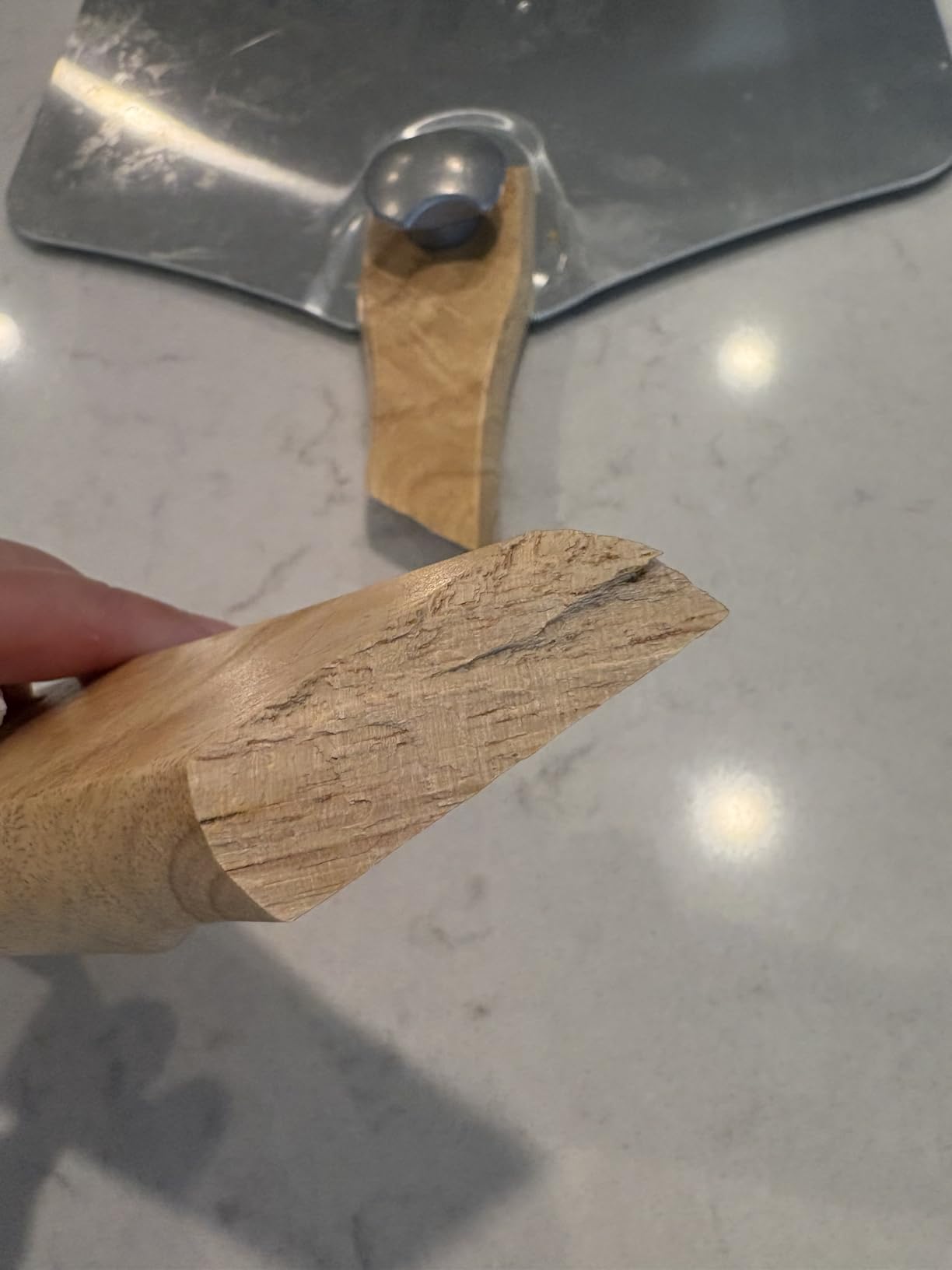
The swivel and lock handle is the clever part. It twists to a fixed 25 inch extension for safe reaching into a hot chamber and folds flat when you are done, and a groove in the wood keeps it from rotating mid-transfer, which is a small detail that prevents a real accident.
The knob at the handle end unscrews by hand with no tools, so you can wash the wood section separately and keep the joint from trapping water and grit.
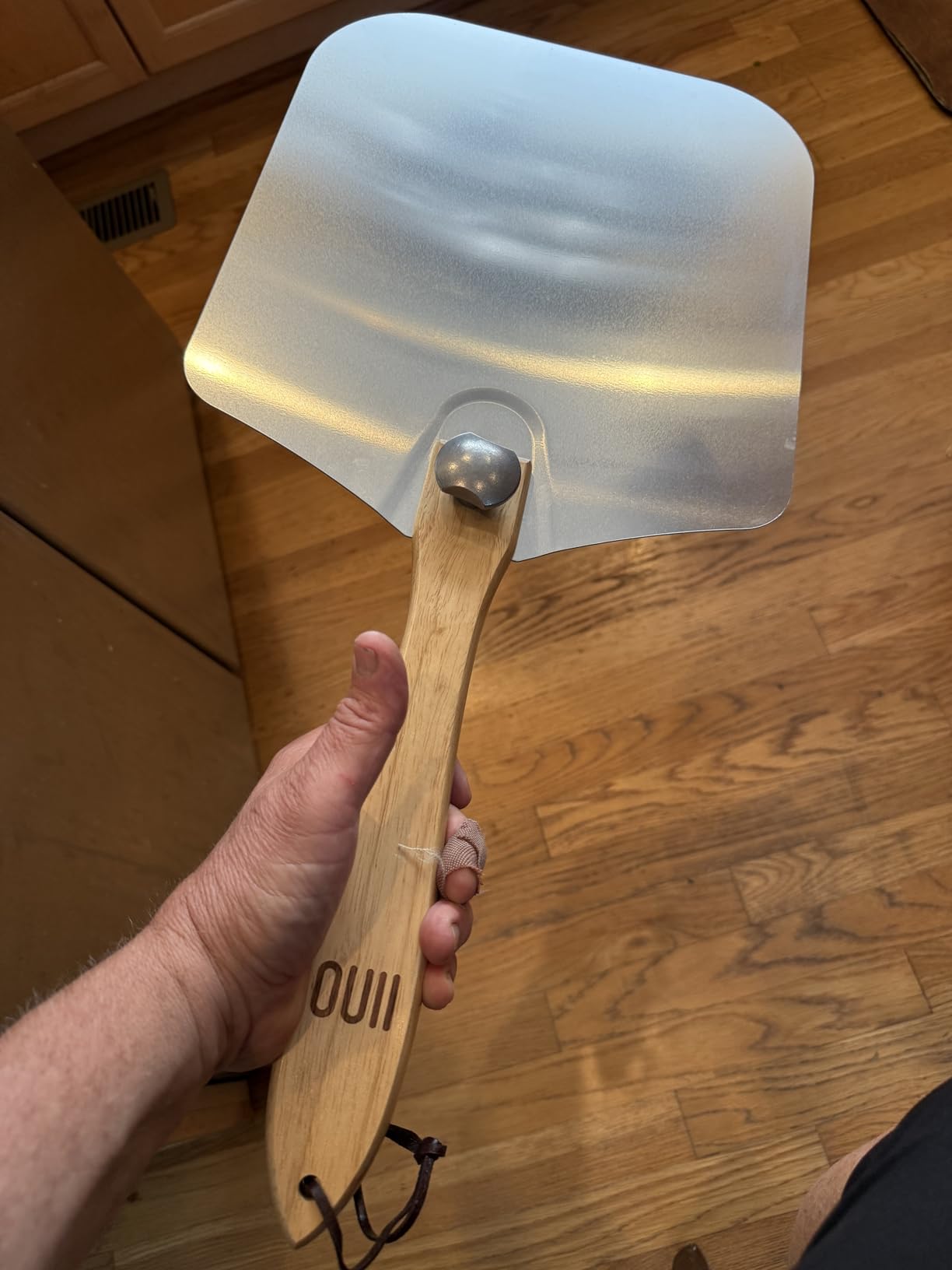
Who this thin peel suits
It suits owners of 12 inch home pizza ovens, and buyers with an Ooni Koda 12 in particular mention it as a natural fit. The 25 inch extension gives enough clearance to reach the back of the stone without leaning over the mouth.
It also suits anyone who values a compact tool. Folded, it is a small flat object that lives in a drawer rather than leaning against a wall for eleven months of the year.
Where it falls short
Do not put it in the dishwasher. Unprotected aluminium oxidises and discolours with heat and detergent cycles, and owners who try it report a permanently dulled, blotchy head.
It is also a two-piece tool, and the handle bolt can work loose after a few uses. Check it before a service rather than during a launch, and the swapping of parts to a metal-only peel is not worth the trouble for turning duty.
7. Chicago Brick Oven Detachable Handle Pizza Peel – The Best for Long Reach

Chicago Brick Oven 12 x 14 Aluminum Pizza Peel with Detachable Handle
Aluminum
12 x 14 in head
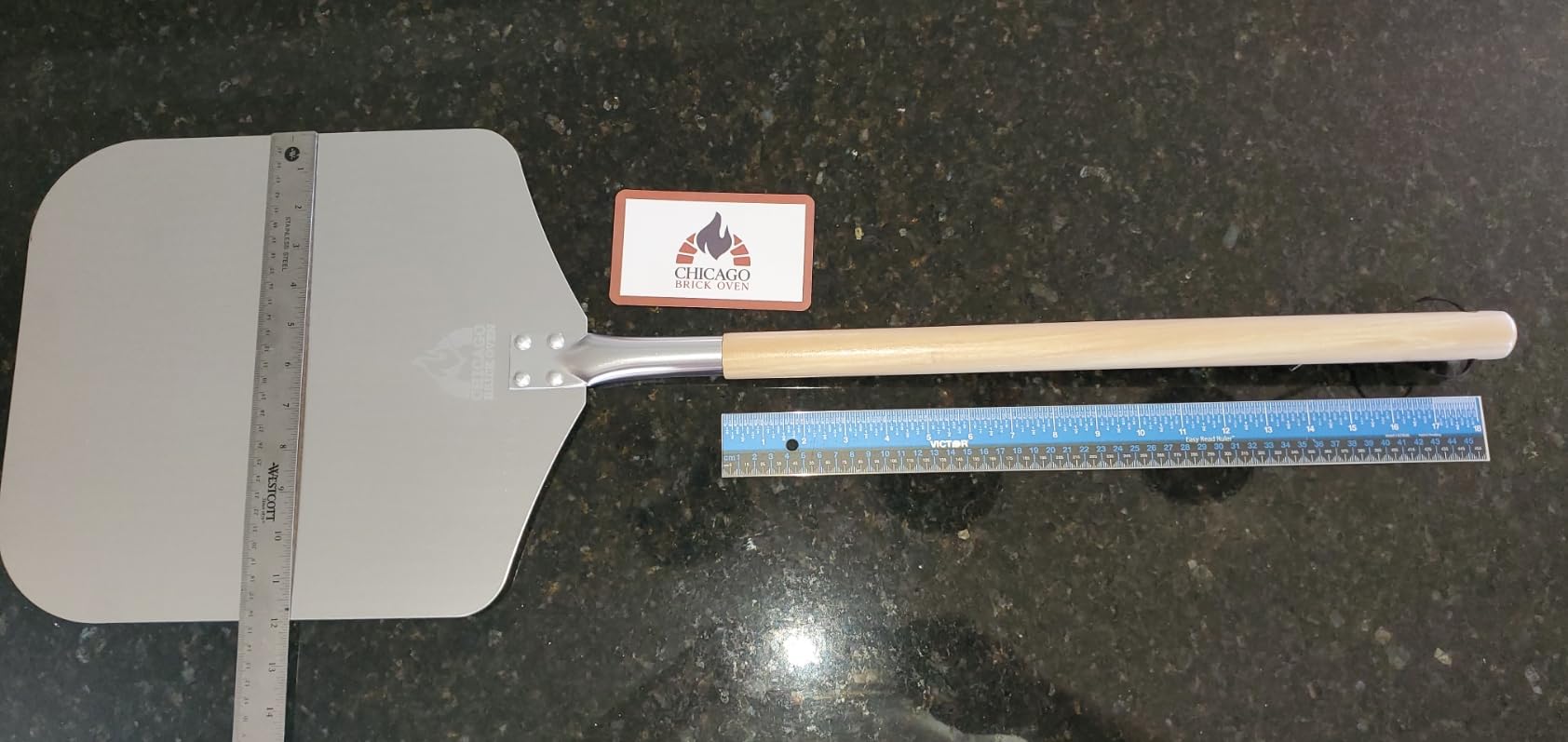
35.5 in overall
Leather strap
Pros
- Longest overall reach in the group at 35.5 in
- Detachable 21 in wooden handle for storage and cleaning
- Leather strap included for hanging
Cons
- Very long overall length is unwieldy in small kitchens
- Two piece joint adds a point that can work loose
- Aluminum catches dough if not floured
Thirty-five and a half inches of overall length changes how you work. That extra reach means you can stand further back from a wood fire, rotate a pie in a deep chamber and reach the back corner of a large stone without putting your forearm into the radiant heat.
For a 1000°F oven, reach is a safety feature rather than a convenience. Every extra inch between your hand and the flame is a margin you will be glad of on a long cook.
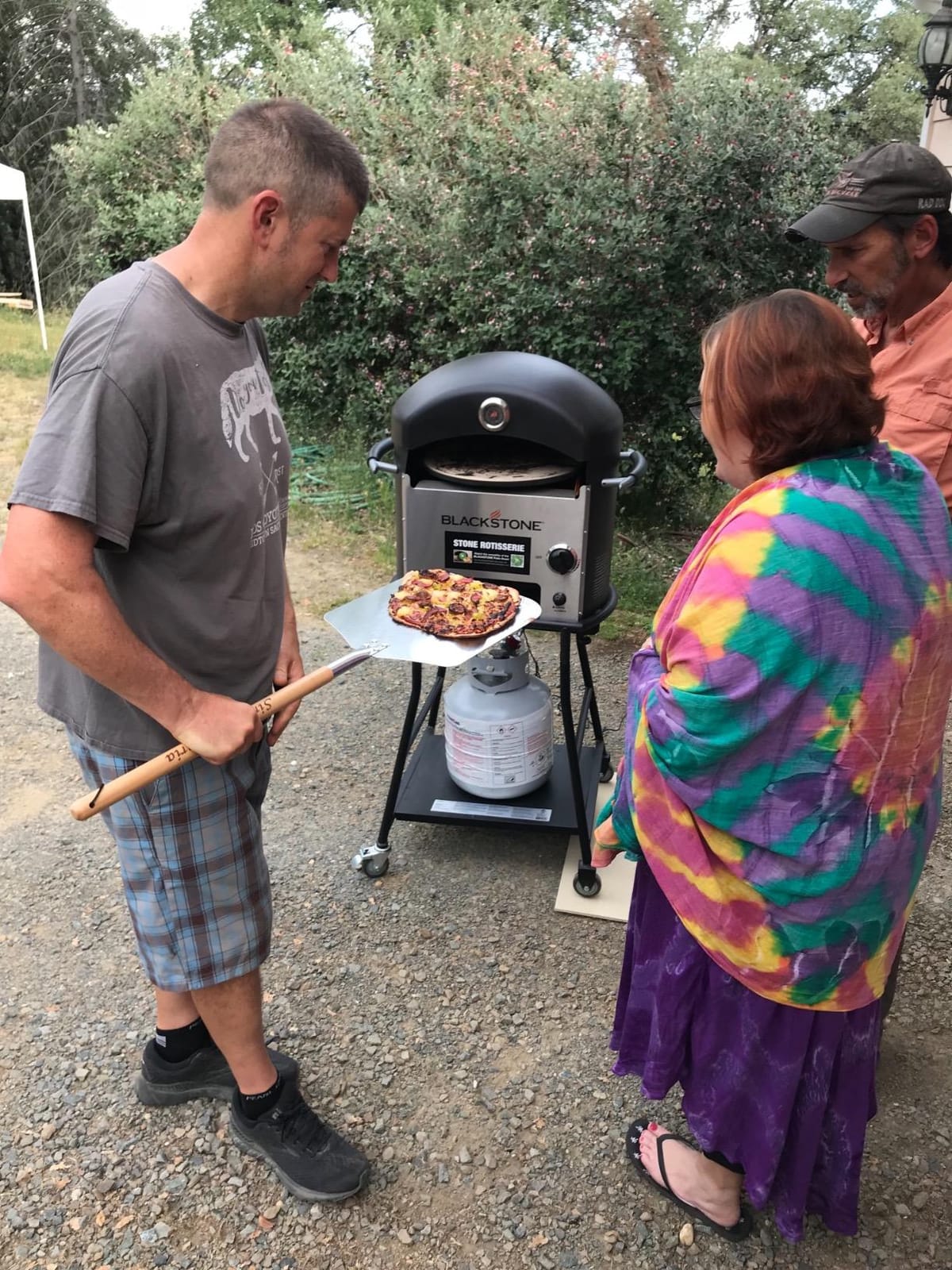
The head itself is a 12 x 14 inch aluminium panel with a tapered edge and rounded corners. Both details are there for a reason. The taper gets under a crust, and the corners will not dig into your hand or catch the oven mouth when you are aligning the peel on the way in.
The 21 inch sanded wooden handle detaches completely, and a leather strap is included for hanging it on a wall hook once the season ends. Smooth aluminium does not absorb smells, which matters if you also move bread and pastry on the same tool.
Who this long peel suits
It suits owners of deep wood fired chambers and anyone cooking close to an open flame. The reach is the feature, and it is the feature you will notice most on the first cook and appreciate most on the twentieth.
It also suits people who want a genuine second tool rather than a duplicate. A 35.5 inch retrieval peel and a short wooden launcher make a clean two-peel system with completely different strengths.
Where it falls short
The length is genuinely awkward inside a house. Unless you detach the handle, 35.5 inches does not fit a normal cabinet, and a tool that lives on the sofa is a tool that gets lost.
The detachable joint is also a second connection point, and joints are where these tools fail. The aluminium head also needs flouring or semolina on every single launch, because bare metal will catch dough.
8. Ooni 7 Inch Perforated Pizza Turning Peel – The Best Turning Peel
ooni Pizza Turning Peel – 7 Inch Aluminum Perforated Pizza Peel, Lightweight Metal Pizza Turner with Long Handle, Pizza Tools, Pizza Oven Accessories
Anodised aluminum
7 in perforated head
31.5 in overall
Nylon handle
Pros
- Perforations shed excess flour for a crisper base
- Anodised surface slides under pizza with minimal sticking
- Lightweight nylon handle reduces wrist fatigue
Cons
- Turning peel only so a separate launcher is required
- 7 in head rotates a pie but will not lift it
- Highest priced tool in this roundup
This is the tool that turns a good pie into an even one. In a very hot chamber the front of a pizza cooks far faster than the back, and a 30 to 35 degree rotation every 30 seconds is the only way to get a uniformly coloured base without pulling the pie out and putting it back.
A 7 inch perforated head is small on purpose. It fits under a crust edge in a tight space, rotates the pie while the base stays in contact with the stone, and the perforations let excess flour fall away instead of dusting onto the stone and burning into smoke.
Anodised aluminium gives the smoothest release surface in this roundup. It behaves like a non-stick coating without being one, so there is no coating to scratch and no coating to degrade. The 31.5 inch overall length keeps your hand well back from ultra-high temperatures.
The glass-reinforced nylon handle is the surprise. At roughly a pound for the whole tool it is light enough to spin one-handed for a full service, which is where a heavier handle starts to fatigue your wrist.
Who this turning peel suits
It suits anyone cooking in a 900°F or hotter oven, which is exactly the audience this roundup is for. At those temperatures uneven baking is not subtle, and rotation is not an optional technique.
It also suits people who have been using a full-size peel to spin and found it frustrating. A dedicated turning head is a different tool with a different purpose, and owners report the difference immediately.
Where it falls short
It is a turning peel only. It cannot launch raw dough, and you still need a wood or aluminium launcher on your bench, so budget for the second tool rather than expecting this to replace one.
Also note that perforations drop a little semolina onto the stone, which is the trade you accept for a crisper base. And at a 7 inch diameter, the head is sized to rotate a pie, not to lift one out.
9. Hans Grill PRO Perforated Pizza Peel – The Best Perforated Launcher

Hans Grill Pizza Peel PRO, Perforated Metal Non-Stick Paddle 12 Inch
Anodised aluminum
14.96 in square head
Beechwood handle
Perforated
Pros
- Perforations let excess flour fall before launching
- Tapered edge makes lifting a cooked pizza easier
- Handle unscrews for compact storage
Cons
- Some users still see sticking with very wet dough
- Handle screw joint can loosen with repeated use
- Anodised finish can discolor over time
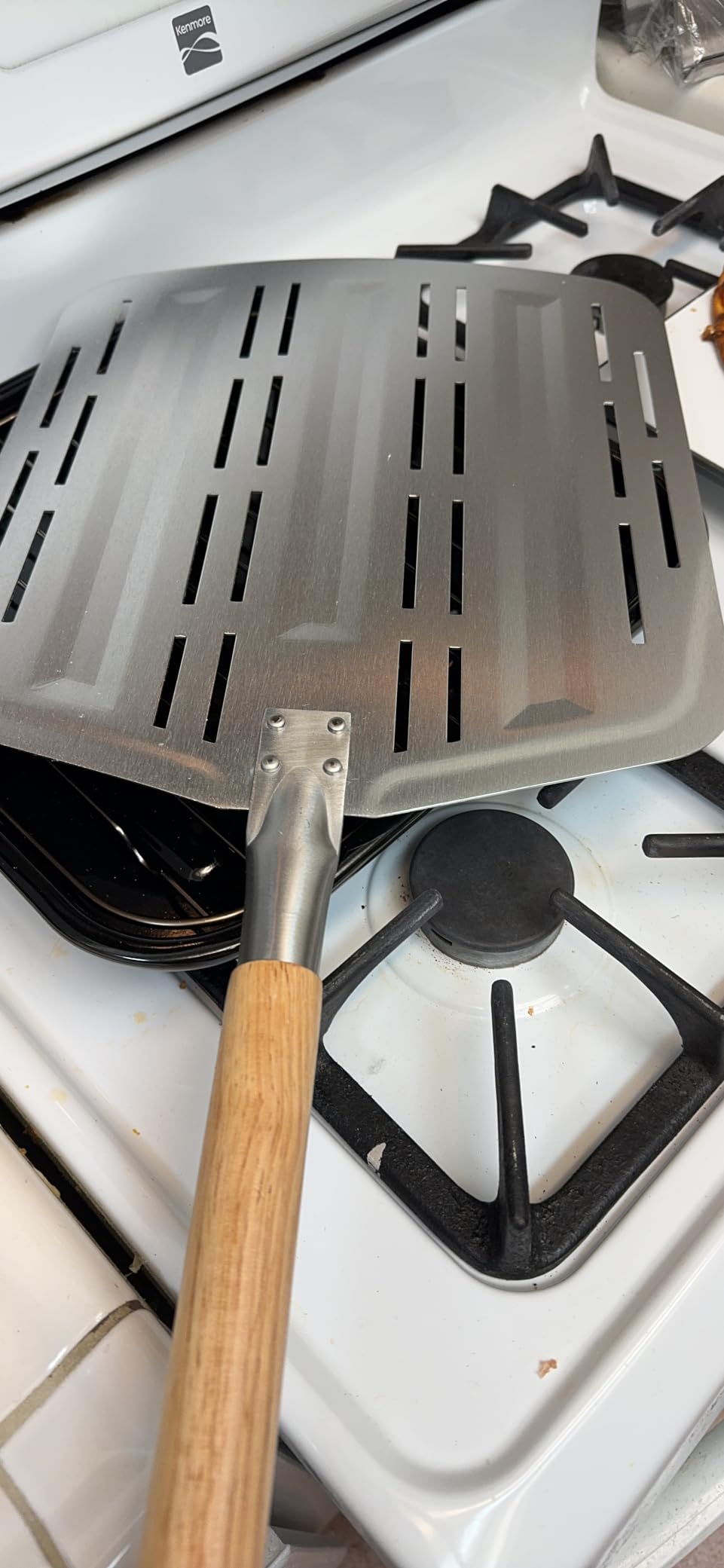
The Hans Grill PRO is the rare peel that both launches and turns. A roughly 15 inch square anodised aluminium head gives you a generous working area for a 12 inch pie, and the perforations let semolina fall away before the dough ever meets the stone.
That perforation is the whole reason to choose it over a solid aluminium launcher. Loose flour carried into a 800°F oven turns to smoke within seconds and can settle on the pizza as a bitter dusting, and a slotted head simply drops it where you are standing.
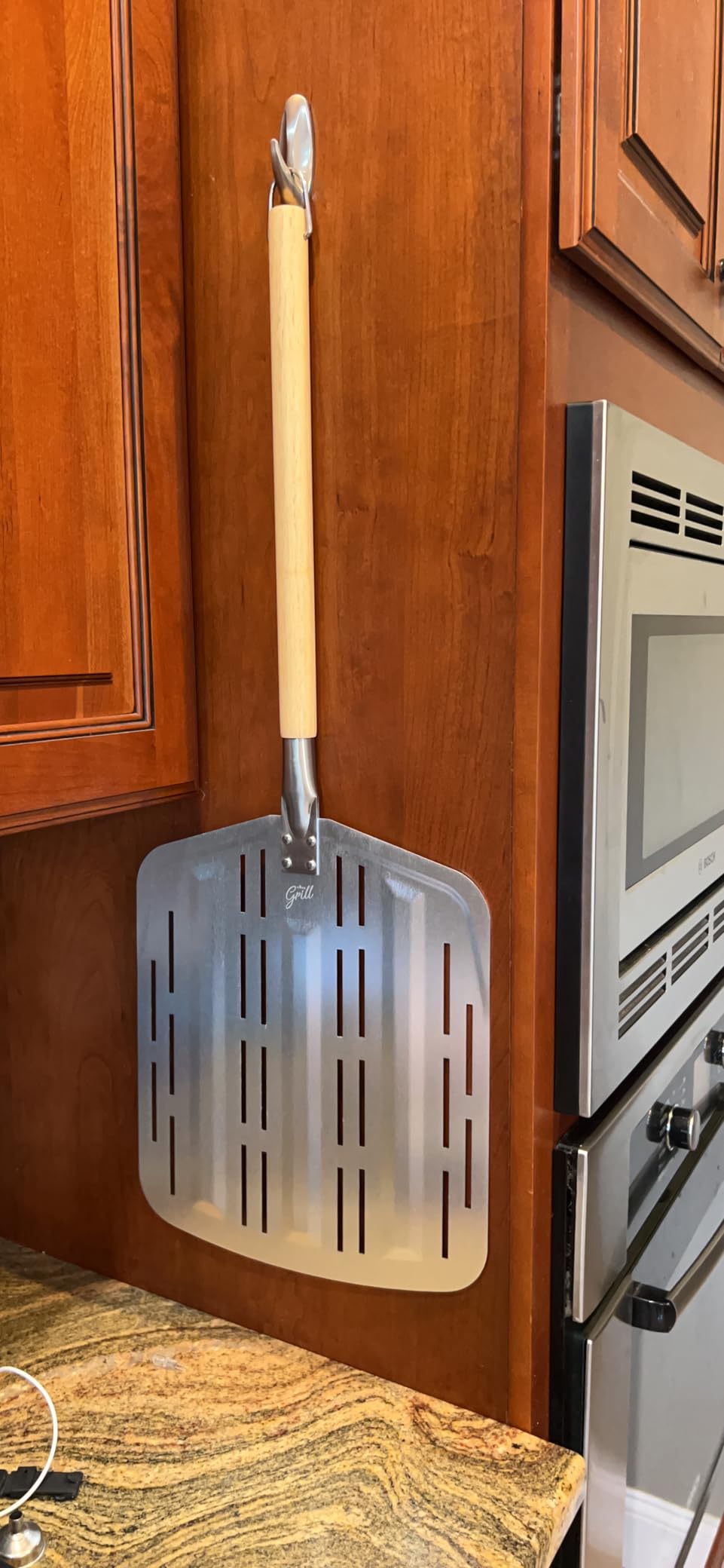
The tapered metal edge is knife-like and does an excellent job of getting under a finished pizza for retrieval. The beechwood handle is turned rather than flat, so it sits in the palm and gives you real leverage when you are pushing a heavy pie forward off the blade.
The handle unscrews for storage, which is the feature that separates this from a fixed-head design. A peel you can break down fits in a drawer; a peel you cannot, leans against a wall until next summer.
Who this perforated peel suits
It suits 12 inch and larger pizza cooking on home ovens where the stone runs hot enough that flour left on the surface would smoke. Owners who had launch failures on cheaper aluminium peels tend to land here.
It also suits anyone who wants to own a single tool rather than a pair. You can build on it, launch on it, rotate with the front edge and retrieve with the taper.
Where it falls short
Perforations cut both ways. Some users still get sticking on very wet, high-hydration dough, and the holes mean a heavier dusting is needed, which defeats some of the point if you prefer a light hand with flour.
As with most two-piece tools, the handle screw joint can loosen after repeated assembly. And the anodised finish is not indestructible, so expect some wear and discolouration on a tool that lives near a fire.
10. onlyfire Nonstick Aluminum Pizza Peel – The Best for Grill and Oven

onlyfire 12″x14″ Metal Pizza Peel – Aluminum Paddle, Wood Handle, 28″ Long
Nonstick aluminum
12 x 14 in head
28 in overall
Rated to 700 F
Pros
- Thin nonstick head transfers better than wood
- Holes in the handle allow wall hanging
- Rated for high heat up to 700 F
Cons
- Aluminum needs flouring or semolina every use
- Head is smaller than the overall length suggests
- Surface shows water spots and needs hand washing
The onlyfire is the pick for people who cook pizza on more than one appliance. A thin nonstick aluminium head works on an outdoor grill, a kamado and a home oven with the same technique, and the 700°F rating covers the range where most of us actually cook.
Compared with wood, the head is thinner and smoother, so a pie slides off with less of a forward shove. That is the single biggest upgrade people notice when they move from a wooden peel to a metal one.
The 10 inch wooden handle does the important work of keeping heat off your hand and arm, and it is drilled with holes so the peel hangs on a wall hook or over the side of a grill rather than occupying shelf space.
Be clear about the proportions. The placing surface is 12 by 14 inches within a 28 inch overall length, so the head is smaller than the total length suggests. If your stone is 14 inches, your margin is thin.
Who this grill-friendly peel suits
It suits households that use a grill for pizza in the summer and an oven the rest of the year, and it doubles as a transfer tool for bread, pies and cookies, which owners mention often enough to be a real pattern rather than a nicety.
It also suits anyone who wants a peel that hangs rather than sits in a cabinet.
Where it falls short
Bare aluminium will catch dough every single time. There is no coating to forgive you here, so the surface needs semolina or flour on every launch, and a head that looks clean is not ready to use.
The 700°F rating is honest but it is not unlimited, and the hand wash requirement is real. Water spots appear on the surface and there is no dishwasher cycle to fall back on.
11. Honsdom 8 Inch Pizza Turning Peel – The Best Compact Turner

Pizza Turning Peel, 8-inch Pizza Peel Turner Spinner with Non-Slip Long Handle & Silicone Hanging Hook, Essential Pizza Oven Accessories for Outdoor & Indoor Baking, Even Crispy Crust Every Time
Hard anodized aluminum
8 in round head
24.8 in overall
10.5 oz
Pros
- Compact round head maneuvers inside tight ovens
- Weighs about 10.5 oz for easy wrist control
- Silicone hook hangs on an oven rack or tool stand
Cons
- 8 in diameter is too small for larger pizzas
- Turning only so a launching peel is required
- Handle assembly needs three screws tightened
At 10.5 ounces this is the lightest tool we used, and lightness is what makes rotation precise. A round 8 inch head fits under a crust edge in a chamber too tight for anything larger, and the low mass means you can nudge, check and correct without disturbing the pie.
The hard-anodised aluminium is sandblasted for a corrosion-resistant finish, and the perforations release flour and steam so the underside of the base dries the way it should in a hot oven.
The integrated silicone hook is the detail that gets noticed. It hangs on an oven rack, a tool stand or a kitchen hook, so a small tool does not disappear into a drawer between cooks, and the non-slip handle grip gives you real leverage when a topped pie needs lifting.
Owners with Ooni Koda 12 and Koda 2 ovens describe it as the tool that finally let them rotate a pie in a tight chamber, sized to work with anything from a 6 inch pizza up to a 24 inch one.
Who this compact turner suits
It suits owners of small and mid-size home pizza ovens, especially anyone who found a full-size peel would not fit in the chamber. The compact round head is the entire point, and it does that job well.
It also suits people who cook on a cart or a small patio setup where a hanging tool matters more than a large one.
Where it falls short
It cannot launch. The head is far too small to carry raw dough, so it is a companion to a launcher rather than a replacement for one, and that is worth being clear about before you buy.
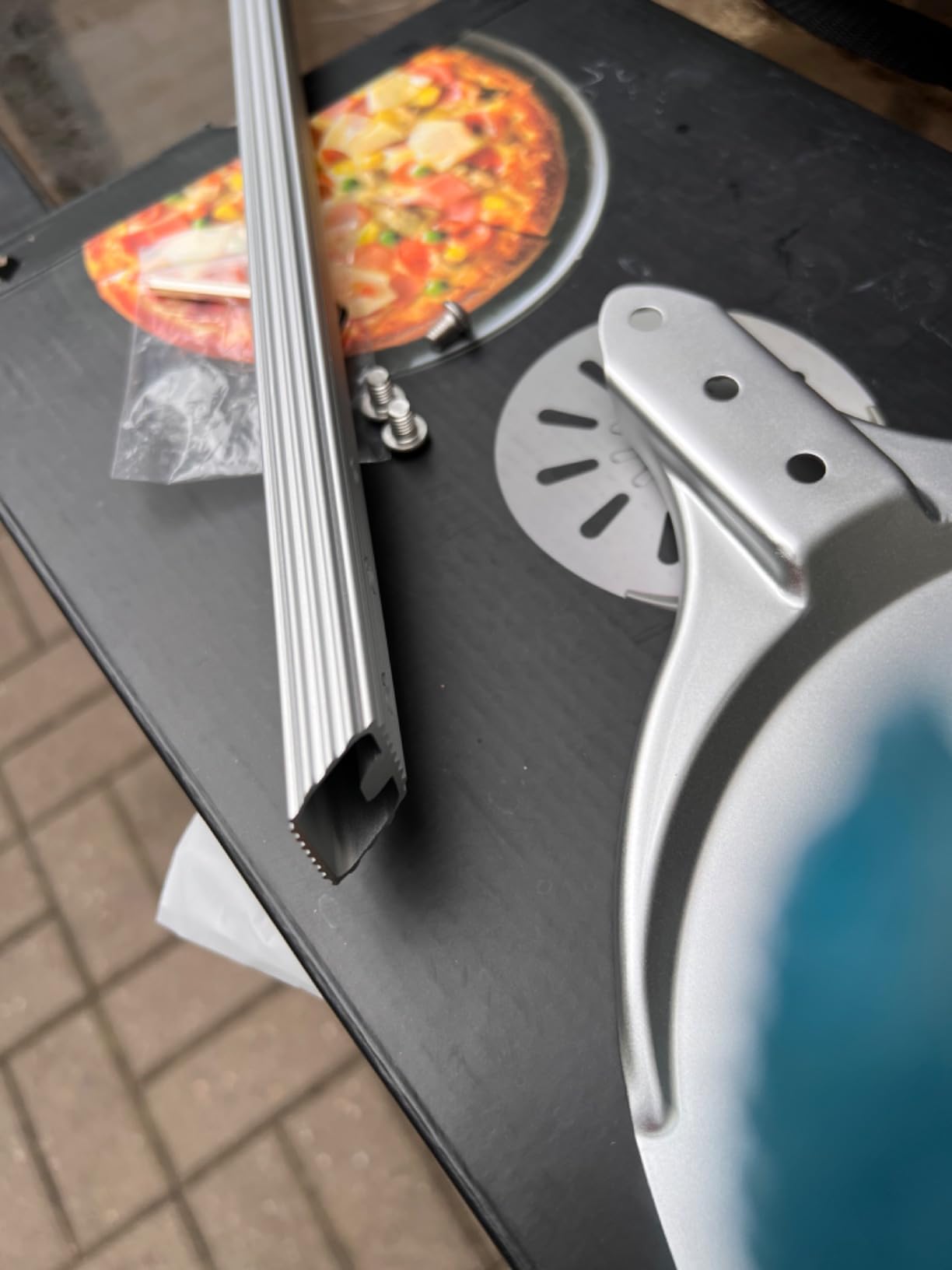
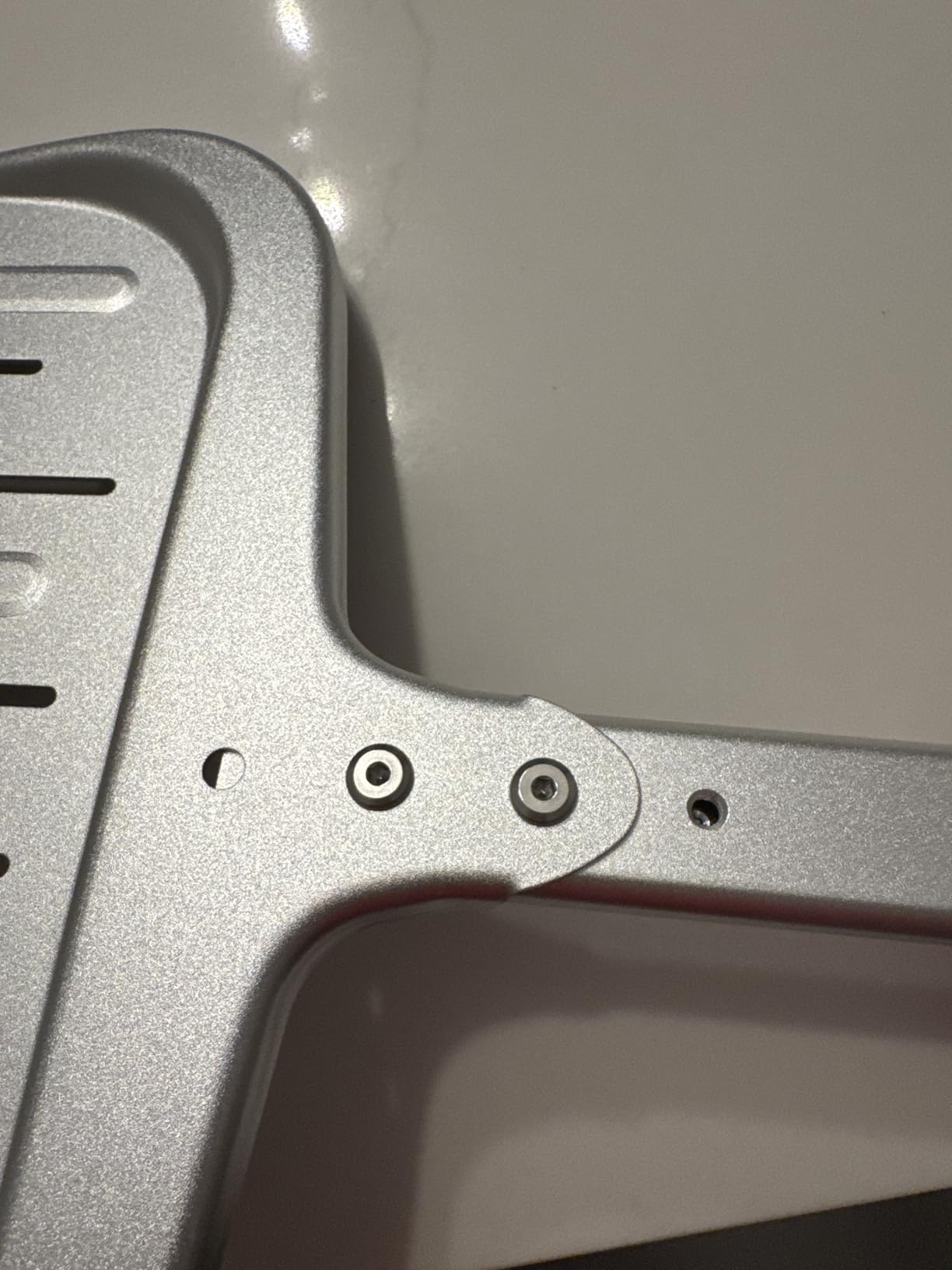
It is also manual only. A few buyers expected something that spins the pizza on its own, and the assembly needs three stainless steel screws tightened with the included hex wrench before the first use.
12. Skyflame 14 x 16 Inch Aluminum Pizza Peel – The Best for Bread and Pastries

Skyflame 14-Inch x 16-Inch Aluminum Pizza Peel with Wooden Handle
Aluminum
14 x 16 in head
11 in pine handle
2200 F rating
Pros
- Large solid aluminum surface is stiff with no flex
- 11 in pine handle keeps hands back from heat
- Flannel cord makes wall storage easy
Cons
- Burrs and rough edges can catch raw dough
- Recessed nut holes make screws hard to tighten
- Handle can loosen as the nuts do not grip wood
The Skyflame is a solid sheet aluminium paddle with no perforations at all, and there is a reason some owners prefer it that way. A continuous surface has no holes for flour to fall through, so the dough stays exactly where you put it on the way in.
The 14 x 16 inch head is thick and stiff with no flex, which is what you want when you are moving a large, fully loaded pie. The 11 inch natural pine handle with a contoured middle grip holds heat off your hand and reduces vibration through the blade.
It is also the pick for anyone using the oven for more than pizza. Large loaves of sourdough come out on this head without sagging, and the same flat surface handles pastries and bread with nothing awkward about it.
A flannel cord is included for hanging, and the stated compatibility covers Uuni 3, Big Green Egg, commercial pizza ovens and similar setups. The listed upper temperature rating is far above anything a home oven reaches.
Who this solid peel suits
It suits cooks who value launch reliability over base crispness. A solid head gives you an unbroken surface to build on, and it will not shed flour onto a hot stone the way a perforated one does.
It also suits anyone whose oven is doing double duty as a bread oven, because the head is large and stiff enough to carry a full loaf without flex.
Where it falls short
Finish quality is the honest complaint here. Multiple owners report burrs and rough edges on arrival that catch raw dough, and taking 10 minutes with a file before the first launch is not optional in our view.
The handle hardware sits in recessed nut holes, which means the screws cannot be fully tightened and the joint can loosen as the nuts fail to grip the wood. Several owners also note the listing copy does not match what arrives, so check the box on delivery.
Wood or Metal: Which Peel to Use When
Wood wins for building and launching, metal wins for turning and retrieving. That single sentence answers the question most people search for, and it lines up with what owners report on the Ooni and pizza oven forums, where the build-on-wood and turn-on-metal split comes up again and again.
Wood is porous and slightly textured, which sounds like a disadvantage and is the entire point. A dough sitting on wood for the two or three minutes of the launch barely grips it, and a dusting of semolina makes the release close to effortless. Metal is smooth and non-porous, which means it releases predictably too, but only once it is floured. Both work when you dust properly.
Metal then wins on durability and precision. Aluminium and anodised aluminium do not warp at 900°F, do not splinter, and give you a thin tapered edge that slides under a finished crust rather than scooping it. That is why the metal picks dominate the turning and retrieval roles in this list.
The cost of metal is heat at the handle. A bare steel or aluminium grip conducts heat straight to your hand, so look for a wood or glass-reinforced handle if you cook near an open flame. The cost of wood is durability. Softwood warping is the most common long-term complaint from high-heat users, and one owner reported replacing a peel that warped badly enough to stop sitting flat.
Perforated or Solid: The Crust Crispness Tradeoff
Perforated wins on the underside of the crust, and solid wins on launch reliability. That is the whole argument, and neither side is wrong.
A perforated head lets excess semolina fall away before launch and vents steam from the base as the pizza cooks. Less loose flour on the stone means less smoke and a drier, crisper underside. It also means you have to dust more heavily to compensate, because some of that flour goes through the holes instead of staying under the dough.
A solid head keeps every bit of flour where you put it and gives you an uninterrupted surface to build on, which is why the Skyflame works well for beginners and for Neapolitan style dough that you do not want to slide around on.
Aluminium versus stainless steel is a smaller argument than most people expect. Aluminium is lighter and conducts heat better, so a thin aluminium blade stays workable when it is warm. Stainless steel is heavier and more rigid, and it is the better choice if you are moving heavy pizza steels rather than dough. The head size and the edge taper matter far more to your pizza than the alloy.
Measure Your Oven Opening Before You Buy a Peel
Measure the width of your oven opening at three points: the narrowest point at the front, the middle of the mouth, and the opening at the back of the chamber. A peel that clears the widest point and then catches halfway in is worse than one that is too small, because you learn that at 800°F with dough in your hands.
Then subtract. You want at least 1 to 2 inches of clearance on each side between the peel head and the oven walls, and you need that clearance at the back of the chamber, not just at the entrance. A 14 inch peel in a 27.5 inch oven is tight enough that you should check whether it catches the fire at the corners.
Match the head to the stone, not the other way around. A 12 inch stone wants a 12 to 14 inch head, a 14 inch stone wants 14 to 16 inches, and going wider than the opening allows is the single most common sizing mistake we see.
Finally, check the total length against your reach. A 24 inch peel is comfortable for a countertop oven, while a deep wood fired chamber really wants 30 inches or more so you can work without leaning over the mouth.
How to Stop Dough Sticking to a Peel
Dough sticking is a technique problem before it is a product problem, and the fix is the same on wood and metal. Work through these in order and the sticking stops.
- Dust the head before the dough goes on, not after. Use semolina or a fine rice flour blend rather than all-purpose flour, which hydrates and turns to paste. Cornmeal works, but it can taste bitter if it burns on a hot stone.
- Shake off the excess. You want a thin matte layer, not a visible dusting. Heavy flour is what falls through perforations and smokes in the oven.
- Move the dough constantly. A pie left sitting on the peel for more than two or three minutes will start to grip, especially on a solid metal head.
- Use a quick forward sh sh sh motion. Push in short bursts rather than one long slide, so you can feel the resistance drop before the dough is halfway off.
- Keep a second tool warm and dry. Flour that has absorbed moisture from a previous pie will not work. A dry spare peel head, or a scrap of parchment for the first launch, saves a lot of pies.
If you are on a perforated head and still fighting sticking, the problem is usually a wet dough rather than the peel. Very high hydration dough needs more semolina and a faster launch, or a brief rest after shaping so the surface dries.
Pizza Peel Buying Guide: The Nine Things That Matter
Head size comes first. It is the one number you cannot work around, and it should be 1 to 2 inches wider than the pizza you intend to cook on both sides.
Overall length comes second, and it is a safety measure. Longer means more distance between your hand and the radiant heat of a stone or an open flame, which is worth paying for if you cook at 900°F or above.
Material decides the job. Basswood and bamboo for launching, aluminium or stainless steel for turning and retrieval, and anodised aluminium if you want a non-stick release without a coating that can degrade.
Edge taper is the detail most people skip and every cook notices. A tapered front edge slides under a finished pizza. A straight cut pushes it. File a straight edge once and the problem goes away.
Weight matters for one-handed work. Something around one to one and a half pounds is manageable for a full service, while a very light turner under 12 ounces gives you the control to rotate precisely.
Handle design is a heat question. Wood, pine, beech or glass-reinforced nylon keeps heat off your hand. Bare metal does not, and in a hot chamber you will feel it.
Storage decides whether you keep using the tool. A folding handle, a detachable handle, a hang hole or a hanging strap means the peel survives the off-season in a drawer or on a hook instead of migrating behind the grill.
Care instructions are the last one people read and the first they regret. Dishwasher safe aluminium is genuinely convenient, but hand-washed aluminium and unfinished wood both need a little discipline to stay in good condition.
Bundles and sets are worth it only when the pieces are complementary. A peel plus a turning peel plus a cutter is a genuine saving. A set of two near-identical launches is just paying extra for a duplicate, and a single well-chosen peel is the better buy.
If your peel setup is still incomplete, our guides to the best countertop pizza ovens for indoor use and the best stand mixers for bread and pizza dough cover the rest of the chain from oven to dough.
Frequently Asked Questions
Which pizza peel is the best?
The best pizza peel for outdoor ovens is the New Star basswood paddle, which pairs a 14 x 16 inch tapered head with a light 426 g weight for launching. Most owners pair it with a small perforated metal turner, such as the Ooni 7 inch model, for rotation and retrieval. One peel can do both jobs, but two tools give you better control.
What is better, a wood or metal pizza peel?
Wood is better for building and launching dough, because its slightly porous surface releases a pie with only a light dusting of semolina. Metal is better for turning and retrieving, because a thin tapered aluminium edge slides under a finished crust and does not warp at 900 degrees. The common setup is a wood launcher plus a metal turner.
Which is better, aluminum or stainless steel pizza peel?
Aluminium is lighter and conducts heat well, so a thin blade stays workable when warm, which suits launching and retrieval. Stainless steel is heavier and more rigid, and it is the better choice for moving heavy pizza steels. For most outdoor oven cooks the difference in the alloy matters far less than head size and edge taper.
Why is my pizza sticking to my pizza peel?
Sticking is usually technique, not equipment. Dust the head with semolina before the dough goes on, shake off the heavy excess, and launch within two or three minutes. A solid metal head needs more flouring than wood because it has no porosity to grip. On a perforated head, dust more heavily because some flour falls through the holes.
Are you supposed to oil a pizza peel?
A light coat of food-grade mineral oil on a wooden peel helps it resist drying and cracking, and it will not burn off at oven temperatures. Do not oil metal peels, and do not use cooking oils or butter, which turn to smoke on a hot stone. Unfinished wood also benefits from a light sanding on arrival to remove rough spots.
Can a pizza peel stay inside the oven?
No. Peels are tools for moving food, not for cooking with. Leaving a peel in a hot chamber damages the handle, warps the head and makes the next launch unpredictable. Aluminium and stainless steel heads tolerate high heat for the seconds they need, but heat ratings vary, so check the stated limit and never exceed it.
Our Final Pick for Outdoor Pizza Ovens in 2026
Buy the New Star basswood peel if you own one outdoor oven and want a single tool that launches well and lasts years of regular use. Buy the Chef Pomodoro aluminium instead if you want less weight, a folding handle and a backstep that makes transfers more forgiving.
Whichever launcher you choose, add a small perforated turner. The Ooni 7 inch model is the best rotation tool we used, and the Honsdom 8 inch is the lighter and cheaper alternative. Those two decisions cover the best pizza peels for outdoor ovens in 2026 without buying anything redundant.