
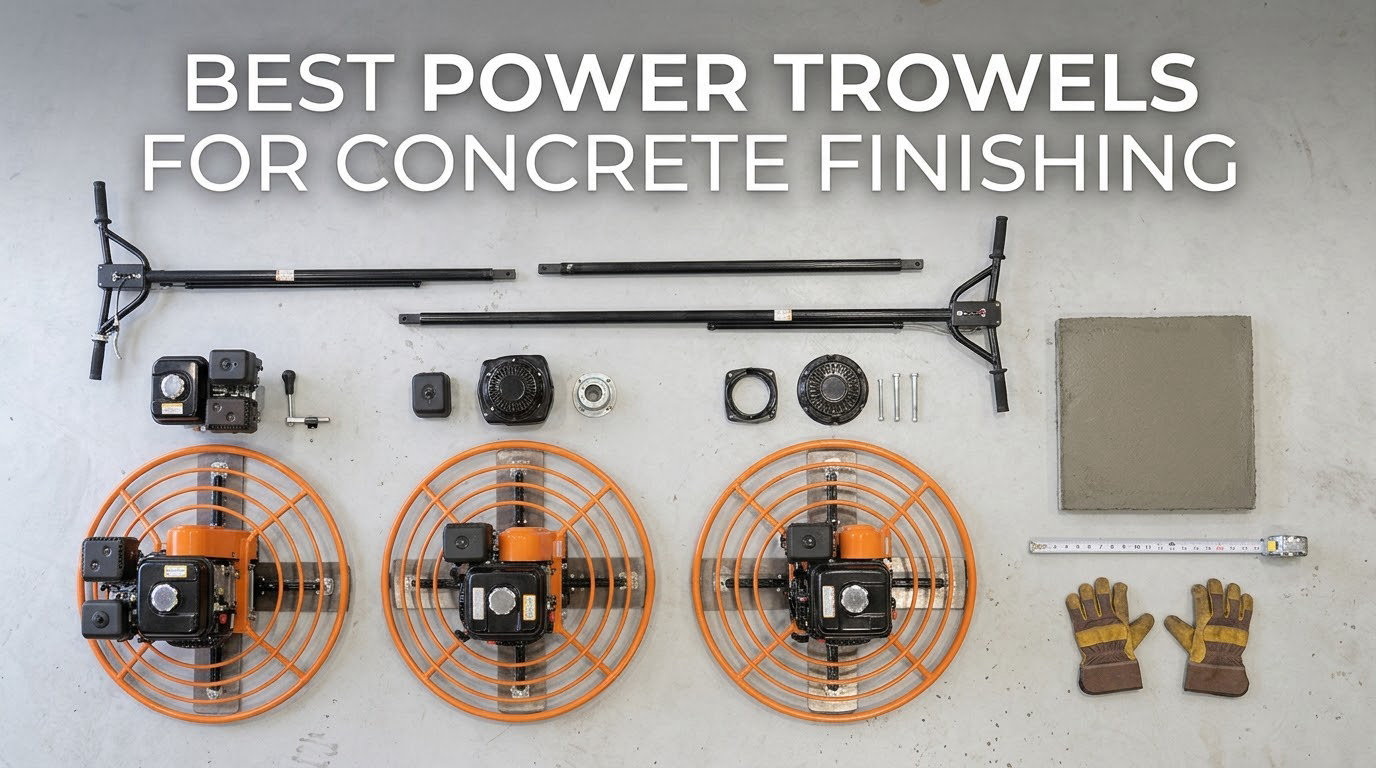
Choosing a power trowel comes down to one number most buyers ignore: how big is the slab you actually have to finish. A 22-inch walk-behind will float and finish a 900 square foot driveway cleanly, and it will leave you walking circles all afternoon on a 12,000 square foot warehouse slab. This guide covers the best power trowels for concrete finishing available now, ten walk-behind machines spanning 22 to 46 inch working widths, with the engine, blade, pitch range and handling details that decide whether a machine earns a place on your truck.
We spent weeks reading spec sheets, owner reviews and dealer catalogs, then sorted the field by the things that break a finishing job: coverage per pass, how much finish range the blade pitch gives you, whether the engine starts when it is cold and wet, and whether you can get parts when the spider bearings go out on a Friday afternoon. The result is a ranked list where the top pick is neither the widest nor the most powerful machine, but the one that balances working width, machine weight and review history better than anything else here.
Everything in this roundup is a walk-behind unit, because that is what most crews and serious DIYers are actually shopping for. If you are finishing slabs north of roughly 10,000 square feet, a ride-on twin-rotor machine is the better tool and we explain where that switch happens below. If you are cutting, breaking or drilling concrete rather than finishing it, our guide to rotary hammer drills covers the other end of the job site.
Table of Contents
What Is a Power Trowel?
A power trowel, also called a power float, concrete finisher or concrete helicopter, is a machine with spinning steel blades or a float pan that smooths and compacts freshly poured concrete, producing a flat, dense finished surface far faster and more evenly than hand troweling. Rotating blades shear the surface paste, push bleed water into the slab, and bring fine aggregate to the top where it can be worked into a hardened, dust-free finish.
The engine or battery spins one or two rotors, and the operator changes blade pitch to shift the machine between three jobs: floating to level the surface, power floating to compact it, and finishing to smooth it. Handle or hydraulic steering moves the machine across the slab, and the whole process depends on timing, because concrete that is too wet will refuse to set and concrete that is too dry cannot be worked at all.
Top 3 power trowels for concrete finishing Picks in 2026
The three machines below cover the widest range of real jobs. The Stark USA leads on balance of size, weight and review history, the Tomahawk 36-inch Kohler is the strongest all-round contractor machine, and the VEVOR 24-inch is the entry point for smaller work.

Stark USA 22 inch 6.5HP
- 22 inch coverage
- 115 lb
- 6.5HP Loncin G200FA
- float pan plus 4 blades
At-a-Glance Spec Comparison of Every Pick in 2026
Every machine below is gas powered, walk-behind and four blade, so the columns that actually differ are working width, engine, pitch range and machine weight. Read the weight column as a handling decision, not a spec sheet curiosity, because a 300 pound machine needs a plan every time it crosses a slab edge.
| Product | Specs | Action |
|---|---|---|
| Stark USA 22 inch 6.5HP Walk-Behind |
|
Check Latest Price |
| Tomahawk 36 inch 6HP Kohler |
|
Check Latest Price |
 VEVOR 24 inch 6HP Power Trowel VEVOR 24 inch 6HP Power Trowel |
|
Check Latest Price |
 California Concrete Tool 36 inch 5.5HP California Concrete Tool 36 inch 5.5HP |
|
Check Latest Price |
 Albott 36 inch 5.5HP GX160 Albott 36 inch 5.5HP GX160 |
|
Check Latest Price |
 Sonrehon 36 inch 5.5HP Honda GX160 Sonrehon 36 inch 5.5HP Honda GX160 |
|
Check Latest Price |
 Tomahawk 46 inch 13HP Honda GX390 Tomahawk 46 inch 13HP Honda GX390 |
|
Check Latest Price |
 Tomahawk 30 inch Portable with 18ft Pole Tomahawk 30 inch Portable with 18ft Pole |
|
Check Latest Price |
 BILT HARD 36 inch 6.5HP BILT HARD 36 inch 6.5HP |
|
Check Latest Price |
 MechMaxx 36 inch Honda GX160 MechMaxx 36 inch Honda GX160 |
|
Check Latest Price |
How We Evaluated These Power Trowels
Nobody hands a finish crew a scoring rubric, so we built one. Five things decided the order, and each one is something you can feel or measure on your own slab within the first ten minutes of using the machine.
Coverage per pass is the first filter, because a 22-inch machine and a 46-inch machine differ by roughly four times the area covered per pass. Finish range is the second: a 0-28 degree pitch adjustment lets you float hard and then finish light on the same machine, while a 0-15 degree range locks you into a narrower window. Power and torque matter on hard concrete and on 46-inch rotors, but only show up late in a job, which is why they rank below width here.
Handling and machine weight come fourth. A machine you can lift into a pickup unaided gets used on small residential work; a 300 pound unit lives on a trailer. The fifth factor is the parts and consumable ecosystem, since blades, float pans and spiders are what you replace, not the engine. Review signal breaks ties, and we gave review count real weight, because a 5.0 average across three buyers tells you far less than a 4.1 across fifty-nine.
1. Stark USA 22-Inch 6.5HP Walk-Behind – The Best All-Round Pick
Stark USA 6.5HP Walk-Behind Power Trowel, 196cc Gas-Powered Concrete Surface Finisher with 22-Inch Float Pan Blade for Cement Finishing & Smoothing
22 inch coverage
6.5HP Loncin G200FA
115 lb
Float pan plus 4 blades
Pros
- Compact footprint works around edges and tight jobsites
- 6.5HP Loncin G200FA engine
- Float pan and four blades cover floating and finishing
- Easy to load at 115 lb
- 59 reviews give the strongest review base in the group
Cons
- 22 inch coverage is the smallest working area
- so large slabs need more passes
- Rating spread includes roughly 12 percent one-star feedback
The Stark USA is the machine we kept coming back to while building this list. At 115 pounds it is by far the easiest full-size walk-behind here to get into a truck bed, and at 22 inches of coverage it still covers enough concrete to be useful on a real pour rather than a patch job. That combination is why it took the top slot even though three machines here carry higher star ratings.
What you get is a 6.5HP Loncin G200FA 196cc engine driving a four-blade assembly with a heavy-duty float pan mounted. The float pan and blades cover both the floating stage and the finishing stage, so one machine handles the whole finishing sequence on a residential slab. The adjustable handle with its protective guard ring gave reasonable control in the reviews, and the operator walks behind it rather than riding.
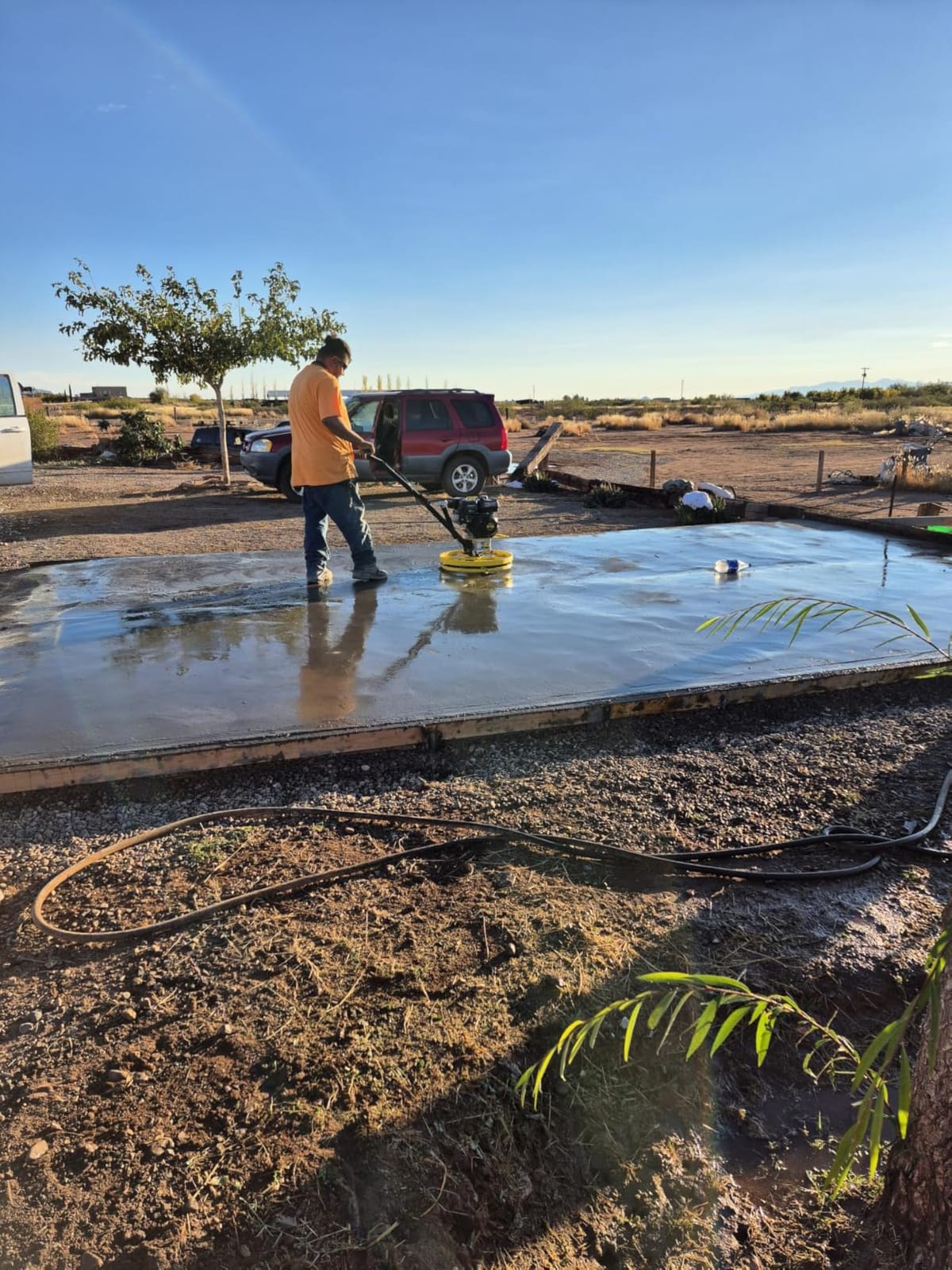
What convinced us is the review base. Fifty-nine reviews at a 4.1 average is the largest sample in this group, and the owner feedback is unusually consistent about the two things that matter: the compact size is genuinely easy to maneuver around edges and confined spaces, and the engine delivers dependable finishing power. Reviewers also note that the long ergonomic walk-behind handle keeps the operator comfortable, which matters more than most spec sheets admit on a long pour.
The honest weakness is coverage. Twenty-two inches is smaller than the 30 to 46 inch blades on everything else here, so a large slab means more passes and more time on the machine. Reviewers report a visible minority of quality complaints, roughly 12 percent one-star and 7 percent two-star, which is the normal pattern for imported gasoline equipment and not a specific defect. For a driveway, a patio, a basement slab or finishing around a foundation wall, that trade is worth making.
Why it works for tight residential work
Most finishing problems on residential jobs are edge problems, and this machine’s footprint is its whole argument. You can run it right up to a foundation wall or a column line without the wide rotor overhang that forces a 36-inch machine to stop short and leave a strip for a hand trowel. That removes the most tedious part of the finishing sequence.
It also weighs 115 pounds, so one person can load it, unload it and reposition it without a second crew member or a ramp. The dimensions are listed at 30.5 by 26.5 by 14 inches, which is compact enough for a small trailer or the bed of a half-ton.
Where it falls short
It is the wrong call for a slab big enough that pass count starts costing you hours, and it is not a finish machine for hard concrete late in the day, when 6.5HP of a small engine has less margin. On anything above roughly 4,000 square feet, a 36-inch rotor pays for its extra width very quickly.
The four-blade finish set is a standard configuration, not a wide-finishing setup, so for a polished architectural slab you will want a purpose-built finish blade set rather than the one that comes in the box.
2. Tomahawk 36-Inch 6HP Kohler – Best Value Contractor Machine
Tomahawk 36″ Power Trowel Walk Behind Gas Power 6 HP Kohler Engine with Combo Blades Float Pan for Concrete Finishing Cement Floor Surface
36 in working width
6HP Kohler CH260
0-28 degree pitch
3 year engine warranty
Pros
- Kohler CH260 carries a 3 year engine warranty
- 36 inch width cuts pass count on mid-size slabs
- 0-28 degree pitch handles floating and finishing
- Independent rotating flywheel for close work at walls and corners
Cons
- At 230 lb it is heavy to move without site transport wheels
- Roughly 17 percent of reviews are one-star
- Only 17 reviews overall
Thirty-six inches is the size most contractors land on, and this Tomahawk is the reason. It pairs a 6HP Kohler CH260 engine with a 36 inch working width that includes the blades and the float pan, which is the mainstream configuration for residential and light commercial flatwork. The Kohler carries a 3-year engine warranty, and that warranty is a bigger deal on a finishing machine than the engine horsepower itself.
The pitch adjustment runs from 0 to 28 degrees, which is the full useful range. That means the same machine can float aggressively right after the screed and then come back later for a light finishing pass, which is exactly the progression you need on a slab that sets fast. Owners also point to the independent rotating flywheel, which lets the operator cut in close to walls, edges and corners without fighting the machine.
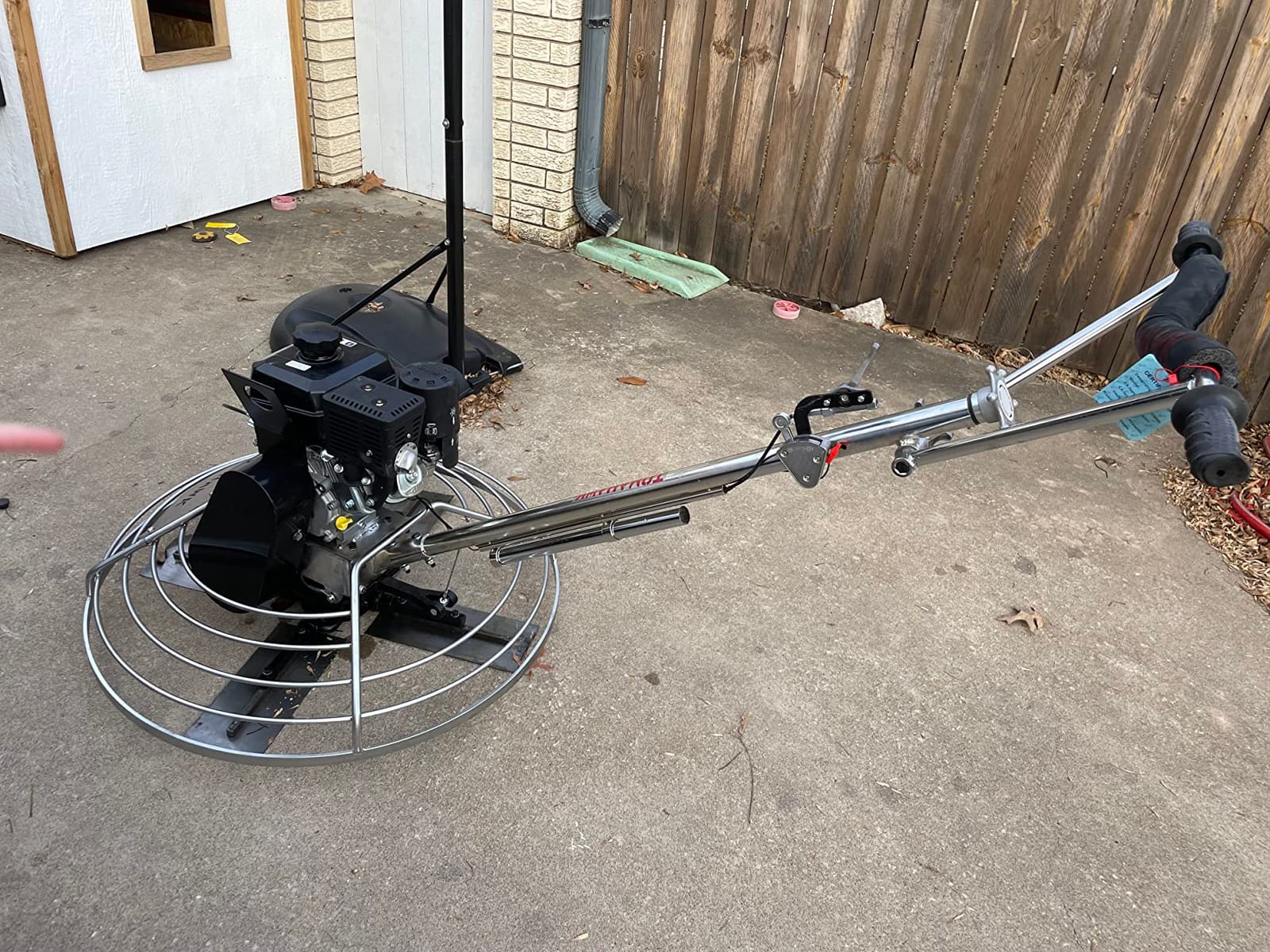
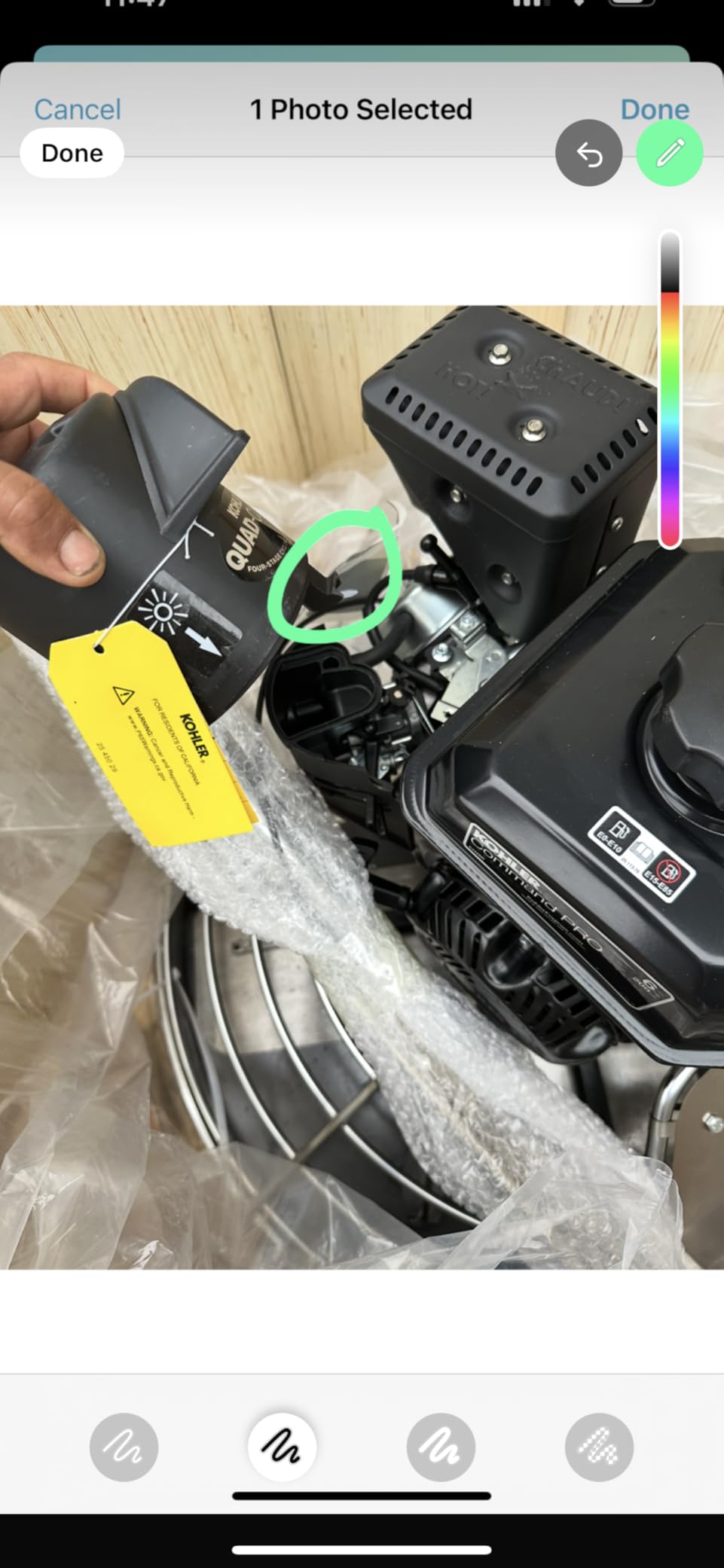
Where the reviews get real is durability and setup. A noticeable share of buyers, roughly 17 percent one-star, report setup or durability gripes, and at 230 pounds this is not a machine you lift casually. Owner photographs show a conventional walk-behind layout with the handle assembly and guard ring, nothing exotic, which is part of why the parts ecosystem is straightforward to source.
What earns it the second slot is the combination of width, pitch range and a warranty-backed engine, which you do not get from many 36-inch machines. If your work is a steady stream of 2,000 to 8,000 square foot slabs, this is the machine we would put on the truck.
Why the Kohler engine matters more than the horsepower
Finishing engines spend their lives cold, wet, dusty and stopped. A Kohler CH260 with a 3-year warranty is a serviceable, widely supported platform, and the warranty is the part that protects you when a recoil or carburetor issue shows up in month three. On an imported machine with no engine warranty, the same failure is your problem and your bill.
The 6HP also gives the 36-inch rotor enough torque to keep blade speed up on concrete that has started to stiffen, which matters more at the end of a finishing pass than at the start.
Where it falls short
Two hundred thirty pounds is a real handling cost. Without transport wheels, moving this machine from the trailer to the slab is a two-person lift, and every relocation on site is a decision rather than a reflex. Budget for site transport wheels if you are working a single residential slab at a time.
It is also a walk-behind only, with no ride-on option in this family, so very large placements still need a different machine.
3. VEVOR 24-Inch 6HP – Best Budget Pick
VEVOR Power Trowel 24 inch, 6HP Gas-Powered Smooth Concrete with Float Pan, Heavy Duty Commercial Screed Concrete Cement with Finishing Blade
24 inch coverage
6HP Kohler
125.2 lb
0-28 degree pitch
Pros
- 6HP Kohler engine driving up to 3600 RPM
- Four hardened steel blades with guards
- 0-28 degree pitch covers matte to polished finishes
- Weighs 125.2 lb
- Centrifugal ignition kills the engine on loss of control
Cons
- Lowest average rating in the group at 3.9
- About 12 percent of reviews are one-star
- 24 inch width is the second smallest here
The VEVOR 24-inch is the most direct way into a real power trowel with a real engine behind it, and the spec sheet is better than the machine’s overall review record suggests. You get a 6HP Kohler gasoline engine driving the polisher up to 3600 RPM, four hardened steel blades with guards, and a 0-28 degree pitch adjustment that covers everything from a matte surface to a high sheen. That pitch range alone puts it ahead of several machines in this list.
It weighs 125.2 pounds, light enough for one person to load it, and it comes with a centrifugal ignition switch that shuts the engine down if you lose control, plus a throttle lever for speed adjustment. Owners highlight the combination of a Kohler engine and adjustable blades as the standout.
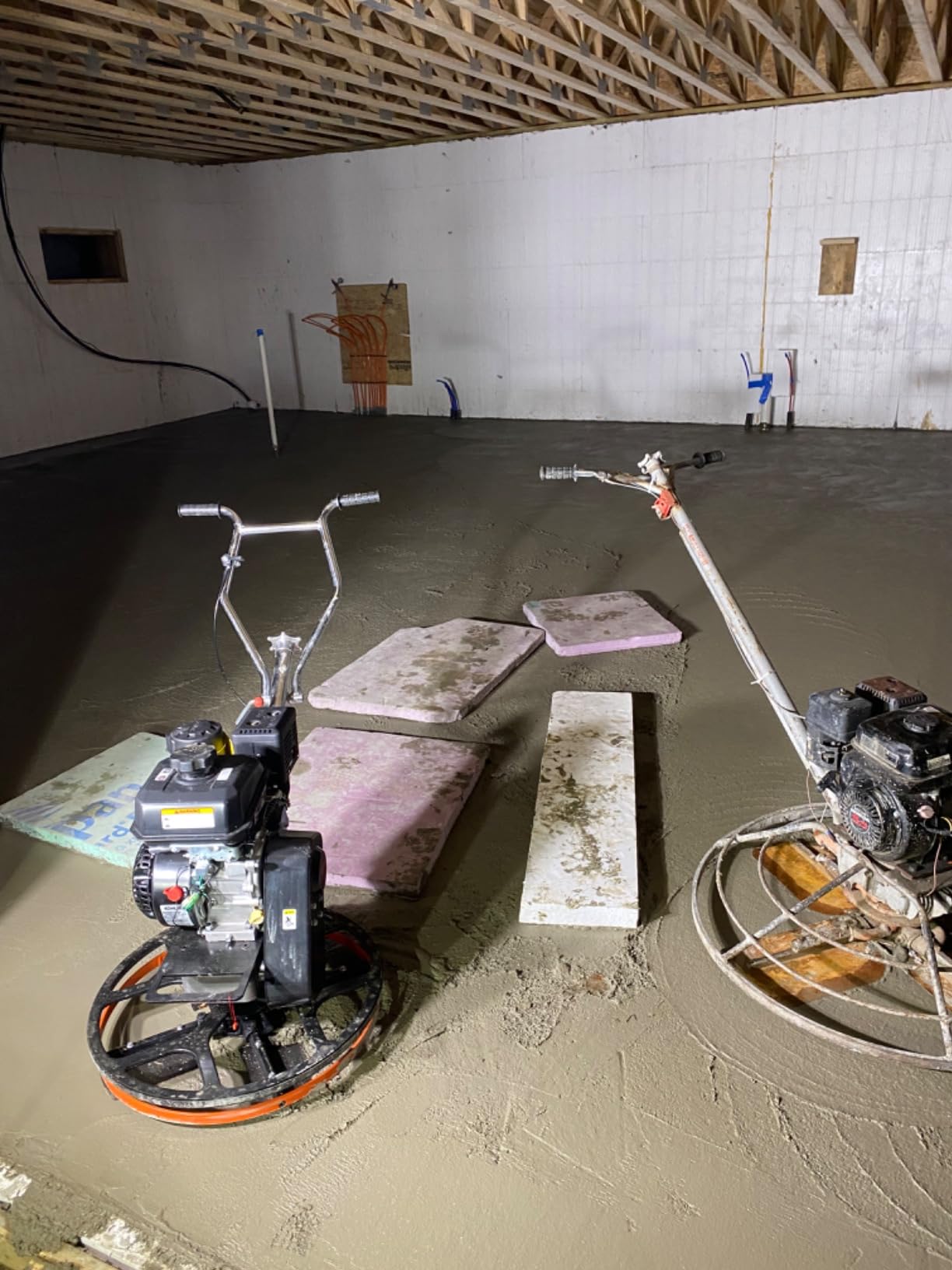
Where the 3.9 average comes from is worth being honest about. Reviewers point to finish consistency and assembly quality as the weaker points, with about 12 percent one-star feedback. That is a consistent theme for value-priced gasoline equipment and it maps directly onto the two things you feel on a slab: a machine that may need a shim and a wrench before it runs its first pass, and blade behavior that takes a moment to settle.
The trade is still worth it for most buyers. If your plan is a patio, a small slab or a one-off basement job, this machine gets you from screed to finished floor on a smaller budget than a 36-inch, and the Kohler under the hood is the right engine family. The same model is also offered in 38-inch and 46-inch widths if you outgrow it.
Why the 0-28 degree pitch matters at entry level
Pitch range is the feature that separates machines far more than horsepower does. At 0 to 28 degrees you can spread the blades almost flat to float and level, then increase the angle to compact and smooth as the concrete stiffens. A narrower range means you either finish too early with an aggressive angle or float too late with a flat one.
Four hardened steel blades with guards are also the durable configuration, and this machine accepts both hardened steel and tempered spring steel blades, which widens your finishing options later without buying a new trowel.
Where it falls short
Twenty-four inches is a small working area for anything but residential work, so on a mid-size slab you will be walking laps. And the review base is thin enough that you should expect to do your own setup and alignment rather than assuming it arrives ready to run.
The 3600 RPM figure describes engine output, not rotor speed, so do not read it as a finish-quality number.
4. California Concrete Tool 36-Inch 5.5HP – Arrives Nearly Ready to Run
CCTI Walk-Behind 36″ Power Trowel with Float Pan – Powered by 5.5 HP Loncin G200FA Gasoline Engine
36 inch diameter
5.5HP Loncin G200FA
205 lb net weight
Arrives 90 percent assembled
Pros
- Arrives 90 percent assembled so it is close to runnable out of the crate
- 5.5HP Loncin G200FA is EPA and CARB certified
- Float pan tool kit and manuals included
- 36 inch mainstream working diameter
Cons
- Only three reviews in total
- 5.5HP has less torque margin on hard concrete
- Very limited long-term field history
The thing that separates this 36-inch machine from every other 36-inch in this roundup is packaging. It arrives about 90 percent assembled, meaning only spider and handle setup remains before you could realistically start, and the float pan, a tool kit and the user manuals all come in the crate. For a first-time owner buying a walk-behind, that removes the most frustrating part of the purchase.
Under the hood is a 5.5HP Loncin G200FA gasoline engine that is EPA and CARB certified, which matters if you ever resell the machine in a regulated state. Working diameter is 36 inches with a float pan, and the net weight is 205 pounds. That is lighter than the Kohler-powered 36-inch above it, which makes it easier to reposition.
The 4.7 rating is among the strongest in the group, but it rests on three reviews, and we give that fact real weight in these rankings. Buyers consistently name the near-ready-to-run packaging and the certified engine as the standouts. Treat the 4.7 as encouraging rather than proven.
Why assembly time is a real buying criterion
A walk-behind power trowel arrives as a frame, a spider, blades, a float pan and a handle, and the order you assemble them in matters. A machine that arrives 90 percent complete turns an afternoon of assembly into a short session of checks, and for a first pour that difference decides whether you finish on schedule.
The included tool kit and manuals also mean you are not hunting for a ring spanner on placement morning, which is when most finishing schedules go wrong.
Where it falls short
You will want to plan the first service visit yourself, because three reviews tells you nothing about how the machine behaves after a season of concrete dust and shim adjustments. The 5.5HP engine has less torque margin than a 6HP or 13HP machine, so on a slab that has gone firm you will feel that sooner.
The listing also notes that delivery is freight to the lower 48 states with business address only and no residential drop-off, which is a real inconvenience if you are not near a commercial dock. Allow for that when you plan your first pour date.
5. Albott 36-Inch 5.5HP GX160 – Easiest to Move Around a Job Site
Albott 36″ Power Trowel, 5.5 HP GX160 Gas Engine Concrete Finisher
5.5HP GX160 engine
36 inch diameter
195.1 lb
Detachable transport wheels
Pros
- Detachable transport wheels make site moves far easier
- 5.5HP GX160 is a proven easy-restart platform
- 0-28 degree pitch plus four manganese steel blades
- Red push rod emergency shutoff
- Lightest 36 inch machine here at 195.1 lb
- Keeps site moves manageable without extra crew
Cons
- Only three reviews
- all of them 5-star
- Listed specifications mix 135 rpm and 3600 rpm figures
- One year manufacturer warranty only
Transport wheels are the feature that earns this machine its place. Detachable wheels mean you can roll the 195-pound trowel across a jobsite instead of dragging it, and for a contractor moving between a driveway, a patio and a basement in the same week, that is worth more than a couple of extra horsepower. The wheels detach for transport in a pickup, so the machine is not a permanent obstacle in the bed.
The engine is a 5.5HP GX160, one of the most widely serviced small gas engines in existence, and buyers single it out as dependable and easy to restart. Working diameter is 36 inches with a float pan and four manganese steel blades, and pitch adjusts from 0 to 28 degrees. A red push rod stops the engine instantly if you lose control, which is a simple, mechanical safety system that does not need electronics to work.
It also comes in 24-inch and 46-inch variants, the latter paired with a 9HP engine, if you want to stay in one brand family across two job sizes. Buyers name the 36-inch width, the GX160 and the safety shutoff as the standouts.
Why the GX160 platform is worth the extra thought
Across this roundup you will see GX160 engines in several machines, and that is deliberate. It is a small, simple, widely supported engine, which means parts are easy to find and any competent small engine shop can service it. For a machine that lives in a truck and gets used in dust, that serviceability is worth more than a bigger engine you cannot get serviced on a Tuesday.
The four manganese steel blades are a harder, more wear-resistant material than plain spring steel, so they hold their edge longer through a full finishing sequence.
Where it falls short
Three reviews, all 5-star, is not enough to judge reliability over a season, and the one-year manufacturer warranty is the shortest in this group. The listed specifications are also inconsistent, with a 135 rpm figure and a 3600 rpm figure appearing for the same engine family, so verify the rotor and engine speeds with the manufacturer before you rely on them.
At 5.5HP it is underpowered compared with a 6HP or 13HP machine for late passes on hard concrete.
6. Sonrehon 36-Inch 5.5HP Honda GX160 – The Engine-First Choice
Power Trowel 36 Inch, 6.5HP Gas Engine Walk‑Behind Concrete Finisher with Float Pan & Adjustable Blade Pitch for Contractor Jobsite
5.5HP Honda GX160
36 inch working diameter
0-28 degree pitch
220 lb
Pros
- Honda GX160 is a widely serviceable engine platform
- 36 inch width speeds up mid-size slabs
- 0-28 degree pitch covers floating and finishing
- Red emergency stop push rod plus detachable transport wheels
- Float pan blades and manual included
Cons
- Only three reviews
- so the 5.0 average is a small sample
- Newer listing with limited long-term field history
- 220 lb is heavy for a 5.5HP machine
If you already own a Honda GX160 or work alongside anyone who does, this is the machine to look at. The GX160 is one of the most common engines in concrete finishing equipment, and it is specified whenever a manufacturer wants a serviceable, widely supported power unit, and owners reviewing this machine describe it as running reliably job to job. The float pan, four heavy-duty manganese steel blades and the operator manual all come in the package, so consumables are covered out of the box.
Working diameter is 36 inches with a 0-28 degree adjustable blade pitch, which covers both bull floating and final troweling on the same machine. Buyers specifically call out the 36-inch pass width as a noticeable time saver on larger slabs compared to the smaller machines they had used before.
It weighs 220 pounds and includes a red emergency stop push rod and detachable transport wheels. Those wheels matter at that weight, and their presence on a machine this heavy is a good sign about how the manufacturer thinks it will be used.
Why engine choice beats horsepower for a finishing trowel
A finishing trowel asks its engine for sustained moderate torque, not peak power, and it asks for it in conditions where a complicated fuel system or an electronic ignition will eventually fail. The GX160 is a simple, mechanical, well-documented engine, and the difference in downtime between a serviceable engine and an unsupported one shows up as money.
Keeping one engine family across several machines also means one set of parts in the truck. That is why the GX160 shows up three times in this roundup.
Where it falls short
Three reviews, all 5-star, is a very thin basis, and this is a newer listing with limited long-term field history, so treat the rating as a signal rather than a record. The 220-pound weight against a 5.5HP engine is heavy for what it delivers, and the transport wheels are not optional in practice.
There is no warranty information in the listing, which is a real gap given the engine brand involved.
7. Tomahawk 46-Inch 13HP Honda GX390 – Widest Coverage in the Roundup
Tomahawk Power 46″ Trowel Walk Behind Gas Power Honda Engine with Blades Float Pan for Concrete Finishing Cement Floor Surface, Silver
13HP Honda GX390
46 inch working width
4 combo hardened blades
Heavy duty gearbox
Pros
- 13HP Honda GX390 gives the most torque in the group
- 46 inch width is the widest working area here
- Cuts pass count significantly on big pours
- Four combo hardened steel blades handle float and finish
- Heavy duty gearbox built for maximum torque
Cons
- At 300 lb it is the heaviest machine in the roundup
- Only two reviews both 5-star
- Needs planned site transport
- Very little long-term feedback
Forty-six inches of working width with a 13HP Honda GX390 is close to the ceiling for a walk-behind, and on a large commercial pour it changes the arithmetic. Compared with a 22-inch machine, the 46-inch rotor touches roughly four times the concrete per pass.
The engine is a 13HP Honda GX390, which has real torque behind a big rotor, and the gearbox is a heavy duty design aimed at maximum torque rather than speed. Four combo hardened steel blades handle both float and finish operations, pitch adjusts from 0 to 28 degrees, and a safety shut-off switch protects the operator if control is lost. Available variants include 8HP and 13HP versions of the same trowel family.
It weighs 300 pounds, and that is the honest headline. It is not a machine that gets repositioned casually or lifted by one person. It belongs on a trailer with transport wheels, on a slab with room to work, and with a crew that has moved machines this size before.
Why width and torque scale together
A large rotor is heavy and creates a large load on the blades, so a big machine with a small engine stalls. Pairing 46 inches with a 13HP GX390 is the correct engineering, and it is why this machine can hold blade speed on concrete that has already begun to stiffen. A wide trowel with a weak engine is a machine that bogs down at the worst moment.
The combo blades are also worth noting: they are designed to work for floating and finishing, so you are not swapping configurations between stages.
Where it falls short
Only two reviews, both 5-star, means almost no critical feedback exists, and 300 pounds means the machine is only worth owning if you place large slabs regularly enough to amortize it. On residential work it is a liability, not a tool.
It is a walk-behind, so on placements where a ride-on would take over you will still be walking it, and a 300-pound walk-behind on a long pour is tiring.
8. Tomahawk 30-Inch Portable with 18ft Pole – Best for Driveways and Patios
TOMAHAWK 30″ Portable Concrete Power Trowel with 18ft Bull Float Handle 37cc Engine (30″ Trowel)
30 inch four-blade spider
37cc engine
57 lb
18 ft bull float pole included
Pros
- Only 57 lb so one person can lift and reposition it
- 18 ft bull float pole lets one operator work a wide slab
- 30 inch four-blade spider with 0-28 degree pitch
- Four multi-use combination blades and the pole included
- Starts troweling up to 45 minutes earlier
Cons
- 37cc engine has far less power than the 5.5 to 13HP machines
- Only two reviews both 5-star
- Smaller diameter means more passes on wide areas
This is the lightest machine in the roundup by a wide margin, and that changes who the machine is for. At 57 pounds it goes into a pickup without ramps, a trailer without a winch, and it can be moved to the far side of a driveway while the concrete is still workable. Everything else here is a two-person handling decision.
What is unusual is the 18-foot bull float pole that comes with the machine. Instead of chasing the machine around a wide slab, one operator can work from the edge using the pole, which is how this kind of finishing is normally done on a residential pour. It is a 30-inch four-blade spider assembly with pitch adjustment from 0 to 28 degrees, and four multi-use combination blades come in the box.
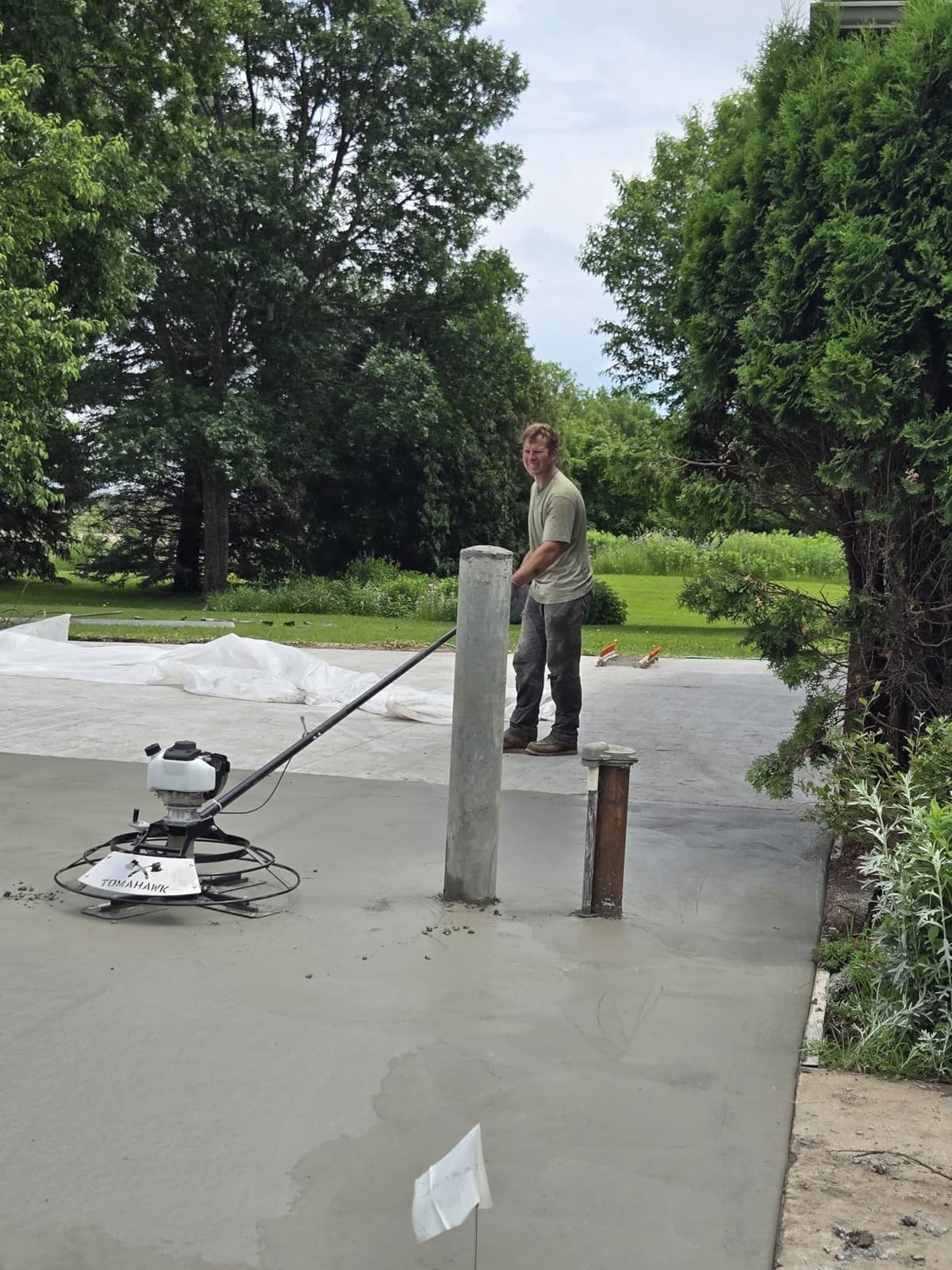
The trade is engine size. A 37cc engine is an order of magnitude smaller than the 5.5HP to 13HP machines here, and the listing’s claim that you can start troweling up to 45 minutes earlier is really a statement about the small rotor and light machine, not about torque. Reviewers name one-person handling and the included pole as the standouts.
Owner photographs show how compact the whole package is next to a full-size walk-behind, with the spider, the pole and the blade set all laid out together. That visual comparison is the fastest way to judge whether a 30-inch machine is the right call for your own slab.
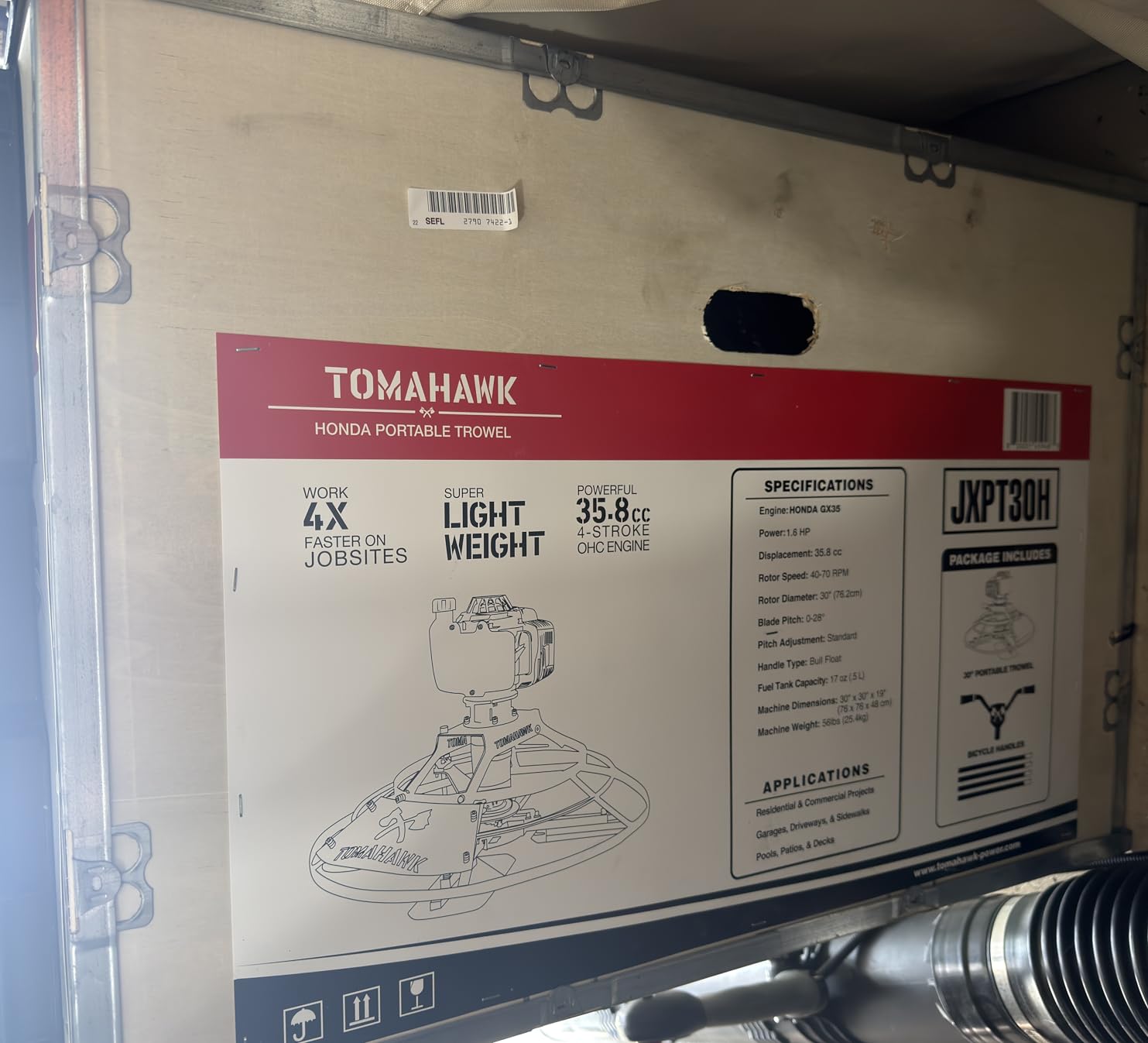
Why the pole changes how you work a driveway
On a driveway or patio, the hardest part of finishing is not the machine, it is the reach. You are trying to smooth concrete twelve feet away from where you are standing, and a walk-behind trowel forces you to either walk on the slab or repeatedly reposition the machine. The 18-foot pole solves that, letting you float and finish from the edge while the machine stays where you parked it.
It also means the slab stays free for wheelbarrows, hoses and the next crew member, which on a tight residential pour is worth as much as the finish itself.
Where it falls short
The 37cc engine is the limiting factor. It is fine for a driveway or a patio that sets normally, and it is not enough power for a large slab or for late passes on hard concrete. Two reviews, both 5-star, is a very small base.
Thirty inches is narrower than the mainstream 36-inch size, so wide residential pours mean more passes than you would take with a bigger machine.
9. BILT HARD 36-Inch 6.5HP – Simplest Controls for New Operators
BILT HARD 36 Inch Walk-Behind Power Trowel with Float Pan, Gas-Powered Concrete Finishing Machine with 4 Blades, 6.5 HP Engine, Adjustable Pitch for Smooth Floors and Construction Projects
6.5HP gas engine
36 inch width
0-15 degree pitch
Emergency stop lever
Pros
- 6.5HP engine gives plenty of power for backyard and small-slab work
- Float pan and combination blades cover leveling and finishing
- 36 inch width suits residential and light commercial
- High-hardness steel blades for wear resistance
- Reachable emergency stop lever
Cons
- Pitch range of 0-15 degrees is among the narrowest here
- Only a single 5-star review
- No listed weight or dimensions
The BILT HARD is the most straightforward 36-inch machine in the roundup, and that simplicity is the point. A 6.5HP gasoline engine, a float pan, four combination blades and an emergency stop lever, with nothing else to configure. For a first power trowel, a machine with fewer variables between you and a finished floor is a reasonable choice.
The combination blade system is what gives it range: the float pan handles initial leveling and the combination blades handle smoothing and finishing, so one purchase covers multiple finishing stages without a lot of accessory changing. High-hardness steel blades are specified for wear resistance, which is the right call on any machine that spends its life dragging aggregate across concrete.
The 36-inch width matches the mainstream residential and light commercial size, and the emergency stop lever is easy to reach during operation, which is the safety feature new operators use most often. The single buyer review praises control, power and the smoothness of the finished surface.
Why pitch range is the one spec to check before buying
At 0 to 15 degrees, this machine gives you about half the pitch range of the 0-28 degree models here. That is a real constraint. A wide range lets you set the blades almost flat for floating, then steepen the angle for finishing as the concrete stiffens. A narrow range means committing to one attitude, and finishing with the blade angle set for floating leaves a surface that never fully closes.
If you are new, that constraint is manageable because you will likely be finishing smaller areas where the timing window is less demanding. On a large slab, it is the spec that would talk us out.
Where it falls short
One review is the entire review base, so there is no meaningful critical feedback and no durability record. The listing also gives no weight or dimensions, and those are the first two numbers you need for transport planning.
Its listing is recent, and a 0-15 degree pitch range is narrower than most of the 36-inch machines here.
10. MechMaxx 36-Inch Honda GX160 – Built for Loading and Positioning
MechMaxx Honda GX160 36 in Walk-Behind Concrete Power Trowel with Blades and Float Pan, PT36H
Honda GX160 4.8HP
36 inch diameter
0-15 degree pitch
Centrifugal safety switch
Pros
- Honda GX160 4.8HP gives dependable starting
- Centrifugal safety switch stops the machine on released control
- Lifting hook and removable front carry handle aid loading
- Adjustable operator handle and steel guard ring
- Blades and float pan included
Cons
- At 291 lb it is heavy despite the small engine
- 0-15 degree pitch is narrower than most rivals
- Only one 5-star review
At 291 pounds, the MechMaxx is one of the heavier machines in the roundup, which makes its handling hardware unusually thoughtful. There is a lifting hook and a removable front carry handle specifically for lifting, carrying, loading and positioning the trowel, plus an adjustable operator handle and a steel guard ring that protects the blades near edges, forms and obstacles. Very few walk-behind packages include a lifting hook.
The engine is a Honda GX160 rated at 4.8HP, the same widely serviced platform used on several other machines here, and the working diameter is 36 inches with four blades and a float pan included. A centrifugal safety switch stops the machine when the operator releases control, which is a mechanical version of the same protection the VEVOR and BILT HARD provide.
The catch is the pitch range. At 0 to 15 degrees it is among the narrowest here alongside the BILT HARD, and combined with 291 pounds of weight, this machine is built for a contractor who has help on site and moves the trowel with a loader or a set of ramps rather than by hand.
Why loading hardware is worth paying for
On any machine over 200 pounds, the injury risk is not the rotor, it is the lift. A lifting hook lets one operator use an engine hoist or a come-along instead of a two-person deadlift, and a removable carry handle lets you reposition the machine around a slab without dragging it across finished concrete. Those features only matter once, at load-in, and then they matter enormously.
The guard ring is the other one. It is the difference between the blades hitting a form or a column and the blades hitting a piece of steel rebar chair, which is a much worse day.
Where it falls short
Two hundred ninety-one pounds against a 4.8HP engine is a lot of machine for not much power, and the narrow pitch range limits finish flexibility compared with the 0-28 degree models. One 5-star review is the entire feedback base, so there is no durability record.
Despite the handling hardware, you still need mechanical help to get this onto a slab.
What Size Power Trowel Do I Need for My Slab?
Match the rotor to the slab, and match it before you buy rather than after. A machine that is too small is not slower because it is bad, it is slower because you walk more laps, and on a 10,000 square foot slab that difference compounds into hours. A machine that is too large is heavy and harder to control near edges.
Under about 1,000 square feet, anything from 22 to 24 inches is comfortable, and a hand trowel is still competitive on the smallest areas. Between 1,000 and 4,000 square feet, 24 to 30 inches is the sweet spot, which is where the Tomahawk 30-inch with its bull float pole earns its keep. From 4,000 to roughly 10,000 square feet, 36 inches is the right answer, and that is where most of the walk-behind market lives.
Above 10,000 square feet, a 46-inch walk-behind like the Tomahawk 13HP reduces pass count meaningfully, but this is also the point where a ride-on twin-rotor machine starts to pay for itself in saved labour hours. If your slab is measured in tens of thousands of square feet, stop buying walk-behinds and read the next section.
One more variable matters more than diameter: slab hardness and how fast the mix sets. A wider machine is harder to hold on soft concrete and a narrower machine is easier to keep on the surface. On a high-early-strength mix in hot weather, go one size down and work earlier.
Ride-On vs Walk-Behind Power Trowel
The ride-on versus walk-behind question comes down to how much concrete you touch per operator per hour. A ride-on machine has two rotors, typically non-overlapping, so the operator straddles the machine and covers a spanning width in one pass while the rotors work behind and beside them. A walk-behind covers that same width by walking it in strips.
Below about 10,000 square feet, a walk-behind is the right call on cost, transport and simplicity. A 36-inch walk-behind is also far easier to own, store and service, and for most residential and light commercial work it is the machine you will use ninety percent of the time. In the Concrete Everything Facebook group, the framing that comes up repeatedly is exactly this: riding machines for big slabs, walk-behinds for smaller work.
Above that, ride-on makes sense because of operator fatigue and pass count. The same Facebook conversations about riding trowels for large slabs show active debate rather than settled consensus, with contractors split between Bartell, Whiteman and Allen by reputation and by the availability of local dealer support. That split is really a service-network question more than a spec question, and the answer for most crews is to buy the machine their nearest dealer carries parts for.
Dealer support is the real deciding factor in this niche. Blades, pans, spiders, handles and control cables are what fail, and a machine whose parts are two days away will sit on a trailer on the one day you needed it.
Gas vs Battery vs Electric Power Trowels
Every machine in this roundup is gas powered, and that is still the default on an outdoor slab: no cord to run and no spare packs to carry. If a slab is more than a short distance from an outlet, a battery trowel means either carrying packs or carrying a generator anyway, and the generator reintroduces the noise and emissions you switched away from.
Battery and electric trowels have made real progress, and the argument for them is specific rather than general. They are quiet, produce no exhaust and no carbon monoxide, and they can run inside enclosed or partially enclosed spaces where a gas engine is a genuine hazard rather than an inconvenience. They also start instantly every single time, which removes the single most common reason a finishing day falls apart.
For enclosed interior work, if you need site power for saws, vibrators or lighting, a power station covers the gap that a battery trowel cannot. Our guide to power stations for power outages covers that angle, and for jobs where the load is fixed and large a propane generator is the comparison worth making.
Dual-fuel machines are the compromise the industry has been converging on, letting one trowel run on a propane cylinder for indoor and site work and on gasoline for long pours. If you work a mix of interior slabs and outdoor placements, that flexibility is worth looking for.
Blades and Float Pans: The Progression That Matters Most
The blade progression is where most finishing quality is actually won or lost, and it is a three-stage sequence. The float pan goes on first, a flat disc that levels the surface right behind the screed and pushes the coarse aggregate down. Then a combination blade replaces it, which is a hybrid shape that floats and compacts at once and handles the window where the surface has stiffened but is not yet hard. Finally a finish blade goes on, a thin, sharp plate that shears the surface paste flat and brings the finish to full sheen.
Skipping a stage is how you get a surface that looks flat in low light and reads as rough under a raking light. The most common finishing failure in the field is going straight to finish blades on concrete that still needed compaction, which leaves a hard crust over soft material underneath.
On brand, Marshalltown is a name worth knowing here, and it is worth separating the two things. Marshalltown hand tools are a different product from power trowel blades, and the reputation you may have heard attaches mostly to the hand tools and finishing accessories. For blades, the question is less about brand and more about blade geometry and hardness for your concrete, which is why blade geometry and hardness matter more to the finish than the badge on the blade set.
Blades and float pans are consumables, not accessories. Budget for them as an operating cost from the first day, because a worn combination blade produces a poor finish long before anything else on the machine needs attention.
Can You Power Trowel Too Much? When Not to Use One
Yes, and this is the most under-answered question in the entire category. Over-troweling draws too much water and cement paste to the surface and brings fine aggregate and air into the top layer, which produces delamination: a thin, weak skin that flakes or powders off later, sometimes months after the slab looked perfect on placement day.
The three warning signs are a surface that stops closing up behind the blades, a sheen that arrives faster than the concrete is hardening, and water beads that reappear on the surface after each pass. When you see any of those, the answer is to leave the slab alone, not to add another pass.
There are places a power trowel is simply the wrong tool. A broom finish should not be steel-troweled first, because the steel finish closes the surface and kills the broom texture. One common question in contractor groups is whether to power float before a broom finish, and the answer crews report is no: bull float behind the screed, then work the surface with a float or kiting broom rather than running a power trowel over it. Near a wall or a narrow strip that a walk-behind cannot reach, a hand trowel with a magnesium float is faster than fighting a 36-inch rotor.
Concrete that is bleeding heavily, has not yet lost its bleed water, or is being placed in extreme heat where the surface skin forms early, is a case for the bull float and a waiting period rather than the trowel. Patience on the first hour of a pour is what protects the finish in year one.
Should You Buy or Rent a Power Trowel?
Rent if you place concrete a few times a year. Buy if you are finishing weekly, because the machine is a production tool and rental day rates plus transport add up fast against a purchase you write down over a few jobs. The crossover in most crews we looked at sits somewhere around a dozen placements a year.
The comparison is not just the machine, though. Rental bills deposit and transport, and you still own the consumables. Blades and float pans wear on rental machines too, and some rental houses charge extra for a worn blade set, so your real cost per job includes at least one blade change.
The other side of the arithmetic is downtime. A machine you own is a machine that is there at 5am on placement day. A rental machine can be unavailable on the one date your pour moved to, and on a concrete schedule a reschedule costs more than the rental ever saved. That is the argument that usually wins for working crews.
If you are buying used to save money, check the hour meter, inspect the spider and blade wear, and confirm there is no lien against the machine. Financed equipment carries a real risk of being repossessed, and a repossessed machine should never be bought without a clear title.
Maintenance, Parts and Used-Equipment Checks
Maintenance on a walk-behind trowel is not complicated, and skipping it is what shortens machine life. Cleaning the concrete off the blades and float pan after every pour matters. A cement build-up on a blade changes its geometry, and a changed geometry is a bad finish on the next slab. Check the spider bearing play while the machine is running, because play there is what turns into a wobble you feel through the handle.
Check engine oil, air filter and fuel filter on the normal schedule, and run the machine briefly after draining fuel to keep water out of the carburetor. Inspect the guard ring, the handle bolts and the emergency shutoff before every job, since all three are safety devices and all three get taken for granted.
For used machines, the checklist is longer. Read the hour meter, though be aware it is easy to reset. Look for uneven blade wear, which means the machine has been run past the end of the blade’s life. Check the spider for radial play and the handle for bent geometry. Confirm the frame has no cracks around the engine mount, and ask for the service history in writing.
Finally, establish where the machine will be serviced before you buy it, not after. In a category with this much variation in brand support, the local dealer network is often worth more than a specification advantage.
Frequently Asked Questions
What is the best power trowel on the market?
The best power trowel is the one whose rotor diameter matches your slab, and among walk-behind machines the Stark USA 22-inch 6.5HP is our top pick for most buyers because it weighs 115 pounds, covers floating and finishing in one machine, and has the largest review base here. For large slabs the Tomahawk 46-inch 13HP Honda GX390 covers the most concrete per pass.
Which power trowel is the best for contractors?
Contractors placing slabs every week generally choose a 36-inch walk-behind with a serviceable engine and a full 0-28 degree pitch range. The Tomahawk 36-inch 6HP Kohler is the strongest fit because the Kohler CH260 carries a 3-year engine warranty, the 36-inch width suits slabs up to roughly 10,000 square feet, and the pitch range covers both floating and finishing.
What is the best finishing trowel for concrete?
For the final steel pass, a power trowel with a finish blade set and a wide pitch adjustment gives the smoothest result. Hand finishing trowels such as magnesium floats are still the right tool for edges, tight corners and small areas a rotor cannot reach, and for broom finish preparation a float or kiting broom is the correct implement instead of steel troweling.
How to get the smoothest concrete finish?
Follow the sequence: bull float behind the screed to level the surface, power float with the float pan once bleed water is gone, wait until the concrete supports pressure without sinking, then power trowel with combination blades and finish with finish blades. Move on time and never over-trowel, because excess passes draw water to the surface and cause delamination.
Can you power trowel too much?
Yes. Over-troweling brings water and cement paste to the surface, pulls fine aggregate and air into the top layer and creates delamination, a weak surface skin that flakes later. Warning signs include a surface that will not close behind the blades, a sheen arriving before the concrete hardens, and water beading up again after each pass. When you see these, stop and leave the slab alone.
What size power trowel do I need for my slab?
Under about 1,000 square feet, 22 to 24 inches works. Between 1,000 and 4,000 square feet, 24 to 30 inches is the sweet spot. From 4,000 to roughly 10,000 square feet, 36 inches is the right choice. Above 10,000 square feet, a 46-inch walk-behind reduces pass count and a ride-on twin-rotor machine starts to justify itself.
Should I rent or buy a power trowel?
Rent if you place concrete only a few times a year, since rental day rates and transport add up quickly. Buy if you finish weekly, because the machine amortises across jobs and it is guaranteed to be available on placement day. Remember that blades and float pans are consumables on either choice, so include a blade change in your cost per job.
Who makes the best power trowels?
Whiteman, Bartell and Allen are the three names most often debated by contractors, and the debate usually comes down to local dealer support and parts availability rather than specifications. For walk-behind machines in this roundup, the engine platforms that matter most are Honda GX160 and GX390, Kohler CH260, and the Loncin G200FA, all of which are broadly serviceable.
Best Power Trowels for Concrete Finishing in 2026: The Verdict
The Stark USA 22-inch 6.5HP takes the top spot for a simple reason: it is the most balanced machine here. At 115 pounds it is the easiest to transport, at 22 inches it is the most comfortable around edges of the full-size machines here, and at 59 reviews it is the only one on this list with a meaningful review history behind its rating. For driveways, patios, basements and foundation work, that combination is the right default.
Work slabs in the 4,000 to 10,000 square foot range and the Tomahawk 36-inch 6HP Kohler is the machine to buy, thanks to the warranty-backed engine and a full 0-28 degree pitch range. Placing tens of thousands of square feet moves you to the Tomahawk 46-inch 13HP or toward a ride-on twin-rotor unit.
Whichever machine you settle on, respect the timing. Bull float behind the screed, wait for the bleed water to leave, then float, combine and finish, and stop when the surface stops closing behind the blades. The best power trowels for concrete finishing are the ones you use at the right moment, not the ones you use longest.